
Direct trade coffee means a roaster buys beans straight from farmers or cooperatives, usually paying a quality premium above commodity rates and building a personal relationship over multiple harvests. It is not a certification, so any bag claiming direct trade could mean anything from a genuine multi-year partnership to a marketing sticker. If you care about where your coffee comes from, the label alone tells you nothing. What the roaster publishes about the farm, the price, and the relationship tells you everything.
TL;DR:
- Genuine direct trade relationships often involve multi-year farm visits, transparent lot-level pricing, and investments like infrastructure or agronomy support.
- Many roasters use the term loosely, and credible sourcing disclosure includes farm names, lot details, and documented relationships rather than vague claims.
- Direct trade offers higher premiums for quality, but there is no minimum price guarantee or third-party audit, making honesty and repeat collaborations essential.
- Unlike Fair Trade, direct trade lacks a certified safety net; it relies heavily on the roaster’s transparency, which can be faked if not actively verified.
- Consumers should verify claims by seeking specific farm or cooperative names, published prices, traceability details, and evidence of ongoing relationships before trusting a direct trade label.
Table of Contents
- What Direct Trade Coffee Actually Means
- Core Principles and What Credible Direct Trade Looks Like
- Who Wins and Who Loses: Benefits and Real Limits
- Direct Trade vs Fair Trade Coffee: What Each One Actually Guarantees
- How to Verify a Direct Trade Claim Before You Buy
- Why the Direct Trade Label Deserves More Skepticism, Not Less
- Try These Traceable Options From Qahwat Al’Ard
- Sources
- FAQ
What Direct Trade Coffee Actually Means
The phrase started showing up in the specialty coffee world in the early 2000s, when roasters like Intelligentsia and Counter Culture began flying to origin countries to buy specific micro-lots instead of relying on commodity brokers or blind auctions. Their goal was not primarily humanitarian. It was flavor. Buying a farmer’s best 200 pounds of a specific varietal, processed a specific way, meant a roaster could chase cup quality that generic sourcing could never deliver.
That quality motive still drives most direct trade programs. Research on roasters’ sourcing decisions confirms that access to micro-lots and quality-aligned incentives are the primary reasons roasters bypass traditional supply chains, not abstract ethics. Paying a farmer more for a better lot only works if the roaster can taste the difference and charge accordingly. That’s the whole mechanism.
In practice, direct sourcing usually looks like this:
- A roaster or buyer travels to the farm or works with an in-country exporter partner who represents specific producers.
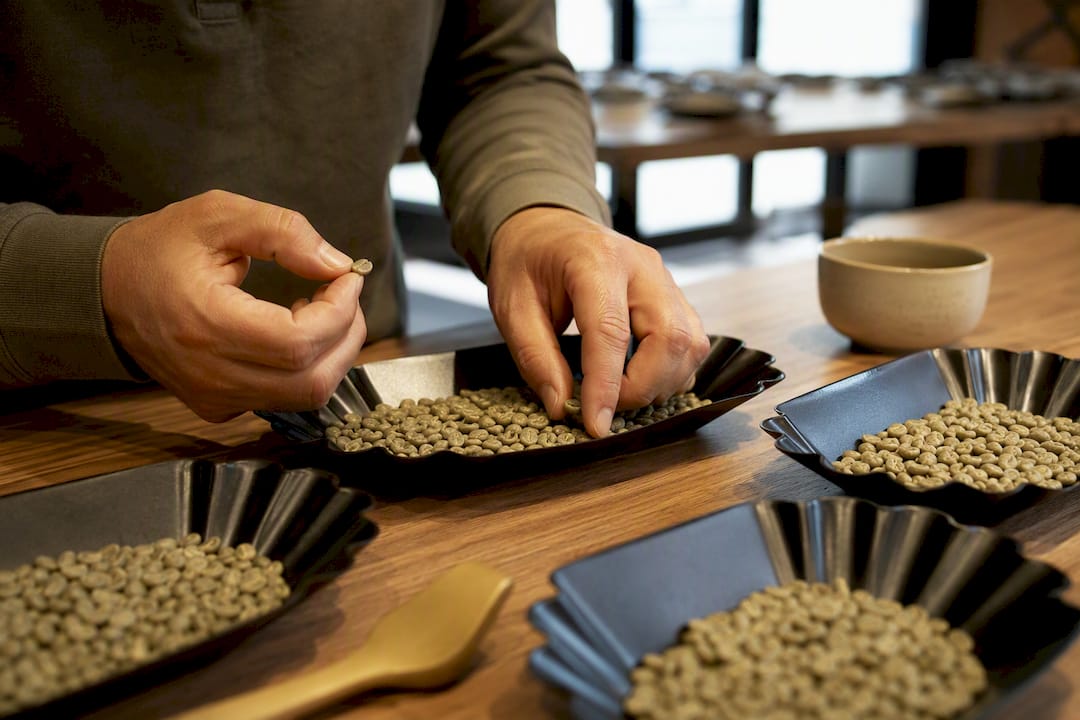
- They cup samples from individual lots rather than buying a blended regional grade.
- They negotiate a price tied to cup score and processing quality, often well above the commodity “C price” set by futures markets.
- They return in future seasons, sometimes investing in processing infrastructure, drying beds, or agronomy support.
- They publish some version of the relationship, whether that’s a farm name on the bag or a fuller transparency report.
None of those steps are legally required. That’s the part most consumers miss.
Because there’s no governing body, the label “direct trade” varies enormously across roasters. One company might mean a fifteen-year relationship with a named cooperative in Huila, Colombia, visited every harvest. Another might mean a single email exchange with an exporter who happens to use the phrase. Industry commentary traces the term to specialty pioneers who wanted to differentiate themselves from certified programs they saw as too slow or too generic for the quality tier they were chasing. That history explains why direct trade grew up outside the certification system entirely, built on reputation instead of audits.
The lack of a standard isn’t automatically a flaw. It’s why the term needs a skeptical eye every time you see it on a bag.
Core Principles and What Credible Direct Trade Looks Like
A direct trade relationship worth trusting rests on a few consistent commitments, even without a certifying body enforcing them.
- Transparency about pricing. Credible roasters state, or at least strongly imply, that they pay above commodity rates and explain why.
- Quality-for-price exchange. The premium is tied to cup score, processing method, or lot selection, not just goodwill.
- Recurring visits, not one-off purchases. Farm visits happen across multiple seasons, not as a single marketing trip.
- Multi-year relationships. The same farm or cooperative name shows up on bags year after year.
- Investment beyond the check. Some roasters fund wet-mill upgrades, drying infrastructure, or agronomy training.
Look for specific signals when you’re evaluating a bag or a roaster’s website. A named farm or cooperative, not just a country. A stated price or premium, even a general range. A traceability page showing lot numbers, harvest dates, or processing details. A published transparency report, however informal. Third-party audits, when a roaster layers a certification like Rainforest Alliance on top of its direct relationships, function as a useful cross-check rather than a replacement.
Pro Tip: Search the roaster’s site for the farm or cooperative name plus the word “price.” If you can’t find a number anywhere, even a rough one, the “direct trade” claim is probably marketing language rather than a documented relationship.
A credible product page typically reads less like an ad and more like a small case study: who grew it, at what elevation, how it was processed, what the roaster paid, and how many seasons they’ve worked together. If a page only says “sourced directly from farmers” with no other detail, that’s a page written by a copywriter, not a sourcing team.
Who Wins and Who Loses: Benefits and Real Limits
Farmers who land a genuine direct trade relationship often see meaningful upside. Quality premiums can run well above commodity pricing, sometimes by a wide margin, because the buyer is paying for a specific lot rather than an anonymous grade. Some roasters go further, funding infrastructure or agronomy support that improves yields and cup quality in future harvests. Reporting on ethical sourcing arrangements documents real price examples and buyer-farmer dynamics that show both sides of this: strong outcomes when the relationship holds, and real exposure when it doesn’t.

For consumers, the payoff is access to coffee you genuinely could not get any other way: single micro-lots with documented origin stories, roasted in small batches, tasting notes that actually track back to a specific farm and processing method. That’s the appeal driving artisan coffee direct from small roasters rather than mass blends.
But direct trade has real limits worth naming plainly:
- No safety net. Unlike certified systems, there’s no minimum price floor protecting farmers if a roaster’s business slows down or shifts priorities.
- Concentration risk. A farm that depends heavily on one buyer relationship is vulnerable if that buyer stops ordering.
- Selective marketing. A roaster can highlight one genuine direct relationship on its homepage while sourcing the bulk of its coffee through conventional channels.
- No independent audit. Claims rest entirely on the roaster’s own word unless they publish verifiable data.
None of that makes direct trade coffee from farmers a bad model. It makes it a model that only works as well as the roaster’s honesty and follow-through.
Direct Trade vs Fair Trade Coffee: What Each One Actually Guarantees
Fair Trade and direct trade solve different problems, and confusing them is where most shoppers go wrong.
Fair Trade is a certified system. Independent auditors verify compliance, and certified cooperatives receive a guaranteed minimum price regardless of market swings, plus a separate Fairtrade Premium paid into community development funds that farmers vote on collectively. Since 2020, the Fairtrade system has supported more than 775,000 coffee farmers and paid out over $400 million in premiums worldwide. Fair Trade Certified’s own standards require supply-chain audits and mandated community funds covering things like safer working conditions and local infrastructure. That price floor is the whole point: it protects farmers even when coffee prices crash.
Direct trade offers no equivalent floor. There’s no third-party audit, no guaranteed minimum, and no community fund mechanism. What it offers instead is a negotiated, quality-linked premium that can, in the right relationship, pay farmers considerably more than either the commodity price or the Fair Trade minimum. It’s targeted and potentially generous, but it’s also unverified unless the roaster chooses to document it.
Here’s how the two compare on the specifics that matter most:
| Factor | Fair Trade | Direct trade |
|---|---|---|
| Certification | Third-party audited | None; self-reported |
| Minimum price floor | Yes, guaranteed | No, negotiated per lot |
| Community development fund | Yes, mandated premium | Varies by roaster |
| Focus | Broad protection, baseline fairness | Quality, relationship, targeted premium |
| Traceability | Cooperative-level | Often farm or lot level |
| Verification | Independent audits | Depends on roaster transparency |
If your priority is a documented, audited safety net for a broad group of farmers, Fair Trade coffee delivers that structure reliably. If you’re chasing exceptional cup quality and a documented, farm-specific story, and you’re willing to do a little homework on the roaster, sustainable coffee trade through direct relationships can deliver more money to fewer farmers with more transparency about the specific lot in your cup. Some of the most credible roasters actually run both: Fair Trade or Rainforest Alliance certification as a floor, with direct relationships layered on top for their specialty offerings. Reading more on how fair price coffee actually works helps clarify which guarantees you’re actually paying for.
How to Verify a Direct Trade Claim Before You Buy
Don’t take the phrase at face value. Run through this before you trust a bag’s story.
- Find the farm or micro-lot name. A real relationship names names: a specific farm, cooperative, or producer, not just “Ethiopia” or “Colombia.”
- Look for a published price or premium. Even an approximate figure or a stated percentage above commodity price is a good sign.
- Check for traceability details. Harvest dates, elevation, processing method, and lot numbers suggest an actual paper trail.
- Search for a transparency report. Some roasters publish annual sourcing reports listing every direct relationship and what they paid.
- Look for evidence of repeat visits. Photos or notes from multiple seasons beat a single trip described in the past tense.
- Check for multi-year language. Phrases like “our third harvest with this cooperative” mean more than “sourced directly.”
Red flags run the opposite direction: vague phrases like “sourced with care,” no farm name anywhere, identical pricing language across every origin the roaster sells, or a total absence of any traceability page. Resources on bean-to-cup traceability walk through exactly what a complete trail should look like.
Pro Tip: If a roaster’s website doesn’t answer your questions, email them directly and ask for the farm name, the price paid, and how many seasons they’ve sourced from that producer. A roaster with a real relationship will answer specifically. One without it will send back a paragraph of marketing language.
Why the Direct Trade Label Deserves More Skepticism, Not Less
The coffee industry sold direct trade as the ethical upgrade to Fair Trade for years, and that framing undersells what’s actually happening. Direct trade isn’t more ethical than Fair Trade. It’s differently structured, with different tradeoffs, and it only outperforms certified systems when the roaster behind it is doing real work.
What gets underestimated is how much the absence of certification cuts both ways. Yes, it lets a roaster pay a farmer double the commodity price for an exceptional lot without waiting on an audit cycle. It also lets a roaster slap “direct trade” on a bag after one origin trip and never repeat the relationship again. The MDPI research on roaster sourcing decisions found that even some roasters themselves support the idea of third-party checks on direct trade claims, precisely because the label has been stretched thin by companies chasing the halo effect without the substance behind it.
My honest read is that the industry’s long-term fix probably isn’t a heavyweight universal certification, which would be expensive and slow for the micro-lot model direct trade is built around. It’s roasters choosing to self-impose real transparency: published price lists, named farms, honest reporting on how many of their offerings are actually direct versus conventionally sourced. That’s a harder standard to fake than a sticker on a bag, and it’s the one shoppers should be demanding before they pay a premium for the story.
— Yasin Sofyian Ayesh
Try These Traceable Options From Qahwat Al’Ard
Qahwat Al’ard builds its catalog around the same transparency standards this article just walked through: named origins, roasted-to-order freshness, and Coffee Journal content that explains exactly where each bean comes from. If you’ve been reading labels skeptically, our product pages are built to survive that scrutiny.
The French Roast leans into a bold, smoky profile from beans pushed to a deep roast, ideal if you want intensity over subtlety. The Italian Roast sits slightly lighter, with the caramelized sweetness classic dark-roast drinkers expect, paired with clear origin documentation on the product page. The Bali Blue is a single-origin standout, carrying the earthy, low-acid character Indonesian coffees are known for, with a full origin story attached.
Start with a sample pack if you want to compare all three side by side before committing to a full bag.
Sources
For deeper reading beyond this article, Fairtrade’s impact summary covers certified-system scale, Fair Trade Certified’s coffee standards detail audit requirements, and Imbibe Magazine’s history of direct trade traces where the term came from and where it’s struggled. Reading primary sources is generally preferable to trusting any single bag’s marketing copy.
- Fair trade overview and impact (Carroll College summary)
- Coffee roasters’ sustainable sourcing decisions and use of the Direct Trade label (MDPI, 2019)
- The opportunities and challenges of direct trade coffee (Imbibe Magazine)
- Fair Trade Certified: what we certify — coffee
- Navigating the complex buzzwords behind an ethical bag of coffee (Daily Coffee News, 2023)
FAQ
What does direct trade coffee mean?
It means a roaster buys beans directly from a farm or cooperative, typically paying a premium tied to quality, rather than sourcing through a commodity market. It is not a certification, so the specifics vary by roaster.
Is Trade Coffee legit?
Trade Coffee is a real, established online coffee subscription and matching service that partners with specialty roasters across the United States. Legitimacy in this context refers to a functioning business, not a guarantee that every partner roaster’s sourcing claims meet the same standard.
What is the number one selling coffee in America?
Mass-market blends from major national brands dominate overall sales volume in American grocery stores, a very different category from the specialty micro-lot coffee discussed throughout this article. Direct trade and single-origin coffees occupy a smaller, quality-focused niche rather than competing on volume.
How do I know if a direct trade claim is genuine?
Look for a named farm or cooperative, a published price or premium, traceability details like harvest dates and lot numbers, and evidence of a multi-year relationship rather than a single visit. Vague language with no specifics is the clearest warning sign.
Does direct trade coffee cost more than Fair Trade coffee?
Pricing varies by roaster and lot, but direct trade premiums are often higher than the Fair Trade minimum price because they’re tied to specific cup quality rather than a baseline floor. Fair Trade guarantees a minimum regardless of quality; direct trade pays more only when the roaster values that particular lot highly.


