


TL;DR:
- Single-origin coffee costs more due to seasonal scarcity, hand labor, and direct trade relationships that ensure traceability. This premium reflects real production costs and investments in sustainable practices, not just branding or rarity. It offers a unique, localized flavor experience that justifies paying a higher price.
Single-origin coffee is defined as coffee sourced from one specific farm, region, or cooperative, and it consistently costs more than blended alternatives. A 2026 analysis of 5,978 coffee bags found that single-origin averages $23.64 per bag compared to $19.97 for blends. That $3.67 gap is not arbitrary. It reflects real costs built into every step of production: seasonal scarcity, hand labor, direct trade relationships, and the kind of supply chain transparency that lets you trace your cup back to a specific hillside in Ethiopia or Colombia. Understanding why single origin costs more turns every purchase into an informed decision rather than a guess.
Why single origin costs more: seasonality and limited supply
Single-origin coffee is harvested once a year, and when a lot sells out, it is gone until the next crop. That finite supply is the first and most direct reason for the price premium. Blenders sidestep this problem entirely by swapping bean sources across origins and harvest cycles, keeping their product consistent and their costs predictable. A roaster working with a single-origin lot from Yirgacheffe, Ethiopia, has no such flexibility.
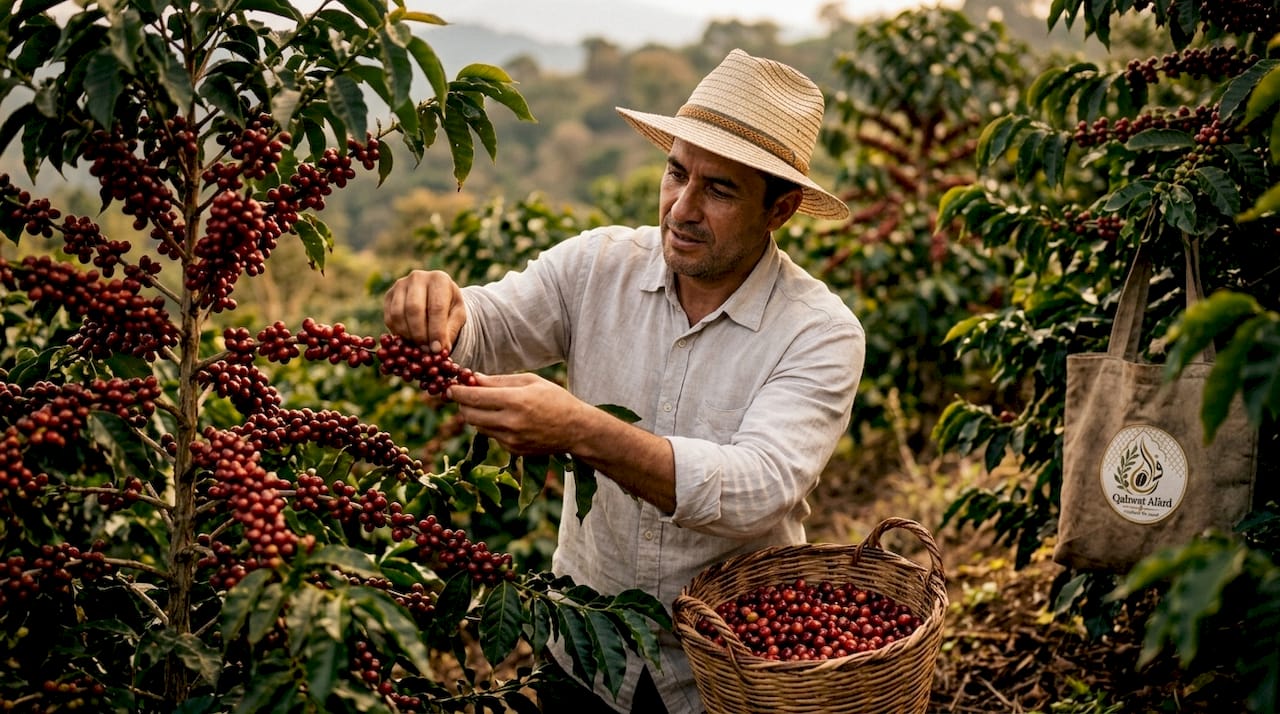
The scarcity effect compounds over the selling season. As a lot diminishes, its perceived rarity increases, and specialty roasters often price accordingly. Roasters also carry sourcing risk that blenders do not. Every harvest cycle requires new sourcing and profile development, meaning the cost of finding, cupping, and contracting a new lot is baked into the final retail price. That investment happens annually, not once.
Seasonal availability also shapes how roasters communicate with customers. A Kenyan AA from a specific cooperative might only be available for four months. Roasters must build marketing, packaging, and customer education around each new release. These operational costs are real, and they land on the price tag. For a deeper look at how origin shapes the cup, the Qahwatalard guide on why origin matters in specialty coffee explains the connection clearly.
Pro Tip: If you find a single-origin lot you love, buy enough to last the season. Once it sells out, the identical profile will not return until the following harvest, and even then, the flavor will shift slightly based on that year’s growing conditions.
How labor and processing drive up single-origin prices
The cost difference between single-origin and blended coffee starts in the field, not the roastery. Single-origin producers rely on hand-picking only ripe cherries, a labor-intensive practice that requires multiple passes through the same trees as cherries ripen at different rates. Mechanized strip harvesting, common in large-scale commodity production, pulls everything off the branch at once, cutting labor costs dramatically but sacrificing cup quality.
After harvest, the sorting process adds another layer of cost. Workers remove defective beans by hand, a step that limits volume but raises cup scores significantly. The key quality indicators tied to this process include:
- Uniform ripeness: Only red or yellow cherries at peak sugar content are selected, which produces cleaner, sweeter flavor profiles.
- Low defect count: Specialty coffee standards require fewer than five full defects per 300 grams, a threshold that demands rigorous sorting.
- Processing method precision: Natural, washed, and honey processing each require controlled environments and careful monitoring, adding time and skilled labor to the cost.
- Lot separation: Keeping micro-lots distinct throughout processing prevents flavor dilution and preserves the terroir characteristics that define single-origin coffee.
Blended coffees tolerate more variation at each of these stages because the final product averages out inconsistencies across multiple origins. Single-origin has no such buffer. Every defect shows in the cup.
Pro Tip: When evaluating single-origin coffee quality, check for a listed processing method and harvest date on the bag. Roasters who publish this information have invested in the traceability infrastructure that justifies a higher price.
Why traceability and ethical sourcing increase the price
Direct trade is the supply chain model most associated with single-origin coffee, and it is more expensive than buying through commodity brokers by design. Under direct trade, roasters pay farmers above commodity market rates in exchange for quality commitments and exclusive access to specific lots. This shorter supply chain preserves the unique flavors that make single-origin worth buying in the first place, but it also removes the cost efficiencies that commodity trading provides.
The benefits of this model extend beyond flavor. Higher prices paid directly to farmers fund investments that protect the long-term viability of specialty coffee production:
- Climate resilience: Premium pricing funds drought resilience measures and shade-grown farming transitions that protect unique coffee terroirs from climate stress.
- Sustainable farming practices: Farmers receiving fair prices can afford organic inputs, water conservation systems, and soil health programs that commodity pricing cannot support.
- Quality incentives: When farmers are paid more for better coffee, they have a financial reason to invest in processing infrastructure and training.
Consumers who buy single-origin are effectively co-investing in these outcomes. The Qahwatalard resource on ethical coffee sourcing breaks down how this model works in practice and what to look for when evaluating a roaster’s sourcing claims. The transparency premium is real: consumers pay more knowing exactly which farm, region, and process created their coffee.
Single origin vs. blends: pricing, flavor, and when to use each
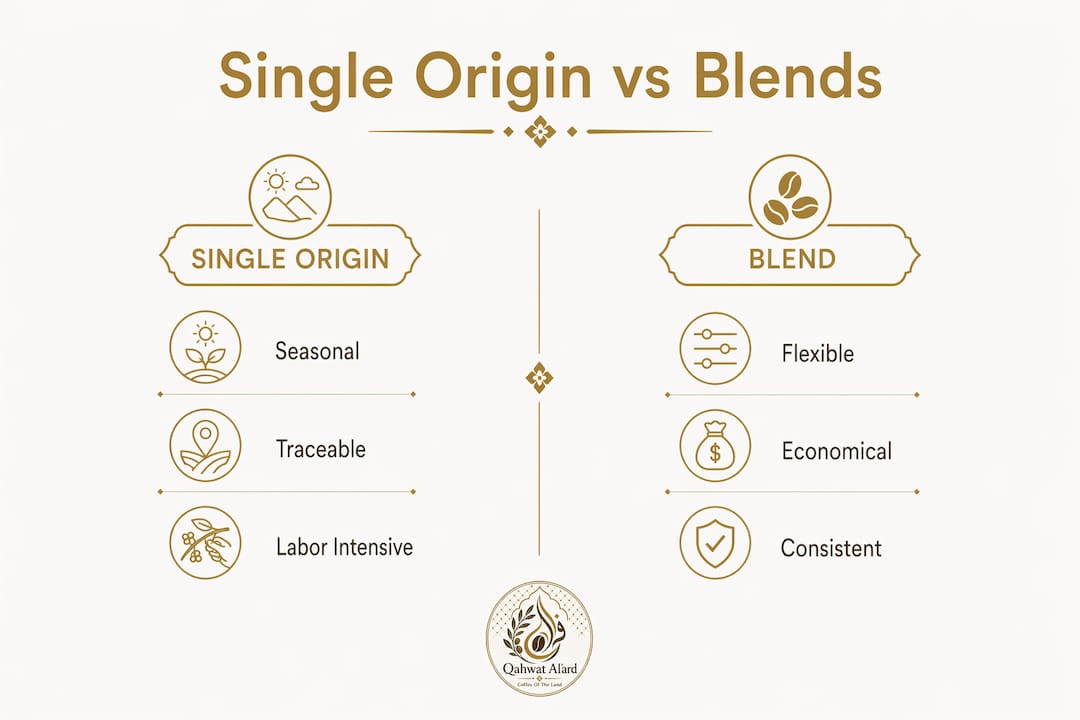
The price gap between single-origin and blended coffee is consistent across the market. Single-origin coffees command $16 to $30 per pound, while blends typically run $12 to $22 per pound. The table below shows how the two categories compare across the factors that matter most to buyers.
| Factor | Single-origin | Blend |
|---|---|---|
| Average price per bag (2026) | $23.64 | $19.97 |
| Price per pound range | $16 to $30 | $12 to $22 |
| Flavor consistency | Varies by harvest | Consistent year-round |
| Supply availability | Seasonal and limited | Year-round |
| Traceability | Farm or cooperative level | Mixed origins |
| Best use case | Tasting, exploration, pour-over | Espresso, daily brewing, volume |
Blends achieve lower costs through flexible sourcing and economies of scale. When one origin becomes expensive or unavailable, blenders substitute without changing the product. That consistency is genuinely valuable for espresso programs and high-volume café settings where repeatability matters more than discovery.
Single-origin coffee serves a different purpose. It is an experiential product, not just a commodity. Drinking a washed Guatemalan Huehuetenango is different from drinking a natural Ethiopian Sidama, and both are different from anything a blend can offer. Experts recommend pairing blends for daily use with rotating single-origin coffees for tasting sessions, a strategy that captures the value of both without overspending on either. For more on how origin shapes flavor, the Qahwatalard guide on coffee terroir explains the science behind why geography tastes like something.
When price reflects luxury branding, not just production cost
Not all single-origin pricing is driven by production costs. Some coffees command prices that go far beyond what labor, processing, and direct trade can explain. Panamanian Geisha, for example, regularly sells for $60 per pound or more. The green bean production cost for these exceptional lots is only about double that of typical specialty beans. The rest is scarcity markup and brand positioning.
Understanding this distinction helps you spend smarter. The factors that push single-origin prices into luxury territory include:
- Competition scores: Coffees that place at events like the Best of Panama auction carry a prestige premium that has little to do with your cup experience at home.
- Micro-lot size: A 50-kilogram lot from a single tree block creates artificial scarcity that drives auction prices beyond any rational production cost.
- Hype cycles: Social media attention around specific origins, like Kona coffee from Hawaii or Jamaican Blue Mountain, inflates retail prices well above comparable quality from less famous regions.
The practical takeaway is that a $25 bag of single-origin coffee from a traceable Ethiopian or Colombian farm represents genuine quality value. A $60 bag of Geisha may or may not deliver a proportionally better cup. Knowing the difference between quality-based pricing and branding-based pricing is the most useful skill a specialty coffee buyer can develop.
Key takeaways
Single-origin coffee costs more because seasonal scarcity, hand labor, direct trade sourcing, and traceability infrastructure each add real cost that blended coffee avoids through flexibility and scale.
| Point | Details |
|---|---|
| Seasonal scarcity raises prices | Single-origin lots are finite; once sold out, they cannot be restocked until the next harvest cycle. |
| Labor intensity adds cost | Hand-picking and defect sorting limit volume but produce the cup quality that justifies the premium. |
| Direct trade pays farmers more | Shorter supply chains increase farmer income and fund climate resilience, which is reflected in retail price. |
| Luxury pricing exceeds production cost | Coffees like Panamanian Geisha are priced partly on scarcity and brand positioning, not just production expenses. |
| Blends offer a cost-effective complement | Rotating single-origin for tasting while using blends for daily brewing captures value from both categories. |
The real value hiding in that price difference
I have spent years tasting through single-origin lots from East Africa, Central America, and the Arabian Peninsula, and the honest truth is that the price premium almost always makes sense once you understand what you are paying for. The $3.67 average gap between single-origin and blended bags is not a marketing tax. It is the cost of a farmer being paid fairly, a roaster investing in a new sourcing relationship every year, and a supply chain short enough that nothing interesting gets lost between the farm and your cup.
What I find most underappreciated is the sourcing risk roasters absorb. Every single-origin release is a bet on a specific harvest from a specific place. If the rains came late in Huila, Colombia, that lot will taste different from last year. The roaster has to re-profile the roast, re-educate customers, and sometimes eat the cost of a lot that did not meet expectations. Blenders never face that problem. That risk is real, and it belongs in the price.
My advice to anyone questioning whether single origin is worth it: stop comparing it to blends on a per-cup cost basis. Compare it to a glass of wine from a named vineyard versus a house pour. Both are wine. Only one tells you something specific about where it came from and why it tastes the way it does. That specificity has value, and once you start tasting for it, the price stops feeling like a premium and starts feeling like the point.
— Anthony-Yasin
Explore single-origin coffee at Qahwatalard
Qahwatalard sources directly from renowned coffee-growing regions and makes every origin detail available before you buy. The single-origin collection includes carefully selected lots from farms where traceability, processing method, and harvest information are standard, not optional. If you want to taste the difference that direct sourcing makes without committing to a full bag, the single-origin sample pack lets you explore multiple profiles side by side. For days when consistency matters more than discovery, the 6 Bean Blend delivers reliable quality at a lower price point. Every product on the platform reflects the same sourcing standards the article describes.
FAQ
Why is single-origin coffee more expensive than blends?
Single-origin coffee costs more because it is seasonal, labor-intensive to produce, and sourced through direct trade relationships that pay farmers above commodity rates. A 2026 analysis found single-origin averages $23.64 per bag versus $19.97 for blends.
Is single-origin coffee worth the higher price?
For tasting, exploration, and understanding how origin shapes flavor, single-origin is worth the premium. Experts recommend using it alongside a blend rather than replacing your daily coffee entirely, which keeps costs manageable.
What makes single-origin coffee quality higher?
Hand-picking only ripe cherries and rigorous defect sorting produce lower defect counts and higher cup scores than mechanized harvesting allows. These labor-intensive steps limit volume but directly improve what ends up in your cup.
Why do some single-origin coffees cost $60 per pound or more?
Coffees like Panamanian Geisha are priced partly on scarcity, auction competition scores, and brand positioning. Their green bean production cost is roughly double that of typical specialty beans. The rest of the price reflects luxury market dynamics, not production expenses.
Does single-origin coffee support sustainable farming?
Direct trade pricing funds climate resilience investments, sustainable farming practices, and quality infrastructure at the farm level. Higher prices paid to farmers create financial incentives to protect the specific terroirs that make single-origin coffee worth buying.


