


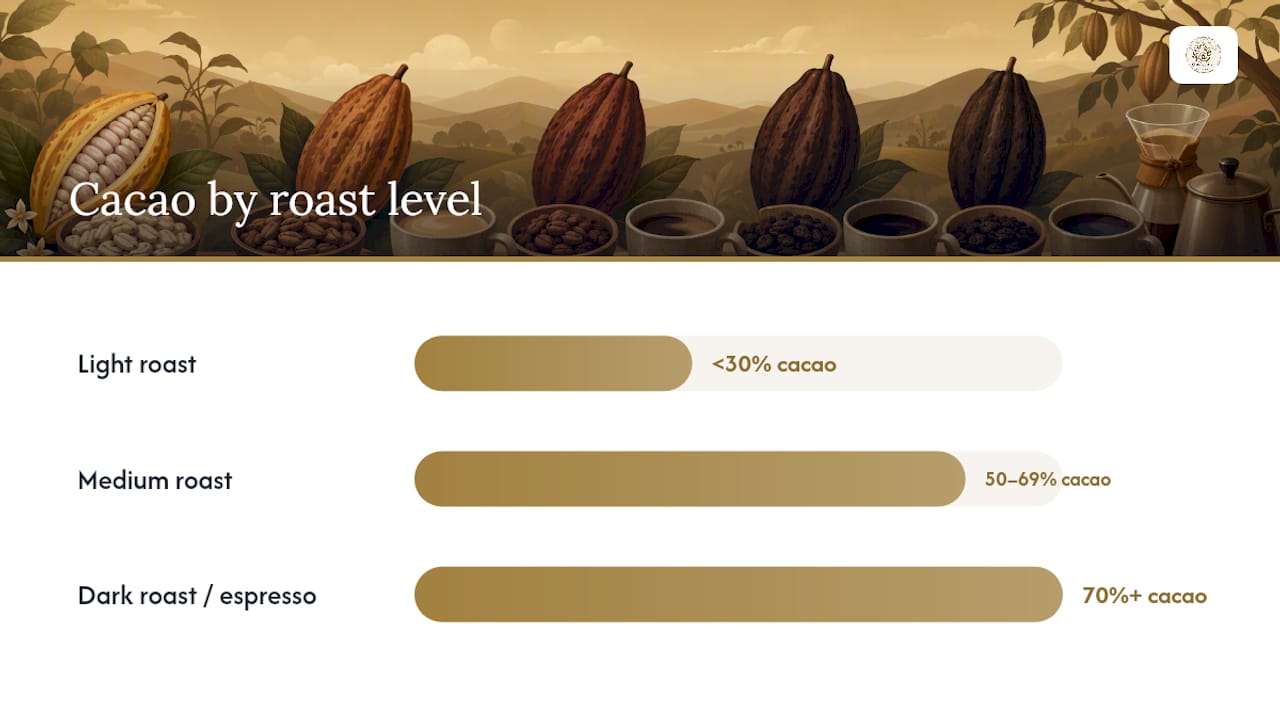
Match your coffee’s roast intensity to your chocolate’s cacao percentage, and watch the acidity: light roast with white or low-cacao chocolate, medium roast with milk or 50–69% dark, and dark roast or espresso with 70%+ dark. That single guideline, laid out by Tasting Table’s chocolatier interview, solves most pairing questions before you even open a bag of beans. Everything else in coffee and chocolate pairing is fine-tuning.
TL;DR:
- Pair light roast coffee with white or low-cacao chocolate to preserve brightness and acidity without clash.
- Use medium roast with milk or 50–69% dark chocolate to balance acidity and enhance nutty, caramel flavors.
- Match dark roast or espresso with chocolate over 70% cacao, as both have deep, roasted, smoky notes that complement each other.
- When acidity is high, choose Dutch-processed or lower-acid chocolate to prevent sour, thin pairings.
- Sensory tests show contrast and balanced flavors are preferred over origin matching, with proper brewing method affecting the pairing outcome.
Table of Contents
- What Are the Rules for Pairing Coffee and Chocolate?
- Should You Match Coffee and Chocolate by Origin?
- How Do You Taste Coffee and Chocolate Together?
- What’s the Best Chocolate to Pair With Each Coffee?
- Why Trust This Coffee and Chocolate Pairing Guide?
- How Does Grind Size Change a Coffee and Chocolate Pairing?
- Does Chocolate Texture Change How a Pairing Tastes?
- Do Freshness and Season Affect Coffee and Chocolate Pairing?
- Can You Pair Coffee and Chocolate With Wine or Spirits Too?
- What Most Pairing Advice Gets Wrong About Coffee and Chocolate
- Try Our Curated Chocolates With Your Next Cup
- Sources
- FAQ
What Are the Rules for Pairing Coffee and Chocolate?
The relationship between roast level and cacao percentage isn’t arbitrary. Light roasts keep more of the coffee’s original acidity and fruit character intact, so they need chocolate that won’t fight back. White chocolate, or anything under about 30% cacao, lets that brightness shine instead of clashing with it. Medium roasts mellow the acid and build body, which is exactly why milk chocolate and mid-range dark bars (50 to 69% cacao) work so well. Dark roasts and espresso bring deep, roasted, sometimes smoky notes that only high-cacao dark chocolate (70% and up) can stand up to without disappearing.
Acidity is where most home pairings go wrong. Two high-acid components on the tongue at once create a sour, thin clash rather than a pleasant tang. Coffee and chocolate.info calls this out directly: pairing a bright, acidic coffee with a fruity, acidic single-origin chocolate can amplify sourness instead of balancing it, according to research on the chemistry behind espresso and dark chocolate pairings. The fix is simple: pick a lower-acidity roast, or choose a Dutch-processed (alkalized) chocolate, which strips out much of that sharp edge and gives the pairing a grounding “bass note” instead.
Fat and sugar do real work here too. The cocoa butter in chocolate coats your palate and physically softens how bitter compounds land, which is part of why a medium-sweet milk chocolate can make a bitter dark roast taste rounder.
- Light roast → white chocolate or sub 30% cacao
- Medium roast → milk chocolate or mid-range dark chocolate
- Dark roast/espresso → high-cacao dark chocolate
- High acidity anywhere → switch to a Dutch-processed or lower-acid option
72% is the cacao threshold where most tasters start needing a genuinely dark, low-acid roast to match intensity, per Tasting Table’s pairing guidance.
Beyond roast and cacao, both coffee and chocolate develop pyrazines during roasting, the same aromatic compounds responsible for toasted, nutty, almost bread-like notes in both. That shared chemistry is what makes a well-matched cup and bar taste like they were made for each other, a concept Coffee & Chocolate.info describes as flavor bridging.
Pro Tip: If a pairing tastes sour or thin, don’t reach for a darker chocolate automatically. Try a milk chocolate first. The added fat and sugar often fix acidity problems faster than adding more cacao intensity.
Should You Match Coffee and Chocolate by Origin?
Matching a Colombian coffee to a Colombian-grown chocolate sounds elegant, and sometimes it works, since both crops are shaped by the same soil, altitude, and climate. That’s genuine terroir overlap, not marketing. But treat it as a secondary move, not your main strategy.
A controlled sensory test found tasters actually preferred complementary contrasts over origin-matched pairs, especially when contrast reduced perceived sourness and bitterness, according to Firetree Chocolate’s research on flavor pairing science. Balance beat similarity.
Use tasting notes as your practical shortcut once roast and cacao percentage are locked in:
- Nutty coffee + nutty or caramel chocolate reinforces the shared note
- Fruity, bright coffee + floral or berry-forward chocolate can either mirror or gently contrast
- Earthy, low-acid coffee + a Dutch-processed or spiced bar grounds both flavors
How Do You Taste Coffee and Chocolate Together?
- Taste the coffee alone first. Note acidity, bitterness, body, and finish before chocolate enters the picture.
- Taste the chocolate alone. Let it sit on your tongue until it starts to soften.
- Take a small sip of coffee while the chocolate is still semi-melted, letting the cocoa butter mix with the hot liquid. This creates the in-mouth emulsion that Coffee & Chocolate.info identifies as the key to a successful pairing.
- Record what changed: did acidity soften, did bitterness round out, did a new flavor emerge?
- Cleanse your palate with plain water, then move to the next combination.
Keep portions small, one square of chocolate and a few sips of coffee per round, so you don’t hit palate fatigue after two or three pairings. Taste your highest-acid coffee last, not first, to avoid souring your palate for everything that follows.
Pro Tip: Keep a simple notebook with four columns: acidity, bitterness, body, finish. After five or six pairings, patterns in your own preferences show up fast, and they won’t always match the textbook rule.
What’s the Best Chocolate to Pair With Each Coffee?
White chocolate belongs with light roasts, particularly washed African or Central American coffees with floral or citrus notes. The sweetness and creaminess of white chocolate has nothing to compete against, so the coffee’s brightness stays front and center.
Milk chocolate in the 30 to 45% cacao range is the natural partner for medium roasts. The caramelized sugar in milk chocolate echoes the toasted, nutty notes a medium roast develops, and neither one overwhelms the other. This is the pairing most people land on instinctively, even without knowing the mechanism behind it.
Above 70% cacao, you need dark roast or straight espresso to keep pace with the bitterness and intensity, a mapping The Manual’s coffee and chocolate coverage backs with the same logic: roast shapes acidity and body more than origin does, so lead with roast and cacao percentage before worrying about where either one was grown.
For an easy way to run these pairings yourself:
- Mexican Chocolate brings warm cinnamon and spice notes that pair well against a medium roast with its own toasted warmth.
- Chocolate Hazelnut leans nutty and rich, a natural match for a medium to medium-dark roast that shares that toasted profile.
- Dubai Chocolate offers a dense, pistachio-and-knafeh richness that holds up against a fuller-bodied dark roast without getting lost.
Sensory analysis consistently shows tasters rate complementary, balanced pairings higher than pairings chosen for matching origin alone, per Firetree Chocolate’s flavor pairing research.
Why Trust This Coffee and Chocolate Pairing Guide?
This guide is written by Yasin Sofyian Ayesh, drawing on sensory research and the practical pairing logic that specialty chocolatiers and coffee professionals actually use, rather than recycled “dark goes with dark” folk wisdom. The framework here rests on documented sensory testing, not guesswork.
Some specialty coffee brands build their reputation on full traceability and single-origin sourcing from growing regions like Colombia, Peru, Bali, and Uganda, with beans roasted fresh to order. That focus on origin transparency is exactly what makes pairing recommendations credible: you can’t reliably match a coffee’s acidity or body to a chocolate if you don’t actually know how that coffee was grown and roasted.
- Learn more about pairing logic in coffee and food pairing examples for culinary enthusiasts
- Explore coffees already built around chocolate notes in this guide to chocolatey coffee profiles
- Understand terroir’s role by reading what single-origin coffee actually means for flavor
How Does Grind Size Change a Coffee and Chocolate Pairing?
Grind size and brewing method aren’t just about extraction efficiency. They change how much acidity, body, and bitterness show up in the cup, and those are the exact variables you’re trying to balance against chocolate.
A finer grind, the kind used for espresso, pulls more oils and solubles out of the coffee in a short brew time, producing a thicker body and concentrated bitterness. That’s precisely why espresso pairs best with high-cacao dark chocolate: neither one backs down. A coarser grind, used for French press or cold brew, extracts more slowly and tends to produce a fuller, lower-acid cup with muted brightness, which can shift a naturally bright coffee into medium-roast pairing territory even if the beans themselves are lighter.
Pour-over and drip methods sit in the middle. They tend to preserve more of a light roast’s acidity and clarity than a French press would, which matters if you’re deliberately trying to pair a bright, fruity coffee against a low-cacao or white chocolate to let that acidity shine.
If a pairing isn’t working the way the roast and cacao rule predicts, check your brew method before you blame the beans or the bar. Switching from a drip brew to a French press, or vice versa, can shift a coffee’s acidity and body enough to change which chocolate actually fits.
Does Chocolate Texture Change How a Pairing Tastes?
Texture affects pairing just as much as flavor does, and it’s the part most people skip entirely. A chocolate’s snap, the crisp break when you bite into a well-tempered bar, signals proper crystallization of the cocoa butter, and that structure controls how quickly it melts in your mouth.
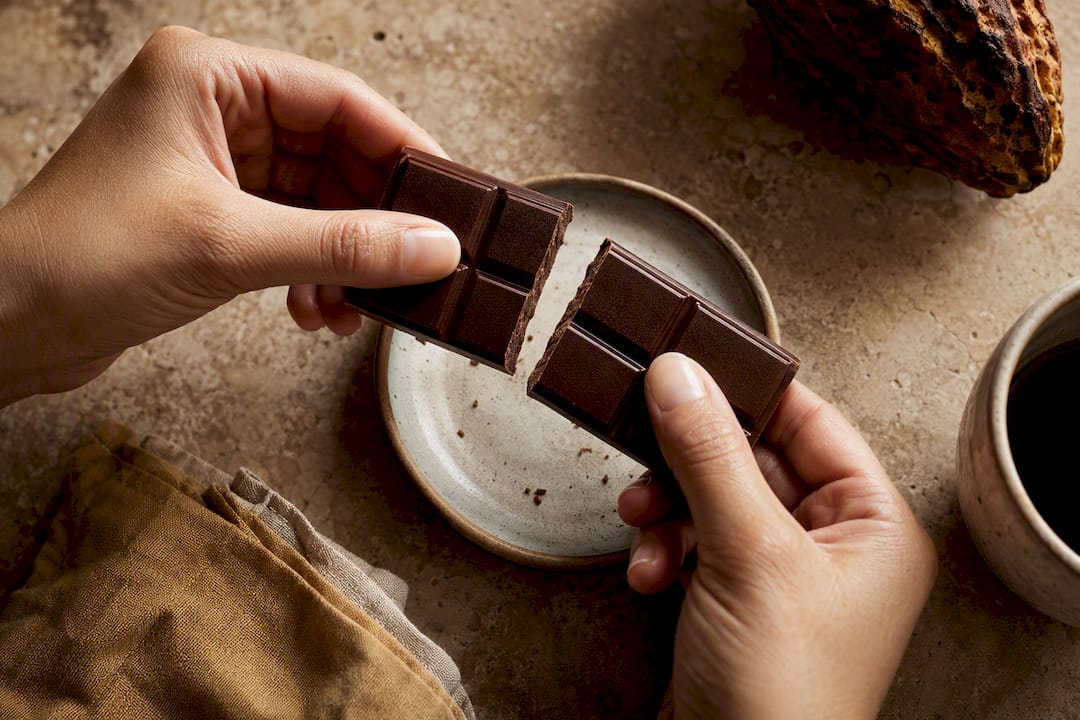
A bar with a clean snap melts slower and more evenly, which extends the window where cocoa butter and hot coffee actually blend into that in-mouth emulsion discussed earlier. A softer, waxier chocolate melts almost immediately, giving you less control over the pairing sequence and sometimes a greasy mouthfeel that masks subtler coffee notes.
Creaminess matters differently. Milk and white chocolates carry more milk fat, which coats the palate more heavily than dark chocolate does. That heavier coating is useful when you’re trying to soften a bitter or acidic coffee, but it can also mute delicate floral or fruity notes in a light roast if you’re not careful about proportion. A thin square works better than a thick chunk when you’re pairing a subtle, high-acid coffee, since you want just enough fat to round the edges without burying the coffee’s character entirely.
Bean-to-bar chocolates with visible cacao texture, sometimes a slightly grainy or rustic mouthfeel, tend to pair more assertively since that texture often comes with less added fat and more concentrated cacao flavor. Keep that in mind when moving between mass-market and craft chocolate in the same tasting session.
Do Freshness and Season Affect Coffee and Chocolate Pairing?
Coffee loses aromatic complexity within weeks of roasting, and chocolate, while shelf-stable for much longer, still shifts in flavor and texture as cocoa butter ages or picks up humidity. Both freshness curves matter for a serious pairing session.
Freshly roasted coffee, ideally within two to four weeks of the roast date, carries brighter acidity and more defined tasting notes than beans that have sat for months. That freshness window is exactly why the roast and cacao percentage rule works best with recently roasted beans. Stale coffee flattens out, losing the acidity and clarity that made a light roast worth pairing with white chocolate in the first place.
Chocolate has its own seasonal quirks. Warmer months can soften bars enough to affect snap and melt rate even before you taste them, which changes the tasting sequence described earlier. Cooler months, particularly around the holidays, tend to bring seasonal chocolate releases with spice or citrus infusions, cinnamon, orange peel, cardamom, that can either reinforce or clash with a coffee’s existing notes depending on roast level.
Buying coffee in smaller batches and storing chocolate away from heat and direct light keeps both components closer to their intended flavor profile, which makes any pairing rule far more reliable to test.
Can You Pair Coffee and Chocolate With Wine or Spirits Too?
Once you’ve got the coffee and chocolate rule down, adding a wine or spirit turns a simple tasting into a three-way flavor experiment. The same logic applies: match intensity, then decide whether you want to reinforce or contrast.
A tawny port or aged rum, both naturally sweet with caramelized, nutty notes, tends to reinforce a medium roast paired with milk or mid-range dark chocolate, since all three share that toasted sweetness.
Espresso specifically works well against orange liqueurs, since citrus cuts through the concentrated bitterness the same way a bright, low-cacao chocolate would. That’s the same acidity-balancing principle at work, just from a different direction.
The risk with three-way pairings is stacking too many bitter or tannic elements at once. If you’re building a tasting flight, treat the spirit or wine the way you’d treat the chocolate: check whether it reinforces or contrasts the coffee’s acidity and bitterness before committing to the combination.
What Most Pairing Advice Gets Wrong About Coffee and Chocolate
Most pairing guides treat “match the intensity” as the whole story, and that’s where they fall short. Intensity matching gets you a passable pairing. It doesn’t get you a great one. The sensory research is clear that tasters consistently rank complementary contrast, not similarity, as the more satisfying combination, and that finding gets buried under simpler rules because contrast is harder to teach in a single sentence.
The bigger blind spot is acidity. Plenty of pairing advice focuses entirely on sweetness and bitterness while ignoring that two acidic components can actively clash rather than complement. If your light roast and your “perfectly matched” chocolate taste sour together, the roast/cacao rule isn’t broken. You’ve stacked acid on acid, and the fix is almost always simpler than people assume: switch to a Dutch-processed chocolate or drop the roast down half a level.
What readers should prioritize first isn’t memorizing a chart. It’s running the actual tasting sequence, coffee alone, chocolate alone, then combined while the chocolate is still semi-melted, and writing down what changes. That five-minute habit teaches more about your own palate than any rule ever will.
— Yasin Sofyian Ayesh
Try Our Curated Chocolates With Your Next Cup
Reading the rule is one thing. Tasting your way through it is another, and that’s where a curated chocolate selection saves you from guessing which bar to buy first. A curated chocolate lineup can give you three distinct starting points instead of a wall of unlabeled options at a grocery store.
Mexican Chocolate brings cinnamon and warm spice, best tried against a medium roast for a cozy, toasted pairing. Chocolate Hazelnut offers a rich, nutty profile that echoes a medium to medium-dark roast’s own toasted character. Dubai Chocolate delivers a dense pistachio and knafeh intensity built for a fuller-bodied dark roast that won’t get overpowered.
If you’re setting up your first real tasting session, start with a single bar and a freshly roasted bag rather than committing to a full pairing flight right away. Visit the Mexican Chocolate product page to pick your first bar, pair it with a roast that matches the guidance above, and run the five-step tasting sequence tonight while both are fresh.
Sources
- A chocolatier explains exactly how to pair coffee and chocolate (Tasting Table)
- Coffee & chocolate: the science behind flavour pairing (Firetree Chocolate)
- Espresso and dark chocolate: the chemical romance behind a perfect pairing (Coffee & Chocolate.info)
FAQ
Does Chocolate Pair Well With Coffee?
Yes. Both share roasted, fermented flavor compounds called pyrazines, which is why research on coffee and chocolate’s shared chemistry calls them natural partners rather than an arbitrary combination.
What Type of Chocolate Pairs Best With Coffee?
It depends on roast level: white or low-cacao chocolate for light roasts, milk or 50–69% dark for medium roasts, and 70%+ dark chocolate for dark roasts or espresso, according to Tasting Table’s pairing framework.
What Pairs Well With Coffee as a Gift?
A curated chocolate selection paired with a specific roast makes a more thoughtful gift than either item alone. Options like Mexican Chocolate for a medium roast or Chocolate Hazelnut for a nutty, medium-dark pairing give the recipient a ready-made tasting experience rather than guesswork.
Is It Good to Eat Chocolate With Coffee?
Yes, in moderation, and the combination can actually improve the tasting experience. The fat and sugar in chocolate physically soften perceived bitterness in coffee, while shared aromatic compounds create flavor bridges that neither one produces alone.


