


TL;DR:
- Coffee extraction involves dissolving soluble compounds from ground coffee into hot water, affecting flavor and balance. Managing variables like grind size, water temperature, brew time, and ratio ensures proper extraction yield and desired taste. Different brewing methods produce distinct flavor profiles based on their extraction processes and contact times.
Coffee extraction is defined as the process of dissolving soluble compounds from ground coffee into hot water to create the beverage you drink. Every sip you take reflects how well that process went. The ideal extraction yield sits between 18–22% of the bean’s soluble mass. Hit that window and you get balance. Miss it and your cup tastes either sour and thin or bitter and harsh. Understanding the coffee extraction process gives you direct control over flavor, body, and aroma in every brew.
What is coffee extraction and why does it matter?
Coffee extraction is the controlled dissolution of acids, sugars, and bitter compounds from roasted coffee grounds into water. These compounds do not release all at once. Acids extract first, then sugars, then bitter compounds, in a fixed sequence that cannot be reversed. That order is the most important fact in brewing. Stop too early and you get sourness without sweetness. Go too long and bitterness takes over.
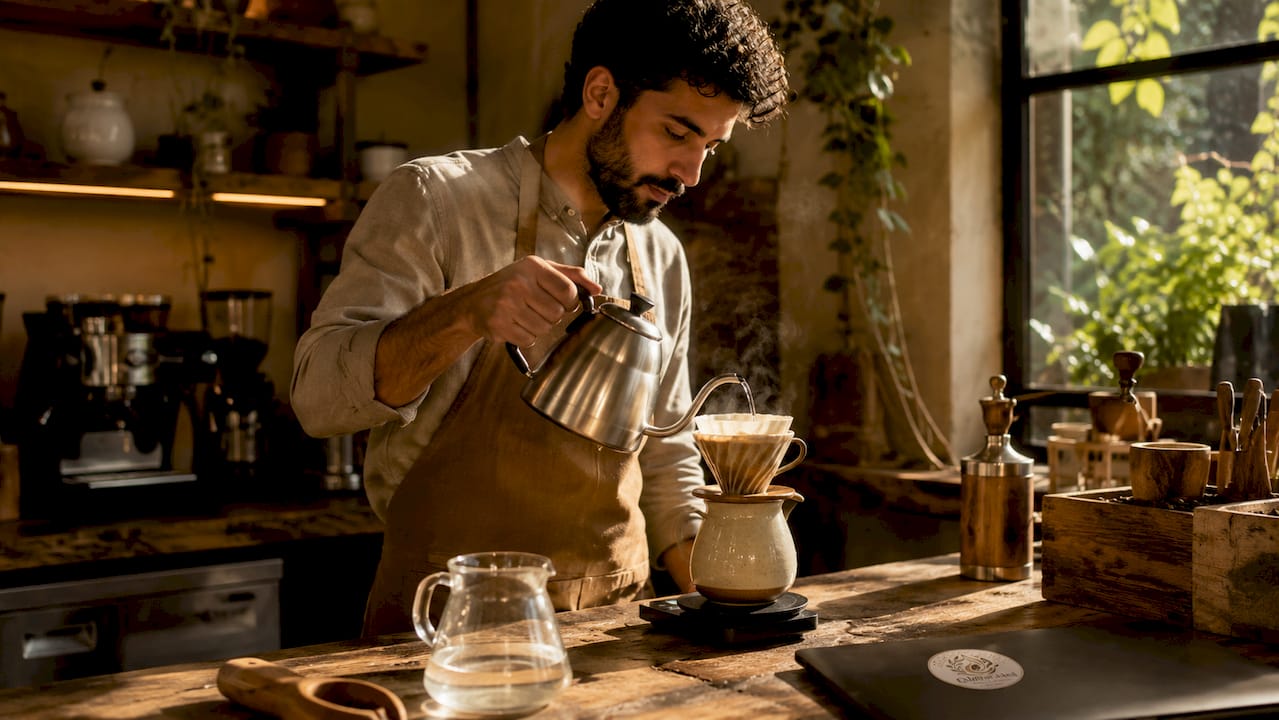
The practical implication is significant. You are not just making coffee. You are managing a timed chemical sequence. Specialty coffee professionals use the term “extraction yield” to describe the percentage of soluble material pulled from the grounds. A balanced extraction yield of 18–22% produces the sweet spot where brightness, sweetness, and body coexist. Below that range, the cup tastes hollow. Above it, tannins dominate and the finish turns dry and unpleasant.
Qahwatalard sources single-origin beans with clear, traceable flavor profiles precisely because origin flavors only show up when extraction is done right. A poorly extracted Ethiopian Yirgacheffe tastes like any bad cup of coffee. A well-extracted one delivers jasmine, stone fruit, and citrus. The bean’s potential lives inside the grounds. Extraction is how you release it.
What factors affect coffee extraction and flavor?
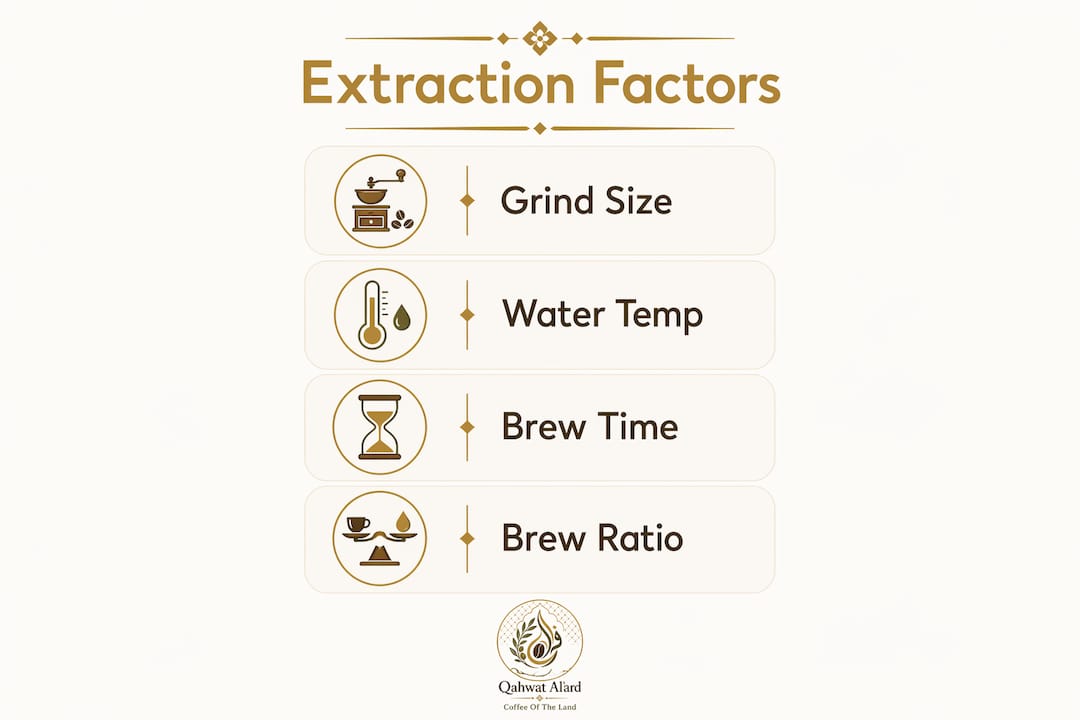
Four variables control the coffee extraction process: grind size, water temperature, brew time, and brew ratio. Each one interacts with the others. Changing one without adjusting the rest shifts your extraction in ways that can be hard to predict.
Grind size
Grind size controls how fast water pulls compounds from the coffee. A finer grind increases surface area, which speeds up extraction. A coarser grind slows it down. This is why espresso uses a very fine grind with a short brew time, while French press uses a coarse grind with a four-minute steep. Understanding different coffee grinds is one of the fastest ways to improve your results at home.
Water temperature
The optimal water temperature for extraction is 195–205°F. Below 195°F, water lacks the energy to dissolve sugars and aromatics fully, leaving the cup sour and flat. Above 205°F, extraction accelerates past the sweet spot and pulls harsh, bitter compounds. Lighter roasts generally benefit from the higher end of that range. Darker roasts extract more readily and do better at the lower end.
Brew time and brew ratio
Brew time determines how long water stays in contact with the grounds. Longer contact means deeper extraction. Shorter contact means less. Brew ratio, the weight of coffee relative to water, controls concentration and yield. A 1:15 ratio (one gram of coffee to 15 grams of water) produces a stronger, more extracted cup than a 1:17 ratio. Adjusting ratio changes how much of the available solubles end up in your cup.
Pro Tip: When your cup tastes off, change only one variable at a time. Adjusting grind size, temperature, and time simultaneously makes it impossible to identify what actually fixed the problem.
How do different brewing methods affect extraction?
Brewing methods fall into three categories: immersion, percolation, and pressure. Each category produces a different extraction profile and a different cup character.
| Method | Example | Contact Time | Pressure | Typical Flavor |
|---|---|---|---|---|
| Immersion | French press | 4–5 minutes | None | Full-bodied, rich, heavy |
| Percolation | Pour-over, drip | 2.5–4 minutes | None | Clean, bright, nuanced |
| Pressure | Espresso | 25–30 seconds | 9 bars | Concentrated, intense, syrupy |
Immersion methods like French press submerge grounds in water for the full brew time. Water becomes saturated with compounds gradually, producing a heavy, full-bodied cup with more oils and texture. The trade-off is less clarity. Fine flavor notes can get lost in the density.
Percolation methods like pour-over and drip constantly replace saturated water with fresh water. This keeps the concentration gradient high throughout brewing, which pulls flavor compounds more efficiently. The result is a cleaner, brighter cup where origin characteristics like floral notes or fruit acidity come through clearly. Brew ratios for drip and pour-over typically run 1:15 to 1:17.
Pressure methods like espresso force hot water through finely ground coffee at around nine bars of pressure. Contact time is short, around 25–30 seconds, but the pressure extracts a concentrated shot with intense flavor and a layer of crema on top. Espresso is not just strong coffee. It is a fundamentally different extraction method that produces a chemically distinct beverage. Qahwatalard’s African Espresso is built specifically for pressure extraction, with a profile that holds up under the intensity of the process.
What are the signs of under-extraction and over-extraction?
Extraction problems fall into three categories: under-extraction, over-extraction, and uneven extraction. Each one has a distinct taste signature.
Under-extraction produces a sour, thin, and sometimes salty cup. The cause is incomplete dissolution of sugars and body compounds. Acids extract early and dominate when the process stops too soon. Common causes include:
- Grind that is too coarse
- Water temperature below 195°F
- Brew time that is too short
- Too little coffee relative to water
Over-extraction produces a bitter, dry, and astringent cup. Heavy tannins and unpleasant bitterness dominate when extraction runs too long or too hot. Common causes include:
- Grind that is too fine
- Water temperature above 205°F
- Brew time that is too long
- Too much coffee relative to water
Uneven extraction is the trickiest problem because the cup tastes both sour and bitter at the same time. Grind inconsistency or channeling causes this. Fine particles over-extract while coarse particles under-extract simultaneously. Poor water distribution in the bed creates channels where water flows through the same path repeatedly, leaving other areas barely touched.
Pro Tip: Use a bloom before brewing. Pre-wet your grounds with twice their weight in water and wait 30–45 seconds. This releases trapped CO2 and allows water to saturate the bed evenly, which reduces channeling and uneven extraction.
How to achieve balanced extraction every time
Balanced extraction is repeatable when you treat brewing as a system rather than a routine. Follow these steps to build consistency.
- Weigh your coffee and water. Use a kitchen scale every time. Eyeballing doses introduces inconsistency that makes troubleshooting impossible.
- Set your grind size for the method. Start with a medium grind for pour-over, coarse for French press, and fine for espresso. Adjust from there based on taste.
- Heat water to 195–205°F. If you do not have a temperature-controlled kettle, bring water to a boil and let it sit for 30 seconds. That drops the temperature to roughly 200°F.
- Perform a bloom. Pour twice the coffee weight in water over the grounds and wait 30–45 seconds before continuing. This step matters most for fresh, recently roasted beans with high CO2 content.
- Brew and taste. Do not rely on color or aroma alone. Taste the cup and identify whether it skews sour (under-extracted) or bitter (over-extracted).
- Adjust one variable. If the cup is sour, grind finer or brew longer. If it is bitter, grind coarser or shorten brew time. Change one thing at a time.
Coffee freshness also affects extraction. Freshly roasted beans contain more CO2, which resists water penetration. Beans that are 7–21 days off roast typically extract more evenly. Stale beans extract quickly and unevenly because cell structure has degraded. The coffee processing method also shapes how readily compounds dissolve. Washed coffees tend to extract cleanly and predictably. Natural-processed coffees carry more fruit-forward compounds that can require slightly adjusted parameters.
Developing a coffee flavor vocabulary makes this feedback loop much faster. When you can name what you taste, you can diagnose the problem and fix it with confidence.
Key Takeaways
Balanced coffee extraction requires managing grind size, water temperature, brew time, and brew ratio together, with taste as your primary feedback tool.
| Point | Details |
|---|---|
| Extraction yield target | Aim for 18–22% extraction yield for a balanced, flavorful cup. |
| Temperature window | Brew between 195–205°F to avoid sourness below or bitterness above. |
| Sequential compound release | Acids extract first, then sugars, then bitters. Timing determines which dominate. |
| Bloom reduces unevenness | Pre-wetting grounds for 30–45 seconds improves water saturation and flavor balance. |
| Method shapes the cup | Immersion, percolation, and pressure each produce distinct flavor profiles and body. |
Why extraction is a skill, not a formula
Most brewing guides treat extraction like a recipe. Set the temperature, measure the ratio, start the timer, and the cup takes care of itself. That framing misses the point entirely.
Extraction is a sequential process that unfolds differently every time, depending on the bean’s freshness, roast level, density, and processing method. A recipe that works perfectly for a washed Kenyan light roast will under-extract a dense natural Ethiopian and over-extract a dark-roasted blend. The variables are real, but they are not fixed. They respond to the specific coffee in your grinder on that specific day.
The insight that changed how I brew is this: evenness matters as much as level. You can hit 20% extraction yield and still have a bad cup if half the grounds extracted at 28% and the other half at 12%. The average looks right. The taste does not. Grind uniformity, bloom technique, and consistent water distribution are not optional refinements. They are the foundation.
My honest advice is to stop chasing recipes and start chasing taste. Brew a cup, taste it deliberately, and ask one question: does it lean sour or bitter? That answer tells you exactly what to change. Sensory evaluation beats any formula because your palate is responding to the actual extraction, not the theoretical one. Trust it.
— Anthony-Yasin
Quality coffee worth brewing well
The techniques covered here only reach their potential when the coffee itself is worth the effort. Qahwatalard sources beans from renowned growing regions with full traceability, so the flavor you extract actually reflects the origin, not just the process. For pressure brewing, the African Espresso delivers a concentrated, fruit-forward profile built for espresso extraction. For pour-over or drip, single-origin selections give you a clean canvas to practice extraction variables without interference from blending. If you want a quick, consistent result without the variables, Qahwatalard’s instant coffee is pre-extracted and ready when you are.
FAQ
What is the ideal extraction yield for coffee?
The ideal extraction yield is 18–22% of the coffee’s soluble mass. Below that range the cup tastes sour and thin. Above it, bitterness and astringency dominate.
What water temperature is best for coffee extraction?
The best water temperature for coffee extraction is 195–205°F. Lighter roasts extract better at the higher end of that range, while darker roasts do better toward the lower end.
Why does my coffee taste sour and bitter at the same time?
Simultaneous sourness and bitterness signals uneven extraction. Inconsistent grind size or channeling causes some grounds to over-extract while others under-extract. A bloom and a more uniform grind fix this in most cases.
How does grind size affect extraction?
A finer grind increases surface area and speeds up extraction. A coarser grind slows it down. Grind size is the fastest variable to adjust when a cup tastes off.
Does the brewing method change how coffee is extracted?
Yes. Immersion methods like French press produce full-bodied cups through long contact time. Percolation methods like pour-over produce cleaner, brighter cups. Pressure methods like espresso produce concentrated shots through forced water flow at high pressure.


