


An omni roast is a single roast profile developed to brew well as both espresso and filter, the pragmatic house choice for multi-method cafés and home setups. Its main strength is flexibility: one bag covers your AeroPress and your espresso machine, cutting the number of SKUs a roaster has to manage. Its main catch is that not every bean or every grinder can pull it off, a point outfits from small specialty roasters to a curated retailer like Qahwat Al’Ard learn fast through sample cupping.
TL;DR:
- High-altitude, dense, washed coffees are the best candidates for omni roasting due to their ability to tolerate medium development without losing clarity.
- Light omni roasts require equipment with pressure profiling or preinfusion to prevent sourness or thin shots, especially with entry-level machines.
- Roasting medium to medium-light with precise development timing and resting enhances the balance between acidity, body, and clarity for versatile brewing.
- Beans with aggressive fermentation or low density tend to develop unevenly in omni profiles and should be avoided or roasted separately.
- Testing multiple small batches with different drop times and resting them several days helps determine the optimal profile for each bean.
Table of Contents
- What an Omni Roast Really Means in Practice
- Which Beans Hold Up Best When Roasted Omni
- How to Dial in Roast Development for an Omni Profile
- Why Your Espresso Machine and Grinder Change the Outcome
- A Simple Way to Test and Rest an Omni Roast Before Selling It
- Should Your Roastery Adopt an Omni Roast at All?
- Why We Treat Omni Roast as a Craft Decision, Not a Shortcut
- Roast Once, Brew Anywhere: Qahwat Al’Ard’s Omni-Friendly Picks
- Sources
- FAQ
What an Omni Roast Really Means in Practice
“Omni” is shorthand for one intention: develop a coffee enough to hold up under espresso pressure without roasting away the acidity that makes it sing as a pour-over. In practice that usually lands the roast medium to medium-light, somewhere between what a dedicated filter roaster would pull and what a espresso-only program would push toward. Specialty Coffee’s definition frames it as a range rather than a fixed number, because the right drop point shifts with the bean itself.
That flexibility comes at a cost. A roast tuned to work everywhere rarely wins a head-to-head against a coffee roasted specifically for one method. A Colombian washed lot dialed in purely for filter might show more distinct floral top notes than the same lot roasted omni. The omni version trades some of that peak clarity for consistency across every brewer behind the counter.
- Versatility: one profile, multiple brew methods, less inventory to babysit
- Trade-off: rarely the single best expression of a bean for any one method
- Best fit: house blends, workhorse coffees, and cafés running high volume across formats
Which Beans Hold Up Best When Roasted Omni
Density and processing decide whether a lot will survive an omni profile or fall apart. High-altitude, high-density washed coffees are the strongest candidates, because their firmer cell structure and balanced sugar content tolerate medium development without turning flat or muddy, a point Espresso Outlet’s guide to omni roasting backs up directly. Washed processing tends to give a cleaner, more predictable cup base to build development around, which matters when you’re trying to satisfy two brew methods at once.
Naturals and other processed lots can work, but only when the fruit character is clean and stable. A well-processed natural with restrained fermentation can add body to an omni cup without tipping into funk. Heavily fermented or low-density lots are the ones to avoid, or at least roast on their own curve, since they tend to develop unevenly and either scorch on the surface or stay underdeveloped in the center.
- Best candidates: dense, high-altitude, washed lots
- Workable with care: clean naturals and honey-processed coffees
- Avoid or isolate: low-density beans and aggressively fermented lots
Pro Tip: Before committing a new lot to your omni program, roast three small batches at slightly different drop points and cup all three against both a pour-over and an espresso extraction. The bean will usually tell you which window it likes.
How to Dial in Roast Development for an Omni Profile
Development time is the lever that decides whether an omni roast tastes balanced or just confused. Push development too far and you lose the acidity that makes filter brewing interesting; stop too early and espresso extraction turns thin and sour. The goal is enough solubility for body and sweetness under pressure, while keeping enough structure for brightness in a filter cup.
A few practical cues roasters rely on:
- End first crack cleanly, then track development time as a percentage of total roast time rather than watching the clock alone.
- Stop well before second crack; omni roasts rarely benefit from the caramelized, drier flavors that dominate darker roasts.
- Adjust development slightly upward for denser beans and downward for softer, lower-altitude lots, since density changes how fast heat penetrates the bean.
- Log every sample roast with droptime, end temperature, bean color, and aroma notes immediately after cooling.
- Cup each sample and write tasting notes the same day, then compare across batches before locking a profile.
Those roasting decisions compound. A half-degree change in drop temperature on a dense Peruvian washed lot can shift the cup from bright and juicy to sharp and thin in espresso. Keep a written record every time, because memory alone will not catch that kind of drift.
Why Your Espresso Machine and Grinder Change the Outcome
An omni roast can be roasted perfectly and still taste bad in your cup if your equipment cannot extract it properly. Very light omni roasts are especially unforgiving in espresso: machines and grinders lacking preinfusion or pressure profiling often pull shots that taste sour or thin, a problem Scott Rao’s analysis of omni roasting lays out in detail. Flow-controlled preinfusion gives the puck time to saturate evenly before full pressure hits, which matters more with a lighter, denser roast than with a darker, more porous one.
If your setup lacks that kind of control, you’re not out of options. Coarsening the grind slightly, adjusting your dose and yield ratio, or leaning toward a milk-based drink instead of a straight shot can all soften the harshness that a less capable machine produces from a light omni roast. Home baristas using entry-level pump machines should expect to lean the roast very slightly darker than a café running a commercial machine with pressure profiling.
- Commercial setups with preinfusion and profiling: can handle lighter, brighter omni roasts
- Home or entry-level machines: often need a touch more development or grind coarsening to compensate
- Milk drinks: forgive extraction flaws that a straight shot exposes
Pro Tip: If a new omni batch tastes sharp on your machine, coarsen the grind by a small increment before you touch the roast profile. Grind adjustment is faster to test and often solves what looks like a roasting problem.
A Simple Way to Test and Rest an Omni Roast Before Selling It
The fastest way to know if a profile actually works omni is to taste it three ways on the same day.
- Cup the sample roast on its own to check for baseline defects or roast flaws.
- Brew a filter cup using your standard ratio and taste for clarity, sweetness, and acidity balance.
- Pull an espresso shot from the same batch and compare body, bitterness, and finish against the filter cup.
- Rest medium-light omni roasts for several days before final judgment. Perfect Daily Grind’s tips on omni roasting note that resting helps these roasts shed excess carbon dioxide and reach peak clarity rather than tasting flat or gassy too soon after roasting.
- Log droptime, tasting notes, and the day you tasted peak flavor so you can repeat the exact window next time.
Should Your Roastery Adopt an Omni Roast at All?
Running one profile across espresso and filter cuts real overhead. Fewer SKUs means less green coffee tied up, simpler training for new baristas, and one dial-in instead of two or three. That efficiency case is why omni roasting became popular with cafés running high volume across multiple brew formats in the first place.
The risk sits on the customer side. A serious pour-over drinker chasing a specific origin’s brightest expression may notice the compromise, and a café that only offers omni options risks losing that customer to a shop with a dedicated filter program. A workable rule: use omni for your house blend or workhorse coffee, and keep dedicated profiles for single-origin showcases where peak expression is the whole point.
- Omni fits: house coffee, high-volume cafés, home setups brewing multiple ways
- Dedicated roasts fit: single-origin showcases, competition coffee, connoisseur-focused menus
- The two aren’t mutually exclusive; most serious programs run both
Why We Treat Omni Roast as a Craft Decision, Not a Shortcut
Too many roasters treat omni as a compromise to settle for when they don’t have time to run separate profiles. That framing gets it backward. The roasters who do omni well treat it as its own discipline, one that demands more cupping, not less, because you’re asking a single profile to satisfy two different extraction physics.
Some specialty coffee roasters source beans with full traceability from regions like Colombia, Peru, Bali, and Uganda specifically because origin quality determines whether an omni approach will even work. A low-density, thin-walled bean will never roast into a good omni cup no matter how carefully you develop it. That’s why bean selection, not roasting cleverness, is the real gatekeeper here.
— Yasin Sofyian Ayesh
Roast Once, Brew Anywhere: Qahwat Al’Ard’s Omni-Friendly Picks
If you want a coffee that works across your espresso machine and your pour-over kit without a second bag in the cupboard, Qahwat Al’Ard’s Italian Roast is built with that flexibility in mind, roasted to hold body for espresso while still giving enough clarity for a filter cup. For drinkers who want the same coffee available through a different Italian Roast listing, both pages carry the same roasting philosophy and traceable sourcing.
For something with more rustic depth, the Cowboy Blend leans into bolder, heartier notes that hold up whether you’re pulling shots or brewing a full pot at home. It’s roasted fresh to order, which matters for an omni profile since resting time affects how the cup tastes across brew methods.
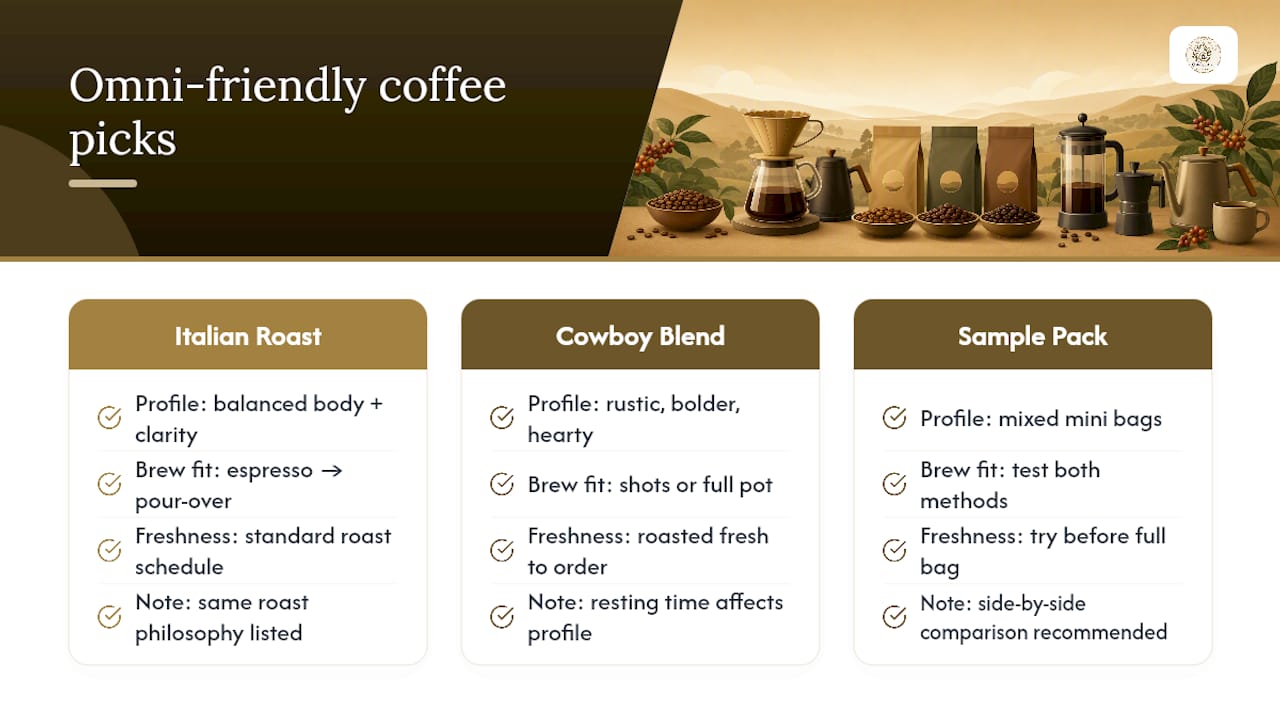
If you split your mornings between an espresso machine and a drip carafe, grab a sample pack and run your own side-by-side test before committing to a full bag.
Sources
- What is an omni roast
- Should you omniroast? The answer is not so simple
- What Is Omni Roast Coffee?
- Top tips for omni roasting coffee - Perfect Daily Grind
FAQ
What Does Omni Mean for Coffee?
“Omni” refers to a single roast profile designed to perform well across brewing methods, most often espresso and filter, rather than being optimized for just one.
What Are the Four Types of Coffee Roasts?
Coffee is generally grouped into light, medium, medium-dark, and dark roasts, with omni roasts typically landing in the medium to medium-light range to balance body and acidity.
What Is the Number One Coffee in the World?
There’s no single universally agreed “best” coffee since taste and ranking depend on origin, processing, and roast style, but high-altitude washed coffees from regions like Colombia and Kenya are consistently rated among the highest-scoring lots by cupping panels.
Which Roast of Coffee Is the Strongest?
Dark roasts are often described as “strongest” in flavor intensity and bitterness, though they actually contain slightly less caffeine by volume than lighter roasts because longer roasting burns off a small amount of caffeine.


