


TL;DR:
- Checking a coffee’s origin details, roast date, and lot ID reveals vital information about its quality and traceability.
- Responsibly sourced beans distinguish themselves through farm-level documentation and credible certifications.
A coffee bean’s journey from farm to cup follows a predictable sequence: cultivation, harvest and primary processing, drying and milling, export and logistics, roasting, grinding and brewing. Every stage leaves measurable traces you can check on the bag. Two signals tell you the most, fastest: a lot ID or QR code that links to farm-level origin data, and a roast date within the last four to eight weeks. Qahwat Al’Ard builds both into its product pages. Research published in the European Journal of Innovation Management found that integrated mobile apps with RFID/QR and IoT sensors can reduce inventory carrying costs by up to 15–25% and improve farm productivity by up to 15%, which shows how much operational precision digital traceability actually delivers.
A typical harvest-to-cup window runs six to twelve months, depending on origin, processing method, and shipping lane. Here is what that looks like in practice:
- Cultivation and harvest: Cherries ripen over nine to eleven months; selective picking adds weeks to the harvest window.
- Primary processing: Washed lots finish in one to two weeks; naturals can take three to six weeks of drying.
- Milling, export, and transit: Four to twelve weeks from dry mill to arrival at a U.S. roastery.
- Roasting and resting: Roasted coffee peaks between four days and four weeks post-roast.
- Your cup: Ideally within eight weeks of the roast date printed on the bag.
Table of Contents
- How does origin shape the flavor of your coffee?
- How harvesting and processing shape the green bean
- What happens at the dry mill before export?
- How does green coffee move from farm to roastery?
- How roasters check and store green coffee before roasting
- What happens to flavor during roasting?
- How do you cup and evaluate coffee at home?
- What can QR codes and blockchain actually prove?
- How to store and enjoy your coffee at home
- Key Takeaways
- Why traceability is the only honest conversation in specialty coffee
- Traceable single-origin coffee, ready to explore
- Useful sources and further reading
- FAQ
How does origin shape the flavor of your coffee?
Geography does more to determine what ends up in your cup than almost any roasting decision. Altitude is the most reliable single variable: beans grown above 1,500 meters develop denser cell structure, higher acidity, and more complex sugars because cooler temperatures slow cherry maturation. Ethiopian Yirgacheffe at 1,800–2,200 meters tastes nothing like a Robusta grown at 400 meters in Vietnam, and the difference is structural, not stylistic.
Soil mineral content, rainfall pattern, and microclimate fill in the rest of what specialty buyers call terroir. Volcanic soils in Sumatra and Guatemala contribute earthy, full-bodied profiles. The consistent cloud cover in Bali’s Kintamani region moderates temperature swings and produces the bright, clean cup that defines Bali Blue. Rainfall timing determines cherry uniformity: a single, well-defined wet season means a tighter harvest window and more consistent ripeness across a lot.
Arabica vs. Robusta is the foundational variety split. Arabica (roughly 60–70% of global production) carries more lipids and sugars, lower caffeine, and the complexity that specialty roasters chase. Within Arabica, cultivar matters enormously: Bourbon tends toward round sweetness, Gesha toward floral and stone-fruit intensity, Typica toward clean and delicate. Robusta runs higher in caffeine and chlorogenic acids, which read as bitterness and a rubbery body. Most specialty single-origins are 100% Arabica; blends often include Robusta for crema and cost management in espresso.
Smallholder farms (typically under five hectares) produce the majority of traceable specialty coffee, often organized into cooperatives that aggregate lots and handle export documentation. Estate farms offer tighter process control but less diversity. Cooperative registration and GPS plot mapping are the two practices that make farm-level traceability possible. Sustainable coffee farming programs that include extension education help smallholders document these details reliably, as IUP research on sustainable production confirms.
What origin details should appear on a traceable bag:
| Label Element | What It Tells You |
|---|---|
| Country and region | Broad terroir context (altitude range, climate type) |
| Farm or cooperative name | Accountability anchor for the lot |
| Altitude (masl) | Proxy for density, acidity, and complexity |
| Lot or parcel number | Links this bag to a specific harvest batch |
| Variety/cultivar | Flavor expectation baseline |
Pro Tip: If a bag lists only “Ethiopia” with no region, farm, or lot number, the origin story stops at the country border. Sidama, Yirgacheffe, and Guji all taste different. Demand the region at minimum.
How harvesting and processing shape the green bean
Picking method
Selective (hand) picking means harvesters return to each tree multiple times, taking only ripe red or yellow cherries. It is labor-intensive and expensive, but it dramatically reduces unripe and overripe cherries in the lot, which are the primary source of astringency and fermentation defects. Strip picking, whether by hand or machine, removes all cherries at once. It is faster and cheaper, but the resulting lot contains a wider ripeness range and requires more aggressive sorting downstream.
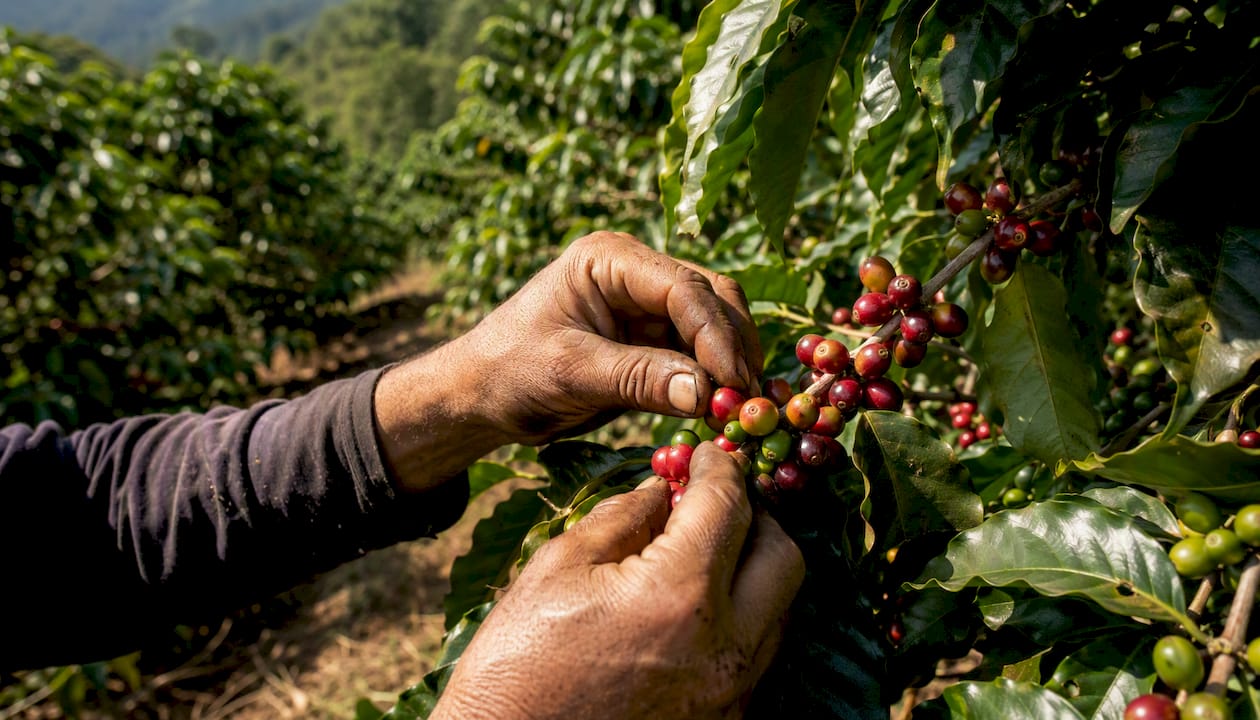
The picking method is rarely printed on a bag, but it correlates with price and origin: high-altitude Ethiopian and Kenyan lots from named cooperatives are almost always selectively picked. Brazilian naturals from mechanized estates are typically strip-harvested and sorted by density.
Primary processing methods
-
Washed (wet) processing: Cherries are pulped to remove the skin, then fermented in water tanks for 12–72 hours to break down the mucilage layer. After fermentation, beans are washed clean and moved to drying. Washed coffees express terroir most directly because the fruit layer is removed early. Expect clean acidity, clarity, and brightness. Kenya AA and most Ethiopian washed lots follow this path.
-
Natural (dry) processing: Whole cherries dry on raised beds or patios for three to six weeks, fermenting slowly as the fruit desiccates around the bean. The result is a fruit-forward, wine-like cup with heavier body. The risk is uneven fermentation and mold if drying is poorly managed. Ethiopian Harrar and most Brazilian naturals use this method.
-
Honey (pulped natural) processing: The skin is removed but some or all of the mucilage stays on the bean during drying. Yellow honey (less mucilage) sits closer to washed; black honey (most mucilage) approaches natural. The result is a middle-ground cup: sweetness and body of a natural with some of the clarity of a washed. Costa Rica and El Salvador produce well-known honey-processed lots.
Signs of processing quality on green beans and bag labels:
- Processing method stated explicitly (washed, natural, honey, anaerobic)
- Fermentation notes (hours, tank type, controlled vs. ambient temperature)
- Lot or parcel ID tied to a specific wet mill or drying station
- Defect counts from the exporter or importer’s QC report
Pro Tip: Anaerobic fermentation (sealed-tank processing) is increasingly common and produces intense, sometimes polarizing flavors. If a bag lists it, check the fermentation time: 48–72 hours is typical; anything over 120 hours is experimental and the flavor will show it.
What happens at the dry mill before export?
After primary processing, coffee still carries moisture that must be brought down to a stable range before it can be stored or shipped. The target is 10–12% moisture content. Above 12.5%, mold risk rises sharply during transit; below 9%, beans become brittle and roast unevenly.
Drying methods and their trade-offs
Sun drying on raised African beds offers the most even airflow and the lowest contamination risk from ground contact. Patio drying on concrete is faster but can introduce earthy taints if the surface is not clean. Mechanical drum dryers speed the process significantly but require careful temperature control; excessive heat above roughly 40°C can pre-damage bean structure and flatten cup quality.
After drying, the mill runs the coffee through hulling (removing the parchment layer for washed, or the dried fruit husk for naturals), optional polishing, and then sorting and grading. Sorting happens by screen size (bean diameter), density (air tables), and color (optical sorters that reject discolored or defective beans). The resulting grade determines price and export classification.
Green-bean QC metrics that matter:
| Metric | Acceptable Range | Why It Matters |
|---|---|---|
| Moisture content | 10–12% | Stability in transit; roast consistency |
| Defect count | Specialty: ≤5 full defects | Cup cleanliness; SCA green-grading standard |
| Bean density | Higher = better | Denser beans roast more evenly |
| Color uniformity | Consistent blue-green | Indicates even drying and proper storage |
Roasters use these numbers to accept or reject incoming lots. When a seller publishes a QC report or “green analysis” on a product page, those four metrics are what to look for.
How does green coffee move from farm to roastery?
The export chain typically runs: dry mill → licensed exporter → freight forwarder → ocean container → U.S. customs → licensed importer → warehouse → roastery. Each handoff is a potential traceability gap. An exporter who aggregates lots from multiple cooperatives without maintaining parcel-level separation is the most common point where origin specificity disappears.
Transit from a major origin port (Mombasa, Santos, Surabaya) to a U.S. East or West Coast port typically takes three to six weeks by sea. Add two to four weeks for customs clearance, drayage, and warehouse intake, and a lot that left the dry mill in October may not reach a roastery until January or February. Delays from port congestion, container shortages, or documentation errors can push that to four to five months.
What to look for in logistics-level trace records:
- Shipment or container number linking the lot to a specific vessel and departure date
- Bill of lading (BOL) reference, which is the primary legal document of the shipment
- Arrival date at the U.S. importer’s warehouse
- Storage conditions during transit (temperature and humidity logs, where available)
IoT sensors embedded in containers can now monitor temperature and humidity in real time, flagging excursions that would compromise bean quality. Platforms like Farmer Connect and IBM Food Trust represent the more advanced end of this infrastructure, connecting farm-level data to consumer-facing QR codes.
Pro Tip: Ask your roaster or seller for the importer’s name. A named specialty importer (one that publishes lot-level arrival reports and cupping scores) is a strong signal that lot integrity was maintained through transit.
How roasters check and store green coffee before roasting
A responsible roastery does not simply unload a bag and roast it. The receiving process starts with a visual inspection of the green beans: color uniformity, smell (musty or fermented odors are immediate red flags), and a quick check for visible defects or foreign material. A moisture meter reading follows, and if the lot is new or unfamiliar, a sample roast and cupping happen before the first production batch.
Standard roastery receiving checklist:
- Visual inspection: color, uniformity, foreign material
- Moisture reading: confirm 10–12% range
- Smell check: clean, grassy, or nutty is good; musty or vinegary is not
- Sample roast: 50–100g on a sample roaster to assess development and flavor potential
- Cupping: evaluate fragrance, aroma, acidity, body, sweetness, and aftertaste against the lot’s stated profile
- Lot ID assignment: link the incoming green-bag lot number to the roastery’s internal batch tracking system
Green beans store well at 60–70°F and 50–60% relative humidity. First-in, first-out lot rotation keeps older inventory moving before newer arrivals. The lot ID printed on the green bag should carry through to the roast batch record and ultimately to the retail bag label. That chain is what makes a QR code on your bag meaningful rather than decorative.
Bag signals that indicate solid roastery QC: roast date (not just a best-by date), lot or batch ID, producer or parcel name, and a stated processing method. Four of those five on one label is a strong indicator the roastery is doing the work.
What happens to flavor during roasting?
Green coffee is essentially flavorless. The Maillard reaction, which begins around 150°C (302°F), is where hundreds of aromatic compounds form as amino acids and reducing sugars interact under heat. Sugar caramelization follows, contributing sweetness and body. Carbon dioxide builds inside the bean until first crack, a loud, popcorn-like pop that signals the bean has expanded and the development phase has begun.
Key roast profile markers:
| Marker | What It Signals |
|---|---|
| First crack temperature | Typically 196–205°C; marks start of development phase |
| Development time ratio (DTR) | Time after first crack ÷ total roast time; 20–25% is a common specialty target |
| Agtron color score | Measures roast darkness; higher = lighter (specialty light roasts) |
| Total roast time | Typically 8–12 minutes for drum roasters; shorter = faster development |
Light roasts preserve the most origin-driven flavors: the floral notes of a Gesha, the berry intensity of a natural Ethiopian, the bright citrus of a Kenyan washed lot. Dark roasts push those origin notes into the background and replace them with roast-derived bitterness and smokiness. Medium roasts sit in between, balancing origin character with roast sweetness.
Roast date is a freshness signal, not a marketing detail. CO₂ degasses rapidly in the first 24–72 hours post-roast, then more slowly over the following weeks. Espresso benefits from a four to seven day rest; pour-over can go earlier, around two to four days. After eight weeks, most roasted coffee has lost enough volatile aromatics that the cup will taste flat regardless of how well it was stored.
Pro Tip: A bag with only a “best by” date and no roast date is hiding information. Best-by dates are typically set twelve months from roast, which tells you nothing about freshness. Always look for the actual roast date.
How do you cup and evaluate coffee at home?
Cupping is the industry-standard method for evaluating coffee without brewing variables getting in the way. You can run a simplified version at home with a kitchen scale, a timer, and a few cups.
Step-by-step home cupping:
- Grind 8.25g of coffee per 150ml of water to a medium-coarse consistency (slightly coarser than pour-over).
- Place grounds in a cup or bowl. Smell the dry grounds: this is the fragrance score.
- Pour water at 93°C directly over the grounds. Start the timer.
- At four minutes, smell the crust before breaking it: this is the aroma score.
- Break the crust with a spoon, pushing grounds to the back of the cup. Smell again.
- After nine minutes, skim the foam and floating grounds. The coffee is ready to taste.
- Slurp from a spoon to aerate the liquid across your palate.
What to evaluate:
- Acidity: Brightness and liveliness (citric, malic, phosphoric); not sourness.
- Body: Weight and texture on the palate (light/tea-like to heavy/syrupy).
- Sweetness: Caramel, fruit sugar, or brown-sugar notes.
- Aftertaste: How long pleasant flavors linger after swallowing.
- Defects: Ferment (vinegar, alcohol), phenolic (medicinal, plastic), musty (mold), or grassy (underdeveloped roast).
The SCA flavor wheel is the standard reference for naming what you taste. Ethiopian washed lots typically show lemon, jasmine, and bergamot. Sumatran wet-hulled coffees lean toward dark chocolate, cedar, and earth. Knowing the origin’s expected profile helps you spot when something is off.
Pro Tip: If a cup tastes sour and thin at the same time, the problem is usually under-extraction, not origin. If it tastes bitter and dry, it is over-extracted. Only after ruling out extraction errors should you attribute off-notes to processing or storage defects.
What can QR codes and blockchain actually prove?
Digital traceability tools are genuinely useful, but they are not magic. A QR code on a bag can link to a static marketing page or to a live database showing lot ID, farm GPS coordinates, processing notes, and payment records. The technology is the same; what differs is the quality of data behind it.
Blockchain-based traceability platforms can record and display many fairness-relevant attributes, but research analyzing coffee roasters’ use of blockchain found that effectiveness depends heavily on data completeness and organizational governance. A blockchain entry is only as trustworthy as the data entered at the source.
The most common failure point in coffee traceability is not the technology. It is the gap between what happens at the farm and what gets recorded. Smallholder farmers without smartphones, reliable internet, or incentives to document their practices are effectively invisible to any digital system, no matter how sophisticated. Maastricht University’s traceability report identifies data silos, limited farmer incentives, and digital exclusion as the primary structural obstacles to complete consumer-facing transparency.
Organizations like Enveritas address this gap directly through field-level monitoring and farmer verification programs that give QR and blockchain links real meaning. The TechnoServe Rwanda coffee traceability project is a concrete example: farm-level processing documentation and community outcome data were packaged into a consumer-facing origin narrative, showing how ground-level programs make digital trace claims credible.
A systematic review published in MDPI Sustainability found mixed empirical evidence for blockchain’s scalability in coffee supply chains, with governance and user adoption identified as the binding constraints, not the underlying technology.
Practical consumer checks for trace claims:
- Scan the QR code. Does it link to lot-level data (farm name, altitude, processing date) or just a brand story?
- Look for a named importer or third-party auditor (Fair Trade, Rainforest Alliance, Organic, or a verification partner like Enveritas).
- Check whether payment or price-to-farmer data is disclosed. Fair-price transparency is one of the strongest signals of genuine supply-chain accountability.
- Ask the seller directly: “What lot ID is this, and can you connect me to the importer’s arrival report?” A seller who cannot answer that question probably does not have the data.
Pro Tip: Sustainability certifications like Fair Trade and Rainforest Alliance are third-party audits, not just labels. They require documented supply-chain records as a condition of certification, which makes them a meaningful corroborating signal when a QR code is sparse.
How to store and enjoy your coffee at home
Once the bag is open, the clock accelerates. Roasted coffee’s main enemies are oxygen, moisture, heat, and light, roughly in that order.
Storage best practices:
- Transfer to an airtight container with a one-way CO₂ valve if the original bag does not have one.
- Store at room temperature in a cool, dry spot away from the stove and direct sunlight. A cabinet works; a countertop next to the espresso machine does not.
- Do not freeze beans you use daily. Freezing and thawing cycles introduce condensation, which accelerates staling. Freeze only if you are storing a sealed, unopened bag for more than three weeks.
- Use within two to four weeks of opening for best flavor; the roast date on the bag tells you how much runway you have before you open it.
Serving tips:
- Use filtered water. Chlorine and mineral imbalances in tap water suppress sweetness and acidity. A simple carbon filter makes a noticeable difference.
- Pre-wet paper filters with hot water before brewing to remove papery taste and warm the vessel.
- Warm your cup before pouring. A cold cup drops the brew temperature by several degrees in the first minute.
- For milk drinks, steam to 60–65°C (140–150°F). Above 70°C, milk proteins denature and sweetness drops.
A light-roast single-origin from a high-altitude origin like Ethiopia or Peru calls for a pour-over or AeroPress to let the acidity and floral notes show. A full-bodied Sumatra or a dark-roast blend handles milk and pressure better, making it a natural fit for espresso or French press.
Key Takeaways
Tracing a coffee bean’s full journey from farm to cup requires checking eight sequential stages, and the most reliable consumer shortcuts are a recent roast date and a lot ID that links to verifiable farm-level data.
| Point | Details |
|---|---|
| Roast date is non-negotiable | Look for a roast date within 4–8 weeks; a “best by” date alone tells you nothing about freshness. |
| Lot ID unlocks the chain | A lot or parcel ID lets you trace a bag back to a specific harvest batch, wet mill, and farm or cooperative. |
| Processing method shapes flavor | Washed, natural, and honey processing each produce distinct flavor profiles and leave identifiable traces in the green bean. |
| Digital traceability has real limits | QR codes and blockchain are only as reliable as the farm-level data behind them; third-party audits corroborate the claims. |
| Qahwat Al’Ard surfaces trace signals | Product pages for Bali Blue, Sumatra, and the Best Sellers Sample Pack present origin details, roast dates, and sourcing context in one place. |
Why traceability is the only honest conversation in specialty coffee
The specialty coffee industry has gotten very good at telling origin stories. What it has been slower to do is make those stories verifiable. A bag can say “single-origin Ethiopia, smallholder cooperative, 1,900 meters” and mean almost nothing if the lot was aggregated at a washing station that serves 400 farms with no individual plot records. The story is true in the loosest sense. The trace is not.
What actually matters is whether the data behind the label was collected at the source, by someone with a reason to get it right. That means farmer registration, GPS plot mapping, and processing records that exist independently of the marketing copy. It means importers who publish arrival cupping scores and lot weights. It means roasters who print the actual roast date, not a best-by date calculated to look fresh for as long as possible.
The consumer’s job is not to become a supply-chain auditor. It is to ask the right questions and recognize when a seller cannot answer them. A roaster who can tell you the importer’s name, the lot ID, and the processing method for every bag they sell is doing the work. One who cannot is selling a story, not a supply chain.
Qahwat Al’Ard’s sourcing approach, with its emphasis on origin documentation and producer transparency, reflects exactly the kind of accountability that makes these questions answerable.
Traceable single-origin coffee, ready to explore
If you have read this far, you know what to look for on a bag. Qahwat Al’Ard’s product pages are built to answer those questions directly.
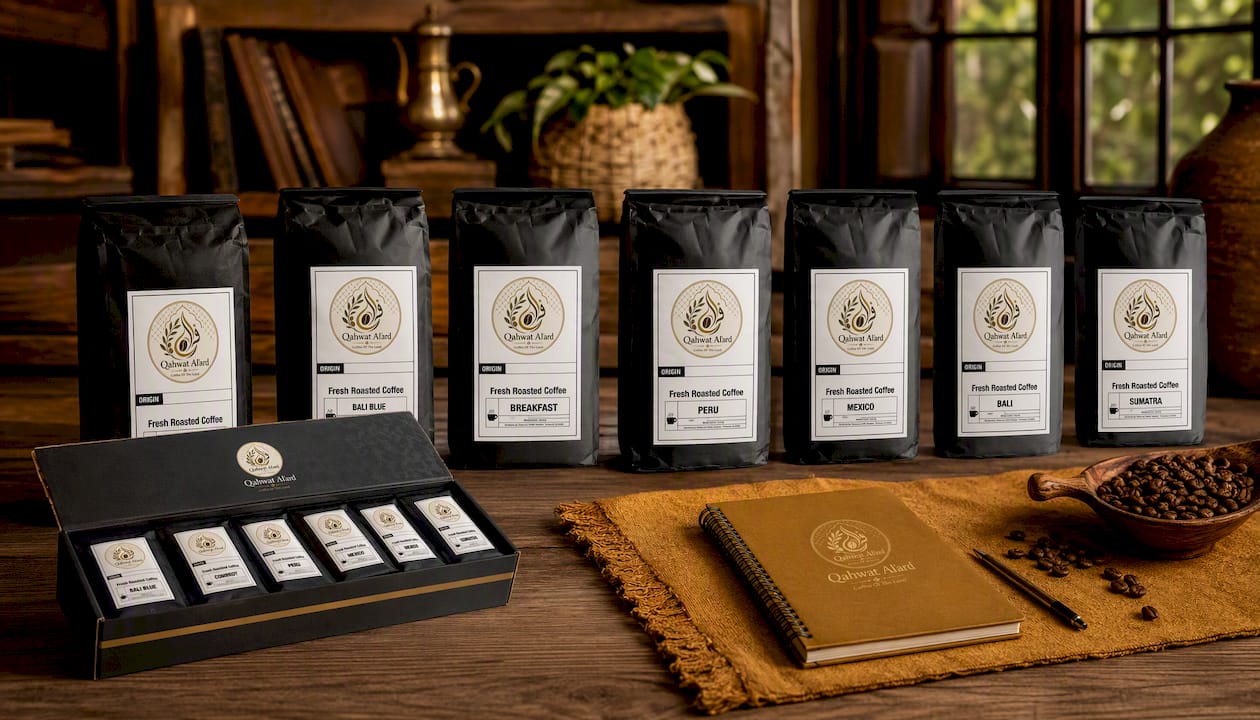
Bali Blue is a single-origin from Bali’s Kintamani highlands, where volcanic soil and consistent cloud cover produce a clean, bright cup. The product page surfaces the origin region, roast profile, and sourcing context so you can check the trace signals before you buy. Sumatra represents the opposite end of the spectrum: a wet-hulled, full-bodied dark-roast origin with earthy, cedar, and dark-chocolate notes that hold up beautifully under pressure or with milk. Both pages include roast date and origin details.
Not sure where to start? The Best Sellers Sample Pack includes six distinct origins: 6Bean, Cowboy, Breakfast, Peru, Mexico, and Bali. It is the fastest way to taste how altitude, processing method, and roast level interact across different origins, with each coffee representing a different point on the farm-to-cup map.
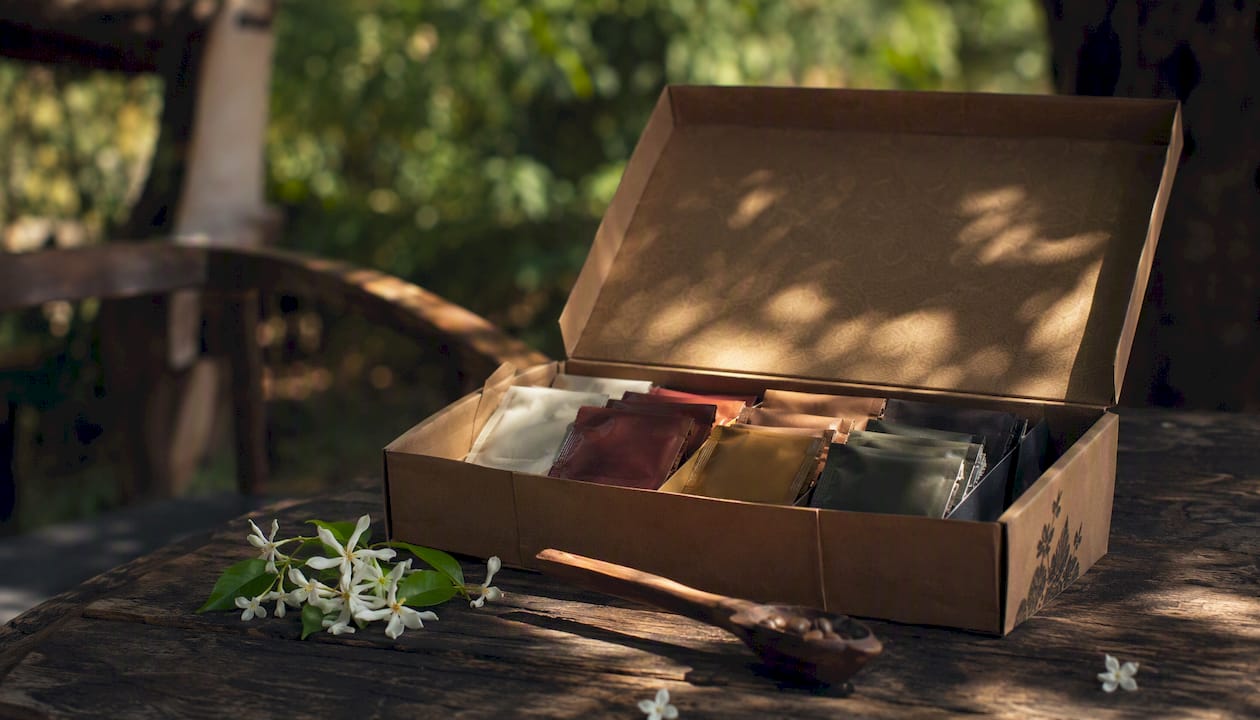
Browse the full selection at Qahwat Al’Ard and check the origin notes on any product page before you order.
Useful sources and further reading
For readers who want to go deeper into the research behind this guide:
- Optimizing coffee supply chain transparency and traceability through mobile application | European Journal of Innovation Management | Emerald Publishing
- The promised potential of blockchain technology for transparency and fairness in agri-food chains: insights from the coffee sector | Frontiers in Sustainable Food Systems
- The digitalization of supply chains and traceability technologies (ScienceDirect excerpt)
- From Bean to Cup: Tracing Rwandan Coffee | TechnoServe
- Making coffee production more sustainable | Indiana University of Pennsylvania (IUP)
- Traceability and transparency report | Maastricht University
- Enveritas — farm-level monitoring and verification
- Systematic review on blockchain and coffee supply chains (MDPI Sustainability)
FAQ
What does a lot ID on a coffee bag actually tell you?
A lot ID links a specific bag to a defined harvest batch from a named farm, cooperative, or wet mill. When paired with a QR code or importer’s arrival report, it lets you verify origin, processing method, and sometimes payment data.
How fresh does roasted coffee need to be?
Roasted coffee is best within four to eight weeks of the roast date. Espresso benefits from a four to seven day rest post-roast; filter methods can be brewed as early as two to four days after roasting.
Can blockchain really prove where my coffee came from?
Blockchain records transactions reliably, but it cannot verify the accuracy of data entered at the source. Research published in Frontiers in Sustainable Food Systems found that effectiveness depends on data completeness and governance, not the technology itself.
What certifications actually support traceability?
Fair Trade, Organic, and Rainforest Alliance certifications require documented supply-chain records as a condition of audit, making them meaningful corroborating signals alongside a lot ID or QR code.
Where can I find traceable single-origin coffee with origin details on the product page?
Qahwat Al’Ard’s product pages for Bali Blue, Sumatra, and the Best Sellers Sample Pack include origin region, roast profile, and sourcing context, giving you the key trace signals before purchase.


