


TL;DR:
- Many biodegradable coffee pods require industrial composting facilities, which most localities lack, limiting their environmental benefits. Certification logos like BPI and TÜV Austria verify genuine compostability, while plant-based materials may impact coffee freshness due to higher oxygen permeability. Reusable stainless steel pods offer the most sustainable option, especially if local composting infrastructure is unavailable.
Picking up a box of coffee pods labeled “eco-friendly” feels like doing the right thing. But the reality behind biodegradable coffee pod types is messier than most packaging lets on. Some pods require industrial composting facilities that your local council may not have. Others use vague “biodegradable” language with zero certification to back it up. If you care about where your morning cup actually ends up, this guide breaks down what the labels mean, which materials matter, and how to find pods that genuinely match your values.
Table of Contents
- Key takeaways
- Understanding biodegradable coffee pod types and what certifications mean
- Pod materials and their real environmental impact
- Top biodegradable coffee pod types worth knowing in 2026
- 1. BPI-certified PLA pods
- 2. TÜV Austria OK Compost HOME pods
- 3. Sugarcane fiber pods
- 4. PHA-based pods
- 5. Cornstarch blend pods
- 6. Plant-based composite pods (mixed natural fibers)
- 7. Aluminum pods with take-back programs
- 8. Reusable stainless steel pods
- Comparing the main biodegradable coffee pod types
- How to choose the right pod for your values and your bin
- My honest take on where biodegradable pods actually stand
- Explore Qahwatalard’s eco-friendly coffee pod range
- FAQ
Key takeaways
| Point | Details |
|---|---|
| Certifications over claims | Look for BPI or TÜV Austria certification rather than generic biodegradable labeling on packaging. |
| Material affects freshness | Plant-based bioplastics have higher oxygen permeability, meaning lighter roasts lose flavor faster than in aluminum pods. |
| Disposal infrastructure matters | Less than 11% of compostable packaging reaches industrial composting, so check your local options before choosing. |
| Subscription savings add up | Certified compostable pods cost around $0.40 to $0.55 each, but subscriptions typically cut that by 15 to 20 percent. |
| Reusable pods go furthest | Stainless steel reusable pods eliminate single-use waste entirely if you are willing to trade some convenience. |
Understanding biodegradable coffee pod types and what certifications mean
Not all biodegradable coffee pod types are created equal. The word “biodegradable” has no regulated definition in the U.S. coffee pod market, which means a manufacturer can print it on a box without any requirement to prove how long breakdown takes or what residues remain. That gap between marketing and reality is where eco-conscious shoppers get burned.
The three terms you will encounter most often are biodegradable, compostable, and recyclable. Biodegradable simply means the material will eventually break down, but “eventually” could mean decades in a landfill. Compostable is a stronger claim: it means the material breaks down into non-toxic components within a defined timeframe under specific conditions. Recyclable means the material can be reprocessed, though actual recycling rates for pods remain low in most municipalities.
Certifications are what separate genuine compostable pod options from greenwashing. Here is what the main ones mean:
- BPI (Biodegradable Products Institute): Requires breakdown in industrial composting conditions within 180 days, leaving no toxic residue. Recognized across North America.
- TÜV Austria OK Compost INDUSTRIAL: European standard requiring breakdown at temperatures of 55 to 60°C in an industrial facility.
- TÜV Austria OK Compost HOME: A stricter real-world standard. Pods must decompose in a backyard compost bin without added heat. This is rare and genuinely useful.
- Din Certco: German equivalent to TÜV, often seen on European brand pods sold in the U.S.
Pro Tip: Always flip the box and look for a certification logo, not just the word “compostable.” The logo means a third party verified the claim. Words alone mean nothing.
The disposal method the certification requires directly determines whether your pod does any good. Industrial compostable pods sent to landfill may not decompose properly, making certification irrelevant if your city lacks the right facility.
Pod materials and their real environmental impact
Understanding what your pod is made of helps you weigh freshness against sustainability honestly. Most plant-based bioplastics and natural fiber pods fall into a few main material categories, each with distinct trade-offs.
PLA (Polylactic Acid): Derived from cornstarch or sugarcane, PLA is the most common compostable pod material. It needs industrial composting to break down and will not degrade in home compost or landfill within a reasonable timeframe. It also has poor oxygen barrier properties, which affects coffee freshness.
PHA (Polyhydroxyalkanoate): A newer bioplastic produced by bacteria from plant sugars. PHA breaks down more readily than PLA, including in soil and marine environments in some formulations. It tends to cost more but offers better environmental performance.
Sugarcane fiber and plant pulp: Often used for pod bodies or lids, these materials are renewable and sometimes home compostable. They offer less structural rigidity than bioplastics but are genuinely lower impact when disposed of correctly.
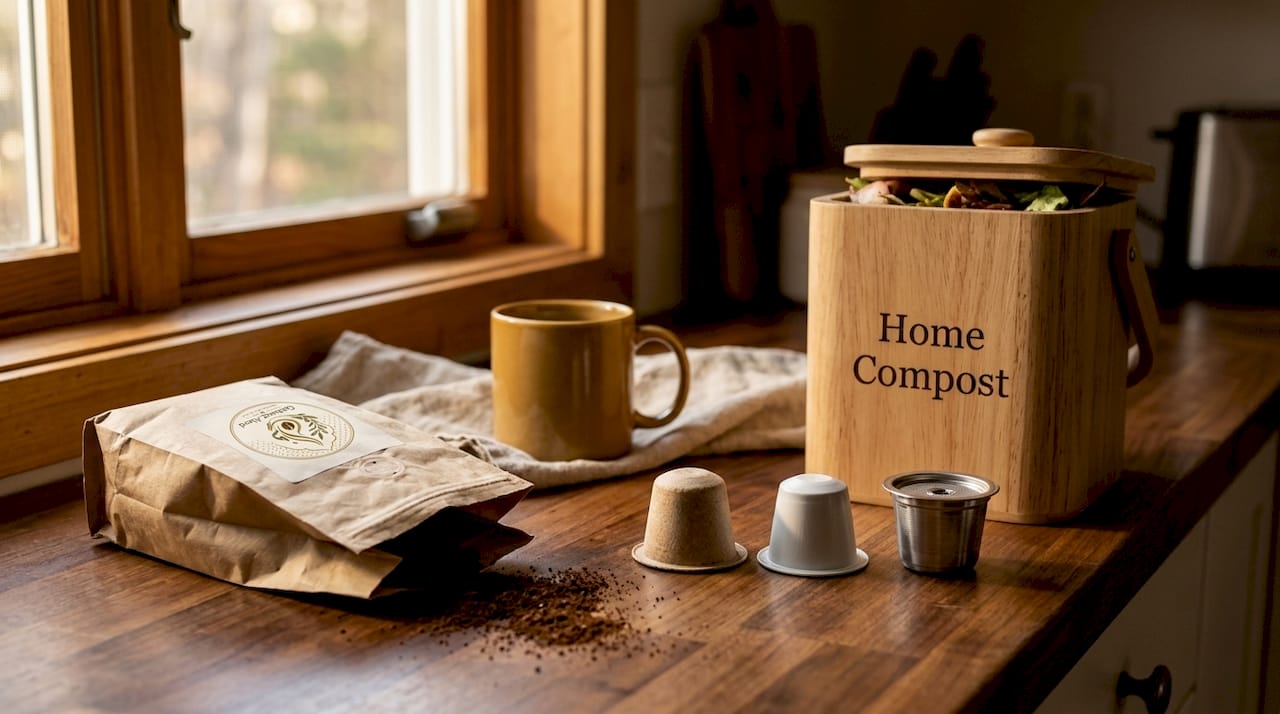
Cornstarch blends: Used in many entry-level eco-friendly coffee capsules. Functional and affordable, but oxygen permeability remains a challenge. The result is that light roast flavors degrade faster compared to pods with aluminum barriers.
One underreported issue worth knowing: chemical migration. Testing for compound migration under brewing conditions is still limited across most manufacturers, meaning some bioplastic compounds could potentially leach into your cup at high water temperatures. The risk appears low based on current data, but it is not zero. Look for brands that publish migration testing results.
Pro Tip: If flavor preservation matters to you as much as sustainability, prioritize darker roast pods in compostable packaging. Darker roasts are more forgiving of the higher oxygen permeability that comes with plant-based materials.
Top biodegradable coffee pod types worth knowing in 2026
Compostable pods are the fastest-growing segment in single-serve coffee, expanding 15 to 20 percent annually. Here are the primary types you will encounter:
1. BPI-certified PLA pods
These pods are the most widely available certified option in the U.S. Brands using BPI-certified PLA are common in specialty retailers and online. They require industrial composting. Nespresso-compatible versions exist from several producers. Price per pod runs around $0.45 to $0.55 via subscription.
2. TÜV Austria OK Compost HOME pods
The rarest and most genuinely useful category. These pods break down in a backyard compost pile, which means they deliver on the promise regardless of your local infrastructure. Expect to pay a premium, often above $0.55 per pod. Flavor-forward specialty roasters tend to use this certification to match their sustainability claims to real outcomes.
3. Sugarcane fiber pods
Made from pressed bagasse, the fibrous residue left after sugarcane juice extraction. These pods are renewable and often home compostable. They are less common in Nespresso-style machines and more frequently found in drip-style or soft pod formats. They pair well with single-origin coffees where you want the origin character to shine without packaging interference.
4. PHA-based pods
Newer to the market but gaining traction. PHA pods offer superior end-of-life performance compared to PLA because the material can break down in more diverse environments. Several specialty brands now use PHA for both the pod body and the filter. Price tends to be higher, but the material science is stronger for genuine environmental outcomes. Look for these when you want a bioplastic pod with verifiable breakdown credentials.
5. Cornstarch blend pods
A budget-accessible entry point into eco-friendly coffee capsules. Cornstarch blends cost less to produce than PHA or certified PLA, making them the most affordable compostable option at the $0.40 range per pod. The oxygen barrier is the weakest of the group, so buy only what you will use within two to three months of the roast date for best flavor.
6. Plant-based composite pods (mixed natural fibers)
Some producers combine bamboo fiber, wood pulp, and plant starch into a composite material. These pods often carry home compost certification and have a notably lower carbon footprint during production. Compatibility tends to be limited to specific machines, so check before you buy.
7. Aluminum pods with take-back programs
Aluminum is not biodegradable, but recycled aluminum production uses 95 percent less energy than virgin aluminum. For coffee lovers who prioritize freshness above all, aluminum pods with a verified brand take-back recycling program are a credible sustainable choice. They preserve flavor better than any bioplastic alternative due to superior oxygen barrier performance.
8. Reusable stainless steel pods
The most sustainable option by any lifecycle measure. Reusable pods eliminate single-use waste entirely. They require filling, tamping, and cleaning, and they do alter the brewing dynamics slightly compared to factory-filled disposable pods. But for someone who drinks two or more cups a day, the waste reduction is significant. You also get full control over which coffee you use, opening the door to freshly ground single-origin beans.
Comparing the main biodegradable coffee pod types
| Pod type | Material | Certification | Disposal method | Price per pod | Freshness impact |
|---|---|---|---|---|---|
| BPI-certified PLA | Cornstarch/sugarcane PLA | BPI | Industrial compost only | $0.45–$0.55 | Moderate oxygen barrier |
| OK Compost HOME | PLA or PHA blend | TÜV Austria HOME | Home or industrial compost | $0.55+ | Lower, buy fresh |
| Sugarcane fiber | Bagasse/plant pulp | Varies | Home compost (often) | $0.42–$0.50 | Low barrier, use quickly |
| PHA-based | Bacterial bioplastic | BPI or TÜV | Industrial or soil | $0.50–$0.60 | Better than PLA |
| Cornstarch blend | Starch composite | BPI | Industrial compost only | ~$0.40 | Weakest barrier |
| Aluminum with take-back | Aluminum | Brand program | Recycling via brand | $0.55–$0.75 | Best preservation |
| Reusable stainless steel | Stainless steel | N/A | No disposal needed | Low ongoing cost | Excellent if ground fresh |
How to choose the right pod for your values and your bin
The single most important question is this: does your city or town have access to an industrial composting facility? If the answer is no, a pod certified only for industrial composting will likely end up in landfill, where it will not break down meaningfully. That matters because most local councils still do not have industrial composting systems.
Here is how to think through your choice:
- No local industrial compost: Prioritize OK Compost HOME certified pods or a reusable pod with freshly ground coffee. Aluminum with a verified take-back program is also a legitimate choice.
- Industrial compost available: BPI or TÜV INDUSTRIAL certified pods are valid. Confirm your facility actually accepts food-contaminated packaging, because many do not take pods with coffee grounds still inside.
- Freshness is a priority: Aluminum take-back or reusable pods. If you want compostable, stick to dark roasts in PHA or PLA pods and buy smaller quantities more frequently.
- Budget is tight: Cornstarch blend pods at the $0.40 range are accessible. Pair them with a subscription to lower cost further and buy in quantities you will finish within eight weeks.
For sustainable coffee sourcing that goes beyond just the pod material, look for brands that publish supply chain transparency alongside their packaging certifications. A certified compostable pod filled with commodity-grade coffee from an untraceable source is still only halfway there.
Avoid pods that use the word “eco” or “natural” without a certification logo. Retailer mandates and environmental policies are pushing manufacturers toward genuine certification, which means the certified options are growing. You have real choices now, and you do not need to settle for marketing language.
My honest take on where biodegradable pods actually stand
I have spent a lot of time looking at the gap between what “compostable pod” means on paper and what actually happens to that pod after you press brew. What I have learned is that the certification is only half the story. The infrastructure piece is the part most eco-conscious consumers never hear about, and it is where good intentions quietly fall apart.
What frustrates me most is that the conversation rarely gets to this level. Most people buying sustainable coffee pods believe they are diverting waste from landfill. In practice, fewer than 11% of compostable pods reach a facility that can actually process them. That is not a reason to give up on certified pods. It is a reason to check your local waste program before you pick a pod type, not after.
My personal position: if you have access to home composting, find an OK Compost HOME certified pod from a brand with traceable coffee and use it. If you do not, seriously consider a reusable pod with quality ground coffee, because that is where the math genuinely favors the planet. The artisan pod space has grown enough that you no longer have to choose between flavor and values.
The best biodegradable pods are the ones you can actually dispose of correctly. Everything else is just good-looking packaging.
— Anthony-Yasin
Explore Qahwatalard’s eco-friendly coffee pod range
If you have done the research and you are ready to put it into practice, Qahwatalard makes that next step straightforward. Their pod lineup is built around single-origin sourcing, full traceability, and packaging that takes sustainability seriously, not just as a label.
The Bali Coffee Pods are a standout option: certified compostable, sourced from a single origin with documented supply chain transparency, and dialed in for a flavor profile that holds up even with the oxygen limitations of plant-based materials. For something with bright acidity and ethical sourcing credentials, the Peru Coffee Pods offer a genuinely distinct experience. Browse the full coffee collection to find pods that fit both your machine and your values without compromise.
FAQ
What makes a coffee pod truly biodegradable?
A genuinely biodegradable coffee pod carries a third-party certification such as BPI or TÜV Austria, confirming it breaks down within a defined timeframe without leaving toxic residue. Pods labeled biodegradable without certification have no verified standard behind them.
Can I compost coffee pods at home?
Only pods certified with TÜV Austria OK Compost HOME can reliably break down in a backyard compost bin. Most compostable pods require sustained industrial temperatures of 55 to 60°C and will not decompose properly in a home pile.
Do biodegradable pods affect coffee flavor?
Yes. Plant-based bioplastics have higher oxygen permeability than aluminum, which means coffee stored in compostable pods loses freshness faster, especially for lighter roasts. Buying smaller quantities and using pods within two to three months of the roast date minimizes the difference.
How do I recycle coffee pods responsibly?
For aluminum pods, use the brand’s take-back program if one exists, or check your local recycling guidelines since many municipalities accept clean aluminum. For certified compostable pods, verify that your local industrial composting facility accepts food-contaminated packaging before assuming it will be processed correctly.
Are plant-based coffee pod types safe to use?
Current evidence suggests plant-based pods are safe, but chemical migration testing under brewing conditions is still limited among manufacturers. To minimize any risk, prioritize brands that publish migration test results and avoid pods with no material safety documentation.


