


TL;DR:
- Single origin coffee encompasses everything from broad country labels to microlots on individual farms, emphasizing traceability and terroir-driven flavor. Its natural variation over seasons reveals unique regional and processing characteristics, making each cup a distinct experience. Transparency in sourcing fosters trust, allowing consumers to appreciate the true story behind every flavorful sip.
Single origin coffee gets thrown around constantly in specialty coffee circles, but most introductions to the term stop at “beans from one place.” That barely scratches the surface. What is single origin coffee, really? It is a category that spans everything from a broad country label to a tiny microlot on a single farm. Understanding the difference between those levels changes how you taste, buy, and appreciate every cup. This guide breaks down the definition, the flavor science behind it, and why sourcing transparency makes all the difference.
Table of Contents
- Key Takeaways
- What single origin coffee actually means
- How origin shapes flavor profiles
- Single origin vs. blends: when each makes sense
- Why sourcing transparency matters
- My take on what single origin coffee really teaches you
- Explore single origin coffee with Qahwatalard
- FAQ
Key Takeaways
| Point | Details |
|---|---|
| Definition goes beyond country | Single origin coffee can mean country, region, farm, cooperative, or microlot. |
| Terroir drives flavor | Altitude, soil, climate, and processing shape every flavor note in the cup. |
| It differs from blends | Blends prioritize consistency; single origin coffees celebrate seasonal uniqueness. |
| Transparency builds trust | Traceable sourcing connects you to farmers and validates quality claims. |
| Sampling is the best start | Tasting a variety of origins side by side reveals flavor differences that descriptions alone cannot teach. |
What single origin coffee actually means
The phrase “single origin” sounds self-explanatory. One origin, one coffee. But single origin means a defined source that can be as broad as an entire country or as narrow as a single plot of land. That range creates a lot of room for confusion, and a lot of room for discovery.
Here is how the levels of specificity break down:
- Country level: The broadest definition. “Ethiopian coffee” or “Colombian coffee” tells you the nation but nothing about the farm, elevation, or processing method.
- Region level: Narrows it to a growing zone. Yirgacheffe in Ethiopia and Huila in Colombia both carry distinct regional reputations because the microclimates within them produce predictable flavor patterns.
- Farm or estate level: A single producer’s land. You can trace your bag to one farmer’s decisions, including harvest timing and cherry selection.
- Cooperative level: A group of small farmers in the same area processing their cherries together. Common in Rwanda and parts of Ethiopia where individual farms are too small to export independently.
- Microlot level: The most specific. Microlots are tiny parcels producing small batches with rare flavor characteristics, often sold at premium prices and available only seasonally.
Pro Tip: When you see “single origin” on a bag, check the label for more detail. A country name alone is a starting point, not a guarantee of traceability. Look for region, farm name, or lot number to understand how specific the origin actually is.
The more precise the origin definition, the stronger the narrative around that coffee. A bag labeled “Burundi, Bukeye Washing Station, 2025 harvest” tells you exactly who processed it, where, and when. That level of detail is what separates specialty single origin from generic marketing.
The contrast with blended coffee is worth understanding early. A blend combines beans from multiple origins to hit a consistent flavor target. Single origin coffees, by definition, carry the natural variation of one source. That is not a flaw. It is the point.
How origin shapes flavor profiles
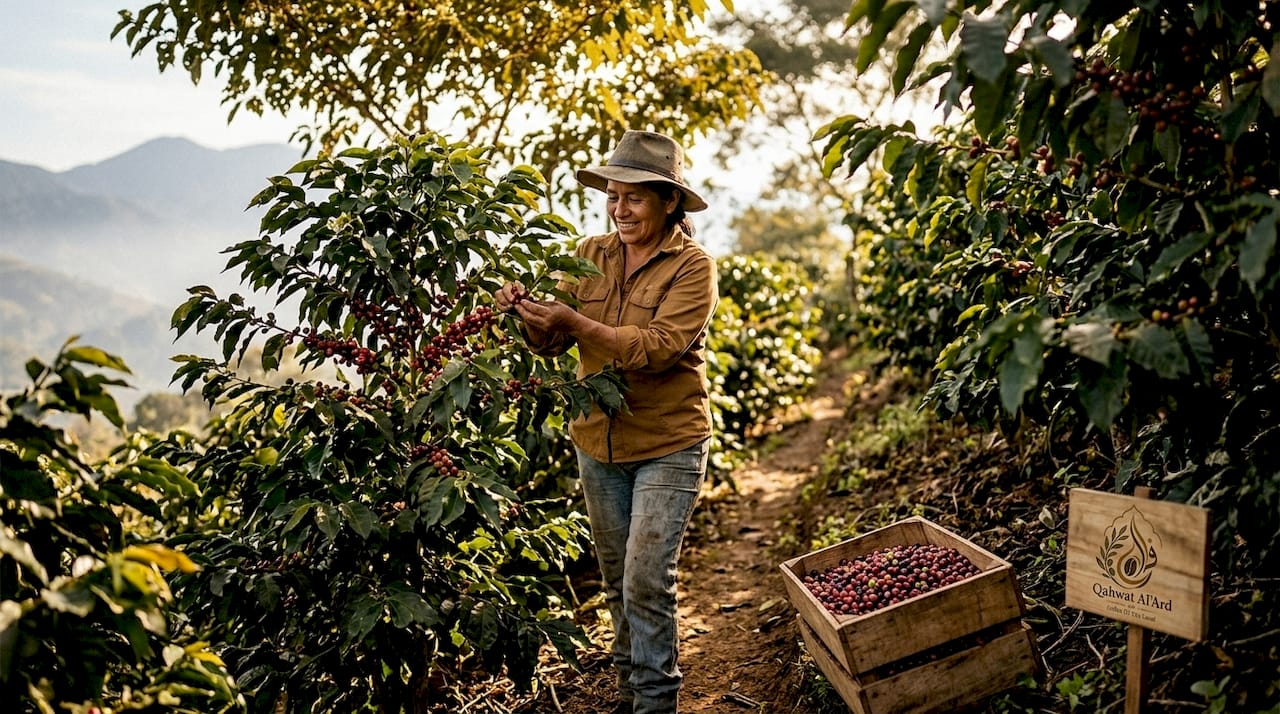
The concept that ties all of this together is terroir, a term borrowed from the wine world. Terroir shapes coffee flavor through soil composition, climate patterns, altitude, and the method used to process the cherry after harvest. Change any one of those variables and you change what ends up in your cup.
Altitude alone has a dramatic effect. Coffee grown above 1,800 meters develops more slowly, concentrating sugars and producing brighter acidity with more complex fruit notes. Lower-altitude coffees tend toward heavier body and earthier, nuttier flavors because the beans mature faster with less temperature variation between day and night.
Here is a quick reference for regional flavor tendencies among the best single origin coffees in 2026:
| Region | Typical flavor notes | Processing style |
|---|---|---|
| Ethiopia (Yirgacheffe) | Jasmine, bergamot, blueberry, lemon | Washed or natural |
| Kenya | Blackcurrant, tomato, grapefruit | Washed |
| Colombia (Huila) | Caramel, red apple, mild citrus | Washed |
| Guatemala (Antigua) | Dark chocolate, walnut, mild spice | Washed |
| Sumatra (Mandheling) | Cedar, tobacco, dark fruit, low acid | Wet-hulled |
| Yemen | Dried fruit, wine, tamarind | Natural |
Among the top African single origin coffees, Ethiopia and Kenya consistently stand out. Ethiopian naturals in particular produce a berry-forward intensity that no blend replicates. The geographic origin impacts flavor in ways that go beyond simple “fruity vs. nutty” categories.
Processing also plays a larger role than most people realize. A natural-processed Ethiopian coffee, where the cherry dries around the bean, produces intense fruit-forward flavors. The same beans washed of their cherry pulp before drying taste cleaner and brighter. Understanding coffee processing methods is one of the fastest ways to decode why two coffees from the same country can taste dramatically different.
Flavor profiles change slightly each harvest due to rainfall, temperature shifts, and seasonal variation. A Kenyan AA that tasted intensely of blackcurrant one year might show more tomato-forward brightness the next. That variation is a feature, not a defect. It reflects the living environment where the coffee was grown.
Pro Tip: When identifying single origin coffee flavors, start by focusing on acidity, body, and finish before chasing specific fruit or floral notes. High, crisp acidity usually signals washed African coffees. Heavy, syrupy body with low acidity often points to wet-hulled Indonesian origins.
Single origin vs. blends: when each makes sense
Understanding what single origin coffee is becomes sharper when you compare it directly to blends. Neither is objectively better. They serve different goals.
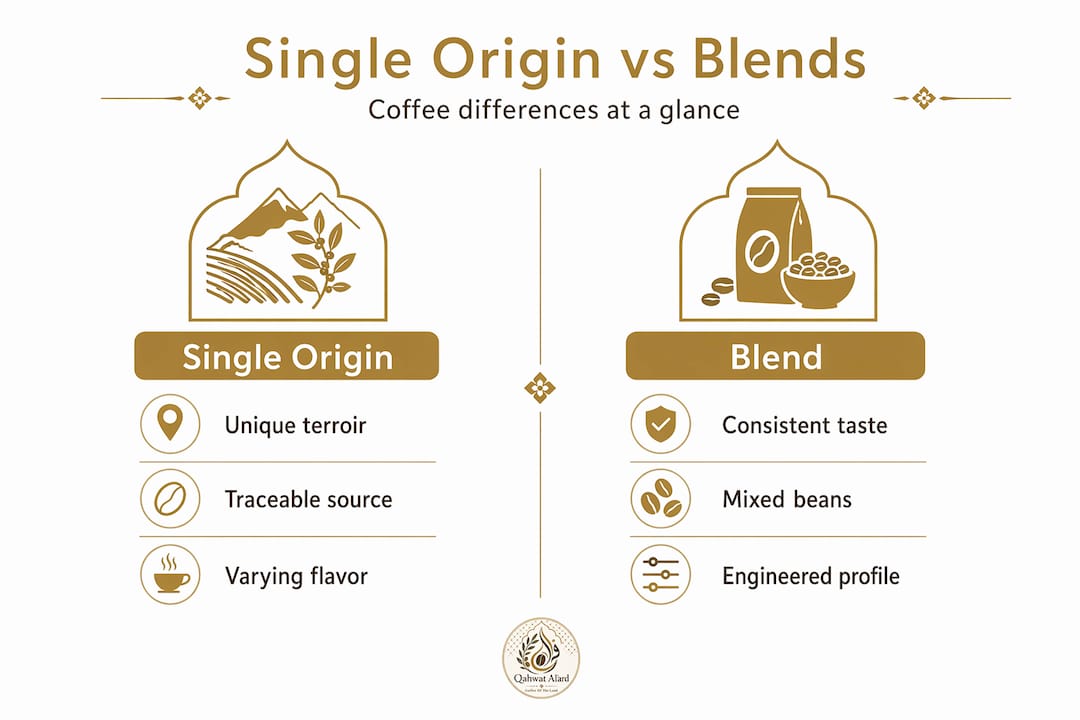
A blend is engineered. Roasters combine beans from multiple origins to produce a predictable cup that tastes the same week after week, year after year. Blends create consistent flavor year-round, while single origins show seasonal flavor variance that reflects their environment. Espresso blends, for example, are often built to handle milk-based drinks because the combination of origins produces the sweetness and body that cuts through dairy.
Single origin coffee, by contrast, highlights regional nuances that disappear in a blend. You are tasting the land, the farmer’s choices, and the season in every cup.
| Single origin | Blend | |
|---|---|---|
| Flavor goal | Uniqueness, terroir expression | Consistency, balance |
| Seasonal variation | Yes, changes each harvest | Minimal, adjusted annually |
| Traceability | High, often farm-level | Low to moderate |
| Best brew method | Pour-over, AeroPress, filter | Espresso, milk drinks |
| Price range | Often premium | Wide range |
When single origin coffee excels:
- Pour-over or filter brewing where subtle flavors are preserved
- Tasting sessions comparing flavor complexity across origins
- Gifting a single origin coffee sampler, where variety is the point
- Exploring top espresso single origin options where you want an unfiltered taste of one region
When blends make more sense:
- Milk-based espresso drinks where blend balance supports the dairy
- Daily brewing where you want the same result without batch-to-batch variation
- Budget-conscious buying where consistent quality matters more than origin stories
Single origin coffee is a premium segment in specialty markets, recognized for distinct flavors and origin reputation. That premium is not arbitrary. It reflects the cost of smaller lots, closer farmer relationships, and more careful processing.
Why sourcing transparency matters
Transparency in single origin coffee is not just a marketing angle. It is the mechanism that connects flavor knowledge to ethical practice.
When you can trace your coffee to a specific farm or cooperative, several things become possible. You can verify that farmers received fair payment. You can understand why that coffee tastes the way it does, because you know the altitude, soil type, and processing approach. And you can make purchasing decisions that support growers rather than anonymous commodity chains.
Traceable supply chains support sustainable and ethical sourcing, and consumers can build direct trust with producers through that transparency. Here is what genuine transparency looks like in practice:
- Lot numbers and harvest dates printed on the bag
- Farmer or cooperative name included in the origin description
- Farm elevation and processing method disclosed
- Direct trade relationships where the roaster visits the farm or knows the exporter personally
The absence of these details does not automatically mean the coffee is bad. But it does mean you are taking the origin label on faith. In specialty coffee, where flavor and ethics are intertwined, that distinction matters.
For anyone exploring top origin coffee samplers for gifting, transparency is also a conversation starter. A bag that names the farm, the region, and the farmer gives the recipient context and a story. A bag that just says “African blend” gives them nothing to explore.
Pro Tip: Ask your roaster where they source their single origin lots and whether they have visited or have a direct relationship with the farm. Roasters who can answer that question clearly are the ones taking origin seriously.
My take on what single origin coffee really teaches you
I have tasted hundreds of single origin coffees over the years, and the thing that consistently surprises new drinkers is how much their assumptions about coffee collapse after trying a well-sourced Ethiopian natural or a sparkling Kenyan washed lot.
Most people enter the world of single origin expecting to find “better coffee.” What they actually find is different coffee. Different in a way that challenges how you think about flavor. A jasmine-scented, lemon-bright Yirgacheffe bears almost no resemblance to a cedar-forward Sumatran. Both are technically the same beverage. Neither tastes like the dark, bitter thing people associate with mass-produced coffee.
What I have learned, and what I think most articles miss, is that single origin coffee is less about quality in the abstract and more about specificity of experience. The microlot distinction is where this becomes real. A 60-kilo bag from a single farm plot in Rwanda, dried on raised beds at 1,900 meters, processed by one family, is a completely different object than a 40,000-kilo container of blended Central American beans. The precision of origin is not a luxury. It is what makes the flavor coherent and the story honest.
My honest advice: stop reading about flavor notes and start tasting. Buy a single origin sample pack with three or four different origins and brew them back to back using the same method. The differences will teach you more about terroir, processing, and region in one morning than any article can in an hour. The knowledge becomes physical, not theoretical.
The best single origin coffees in 2026 are not necessarily the rarest or most expensive. They are the ones where origin, processing, and roasting are all working together honestly. Chasing that coherence is what makes this worth your time.
— Anthony-Yasin
Explore single origin coffee with Qahwatalard
If you have made it this far, you are ready to move from understanding to tasting. Qahwatalard sources its coffees with traceability and origin quality at the center of every selection.
The Single Origin Favorites Sample Pack is the fastest way to taste the differences described in this article across multiple regions in one order. For those drawn to African origins specifically, the African Espresso showcases exactly why top African coffee origins produce some of the most complex, fruit-forward flavors in the specialty world. You can also browse the full single origin collection to find individual origins with detailed sourcing information, so you always know where your coffee comes from and why it tastes the way it does.
FAQ
What does single origin coffee mean exactly?
Single origin coffee comes from one defined source, which can range from an entire country to a single farm or microlot. The more specific the origin, the greater the traceability and flavor clarity.
Is single origin coffee better than a blend?
Neither is universally better. Single origin coffee offers unique terroir-driven flavor and traceability, while blends deliver consistency and balance. The right choice depends on how you brew and what you value in the cup.
Why does single origin coffee taste different each year?
Flavor profiles shift each harvest because rainfall, temperature, and seasonal conditions change year to year. This natural variation is what makes single origin coffee a living, seasonal product rather than a static commodity.
What are the best regions for single origin coffee?
Ethiopia, Kenya, Colombia, Guatemala, and Yemen are among the most celebrated. Top African single origin coffees from Ethiopia and Kenya are especially prized for their intense fruit, floral, and citrus complexity.
How do I start tasting single origin coffee flavors?
Begin with a sample pack featuring three or four different origins and brew them using the same method back to back. Focus first on acidity, body, and aftertaste before trying to identify specific fruit or floral notes.


