


TL;DR:
- Sustainable coffee production is essential for protecting ecosystems, supporting farmers economically, and ensuring long-term supply. Poverty, climate change, and environmental degradation threaten the viability of coffee, making industry-led initiatives and responsible consumer choices crucial. Focused practices like agroforestry, direct trade, and transparent sourcing create meaningful environmental and social benefits at the farm level.
Sustainability in the coffee industry means adopting practices that protect ecosystems, support farming communities economically, and secure the long-term viability of global coffee production. Why sustainability matters in the coffee industry is no longer a philosophical question. It is a supply chain imperative backed by hard data. Approximately 44% of global coffee producers live in poverty, with 22% in extreme poverty. That statistic reveals a system under serious structural stress, and it explains why consumers, roasters, and corporations are rethinking how coffee reaches your cup.
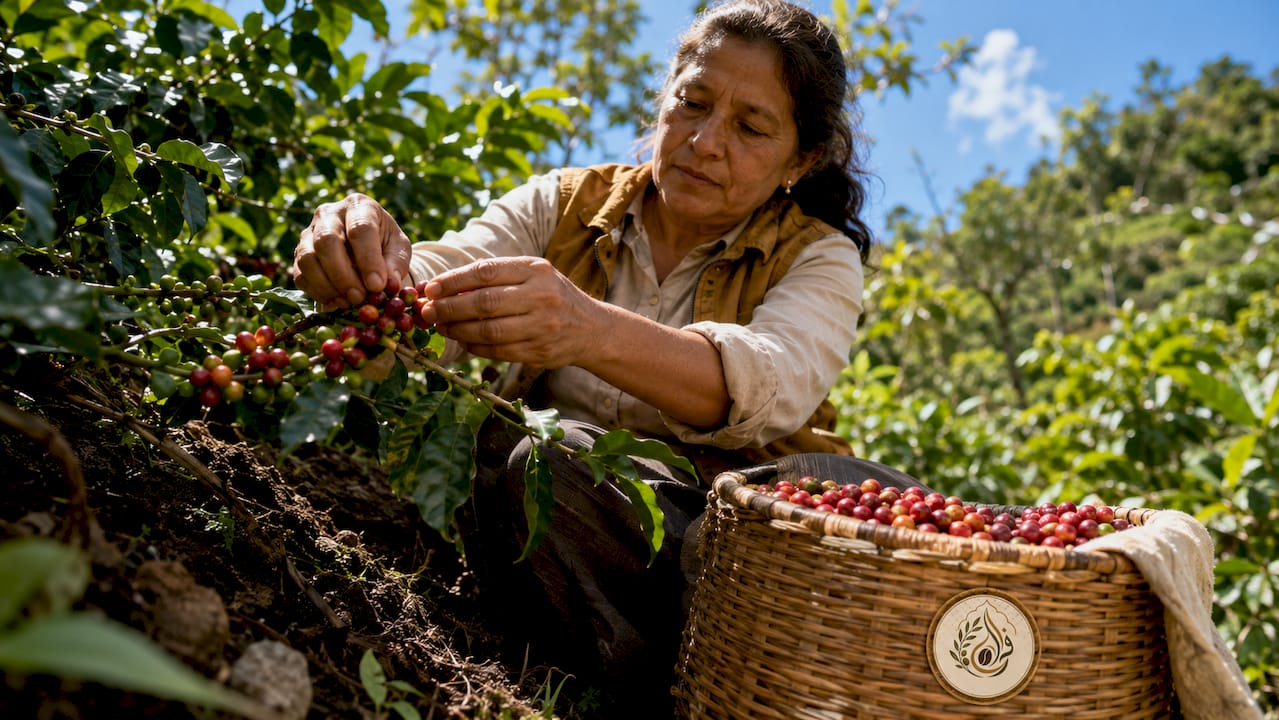
Why sustainability matters in the coffee industry
Sustainable coffee production rests on three interconnected pillars: environmental stewardship, social equity, and economic viability. Remove any one of them, and the system collapses. A farmer who cannot afford to maintain shade trees will clear them. A cooperative that cannot access fair pricing will cut corners on processing. The importance of sustainable coffee becomes clear when you understand that these decisions compound across millions of farms spanning Brazil, Ethiopia, Colombia, Vietnam, and beyond.
The coffee industry faces a convergence of pressures that make sustainability non-negotiable. Climate change is shrinking viable growing regions. Deforestation is accelerating soil degradation. And economic fragility forces short-term survival decisions that undermine long-term environmental stewardship. Major players have taken notice. JDE Peet’s has committed to 100% responsibly sourced green coffee by 2028, a target that signals how seriously top-tier corporations now treat supply chain risk. Understanding the coffee industry environmental impact is the first step toward addressing it.
What are the main environmental impacts of coffee production?
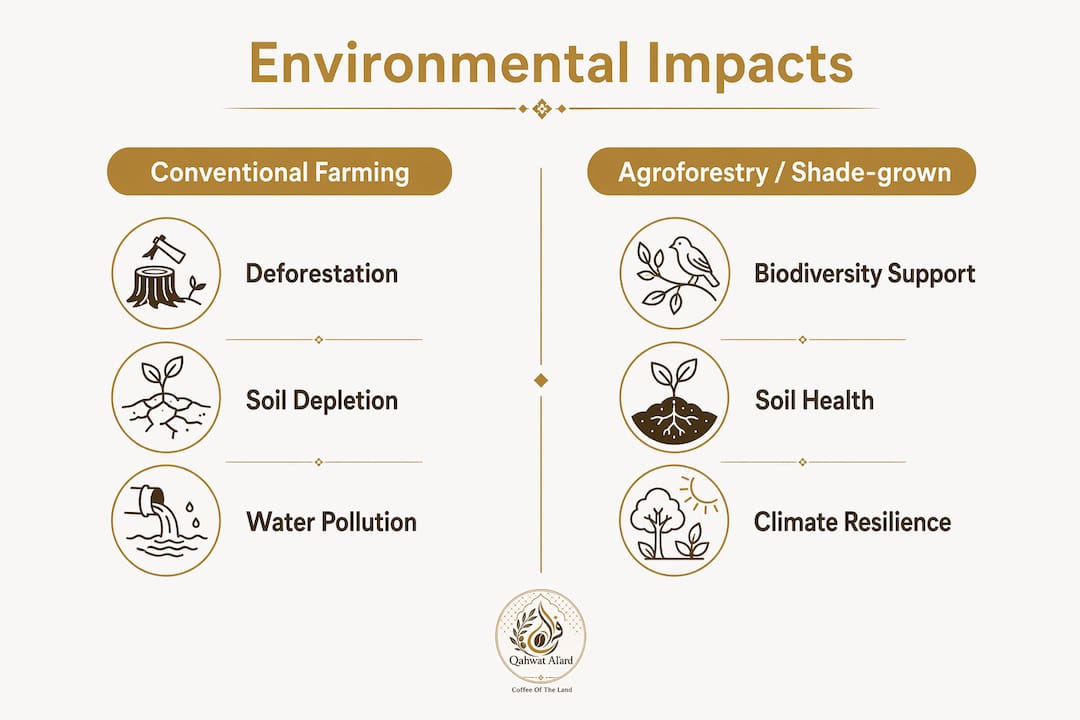
Conventional coffee farming leads to deforestation, soil depletion, water pollution, and high carbon footprints. This is not a fringe concern. Sun-grown monoculture coffee, which replaced traditional shade-grown systems across Latin America and Southeast Asia during the 1970s and 1980s, stripped forest canopies and eliminated the biodiversity those canopies supported. The result was faster yields in the short term and accelerating ecological damage over decades.
The environmental toll breaks down across several categories:
- Deforestation: Clearing forest for coffee plantations destroys habitat for migratory birds, pollinators, and mammals. Central America alone lost millions of hectares of forest to coffee expansion.
- Soil degradation: Without tree cover, topsoil erodes rapidly. Repeated agrochemical application depletes microbial diversity, reducing soil fertility over time.
- Water pollution: Wet-milling processes, which strip the coffee cherry’s pulp using water, generate highly acidic wastewater. When discharged untreated into local streams, this wastewater devastates aquatic ecosystems.
- Carbon footprint: Transportation, processing, and synthetic fertilizer production all contribute to coffee’s carbon output across the supply chain.
| Environmental factor | Conventional farming | Agroforestry/shade-grown |
|---|---|---|
| Biodiversity support | Low | High |
| Soil health | Degrades over time | Maintained or improved |
| Water pollution risk | High (wet-milling runoff) | Lower with managed processing |
| Carbon sequestration | Minimal | Significant |
| Climate resilience | Vulnerable | Stronger |
Shade-grown agroforestry supports biodiversity, improves soil health, and strengthens climate resilience by functioning like an artificial forest. These systems create layered canopies that regulate temperature, retain moisture, and provide habitat. The Specialty Coffee Association has noted that existing agroforests offer long-term climate resilience benefits that exceed those of new tree planting programs. That finding challenges the assumption that restoration always outperforms conservation.
Pro Tip: When evaluating a coffee’s environmental credentials, look for shade-grown or bird-friendly certifications alongside organic labels. These signal that the farm actively maintains forest canopy rather than simply avoiding synthetic inputs.
What social and economic challenges threaten coffee producers?
The social dimension of coffee sustainability is inseparable from the economic one. Poverty is not a background condition in coffee-growing regions. It is the central variable that determines whether a farmer can afford to farm sustainably at all.
Consider what unequal value distribution actually means in practice. A kilogram of specialty coffee that retails for $40 in a New York café may return less than $1 to the farmer who grew it. That gap is not just unfair. It is structurally destabilizing. When farmers cannot cover production costs, they reduce labor, skip soil amendments, and abandon shade trees that require maintenance but generate no direct income.
“Sustainability gaps in coffee are often economic. Insufficient farmer income forces prioritization of short-term survival over environmental stewardship, leading to instability across the entire supply chain.” — Sustainable Food Systems Journal, 2026
The social challenges extend beyond income:
- Child labor: Economic desperation in coffee-growing households in countries like Honduras and Côte d’Ivoire drives reliance on child labor during harvest seasons.
- Gender inequality: Women perform a disproportionate share of coffee labor but hold fewer land rights and receive less income.
- Health risks: Unprotected exposure to agrochemicals affects farming families directly, with long-term health consequences that rarely appear in supply chain audits.
- Community infrastructure: Isolated growing regions often lack schools, clinics, and roads, making economic mobility nearly impossible without deliberate investment.
Improving farm productivity and profitability creates the most effective buffer against climate stress, according to research from TechnoServe and UNIDO. This means that social investment and environmental resilience are not competing priorities. They reinforce each other. A farmer with stable income, access to credit, and technical training is far more likely to adopt practices that protect the land.
How are industry stakeholders responding with sustainability initiatives?
Corporate commitments have grown more specific and time-bound in recent years, which is a meaningful shift from earlier decades of vague pledges. JDE Peet’s target to expand regenerative farming by 200,000 hectares by 2030 represents a concrete, measurable commitment tied to supply chain risk management rather than marketing alone.
Certifications remain the most visible tool for communicating sustainability to consumers. Fair Trade, Rainforest Alliance, and Starbucks’ C.A.F.E. Practices program each set standards for environmental and social performance. However, community-based cooperatives integrating indigenous knowledge often outperform top-down certification schemes in actual sustainability outcomes. High compliance costs act as barriers that exclude the smallest and most economically vulnerable farmers from certified markets, which is precisely the population that needs support most.
Here is how the response is taking shape across the industry:
- Corporate sourcing commitments: Major roasters and retailers are setting percentage targets for responsibly sourced coffee, creating market demand that filters back to farm-level practices.
- Regenerative agriculture programs: Beyond organic, regenerative approaches focus on rebuilding soil carbon, restoring water cycles, and increasing biodiversity on working farms.
- Direct trade relationships: Roasters who buy directly from producers, bypassing commodity brokers, can pay higher prices and maintain transparency about farm conditions.
- Climate resilience funding: Organizations like TechnoServe and UNIDO are channeling investment into knowledge transfer, infrastructure, and financial access for smallholder farmers.
- Policy alignment: The EU Deforestation Regulation, which took effect in 2024, now requires companies to prove that coffee was not grown on deforested land, creating legal accountability alongside voluntary commitments.
Pro Tip: Before trusting a brand’s sustainability claims, check whether they publish supply chain transparency reports with farm-level data. Vague commitments to “ethical sourcing” without traceable evidence are marketing, not accountability. Qahwatalard’s ethical sourcing guide explains what genuine transparency looks like.
What sustainable practices are actually transforming coffee production?
The benefits of sustainability in coffee are most visible at the farm level, where specific practices produce measurable outcomes. These are not theoretical interventions. They are methods already in use across certified and non-certified farms in Ethiopia, Peru, Indonesia, and elsewhere.
Sustainable coffee cultivation reduces pesticide use through integrated pest management, improves water conservation, and supports fair labor practices simultaneously. That combination matters because it demonstrates that environmental and social goals are not in tension. They are achieved through the same set of practices.
| Practice | Primary benefit | Secondary benefit |
|---|---|---|
| Shade-grown agroforestry | Biodiversity and soil health | Carbon sequestration |
| Integrated pest management | Reduced chemical use | Lower input costs for farmers |
| Water recycling in processing | Reduced pollution | Lower water consumption |
| Direct trade sourcing | Fair pricing for producers | Supply chain transparency |
| Soil conservation techniques | Erosion prevention | Long-term yield stability |
Beyond the table, the mechanics of each practice deserve attention. Integrated pest management, for example, uses biological controls like predatory insects and disease-resistant coffee varieties before reaching for chemical inputs. This reduces costs for farmers while protecting surrounding ecosystems. Water recycling systems in wet-milling facilities treat and reuse processing water, dramatically cutting the volume of acidic wastewater that reaches local streams.
Biodiversity-based value chains empower local economies and help producers meet stricter international trade rules, according to UNCTAD. Agroforestry coffee, in particular, enables product diversification. A farmer growing coffee under a canopy of fruit trees, timber species, and medicinal plants has multiple income streams, which reduces dependence on coffee price volatility. That economic diversification is itself a form of climate resilience.
Direct trade relationships deserve specific mention because they address the value distribution problem at its source. When a roaster like those partnering with Qahwatalard buys directly from a cooperative in Yemen or Ethiopia, the price premium stays in the community. Farmers receive feedback on quality, which incentivizes investment in better practices. The sustainable packaging choices that complete the supply chain extend this commitment from farm to shelf.
Key takeaways
Sustainability in the coffee industry requires simultaneous action on environmental, economic, and social fronts because each dimension directly enables or undermines the others.
| Point | Details |
|---|---|
| Poverty drives unsustainable farming | 44% of producers live in poverty, forcing short-term decisions that damage ecosystems. |
| Agroforestry outperforms monoculture | Shade-grown systems deliver biodiversity, soil health, and carbon benefits that sun-grown farms cannot match. |
| Economic viability enables stewardship | Farmers with stable income and market access are far more likely to adopt and maintain sustainable practices. |
| Certifications have real limits | High compliance costs exclude smallholders; community-driven cooperatives often achieve better outcomes. |
| Transparency is the consumer’s tool | Supply chain traceability reports, not marketing language, are the reliable signal of genuine sustainability. |
Why carbon accounting alone won’t save coffee
The data on coffee sustainability is compelling, but the frameworks used to measure progress are lagging behind the reality on the ground. I have spent years reading sustainability reports from major roasters, and the pattern is consistent: carbon metrics dominate, biodiversity gets a footnote, and farmer income appears as a social responsibility checkbox rather than a core variable.
The Specialty Coffee Association’s research makes this point sharply. Carbon accounting frameworks inadequately measure and reward the maintenance of biodiverse existing agroforests, which are among the most climate-resilient systems in coffee production. A company can hit its carbon targets while the agroforest that sequesters that carbon slowly degrades because the farmer maintaining it cannot afford to keep the trees standing.
What actually works, in my reading of the evidence, is the combination of economic incentives and community ownership. The community-based approaches that integrate indigenous knowledge consistently outperform certification-only models. That is not an argument against certification. It is an argument for treating certification as one tool in a larger system rather than the destination itself.
The uncomfortable truth is that most consumers, including serious coffee drinkers, are buying sustainability signals rather than sustainability outcomes. A certification logo on a bag tells you a farm met a standard at a point in time. It does not tell you whether the farmer earned enough to send their children to school or whether the stream next to the processing station is clean. Demanding traceability, supporting brands that publish origin data, and paying prices that reflect real production costs are the consumer behaviors that actually move the needle.
— Anthony-Yasin
Explore sustainable coffee from Qahwat Al’Ard
Qahwatalard sources coffee with the full supply chain in mind, from the soil conditions at origin to the transparency of the relationship with the farmer. Every product in the single-origin collection is selected for traceability and quality, with sourcing that prioritizes communities and farming systems worth supporting.
If you want to choose sustainable coffee that reflects genuine values rather than marketing language, Qahwatalard’s range gives you the origin data, the farming context, and the flavor quality to make that choice with confidence. Supporting ethical supply chains starts with knowing exactly where your coffee comes from and who grew it.
FAQ
Why does sustainability matter in the coffee industry?
Sustainability matters because the coffee industry faces simultaneous environmental degradation, producer poverty, and climate risk that threaten long-term supply. Without sustainable practices, the conditions that produce quality coffee will deteriorate within decades.
What are the biggest environmental impacts of coffee production?
Conventional coffee farming causes deforestation, soil depletion, water pollution from wet-milling runoff, and significant carbon emissions. Shade-grown agroforestry systems mitigate all of these impacts while supporting biodiversity.
How does poverty affect sustainable coffee farming?
Approximately 44% of coffee producers live in poverty, which forces short-term survival decisions that conflict with environmental stewardship. Farmers without stable income cannot afford to maintain shade trees, invest in soil health, or adopt cleaner processing methods.
Are coffee certifications like Fair Trade actually effective?
Certifications set meaningful standards but carry real limitations. High compliance costs exclude many smallholder farmers, and community-based cooperatives using indigenous knowledge often achieve stronger sustainability outcomes than certification-only approaches.
How can consumers support sustainable coffee practices?
Consumers can choose brands that publish supply chain transparency reports, pay prices that reflect real production costs, and prioritize single-origin coffees with traceable sourcing. Reading sustainability certifications critically is a practical starting point.


