


Most coffee pods can be recycled, but not through your curbside bin. The right method depends entirely on what the pod is made of and what your city allows. Consumer Reports confirms that recycling eligibility hinges on local policy and pod material, while services like Podback and brand mail-back programs fill the gaps most municipal systems can’t handle.
Here’s your quick-start guide by pod type:
- Plastic No.5 (K-Cup style): Peel the lid, dump the grounds into compost or trash, rinse the shell, then check if your city takes No.5 plastic curbside.
- Aluminum capsules (Nespresso-style): Skip the curbside bin entirely. Save them for a brand mail-back program or an official drop-off point.
- Mixed-material or unmarked pods: Assume curbside won’t take them. Use a mail-back service or compost the grounds and trash the rest.
Scale matters here: Americans run single-serve coffee machines constantly, and that daily habit adds up to a mountain of small, easy-to-lose packaging.
TL;DR:
- Recycling coffee pods depends heavily on local policies and pod materials, with many requiring mail-back programs due to size and contamination issues.
- Polypropylene No.5 plastic pods can be curbside recycled if cleaned and checked against local guidelines, while aluminum capsules should generally be sent via mail-back services.
- Mixed-material and unmarked pods are the hardest to recycle and often demand separation or specialized disposal methods, with compostable pods needing certification verification.
- Switching to reusable or refillable pods usually reduces waste more effectively than recycling single-use options, despite added effort.
- Most recycling failures stem from contamination and size issues rather than material type alone, making reduction strategies a more sustainable focus.
Table of Contents
- How to Recycle Coffee Pods Based on What They’re Made Of
- How Do You Prepare Each Pod Type for Recycling?
- Where Can You Take Coffee Pods That Curbside Won’t Accept?
- Is It Better to Just Stop Using Pods Altogether?
- What Qahwat Al’ard Does Differently on Pod Sustainability
- Key Takeaways
- Where to Verify Local Rules and Find Drop-Off Programs
- Why Most Advice on This Topic Misses the Point
- Choose Coffee Pods Built for a Lower-Waste Routine
- Sources
- FAQ
How to Recycle Coffee Pods Based on What They’re Made Of
The material inside your pod determines almost everything about how you dispose of it. Three categories dominate the market, and each behaves differently in a recycling stream.
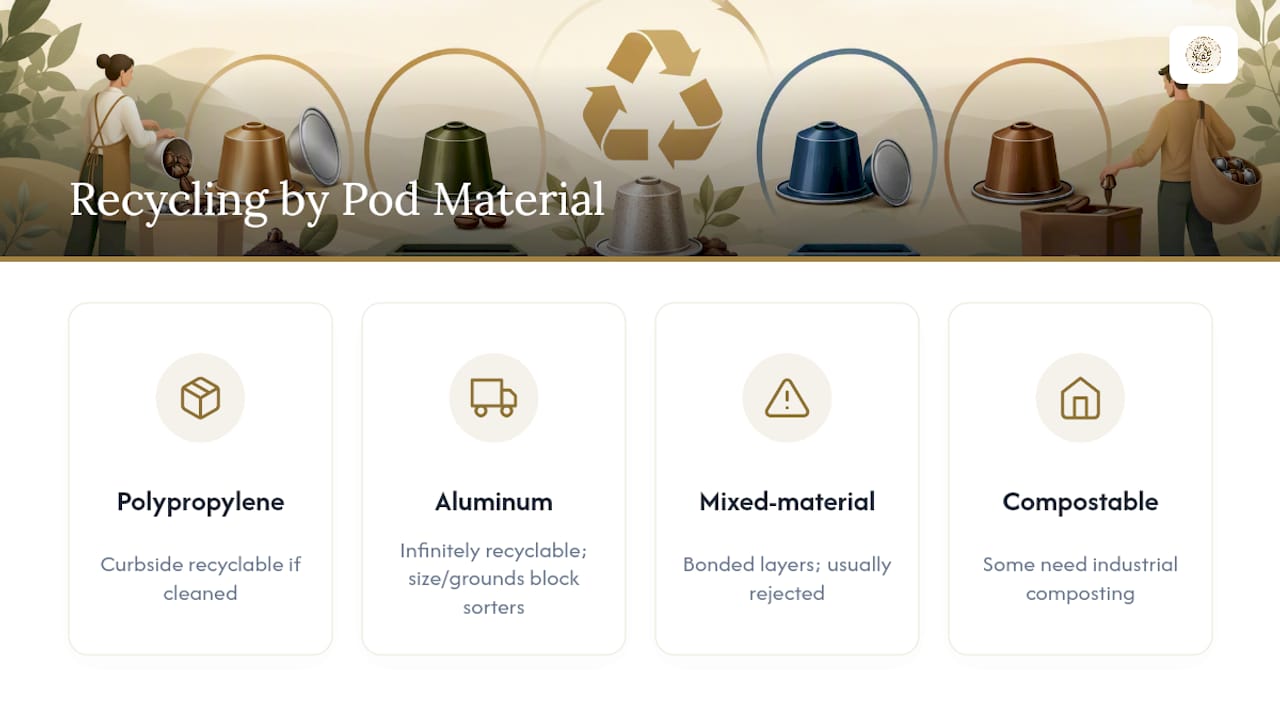
Polypropylene (No.5 plastic) is the most common material in K-Cup-style pods. It’s technically recyclable, and some municipal programs accept it curbside once it’s cleaned. Look for the small triangle stamped “5” on the pod’s underside or rim. That number is your first clue.
Aluminum capsules, the kind Nespresso and similar brands popularized, are infinitely recyclable in theory. Aluminum never degrades in quality no matter how many times it’s melted down. The problem isn’t the material. It’s the size and the leftover grounds, which most municipal sorting facilities can’t process.
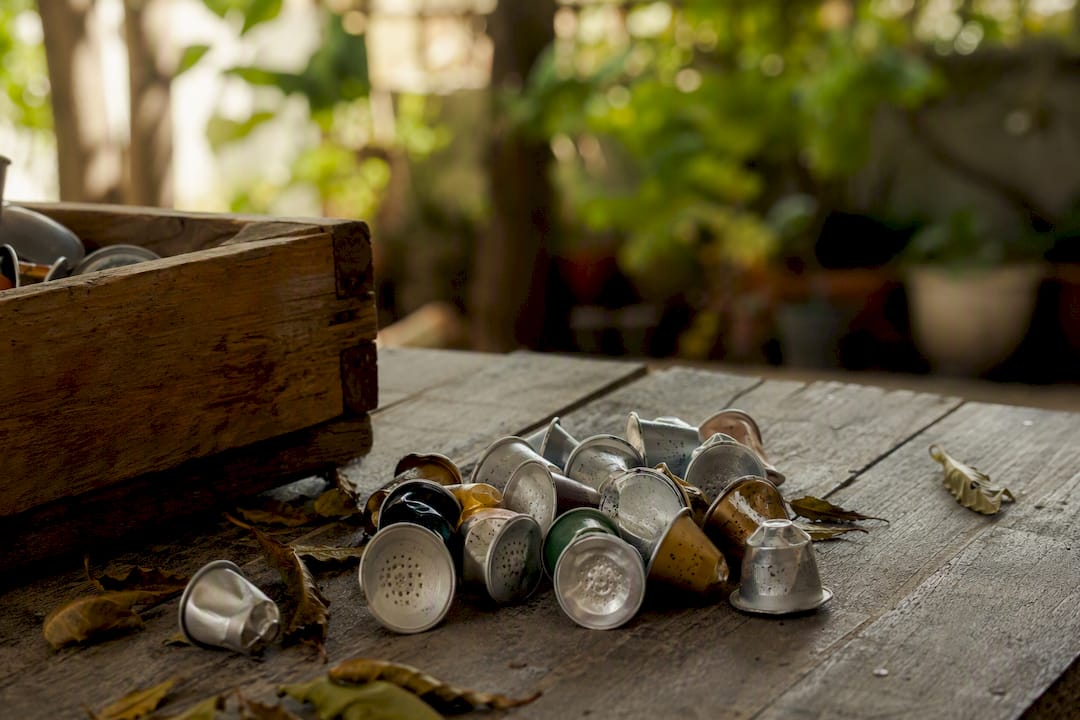
Mixed-material pods combine plastic, foil, and sometimes paper in a single unit. These are the hardest to place. Recycling facilities generally can’t separate bonded materials on the fly, so mixed pods often get rejected outright even when individual components are recyclable.
Then there’s the growing category of pods marketed as compostable or biodegradable. These claims vary wildly. Some require industrial composting facilities that most residential areas don’t have. Others genuinely break down in a backyard compost bin within a few months. Always check the packaging for a certification mark rather than trusting the word “eco-friendly” alone.
Why does size cause so much trouble? Sorting equipment at material recovery facilities relies on optical scanners and mechanical screens calibrated for larger items. A coffee pod, especially one still holding wet grounds, frequently falls through screens meant for bottles and cans, or it contaminates a whole batch of otherwise-recyclable plastic. That’s the real reason so many cities exclude pods from curbside programs, regardless of what the plastic itself is made of.
How Do You Prepare Each Pod Type for Recycling?
Preparation is the step most people skip, and it’s the reason so many recyclable pods end up in a landfill anyway. Follow these steps based on what you’re holding.
- K-Cups and other polypropylene (No.5) pods: Peel off the foil lid and set it aside. Empty the coffee grounds into a compost bin or the trash. Rinse the plastic shell under cold water to remove residue. Check your city’s recycling guide for No.5 plastic acceptance before tossing it in the bin.
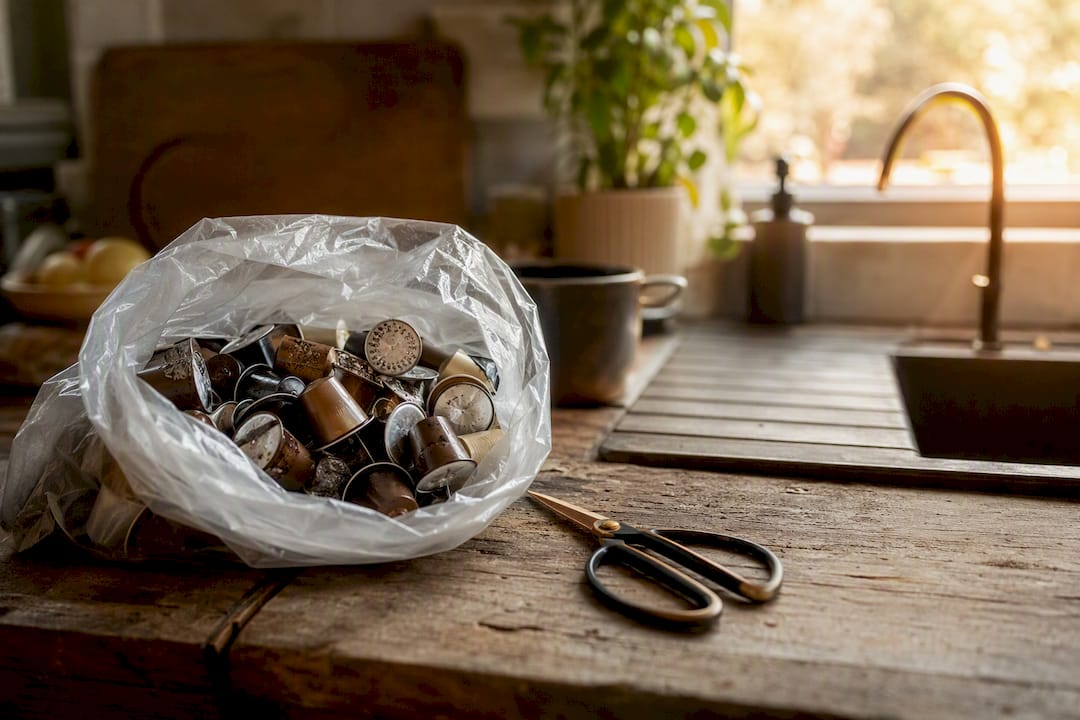
- Aluminum capsules: Don’t rinse and toss these curbside, even though aluminum is normally a recycling superstar. Collect used capsules in a bag or box, then use your brand’s official mail-back program or a designated drop-off location.
- Mixed-material or unidentified pods: If you can pry apart the foil and plastic, separate what you can and recycle each piece appropriately. If not, a third-party mail-back service is your best bet. Otherwise, compost the grounds, recycle any clearly identifiable component, and trash the rest.
- Certified compostable pods: Read the packaging for a specific composting standard rather than a vague green label. Many require a commercial composting facility, so check whether your city offers organics pickup before assuming your backyard bin will do the job.
Pro Tip: Keep a small labeled bag near your coffee station specifically for used aluminum capsules. Once it’s full, that’s your reminder to request a new mail-back envelope or drop it at a partner location.
Where Can You Take Coffee Pods That Curbside Won’t Accept?
When your city says no, three practical channels pick up the slack.
Brand mail-back programs are usually the easiest route. Many coffee pod manufacturers offer prepaid shipping bags or boxes. You collect used capsules at home, mail them back once full, and the brand handles sorting and processing. Podback models this well: pods get shredded, coffee grounds go to anaerobic digestion, and shells get reprocessed into new material.
Third-party recycling services fill gaps brands don’t cover. TerraCycle runs mail-back brigades for specific pod types, often through prepaid boxes that handle mixed or hard-to-sort materials.
Municipal or supermarket drop-off points exist in some areas, though coverage is inconsistent. Search tools that let you find recycling options by ZIP code can point you toward the nearest location.
Before shipping anything, check the program’s rules on volume and bagging. Some ask you to combine several months’ worth of pods into a single shipment to cut down on transport waste.
Is It Better to Just Stop Using Pods Altogether?
Recycling isn’t the only lever here, and it might not even be the strongest one. Consumer Reports points out that switching to a reusable pod or refillable filter often cuts waste more effectively than recycling ever could, simply because it removes the packaging problem at the source.
- Reusable pods fit most single-serve machines and let you use your own ground coffee, refill after refill.
- Refillable filters work similarly and cost less upfront than buying specialty reusable capsules.
- Composting grounds at home diverts organic waste regardless of which pod system you use.
The trade-off is convenience. Reusable pods take an extra thirty seconds to fill and clean, and some drinkers notice a slight difference in taste consistency. If you’re on the fence, our comparison of reusable versus single-use pods walks through what to expect before you switch.
What Qahwat Al’ard Does Differently on Pod Sustainability
Qahwat Al’ard sources single-origin coffee with full traceability from growing regions like Peru, Colombia, Bali, and Uganda, and that transparency extends to packaging decisions, not just bean origin.
- Our guide to biodegradable pod types breaks down which certifications actually mean something.
- The 60 Pack Single Serve Coffee Pods suit households running a machine daily and wanting fewer reorders.
- The 12 Pack Single Serve Coffee Capsules work well for testing a new roast before committing.
- The Peru Coffee Pods offer a traceable, single-origin option for readers who want to know exactly where their coffee comes from.
Editorial credit: Yasin Sofyian Ayesh
Key Takeaways
Recycling coffee pods successfully depends on matching the pod’s material to the correct disposal channel: curbside for accepted plastics, mail-back for aluminum and mixed materials.
| Point | Details |
|---|---|
| Check the material first | Look for the No.5 code on plastic pods and treat aluminum capsules differently. |
| Prep before you recycle | Peel, empty grounds, and rinse the shell before curbside or mail-back disposal. |
| Aluminum needs mail-back | Curbside programs rarely accept capsules; use brand or third-party mail-back instead. |
| Reduction beats recycling | Switching to reusable pods or refillable filters often cuts more waste than recycling alone. |
| Qahwat Al’ard offers traceable options | Products like the Peru Coffee Pods and 60 Pack Single Serve Coffee Pods pair sourcing transparency with practical pod choices. |
Where to Verify Local Rules and Find Drop-Off Programs
A few resources cover most of what you’ll need to confirm before recycling pods in your area.
- Consumer Reports’ recycling guide breaks down material-by-material recycling advice for K-Cups, Nespresso capsules, and other pods.
- Podback explains how collected pods are processed into recovered materials.
- Recycle Right offers category-specific guidance on plastic versus aluminum pod prep.
- TerraCycle runs mail-back brigades for specific coffee pod brands.
- Your city’s waste management page, such as Cleveland’s coffee pod disposal guidance, will tell you definitively what’s accepted locally.
Why Most Advice on This Topic Misses the Point
The conventional wisdom treats pod recycling as a simple sorting problem: figure out the plastic number, toss it in the right bin, done. That framing ignores how recycling infrastructure actually works. A pod’s size and contamination risk matter more than its material classification, which is why aluminum, one of the most recyclable materials on earth, still needs a mail-back program instead of a curbside bin.
I’d argue the bigger failure is that most guides treat recycling and reduction as separate conversations. They’re not. If switching to a reusable pod cuts your waste more than perfect recycling compliance ever could, that should be the leading recommendation, not an afterthought buried at the end of an article. Readers deserve to know that the “greenest” habit might be the one requiring the least sorting effort, not the most.
Prioritize reduction where it’s realistic, and treat mail-back programs as the honest answer for what’s left over.
— Yasin Sofyian Ayesh
Choose Coffee Pods Built for a Lower-Waste Routine
Instead of guessing whether your current pod brand offers any real end-of-life plan, Qahwat Al’ard gives you traceable sourcing information and packaging guidance up front, so you know what you’re working with before the pod ever reaches your machine. Every product page states origin details clearly, from Peru to Uganda, and our coffee journal covers compostable certifications in plain language instead of vague green marketing claims. If you’re ready to switch to a pod system that treats sustainability as part of the product story rather than an afterthought, browse the 60 Pack Single Serve Coffee Pods for everyday use or start smaller with the Peru Coffee Pods to taste a single origin firsthand.
Sources
- How to recycle K-Cups, Nespresso capsules & coffee pods — Consumer Reports
- Podback — coffee pod recycling service
- Dispose of Coffee Pods Right in City of Cleveland
FAQ
Where Can I Take My Coffee Pods for Recycling?
Check your city’s waste management website first, since curbside acceptance varies by location. If your city excludes pods, use a brand mail-back program or a third-party service like TerraCycle.
What Can I Do With Old Coffee Pods?
Compost the grounds, recycle the shell if your municipality accepts the material, and use a mail-back program for anything curbside won’t take. Switching to reusable pods also prevents the waste question from coming up again.
Are There Any Coffee Pods That Are Recyclable?
Yes. Polypropylene (No.5) pods and aluminum capsules are both recyclable in principle, though aluminum almost always requires a mail-back or drop-off program rather than curbside pickup.
Is It Better to Compost or Recycle Coffee Grounds?
Composting is usually simpler and keeps organic waste out of landfills, while the empty shell should go through whatever recycling path matches its material.
Do Compostable Coffee Pods Actually Break Down at Home?
Some do, but many compostable pods require industrial composting facilities rather than a backyard bin. Check the packaging for a specific certification before assuming it’s home compostable.


