
Dark roasting buries origin flavor because it manufactures enormous quantities of new, powerful compounds that drown out the fainter chemical signals a coffee bean’s origin left behind. It’s a volume problem: the roast-driven volatiles are simply louder than the terroir-driven ones.
A PMC study using headspace SPME–GC–MS analysis on single-origin Arabica coffees found roasting degree explained more of the aroma variation than geographic origin did. Three things drive that outcome:
-
The Maillard reaction during roasting builds furans and pyrazines, compound classes that can make up well over half the volatile profile in a roasted bean.
-
These roast-born compounds have lower odor detection thresholds, so your nose picks them up first, and often exclusively.
-
The Specialty Coffee Association’s flavor wheel and cupping protocols use medium-light roasts specifically because darker roasts smother the descriptors tied to origin.
If you want to taste where a coffee actually came from, roast level is the first variable to control, not the last. The tasting and buying steps further down show you exactly how.
Key Takeaways
Roast chemistry generates high concentrations of low-threshold compounds like furans and pyrazines that overwhelm the far fainter esters and terpenes carrying origin character.
| Point | Details |
|---|---|
| Roast beats origin in lab tests | Studies using SPME–GC–MS found roast degree explained more aroma variation than growing region. |
| Furans and pyrazines dominate | These Maillard-reaction compounds can make up 50 to 80% of a roasted coffee’s volatile profile. |
| Acidity drops as roast darkens | Chlorogenic acids break down with heat, muting the brightness that signals origin. |
| Light roast reveals origin best | Cupping standards use medium-light roasts specifically to preserve terroir markers. |
| Choose your roast by goal | Qahwat Al’Ard offers single-origin light roasts for origin clarity and dark roasts like Italian and French Roast for bold, roast-forward flavor. |
Table of Contents
How Roasting Changes Coffee’s Chemistry
Green coffee beans carry almost no aroma. Everything you smell in a cup, floral, fruity, roasted, smoky, gets built or destroyed during the roast itself, and the phase of roasting determines which outcome you get.
Roasting runs through distinct temperature zones. Drying happens below about 320°F, then the bean starts browning as it approaches first crack, roughly 355 to 400°F, when sugars and amino acids react in the Maillard process. Push past second crack, generally 430°F and up, and pyrolysis takes over: cell structures break down, oils migrate to the surface, and the chemistry shifts from “building flavor” to “burning it.”
The Maillard reaction, along with its cousin the Strecker degradation, is the real engine of roast flavor. It produces furans (caramel, sweet, slightly nutty), pyrazines (roasted, earthy, nutty), pyridines (bitter, burnt), and, at higher roast degrees, phenylindanes, which show up specifically in darker roasts and correlate with the sharper bitterness people associate with French or Italian roast profiles. None of these compounds exist in green coffee. Roasting invents them.
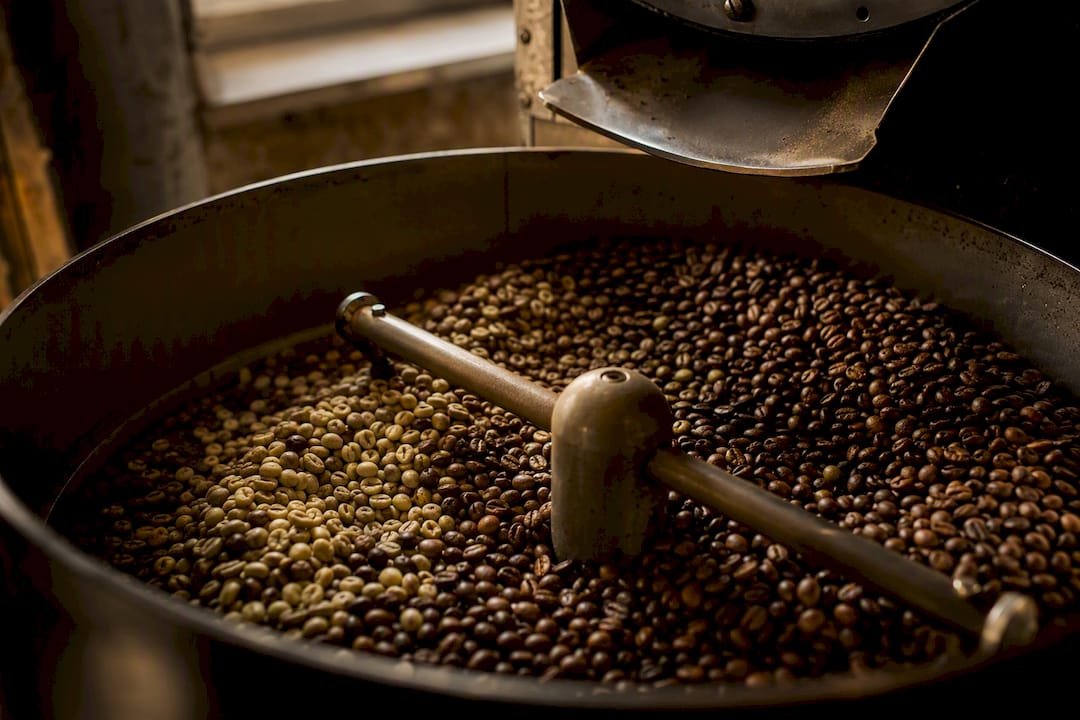
Meanwhile, the compounds that do carry origin information are getting consumed. Chlorogenic acids, the family responsible for much of coffee’s bright acidity, break down as roast time and temperature increase, converting into quinic and caffeic acids that read as flat bitterness rather than lively acidity. Delicate esters that smell floral or fruity, some tied directly to fermentation and processing at origin, volatilize and degrade well before the bean reaches a dark roast color.
The scale of this transformation is easy to underestimate. More than 1,000 volatile compounds have been identified in roasted coffee, yet only about 5% of them actually drive what you perceive as aroma, and that small, powerful group is overwhelmingly made of Maillard products. A handful of roast-generated molecules can dominate the sensory experience of a bean, no matter where it grew.
Roast-driven chemical shift:
-
Furans and pyrazines can account for well over half the total volatile profile in a roasted Arabica sample.
-
Chlorogenic acid content declines steadily from light to dark roast, muting acidity.
-
Phenylindane formation increases with roast degree, adding bitterness that has nothing to do with the growing region.
Origin Markers vs. Roast Markers: What’s Actually in Your Cup
Some compounds in your coffee are messengers from the farm. Others are manufactured entirely by the roaster. Learning to tell them apart is the fastest way to stop confusing “roasty” with “origin character.”
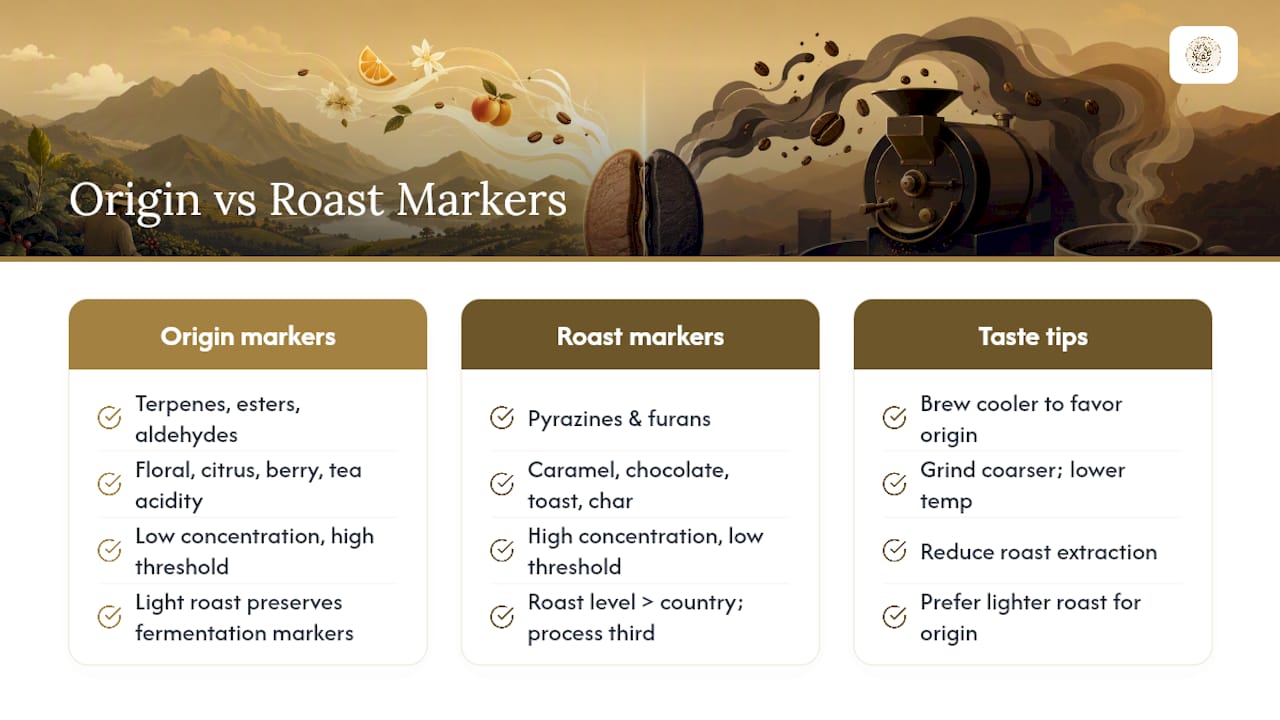
Origin tends to speak through terpenes, esters, and specific aldehydes carried over from the green bean and its processing. These give you floral notes, citrus brightness, berry-like fruitiness, or the tea-like acidity that distinguishes, say, a washed Ethiopian lot from a natural-processed one. A study of 46 specialty Arabica lots found that light roasts preserved fermentation-linked markers like linalool and 2,3-butanediol far better than darker roasts, and that roast level had a stronger effect on volatile composition than country of origin, with post-harvest process coming in third.
Roast speaks through furans, pyrazines, phenylindanes, and pyridines. Sensory-wise, that’s caramel, chocolate, toasted grain, char, and bitterness, the flavors people call “coffee flavor” even though they’re really “roasting flavor.” A well-executed dark roast can carry heavy body and visible surface oils precisely because pyrolysis has taken hold.
The masking itself comes down to concentration and threshold. Roast compounds exist in far higher concentrations and register at lower odor thresholds than most origin-derived aromatics. Put a trace amount of a floral ester next to a flood of pyrazines, and your nose picks the pyrazines every time. It’s not that the origin note disappears chemically. It’s that it’s outshouted.
Pro Tip: If you want a fighting chance at tasting origin in a darker roast, grind slightly coarser than usual and brew a touch cooler, around 195°F instead of 205°F. Lower extraction temperatures pull fewer of the harsh roast compounds and let what’s left of the origin character come through cleaner.
What the Lab Studies Actually Show
The chemistry explanation isn’t a theory. It shows up consistently across the studies that actually measure what’s in the cup.
The headspace SPME–GC–MS analysis referenced earlier identified 138 distinct volatile compounds across ten single-origin Arabica samples, with furans running roughly 24 to 41% of the profile and pyrazines 25 to 39%.
A separate terroir review makes the same point from a different angle: standardized cupping protocols deliberately use a medium-light roast, around Agtron 65, because that’s the roast window where origin differences remain measurable. Push past it, and terroir signals start getting absorbed into the roast’s own chemistry.
That doesn’t mean origin becomes irrelevant once the roaster hits second crack. The 46-lot study found origin-derived precursors still shape which flavor compounds are even available for roast chemistry to work with, so a naturally sweeter or more floral green bean can still produce a subtly different dark roast than a flatter one, even if a taster can’t consciously pin down why.
Key figures worth remembering: furans and pyrazines can make up a majority of a roasted coffee’s volatile profile, and roast level outranked both country of origin and post-harvest process as a driver of aroma variation in controlled lab comparisons.
How to Taste for Origin, Even in a Dark Roast
You can still find origin character in your cup. It just takes deliberate technique, because you’re working against the chemistry, not with it.
-
Start with a lighter roast if origin clarity is the goal. Light and medium-light roasts retain the most fermentation and terroir markers.
-
Grind coarser and brew with immersion. Methods like French press or a slow pour-over reduce contact time with harsh roast compounds while still extracting delicate esters.
-
Lower your water temperature slightly. Brewing closer to 195 to 200°F instead of a full boil pulls fewer bitter phenolics and less char flavor.
-
Cup the same origin at two roast levels side by side. Nothing teaches the roast/origin distinction faster than tasting one bean roasted light and dark in the same sitting.
-
Smell before you sip. Aroma often reveals origin cues that get lost once the coffee hits your palate alongside roast bitterness.
If your priority is roast character rather than origin, medium to dark roasts are the better call, they’re built for body, sweetness from caramelization, and standing up to milk. If origin clarity matters more, stay in the light to medium-light range.
-
Buy sample packs so you can compare roast levels without committing to a full bag.
-
Look for single-origin light roasts specifically, since origin labeling and flavor expectations are most meaningful at lower roast degrees.
-
Note brew ratio and dose. A higher coffee-to-water ratio can help delicate origin notes survive even a slightly darker roast.
Pro Tip: Cup a single origin at three roast levels in one sitting, light, medium, and dark, using the same brew method for all three. It’s the single fastest way to train your palate on where “origin” ends and “roast” begins.
When Dark Roast Is the Right Call Anyway
Masking origin isn’t always a flaw. Sometimes it’s exactly the point.
Classic espresso traditions, especially Italian-style blends, were built around dark roast character on purpose, since bitterness and caramelized sweetness balance well against crema and milk. Milk-forward drinks like lattes and cappuccinos need a roast bold enough to cut through dairy, and cold brew benefits from the lower acidity that comes with darker profiles. Some drinkers also find lighter roasts too acidic on a sensitive stomach, making dark roast the more comfortable daily choice.
-
Espresso and milk-based drinks favor roast-driven body and sweetness.
-
Cold brew’s extended steep time already mutes acidity, so a darker roast complements rather than competes.
-
Lower perceived acidity can matter for readers who find bright, light roasts hard on the stomach.
A well-executed dark roast still reflects the underlying bean’s quality, density, moisture, and processing all influence how it roasts. A poorly grown or defective bean, though, is much easier to hide once the roast goes dark enough to add smoke and char to everything.
Why Qahwat Al’Ard Carries Both Ends of the Roast Spectrum
We stock single-origin light and medium-light roasts alongside dark roast blends because the “right” roast depends on what you’re chasing, origin clarity or roast character, not on which one is objectively better. The most useful thing you can do is compare the same origin roasted two ways.
Try a sample pack built around that comparison, and pair it with our roast-level guides if you want the chemistry behind what you’re tasting.
Try the Roast Comparison for Yourself
Reading about furans and phenylindanes only gets you so far. The fastest way to actually feel the difference roast makes is to put two cups side by side and taste it.
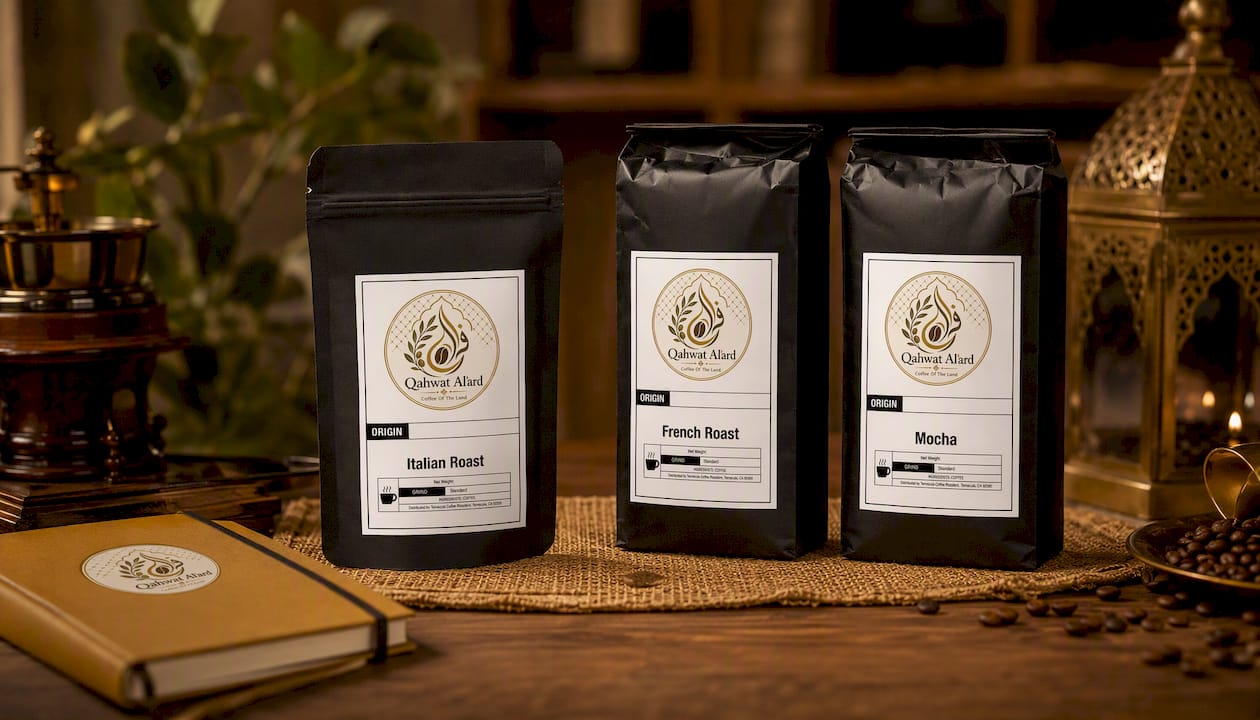
Qahwat Al’Ard’s dark roast lineup gives you three distinct ways to experience roast-driven flavor without guessing at what you’re getting. The Italian Roast sits at the far end of the spectrum, bold, smoky, built for espresso and milk drinks where roast character needs to stand up to dairy. The French Roast offers a slightly different profile, heavier body with a deep, almost charred sweetness that works well in cold brew. And the Mocha leans into chocolate-forward notes that roast chemistry naturally produces, no flavoring needed to get there.
If you’re curious how any of these origins taste before roast chemistry takes over, order a sample pack alongside one of these dark roasts and cup them side by side. It’s the clearest way to see exactly where roast ends and origin begins.
Sources
FAQ
Why Does Dark Roast Coffee Taste So Different From Light Roast?
Dark roasting generates high concentrations of bitter, smoky compounds like pyrazines and phenylindanes while breaking down the acids and esters that carry origin flavor, so the roast character takes over the cup.
Can You Still Taste Origin in a Dark Roast Coffee?
Some origin influence remains through precursor compounds, but it’s much harder to detect since roast-derived volatiles dominate the aroma at lower detection thresholds.
What Roast Level Best Preserves Origin Flavor?
Light and medium-light roasts, the same range used in standardized cupping protocols, preserve the most terroir and fermentation-derived markers.
Is Dark Roast Coffee Lower Quality Than Light Roast?
Not inherently. Dark roast is a stylistic choice suited to espresso, milk drinks, and cold brew, though poor-quality beans are easier to disguise once roasted dark.
Does Qahwat Al’Ard Offer Both Light and Dark Roast Options?
Yes. Qahwat Al’Ard carries single-origin light and medium-light roasts alongside dark roast options like Italian Roast and French Roast, letting you compare the same bean at different roast levels.


