


TL;DR:
- Roasting plays a crucial role in transforming raw coffee potential into aromatic, flavorful, and balanced cups.
- Recent scientific advances, like universal color curves, help roasters achieve consistent quality through objective measurement.
- However, expert judgment and sensory experience remain essential to craft exceptional coffee, complementing technological tools.
Most coffee lovers point to origin or brewing method when explaining why one cup tastes dramatically better than another. That instinct is understandable but incomplete. The roaster sitting between green bean and grinder makes decisions that determine whether a Kenya single origin expresses bright citrus or turns flat and papery, whether an Ethiopian natural sings with blueberry or smells faintly of smoke. Empirical science is now catching up to what skilled roasters have always known intuitively: roast profile is a primary driver of sensory outcome, and new research is giving the industry tools to measure and replicate that excellence with real precision.
Table of Contents
- Why roasting is the turning point for coffee quality
- Measuring roast color: Science behind consistency
- Technology’s role in enhancing roaster consistency
- Specialty Arabica vs. other coffees: Nuances and limitations
- Roaster wisdom: Why science alone isn’t enough
- Explore premium coffees shaped by expert roasting
- Frequently asked questions
Key Takeaways
| Point | Details |
|---|---|
| Roasting drives quality | The roast transforms green beans, unlocking the unique flavors and excellence we expect from premium coffee. |
| Color curve science | Empirical color curves provide roasters with a consistent, evidence-based way to control quality in specialty Arabica. |
| Technology enhances consistency | Modern data-logging lets roasters replicate successful profiles and improve coffee reliability. |
| Nuanced approaches matter | Different coffee types require tailored roasting; universal curves work for Arabica, but not all beans. |
| Balance of skill and science | True coffee excellence comes from both empirical measurement and the artisanal touch of experienced roasters. |
Why roasting is the turning point for coffee quality
Think of roasting as the moment when raw agricultural potential either gets honored or lost. Green beans arrive carrying a genetic blueprint shaped by altitude, soil, variety, and processing. But that blueprint is just potential. Heat, time, and the roaster’s judgment are what translate genetics into the aroma compounds, acids, and body that end up in your cup.
Roasting triggers the Maillard reaction and caramelization simultaneously, generating hundreds of volatile aromatic compounds while breaking down chlorogenic acids and restructuring cell walls. A roaster targeting a light profile for a Tanzanian washed bean preserves more of those delicate florals and higher acidity. The same bean pushed darker loses brightness but gains chocolate depth. Neither is wrong. What matters is intentionality.
Understanding coffee flavor and origin helps you appreciate what the roaster is working with, but origin alone never guarantees a great cup. Consider these core ways roasting determines your final sensory experience:
- Aroma development: Most of the volatile aromatics that define “coffee smell” form during the roast, not during growing or brewing.
- Acidity calibration: Roasters can sharpen or soften brightness by managing the rate of temperature rise during specific roast phases.
- Body and mouthfeel: Longer roasts break down more cell structure and increase soluble solids potential, producing heavier body.
- Sweetness perception: The early stages of caramelization create sweetness; over-roasting destroys it.
- Aftertaste duration: Roast-driven compounds directly affect how long and how pleasantly a finish lingers.
One thing connoisseurs often overlook is that roasting and brewing operate as separate quality gates. Roasting and brewing are different quality gates, and the right roast only becomes meaningful when brewing variables are dialed in. A masterfully roasted bag can still produce a mediocre cup if grind size, water temperature, or extraction time is off. Roasters who care about ethical coffee sourcing understand this chain of responsibility: quality at source means nothing if roasting or brewing fails the bean.
“The roaster’s job is to interpret the green coffee and communicate its best qualities to the brewer—without distorting the message along the way.”
Measuring roast color: Science behind consistency
For decades, experienced roasters relied on visual color, smell, and auditory cues like first crack and second crack to gauge roast development. That expertise is still irreplaceable. But a major leap forward in quality management is now happening at the intersection of color science and specialty coffee.
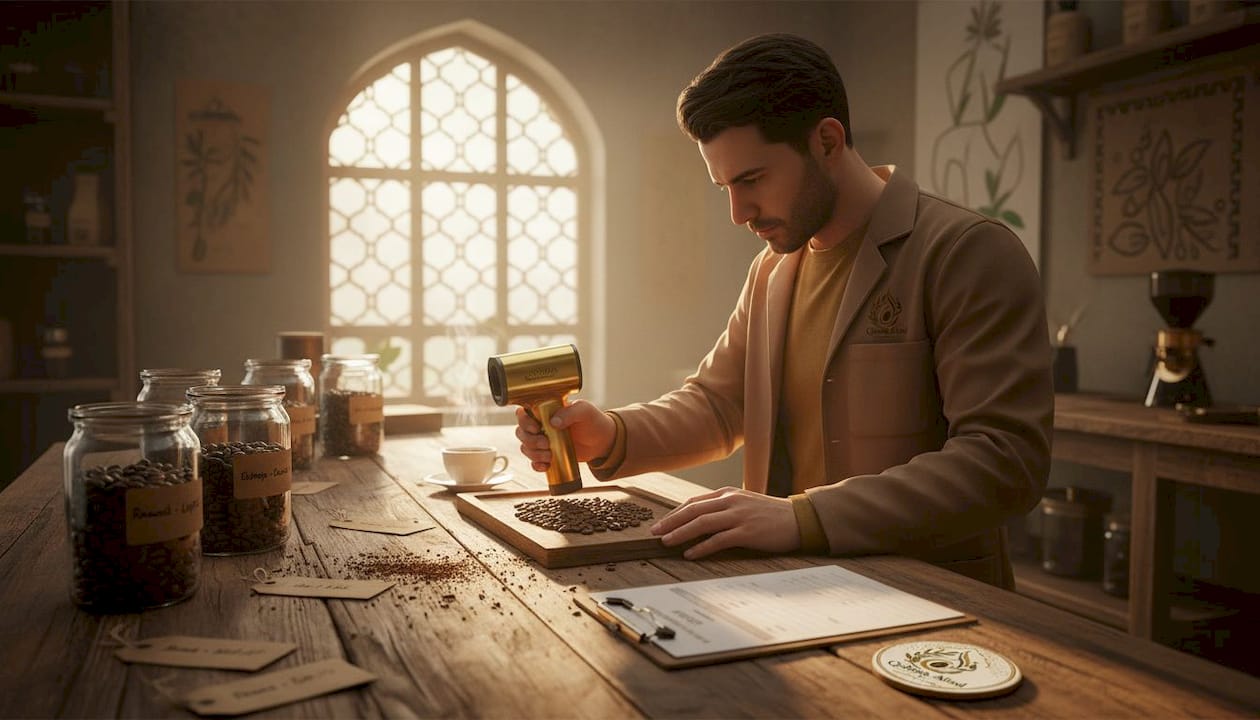
Researchers recently identified a universal roasted coffee color curve showing that roast color can serve as a quantitatively consistent indicator of roast progression for specialty Arabica, regardless of roast profile or origin. This is a big deal. It means color, measured using the CIELAB Lab* system, tracks predictably across different origins and roasting approaches for high-quality Arabica. Roasters can now use color data as an objective checkpoint rather than relying entirely on subjective visual assessment.
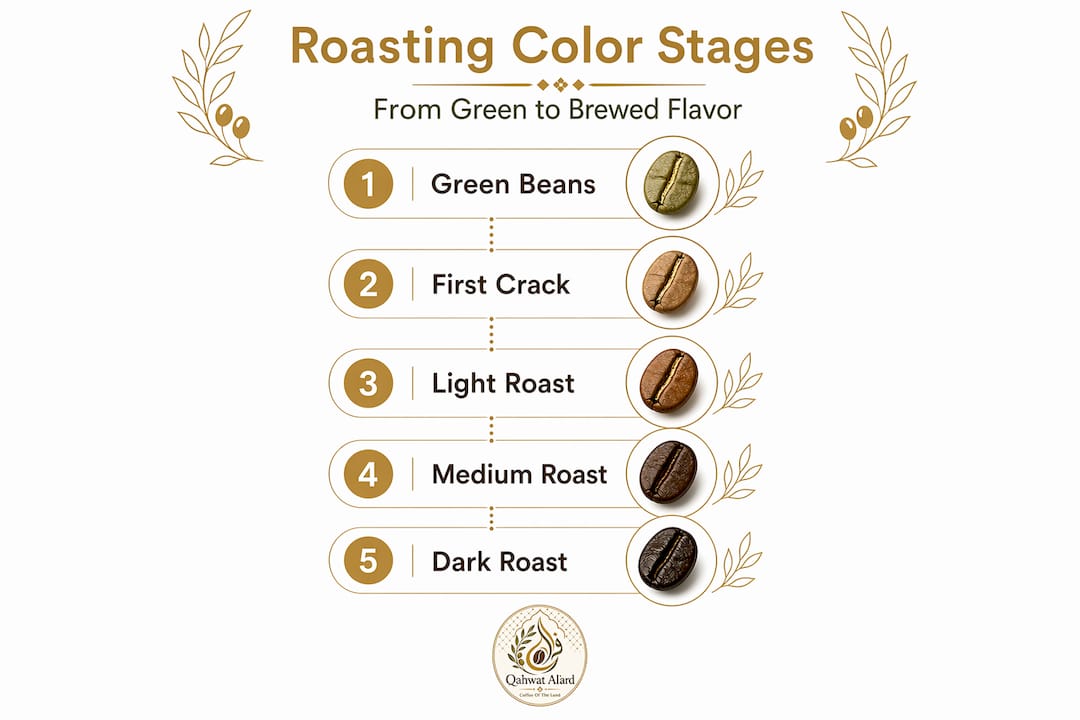
The CIELAB system measures color in three dimensions: L* for lightness, a* for red-green axis, and b* for blue-yellow axis. As coffee roasts, it moves along a predictable trajectory in this color space. Tracking that trajectory gives roasters a quantitative fingerprint for any given roast stage.
| CIELAB component | What it tracks | Relevance to roasting |
|---|---|---|
| L* (lightness) | Light to dark range | Drops significantly as roast darkens |
| a* (red-green) | Red tones in bean surface | Rises during early Maillard stage |
| b* (blue-yellow) | Yellow tones | Shifts during caramelization |
| Combined trajectory | Full color progression curve | Universal for specialty Arabica |
However, science is appropriately humble here. Published correction note limitations clarify that these findings focus only on high-quality specialty-grade Arabica and do not address decaf or defect-heavy coffees. Decaffeination alters bean chemistry significantly, and defect-laden beans introduce unpredictable color responses. Applying the universal curve to those edge cases would be a measurement error, not a roasting insight.
Pro Tip: If you want to understand how dramatic color progression looks in practice, compare a light roast side by side with a French Roast profile. The visual shift from tan to near-black tracks directly with the CIELAB L* drop, and you can taste the corresponding flavor transformation: delicate fruit notes replaced by bold, bittersweet intensity.
Technology’s role in enhancing roaster consistency
Knowing the science of roast color is useful. Having tools to act on it in real time is transformative. Modern roasting software has changed what’s possible for specialty roasters who want to deliver the same cup quality batch after batch.
Modern roasting software and curve overlaying techniques help roasters maintain consistent quality by recording real-time roast data. Rather than reconstructing a great roast from memory, a roaster can pull up the exact temperature curve from a previous batch, overlay it on the current roast in progress, and make live adjustments to stay on track. This is quality management at a level previously unavailable to all but the largest industrial operations.
Here’s how a technology-assisted roasting workflow typically unfolds:
- Profile creation: The roaster establishes a reference profile for each coffee, logging every temperature point, rate of rise, and critical event like first crack timing.
- Real-time overlay: During subsequent batches, software displays the live curve against the reference profile, revealing deviations as they happen.
- Adjustment and annotation: The roaster makes targeted adjustments to heat or airflow, annotating changes for future reference and learning.
- Color verification: At drop, color measurement tools cross-check the roast visually against CIELAB benchmarks for that profile.
- Sensory confirmation: Cupping sessions validate that the data-driven approach actually produced the intended flavor result.
Pro Tip: For home enthusiasts who want to appreciate this process, investing in quality gear matters more than most people realize. Exploring premium coffee gear that supports precise brewing helps you actually taste what expert roasters intended when they dialed in a profile.
The stakes are especially high for specialty grade, ethically sourced coffees. When a green coffee costs significantly more because of sustainable farming practices and fair trade premiums, the roaster has a greater obligation to deliver the best possible outcome. Technology reduces the margin for error and honors that investment. Our coffee with mushrooms medium roast is one example of how a carefully managed roast profile preserves the functional ingredients in a complex blend while delivering a clean, balanced cup.
Specialty Arabica vs. other coffees: Nuances and limitations
Not every coffee responds to roasting the same way, and understanding those differences separates casual enthusiasm from genuine connoisseurship. Specialty Arabica, defined by the Specialty Coffee Association as scoring 80 points or above on a 100-point scale, is the benchmark for precision roasting and the primary subject of the new color curve research.
But the coffee world extends well beyond specialty Arabica. Robusta, liberica, and commercially graded Arabica with defects all roast differently and require distinct approaches.
| Coffee type | Color curve reliability | Typical roast challenge | Best approach |
|---|---|---|---|
| Specialty Arabica | High (universal curve applies) | Preserving delicate aromatics | Precise profiling, data-driven |
| Commercial Arabica | Moderate | Defect masking vs. flavor expression | Experience-based adjustments |
| Robusta | Low for universal curve | Higher caffeine affects heat behavior | Species-specific profiles |
| Liberica | Low for universal curve | Unusual bean density and size | Manual sensory-heavy approach |
| Decaf | Not applicable | Altered cell structure from processing | Conservative, slower development |
The correction note limitations from the color curve research make clear that edge-case limits include defect-heavy coffees and non-Arabica species, which may behave differently under identical heat conditions. A roaster who applies specialty Arabica protocols to a high-robusta blend risks under-developing or scorching the batch because robusta beans have denser cell walls and respond to heat at different rates.
What does this mean for you as a coffee enthusiast? When you see a brand investing in rigorous roasting protocols, check whether they’re applying those protocols appropriately across their full offering:
- Single origin specialty Arabica should show evidence of precision profiling matched to the specific origin’s characteristics.
- Blends containing robusta should reflect deliberate calibration for that species, not a one-size-fits-all curve borrowed from Arabica research.
- Functional or specialty blends require additional consideration for added ingredients that may be heat sensitive.
Our African Espresso specialty showcases what happens when roasting honors the distinct characteristics of African-grown Arabica: a cup built around natural acidity, winey depth, and stone fruit complexity that a poorly calibrated roast would flatten entirely. For those who prefer bolder intensity, the dark roast approach demonstrates how taking a coffee further along the color curve shifts the sensory experience toward roast-forward richness without tipping into bitterness.
Roaster wisdom: Why science alone isn’t enough
Here’s something the specialty coffee world doesn’t say loudly enough: data can protect you from a bad roast, but it cannot guarantee a great one. This distinction matters enormously, and it’s where roaster instinct and accumulated sensory experience become irreplaceable.
Science narrows the range of error. The CIELAB color curve tells a roaster they’re hitting the right point in roast progression. Software confirms they’re following the reference profile. But between those checkpoints, dozens of micro-decisions happen in real time. The roaster hears how beans are moving in the drum. They smell the transition from grassy to bready to caramel. They feel whether the batch is responding sluggishly or too aggressively to a heat adjustment. No sensor captures all of that simultaneously in a form that can drive an immediate, nuanced response.
This becomes especially true with small batches of rare or experimental coffees, like a limited natural-process lot from a smallholder farm in Yemen or a carbonic maceration experiment from a Peruvian producer. These coffees often don’t behave like any reference profile in the database. They require a roaster who can adapt, trust their senses, and resist the temptation to force the coffee into a familiar data shape.
The uncomfortable truth for those who over-fetishize technology is this: a roaster who understands the science deeply but has spent fewer than a thousand hours actually roasting will make worse decisions than an experienced roaster who barely knows what CIELAB stands for. The optimal roaster combines both. Science gives them a framework. Experience gives them judgment. Neither is sufficient alone.
We believe the most sustainable coffee choices extend beyond sourcing. They include the commitment to roasting those beans with enough care and expertise that the farmer’s work is never wasted in the roast drum. When a coffee has been grown ethically, harvested carefully, and transported with attention to freshness, the roaster’s job is as much an act of respect as it is a craft.
Explore premium coffees shaped by expert roasting
Understanding roast science transforms how you experience every cup. Recognizing what precision profiling, color management, and roaster expertise actually produce in the cup gives you a new lens for evaluating quality.
At Qahwat Al’Ard, every coffee in our catalog moves from green sourcing through expert roasting with exactly this level of attention. Our single origin coffees from Ethiopia, Kenya, Tanzania, Yemen, and beyond are roasted to honor their distinct terroir, not to fit a generic profile. Whether you’re drawn to the transparency of a light roast that lets origin flavors speak or the bold complexity of a dark roast developed with precision, our selection offers coffees where roasting decisions are deliberate, measurable, and craft-driven. Browse our full collection at qahwatalard.com and taste what expert roasting actually feels like in the cup.
Frequently asked questions
How does roast color impact coffee flavor?
Roast color is a key marker of development and correlates directly with flavor changes. Research confirms that roast color serves as a consistent indicator of roast progression for specialty Arabica, helping roasters achieve repeatable sensory results across batches and origins.
Does technology help roasters produce better coffee?
Yes, when used alongside sensory expertise. Modern roasting software and curve overlaying gives roasters the ability to track and replicate successful profiles with precision, reducing batch-to-batch variation and supporting consistently high quality outcomes.
Are universal roast curves valid for all coffee types?
No, and the research is explicit about this. The correction note limitations warn that the universal color curve applies only to high-quality specialty-grade Arabica and does not extend reliably to decaf, defect-heavy beans, or non-Arabica species like robusta or liberica.
How do roasters and brewers ensure great coffee together?
They treat roasting and brewing as linked but distinct checkpoints. Using frameworks like the SCA Golden Cup targets, skilled roasters and baristas cross-check both roast and extraction variables, ensuring neither side of the process undermines the other.


