


Yes, coffee roasted and processed specifically to lower chlorogenic acid content tends to sit easier on a sensitive stomach for many drinkers. The smartest way to find out if it works for you is to start small: a Single Origin Favorites Sample Pack or a box of Mexico Coffee Pods from Qahwat Al’Ard lets you test tolerance without committing to a full bag. If your reflux is frequent or severe, loop in a doctor before you experiment.
TL;DR:
- Top testing options include sample packs and pods that allow multiple trials without large commitment, reducing waste if a bean doesn’t suit your stomach.
- Darker roasts made with hot-air roasting tend to have lower chlorogenic acid levels, but third-party lab testing is the only reliable way to confirm low acid content.
- The flavor profile of low-acid coffee is generally mellower and less bright, with more chocolate and caramel notes, regardless of the roast level.
- Brewing methods like cold brew, lower temperature hot brewing, and adding milk can help reduce the perceived acidity and ease digestive discomfort.
- Individual responses vary widely, so proper testing involves changing one variable at a time and tracking specific reactions, rather than assuming one product will work for everyone.
Table of Contents
- Which Qahwat Al’Ard Coffees Work Best for Sensitive Stomachs?
- What Does “Low Acid” Actually Mean in Coffee?
- How Do You Choose a Low-Acid Coffee?
- Can Brewing Method Lower Coffee’s Acidity?
- Who’s Behind This Guide?
- Does Low-Acid Coffee Taste Different From Regular Coffee?
- How Should You Store Low-Acid Coffee Beans?
- Are There Other Health Benefits to Low-Acid Coffee?
- What Do Low-Acid Coffees Typically Cost?
- Which Low-Acid Coffee Should You Buy First?
- The Real Lesson in All This Testing
- Ready to Test Your Tolerance? Start Here
- Sources
- FAQ
Which Qahwat Al’Ard Coffees Work Best for Sensitive Stomachs?
Not every coffee on the shelf is built the same way, and if your stomach reacts to coffee, format matters almost as much as roast. Some readers do better with a single origin they can isolate and track. Others want variety without buying five separate bags. Here’s how the Qahwat Al’Ard catalog breaks down for gentler drinking.
Single Origin Favorites Sample Pack This is the starting point if you don’t yet know which origin your stomach tolerates best. Because each origin carries a different natural acid profile, tasting several sides by side, rather than guessing from one bag, is the fastest way to isolate what actually triggers you.
- Best for: readers who haven’t identified their personal trigger yet
- Standout: lets you compare origins without a full bag commitment
- Buying notes: check the listing for available roast levels and bag sizes before ordering
Flavored Coffees Sample Pack Flavored coffee has a reputation for being harsher on sensitive stomachs, mostly because of how some brands handle their flavoring oils. This sample pack is worth trying if you want variety without giving up flavor entirely, though flavored beans deserve a closer look before you commit to a full-size bag.
- Best for: drinkers who want flavored options without buying several full bags to test them
- Standout: samples multiple flavor profiles in one order
- Buying notes: pair with a food journal for a week to catch delayed reactions
Chocolate Hazelnut and French Vanilla Both are popular flavored picks, and both deserve a specific caution: flavoring is typically added after roasting, so the additive itself, not the bean’s chlorogenic acid content, can be what irritates a sensitive stomach. If you know dairy-adjacent or sugar-heavy additives bother you, patch-test these in a small quantity before buying a full bag of either.
- Best for: drinkers who tolerate flavored coffee elsewhere and want a coffee-shop-style cup at home
- Standout: dessert-style flavor without visiting a café
- Buying notes: read the ingredient list on the product page, not just the flavor name
Best Sellers Sample Pack: 6Bean, Cowboy, Breakfast, Peru, Mexico, Bali This is the broadest option on the list, spanning six different blends and origins in one box. It’s the pack to choose if you want maximum coverage of roast levels and bean styles before narrowing down to a single favorite.
- Best for: readers who want to sample blends and single origins in one order
- Standout: covers light, medium, and dark roast territory in a single pack
- Buying notes: track which of the six you finish first. That’s usually your answer.
Mexico Coffee Pods and English Breakfast Pods solve a real problem for reflux-prone drinkers: portion control. A single pod means one measured cup, which makes it far easier to notice if today’s stomach ache is coffee-related or not. English Breakfast, a black tea rather than a coffee, is worth mentioning for households splitting between a coffee drinker and someone avoiding coffee acids altogether.
- Best for: single-serve convenience and clean tracking of one cup at a time
- Standout: no grinding or brewing guesswork, so the variable you’re testing stays isolated
- Buying notes: pods work well for office trials where you can’t control water temperature or brew time
If your household mixes coffee drinkers with tea drinkers, the Peach Paradise fruit tea or Earl Grey round out the options for anyone avoiding coffee acids entirely while still getting a warm drink in the rotation.
What Does “Low Acid” Actually Mean in Coffee?
“Low acid” gets used loosely in coffee marketing, and it covers two different things that aren’t the same. One is chlorogenic acid, a chemical compound in the raw bean that’s been linked to gastric irritation. The other is perceived flavor acidity, the bright, tangy taste you notice in a cup, which comes from different compounds entirely and has little to do with how your stomach reacts.
That distinction explains why a dark roast can taste “smooth” while still causing reflux, and why a bright, citrusy light roast might sit fine with some drinkers. Chlorogenic acid content, not tasting-note acidity, is what most reflux-focused coffee is trying to reduce.
Roasting method plays a direct role here. A 2021 review in Nutrients on coffee processing and bioactive compounds notes that roasting and processing chemically alter these compounds, and roast style is one of the biggest levers. Hot-air, or fluidized-bed, roasting circulates heat around the bean more evenly than a traditional metal-drum roaster, and that difference in heat transfer changes how much chlorogenic acid survives the process. Qahwat Al’Ard’s own breakdown of artisan roasting methods covers how convection versus drum roasting shapes both flavor and chemical composition, which is useful reading if you want to understand what’s actually happening inside the roaster.
Independent lab testing on specialized low-acid coffees has shown measurably lower chlorogenic acid levels compared with average national brands, which is the closest thing to hard proof that “low acid” labeling can mean something real rather than a marketing flourish. That’s also why third-party lab reports matter more than a bag’s front-label claim.
What a credible lab report should cover:
- Chlorogenic acid levels, ideally compared against a baseline or industry average
- Mycotoxin and mold screening, since some reflux and stomach reactions come from contaminants rather than the coffee itself
- A visible test date and testing lab name, not just a certification logo
Be skeptical of any bag that says “low acid” with no testing data attached anywhere on the product page. That single word, printed with nothing to back it, is the single biggest labeling red flag in this category. USDA organic certification is a separate but related signal. It doesn’t guarantee lower chlorogenic acid, but it does tell you the beans were grown without synthetic pesticide residue, which matters to plenty of sensitive-stomach drinkers for reasons beyond acidity.
How Do You Choose a Low-Acid Coffee?
Selecting a low-acid coffee is less about finding the “right” brand and more about running your own small experiment. Here’s the checklist worth working through before you buy:
- Look for third-party lab testing. A coffee that publishes chlorogenic acid and mycotoxin results is telling you more than one that just prints “gentle on your stomach” on the bag.
- Check for roast method disclosure. Does the seller mention hot-air versus drum roasting, or at least a roast date? Freshness and roast style both affect chlorogenic acid retention.
- Match roast level to your taste, separately from acidity. Darker roasts often taste smoother, but remember that flavor smoothness and chemical acidity are not the same thing.
- Ask about the decaf process, if relevant. Some decaffeination methods strip more compounds than others, which can shift both flavor and chlorogenic acid content.
- Pick your format based on how you’ll actually test it. Whole bean works if you’re comfortable controlling your own brew variables. Pods work better for consistent, low-effort trials. Sample packs work best when you’re still narrowing down which origin or roast agrees with you.
When you’re reading a product page, watch for vague claims with nothing behind them. “Stomach friendly,” with no lab data, no roast information, and no sourcing detail, is a page written by a marketing team, not a roaster who tested anything.
Pro Tip: Buy the smallest format available on your first order, even if the per-ounce price looks worse. A $12 sample pack that tells you a bean doesn’t work saves you from a $20 full bag that sits half-finished in your pantry.
Sample packs and pods exist for exactly this reason. A full bag locks you into one bean before you know if it agrees with you. A sample pack or a box of pods lets you run three or four trials for roughly the same money, which is the more rational way to spend on an untested product category.
Can Brewing Method Lower Coffee’s Acidity?
Your brewing choices can meaningfully change how a cup feels in your stomach, independent of which bean you started with. Cold brew is the most reliable lever here. Steeping coarsely ground coffee in cold or room-temperature water for 12 to 24 hours extracts fewer of the compounds that contribute to bright, sharp flavor, and many reflux-prone drinkers report an easier time with it than with hot brew from the same beans. A rough starting ratio is 1 part coffee to 4 parts water for a concentrate you dilute later.
If you’re sticking with hot brew, two adjustments help: drop your water temperature slightly, aiming for 195 to 200°F instead of a full boil, and grind a touch coarser than you normally would. Both changes slow extraction and pull out less of what contributes to a harsh, acidic-tasting cup.
- Use longer immersion methods (French press, cold brew) over fast-extraction methods like espresso if you’re testing tolerance
- Add milk or cream, which can buffer some of the sharpness for drinkers who tolerate dairy
- Skip the baking soda trick some forums recommend. It can neutralize stomach acid short-term, but Cleveland Clinic’s own lifestyle guidance for GERD points toward dietary and behavioral adjustment as the primary management strategy, not chemical workarounds
- Drink coffee after food rather than on an empty stomach, which tends to blunt the reflux response for many people
Pro Tip: Try the same bean two ways, hot brewed and cold brewed, on back-to-back days. If your stomach reacts to one but not the other, you’ve just learned your trigger is extraction, not the bean itself.
Who’s Behind This Guide?
This article is written by Yasin Sofyian Ayesh, a contributor covering specialty coffee sourcing and roasting practices for Qahwat Al’Ard. The claims here are built on published research and the brand’s own sourcing documentation, not guesswork.
Qahwat Al’Ard backs its low-acid recommendations with a few concrete proof points:
- Full traceability on beans sourced from Colombia, Peru, Bali, and Uganda, so you know where a bean actually came from before it reaches your cup
- Educational content on coffee processing methods that breaks down how natural, washed, and anaerobic processing each affect the finished bean
- A detailed look at how roasters shape flavor and quality, covering equipment choices and roast timelines that affect chlorogenic acid retention
- Coverage of anaerobic processing as a contrast point to methods that prioritize brightness over gentleness
Readers who want the mechanics behind any of these recommendations can work through those posts directly rather than take a bag’s front label at its word.
Does Low-Acid Coffee Taste Different From Regular Coffee?
Not as much as you’d expect, and that surprises most first-time buyers. Low-acid coffee isn’t a separate species of bean. It’s usually the same coffee species, processed or roasted to retain less chlorogenic acid, which means the flavor differences come down to roast level and origin rather than some fundamentally different taste category.
Darker roasts, which dominate the low-acid category, tend to taste rounder, with more chocolate and caramel notes and less of the bright, fruity snap you get from a light roast Ethiopian or Kenyan bean. Epicurious’s tasting coverage of low-acid coffee found that many low-acid options remain genuinely flavorful, and that origin and roast level, more than the low-acid processing itself, drive most of the taste difference drinkers notice.
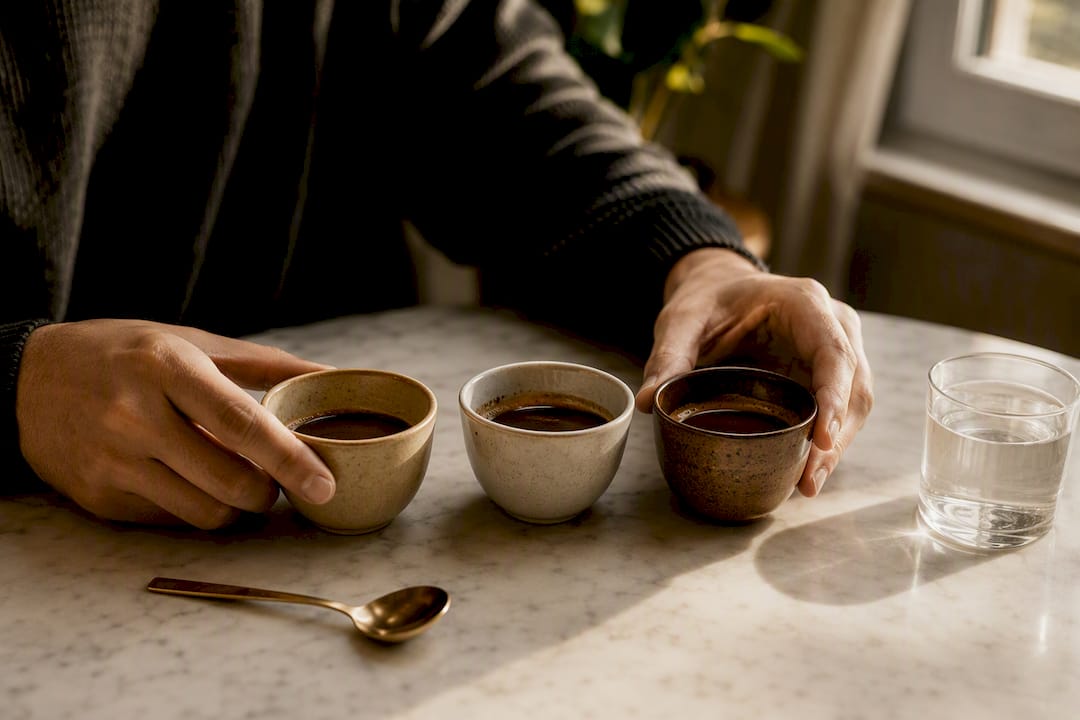
Set your expectations at “smoother and mellower,” not “watered down.” A well-roasted low-acid Peru or Mexico bean still has body and sweetness. What you’re trading away is sharpness, not flavor. If you’re coming from a habit of bright, acidic light roasts, expect an adjustment period of a few cups before a mellower profile starts tasting normal rather than flat.
How Should You Store Low-Acid Coffee Beans?
Storage matters more for low-acid coffee than people assume, mostly because staleness can reintroduce the harshness you were trying to avoid. Oxidized, stale coffee oils can taste sharp and bitter even from beans that started with low chlorogenic acid content, which undoes the point of buying them in the first place.
Keep beans in an airtight, opaque container, away from direct light and heat. A cabinet away from the stove works better than a countertop canister that looks nice but sits in sun for six hours a day. Skip the refrigerator. Coffee absorbs moisture and surrounding odors from a fridge, which can affect both flavor and, over time, promote the kind of mold growth that mycotoxin testing is meant to catch in the first place.
Buy only what you’ll use in two to three weeks, and grind just before brewing rather than storing pre-ground coffee. Ground coffee has far more surface area exposed to air, which speeds up the staling process considerably compared to whole beans. This is also a good argument for sample packs and pods: smaller portions mean you’re less likely to have a half-used bag going stale in the back of a cabinet.
Are There Other Health Benefits to Low-Acid Coffee?
Reflux relief tends to dominate the conversation, but chlorogenic acid isn’t purely a problem compound. It’s also one of coffee’s primary antioxidants, so a coffee engineered to reduce chlorogenic acid content is making a trade-off, not a pure upgrade.
That’s worth knowing before you assume “lower acid” automatically means “healthier” in every dimension. You’re gaining stomach comfort and losing some antioxidant density in exchange. For most people managing occasional reflux, that trade is worth it. For someone drinking coffee primarily for its antioxidant profile with no stomach issues at all, a standard roast might serve them better.
The gastroenterology guidance on dietary triggers generally frames this as an individual calculation rather than a universal rule: manage the trigger that’s actually bothering you, and don’t assume every processing change is a wholesale health upgrade. Caffeine content is a separate variable entirely. Low-acid processing doesn’t reliably raise or lower caffeine, so if caffeine itself is your trigger rather than acidity, you’ll want to look at decaf or reduced-caffeine options specifically, not just low-acid labeling.
What Do Low-Acid Coffees Typically Cost?
Specialty low-acid coffee generally runs close to standard specialty-grade pricing, sometimes with a modest premium tied to the extra processing steps or lab testing involved. Sample packs sit at the low end of the entry cost, which is exactly why they’re the recommended starting point for anyone unsure whether low-acid coffee will actually help.
The value calculation here isn’t just price per ounce. It’s price per successful trial. A full-size bag that doesn’t agree with your stomach is money spent on information you could have gotten for less. A sample pack spanning several origins, like the Single Origin Favorites Sample Pack, or a multi-blend box like the Best Sellers Sample Pack, spreads that cost across several tests instead of one bet.
Pods carry a per-cup premium over whole bean, which is standard across the entire pod category regardless of brand or acidity claims. That premium buys you portion control and brewing consistency, both of which matter when you’re trying to isolate a trigger. Whole bean stays the better long-term value once you’ve identified a bean that works, since you’re no longer paying for single-serve convenience you don’t need anymore.
Which Low-Acid Coffee Should You Buy First?
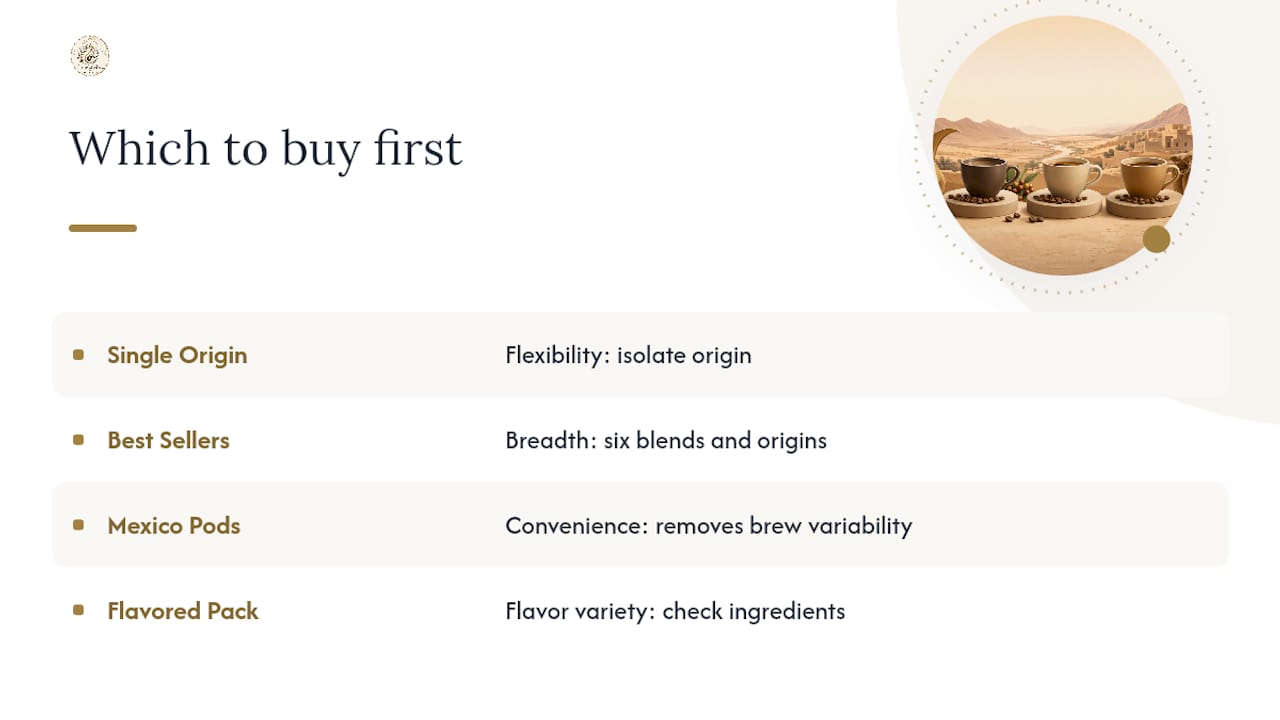
If you’re narrowing decisions to one purchase, here’s how the shortlist stacks up. The Single Origin Favorites Sample Pack wins on flexibility. It’s the strongest first purchase because it lets you isolate origin as a variable before you spend money on a full bag of anything.
The Best Sellers Sample Pack wins on breadth. Six different blends and origins in one box means you’re testing roast level, blend composition, and origin all at once, which is useful if you want a faster answer even at the cost of a slightly messier experiment.
Mexico Coffee Pods win on convenience and control. If your main goal is a clean, one-variable test, pods remove brewing inconsistency from the equation entirely, though you pay a per-cup premium for that.
The Flavored Coffees Sample Pack, including options like Chocolate Hazelnut and French Vanilla, is the pick if flavor variety matters as much as stomach comfort to you, with the caveat that added flavoring ingredients are worth checking before you commit to a full bag.
There’s no single best answer here, because the right first purchase depends on whether you’re optimizing for speed, flexibility, or flavor variety. Start with the format that matches how patient you’re willing to be with the testing process.
The Real Lesson in All This Testing
Most low-acid coffee advice treats the category like a solved problem: buy the right bag, and reflux goes away. That’s not how the research actually reads. The clearest thread running through the GERD dietary research is individual variability. What triggers one person’s reflux barely registers for another, which means the “best” low-acid coffee is genuinely different from one drinker to the next.
Where conventional advice falls short is treating a single bag purchase as the test. One bag, one brew method, one conclusion, that’s not enough data to know if the bean, the brew temperature, or the timing relative to a meal was actually responsible. A proper trial means varying one thing at a time across a few cups.
Prioritize the testing process over the brand name. A sample pack that lets you run three real comparisons beats a single bag you’re guessing about. Get the variable isolation right first. The specific bean matters less than most marketing suggests.
— Yasin Sofyian Ayesh
Ready to Test Your Tolerance? Start Here
Qahwat Al’Ard’s advantage for this exact problem is simple: full traceability from origin to roast means you can actually see what you’re testing, instead of guessing at a “low acid” label with nothing behind it. That transparency, sourced from Colombia, Peru, Bali, and Uganda, is what lets you match a reaction to an actual origin and roast rather than a marketing term.
Start with the Single Origin Favorites Sample Pack if you want to isolate which region agrees with your stomach, or the Best Sellers Sample Pack if you’d rather cover more ground in one order. If convenience matters more than variety, Mexico Coffee Pods give you a clean, single-serve test with no brewing variables to control.
Order one pack, brew a single cup after a meal rather than on an empty stomach, and give it a few days before drawing conclusions. If that origin works, browse the full single origin collection to find your next bag.
Sources
The clinical framing in this guide draws on Cleveland Clinic’s lifestyle guidelines for GERD, which lays out dietary trigger management as a core part of reflux care, and the Nutrients review on coffee processing, which explains how roasting chemically alters bioactive compounds like chlorogenic acid. For a consumer tasting perspective, Epicurious’s coverage of low-acid coffee offers a useful reminder that flavor and chemical acidity aren’t the same thing. The open-access review on diet and GERD underscores just how individual these triggers really are.
FAQ
What are the least acidic coffee beans?
Coffees roasted specifically to reduce chlorogenic acid, often through hot-air roasting methods, tend to register lowest on lab tests measuring this compound. Look for products that publish third-party lab results for chlorogenic acid rather than relying on a “low acid” label with no data behind it.
What coffee is good for acid reflux?
Coffee processed or roasted to lower chlorogenic acid content is generally easier on reflux-prone stomachs, though individual response varies quite a bit from person to person. Cleveland Clinic’s GERD lifestyle guidance recommends trialing specific beverages and tracking your own reaction rather than assuming any single product will work universally.
What beans are the least acidic?
Beans processed with documented chlorogenic acid reduction, and typically roasted darker using hot-air methods, tend to test lowest for this compound. Single-origin beans from Peru, Mexico, and similar regions often show up in low-acid product lines, though roast method matters more than origin alone.
Where can I buy low acidic coffee?
Qahwat Al’Ard offers several low-commitment ways to test low-acid coffee, including the Single Origin Favorites Sample Pack, the Flavored Coffees Sample Pack, and Mexico Coffee Pods for single-serve trials. Current pricing for each is listed directly on the product pages.


