


TL;DR:
- Yemeni coffee features intense dried fruit, dark chocolate, warm spices, and a wine-like acidity. Its unique flavor stems from heirloom genetics, high-altitude growing, and natural sun-drying traditions. Brewing methods like the Ibrik or French press best preserve its complex, wild profile.
The Yemeni coffee flavor profile is defined by intense dried fruit, dark chocolate, warm spices, and a wine-like acidity found in no other origin on earth. In specialty coffee circles, this profile is often called a “natural process terroir expression,” meaning the land, altitude, and traditional processing method all leave a direct fingerprint on your cup. Yemen is widely recognized as the birthplace of cultivated coffee, and its beans carry that ancient lineage in every sip. What you taste in a Yemeni cup is not engineered. It is the product of heirloom genetics, mountain altitude, and centuries of unchanged farming practice.
What are the key flavor characteristics of Yemeni coffee?
Yemeni coffee is defined by intense dried fruit flavors, dark chocolate, complex spices, wine-like acidity, and a syrupy body that coats the palate. These are not subtle background notes. They are the dominant, unmistakable character of the cup. No other origin stacks this many distinct sensory layers into a single brew.
The primary flavor notes you will encounter include:
- Dried fruit: Raisin, date, and fig are the most common descriptors. These come directly from the natural sun-drying process.
- Chocolate and cocoa: Dark chocolate and bittersweet cocoa undertones run through most Yemeni varieties.
- Spice: Cardamom, cinnamon, and clove appear as both aroma and aftertaste. These notes are not added. They develop naturally in the bean.
- Wine-like acidity: This is a tartaric, almost Burgundy-style acidity, not the bright citric acid typical of washed Ethiopian coffees.
- Full, syrupy body: The mouthfeel is thick and coating, closer to a dessert wine than a light tea-style coffee.
- Aftertaste: Long, warm, and spiced. A well-roasted Yemeni bean leaves a finish that lingers for minutes.
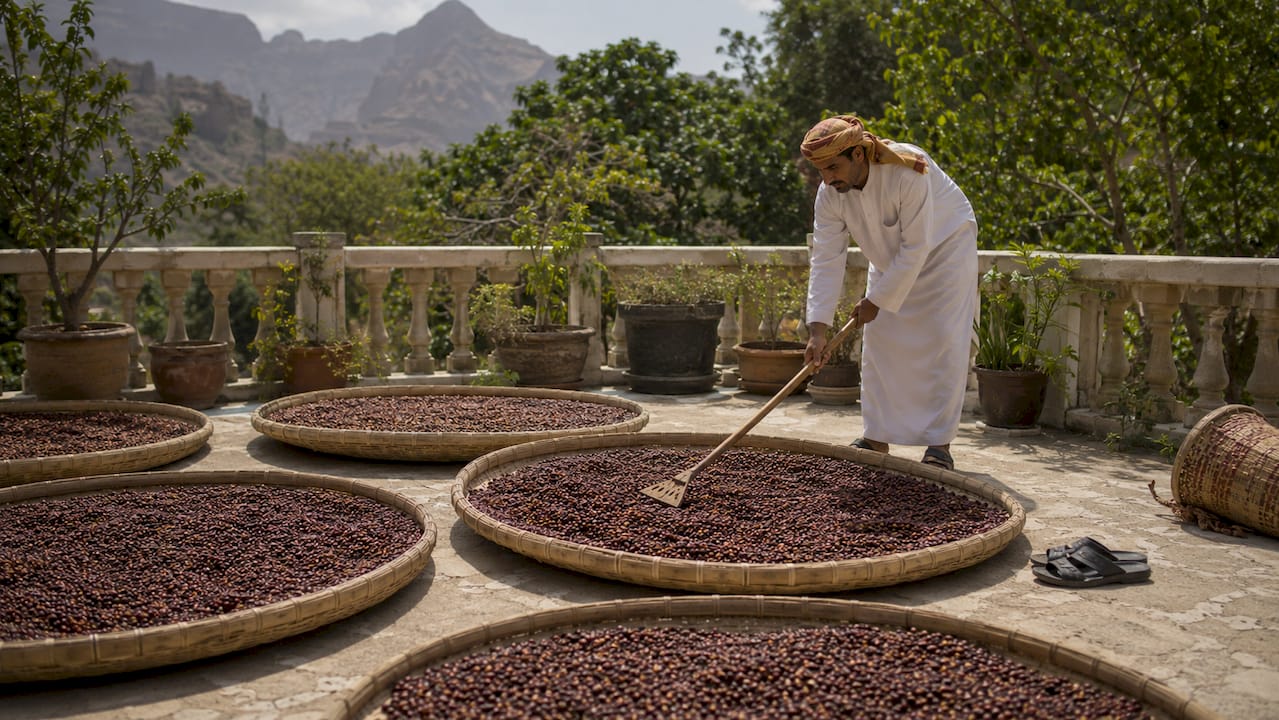
The natural sun-drying method is the single biggest driver of these flavors. Beans dry inside the fruit on rooftops for weeks, allowing sugars and fermentation compounds to migrate deep into the seed. This is why Yemeni tasting notes read more like a dried fruit market than a standard coffee menu.
Pro Tip: Light to medium roasts preserve the most complexity in Yemeni coffee. A dark roast will amplify the chocolate and spice but burn off the delicate dried fruit and wine-like acidity that make this origin exceptional.
How do regional varieties of Yemeni coffee differ in flavor?
Yemen’s coffee varieties list includes five major growing regions, each producing a cup with a distinct personality. Altitude, microclimate, and soil composition shift the flavor balance significantly from one mountain range to the next. Understanding these regional differences is what separates a casual Yemeni coffee drinker from a true enthusiast.
| Region | Altitude | Primary Flavor Notes | Character |
|---|---|---|---|
| Haraaz | 2,000–2,500m | Dark chocolate, stone fruit, plum | Bold, heavy, complex |
| Mattari | 1,800–2,200m | Winey fruit, blueberry, molasses | Intense, fruit-forward |
| Ismaili | 1,500–2,000m | Floral, apricot, light spice | Delicate, aromatic |
| Sanani | 1,600–2,100m | Mixed fruit, mild spice, earthy | Balanced, approachable |
| Hirazi | 1,700–2,300m | Dried cherry, cocoa, cedar | Rustic, full-bodied |
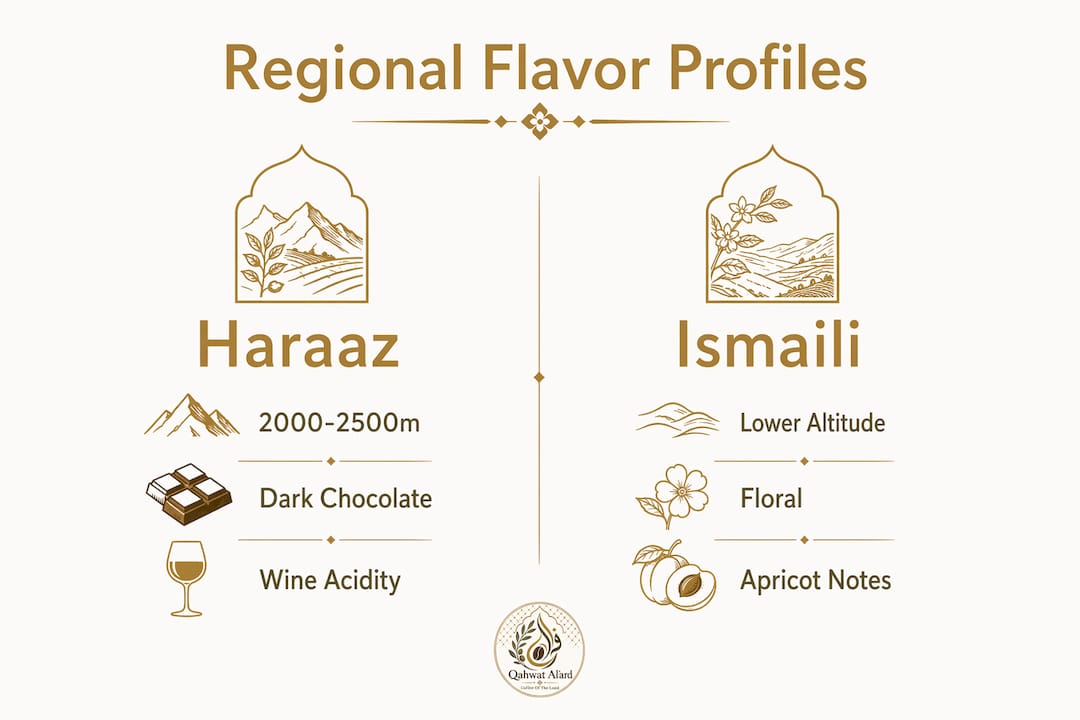
Haraaz is widely considered the most prized of the best Yemeni coffee varieties. Its extreme altitude produces beans with the highest sugar and acid concentration, which translates to that signature dark chocolate and stone fruit intensity. Mattari is the region most associated with the classic “mocha” descriptor, a term that originates from the Yemeni port city of Mocha and refers to the wine-fruit character of the cup, not chocolate syrup.
Ismaili stands apart for its floral and apricot notes, making it the most approachable entry point for drinkers who prefer lighter, more aromatic profiles. Top specialty lots from Haraaz, Mattari, and Ismaili regularly score between 88 and 93 points on the SCA scale. That range places them firmly in the elite tier of global specialty coffee, competing with the best lots from Ethiopia and Panama.
How do growing conditions shape Yemeni coffee’s taste?
Yemen’s terroir is unlike any other coffee-growing environment on the planet. Yemeni coffee grows at altitudes between 1,500m and 2,500m, where extreme diurnal temperature swings force the plant to concentrate sugars and acids inside the bean. Hot days and cold nights slow the fruit’s development, giving the seed more time to accumulate complexity. This is the same mechanism that makes high-altitude Ethiopian and Guatemalan coffees exceptional, but Yemen’s mountains push it further.
Four factors define how Yemeni terroir shapes the cup:
- Ancient terraced farming. Yemeni farmers have carved terraces into steep mountain slopes for over 500 years. These terraces control water drainage and root depth, creating a consistent stress environment that concentrates flavor.
- Heirloom genetics. Yemeni coffee’s wild flavor stems from ancient, non-hybridized heirloom genetics distinct from Typica and Bourbon lines. These varieties have never been crossed with commercial cultivars, preserving a flavor complexity that modern hybrids cannot replicate.
- Natural sun-drying. Extended rooftop drying allows fermentation notes and fruit sugars to migrate into the bean, producing the dried fruit sweetness and complexity that define Yemeni tasting notes. Washed coffees from Colombia or Kenya strip this layer away entirely.
- Minimal water access. Yemen’s arid climate means trees grow under water stress, which further concentrates the bean’s flavor compounds.
Pro Tip: When you read “natural process” on a coffee bag, it means the bean dried inside the fruit. For Yemeni coffee, this is not a processing choice. It is the only method farmers have used for centuries, which is why the flavor is so deeply embedded in the bean’s character.
Understanding how altitude shapes flavor helps explain why Haraaz consistently outscores lower-altitude lots. The role of terroir goes beyond altitude alone, pulling in soil minerals, rainfall patterns, and even the specific wild yeast populations present during drying.
How does Yemeni coffee compare to other major origins?
Placing Yemeni coffee next to other prominent origins clarifies what makes its flavor characteristics genuinely rare. Yemeni coffee’s flavor contrasts sharply with Ethiopian’s brighter floral notes and Colombian’s balanced sweetness. Yemeni is darker, heavier, and wilder in character than either.
Here is how the comparison breaks down across four key sensory dimensions:
- Yemeni vs. Ethiopian: Ethiopian naturals share some dried fruit overlap, but Ethiopian coffees lean toward bright berry and jasmine. Yemeni cups are heavier, darker, and more wine-driven. The acidity in Ethiopian coffee is citric and lively. In Yemeni coffee, it is tartaric and brooding.
- Yemeni vs. Colombian: Colombian coffee is the benchmark for balance. Sweet, clean, and consistent. Yemeni coffee is the opposite of consistent. It is wild, intense, and layered in a way that demands attention. Colombian suits everyday drinking. Yemeni suits deliberate tasting.
- Yemeni vs. Sumatran: Both origins produce full-bodied, low-acidity cups with earthy depth. But Sumatran coffee leans toward mushroom, tobacco, and dark earth. Yemeni coffee replaces those earthy notes with dried fruit, spice, and a wine-like finish. They share body weight but diverge completely in flavor direction.
- Roast profile comparison: Colombian and Ethiopian coffees are typically roasted light to medium to preserve brightness. Yemeni coffee performs best at medium roast, where the spice and fruit notes peak without the chocolate becoming bitter.
For a deeper look at how origin shapes flavor complexity across regions, the comparing coffee origins guide at Qahwatalard covers this topic in detail.
What are the best ways to brew and taste Yemeni coffee?
Yemen coffee preparation techniques have been refined over centuries, and the traditional methods are still the most effective for experiencing the full flavor profile. Traditional Yemeni preparation includes brewing with an Ibrik and adding cardamom pods to highlight the spice-driven flavor. This method, known as qahwa, is served in small cups and consumed slowly, which is exactly how the complexity of this coffee deserves to be experienced.
Practical brewing guidance for getting the most from Yemeni beans:
- Ibrik or Turkish pot: This is the most traditional method. Low, slow heat extracts the full body and spice character. Grind fine, use cold water, and heat gradually without boiling.
- French press: A coarser grind and four-minute steep highlights the syrupy body and dried fruit notes. This is the best modern method for showcasing Yemeni mouthfeel.
- Moka pot: Produces a concentrated, espresso-style extraction that amplifies the chocolate and spice. Strong and bold, best for drinkers who want intensity over nuance.
- Water temperature: Use water at 195°F to 205°F (90°C to 96°C). Boiling water scorches the delicate fruit compounds and flattens the wine-like acidity.
- Milk and sugar: Yemeni coffee is best served without milk or sugar to preserve its natural earthy and spice-driven flavors. Cardamom is the traditional addition and actually enhances rather than masks the spice notes already present in the bean.
Pro Tip: Grind Yemeni coffee just before brewing. The volatile aromatic compounds responsible for the cardamom and cinnamon notes dissipate quickly once the bean is ground. A burr grinder set to medium-fine for French press or medium for drip will give you the cleanest extraction.
Key takeaways
The Yemeni coffee flavor profile is the product of ancient heirloom genetics, extreme altitude terroir, and natural sun-drying, producing dried fruit, dark chocolate, warm spice, and wine-like acidity that no other origin replicates.
| Point | Details |
|---|---|
| Core flavor identity | Dried fruit, dark chocolate, cardamom, and wine-like acidity define every Yemeni cup. |
| Regional variety matters | Haraaz, Mattari, and Ismaili each produce distinct profiles ranging from bold chocolate to delicate floral. |
| Altitude drives complexity | Beans grown at 1,500–2,500m develop concentrated sugars and acids through extreme temperature swings. |
| Natural processing is non-negotiable | Sun-drying inside the fruit is what creates the signature dried fruit sweetness and fermentation depth. |
| Brew method shapes the experience | Ibrik and French press best preserve the spice and body; light to medium roast protects the fruit notes. |
Why Yemeni coffee changed how I think about flavor
I have tasted a lot of single-origin coffees over the years. Ethiopian naturals, Kenyan SL28, Panamanian Geisha. Each one has a moment where it surprises you. But the first time I tasted a Haraaz natural from Yemen, I genuinely did not recognize it as coffee at first. It smelled like a bowl of dried figs and dark chocolate left next to a glass of red wine. That sounds like a description someone invented. It is not.
What struck me most was how unpolished it tasted compared to modern specialty coffees. Most high-scoring coffees today are processed to highlight clean, bright, predictable notes. Yemeni coffee does not do that. It is wild and funky, and that wildness reflects authentic ancient origins that remain unaltered by commercial hybridization. That is not a flaw. That is the point.
My honest advice to anyone building a palate for Yemeni coffee: stop comparing it to other coffees. Taste it on its own terms. Brew it in a French press, skip the milk, and give it five minutes to cool slightly before your first sip. The flavor opens up as the temperature drops, and the spice notes become clearer. You are not just drinking coffee. You are drinking something that has been grown and processed the same way for five centuries. That context changes how it tastes.
Modern coffee culture is finally catching up to what Yemeni farmers have always known. Heirloom genetics and traditional processing produce complexity that no amount of post-harvest engineering can replicate. If you have only ever explored African coffees through Ethiopia, a Mattari or Ismaili lot will reframe your entire understanding of what the continent’s coffee can be.
— Anthony-Yasin
Explore single-origin Yemeni and specialty coffees at Qahwatalard
If this guide has made you want to taste what you have been reading about, Qahwatalard sources and roasts single-origin coffees with full traceability back to the farm and region. The single-origin collection includes carefully selected lots chosen for flavor complexity and authentic origin character, exactly the kind of sourcing that Yemeni coffee demands.
Qahwatalard’s approach to specialty coffee goes beyond the bag. Every product comes with origin context, roast notes, and brewing guidance so you can taste the difference that terroir makes. Whether you are starting with a familiar African profile or ready to go deep on a rare Yemeni lot, the African Espresso is a strong starting point for drinkers who want bold, fruit-driven complexity before committing to a full single-origin Yemeni purchase.
FAQ
What does Yemeni coffee taste like?
Yemeni coffee tastes like dried fruit, dark chocolate, warm spices such as cardamom and cinnamon, and has a wine-like acidity with a thick, syrupy body. These flavors come from natural sun-drying, heirloom genetics, and high-altitude growing conditions.
What are the main Yemeni coffee varieties?
The main Yemeni coffee varieties by region include Haraaz, Mattari, Ismaili, Sanani, and Hirazi. Each produces a distinct flavor profile, from Haraaz’s dark chocolate and stone fruit to Ismaili’s floral and apricot notes.
How is Yemeni coffee traditionally prepared?
Yemeni coffee is traditionally brewed in an Ibrik with cardamom pods added to the grounds, then served in small cups without milk or sugar. This method, called qahwa, preserves the full spice and fruit character of the bean.
Why is Yemeni coffee so rare and expensive?
Yemeni coffee is rare because it grows on ancient terraced mountain farms with limited yield, uses labor-intensive natural processing, and comes from non-hybridized heirloom varieties that cannot be mass-produced. Political instability in Yemen further restricts export supply.
How does Yemeni coffee score in specialty coffee ratings?
Top specialty lots from Haraaz, Mattari, and Ismaili regularly score 88–93 points on the SCA scale, placing them in the elite tier of global specialty coffee alongside the best Ethiopian and Panamanian Geisha lots.


