


Swiss Water decaf preserves origin character better than most solvent-based methods, and Qahwat Al’ard’s best pick for proving it is the Single Origin Favorites Sample Pack, followed closely by the Best Sellers Sample Pack. Both use the Swiss Water Process, meaning zero chemical solvents touch the beans. If you want a decaf that tastes like coffee instead of an apology for coffee, start there, especially if your skeptical decaf can taste good at all.
TL;DR:
- Swiss Water decaf preserves origin character better than solvent-based methods and typically costs more due to its traceability and freshness benefits.
- The best options are the Single Origin Favorites and Best Sellers sample packs, which allow taste testing across multiple origins and blends before buying full bags.
- For brewing, decaf beans need slightly finer grounds and adjusted coffee-to-water ratios to avoid a thin, weak taste, especially for pour-over and AeroPress methods.
- Always verify that the decaf listing explicitly states Swiss Water or solvent-free processes, and prefer whole beans with recent roast dates for optimal flavor.
- Swiss Water is ideal when origin clarity matters most, particularly for single-origin coffees, but it may produce a lighter body than other decaffeination methods like ethyl acetate.
Table of Contents
- Top Swiss Water Decaf Picks From Qahwat Al’ard
- Why the Swiss Water Process Matters for Flavor
- How Do You Choose the Best Swiss Water Decaf?
- Getting the Best Cup From Swiss Water Decaf
- Why Trust These Picks: Qahwat Al’ard’s Proof Points
- When Swiss Water Is the Right Call
- Try Swiss Water Decaf Without Committing to a Full Bag
- Sources
- FAQ
Top Swiss Water Decaf Picks From Qahwat Al’ard
Here’s a scannable rundown of the catalog’s standout decaf and Swiss Water offerings, with tasting notes and who each one suits best.
- Single Origin Favorites Sample Pack: A tasting flight across distinct growing regions, roasted medium to showcase origin clarity. Best for pour-over or AeroPress. Ideal for readers who want to taste terroir differences side by side. Browse the sample pack collection to compare formats.
- Best Sellers Sample Pack (6Bean, Cowboy, Breakfast, Peru, Mexico, Bali): A wide-net sampler mixing blends and single origins, medium to medium-dark roast. Works in drip machines and French press alike. Suited to households where everyone wants something different.
- Flavored Coffees Sample Pack: Rounds out the flavored lineup with lighter, aromatic infusions. Best brewed drip or pour-over to avoid muting the flavoring. Good for dessert-coffee drinkers.
- Chocolate Hazelnut: Medium roast with cocoa and toasted nut notes layered over a clean base. Holds up well in a French press. Fits anyone easing off sugary coffeehouse drinks.
- French Vanilla: Medium roast, sweet and rounded, no bitterness fighting the vanilla. Great in drip machines for everyday mornings. A classic pick for reluctant decaf drinkers.
- 6 Bean, Cowboy, Breakfast Blend, Peru, Mexico, Bali: Each represents a different roast profile, from bright and fruity (Peru) to bold and smoky (Cowboy). Best matched to your usual brew method rather than a special one.
- Mexico Coffee Pods: Same origin profile in single-serve format. Best for convenience brewing at the office or in a Keurig-style machine.
- English Breakfast and Earl Grey: For days you want tea instead of coffee, both hold up to milk without turning bitter.
- Peach Paradise: A fruit-forward flavored coffee, best iced or cold-brewed to let the peach notes shine.
Whole bean is the better freshness bet across the board. Pods win on convenience but lose a little on aroma retention.
Why the Swiss Water Process Matters for Flavor
Swiss Water decaffeination works by soaking green coffee beans in hot water, then passing that water through green coffee extract, a solution already saturated with everything in coffee except caffeine. Osmosis pulls caffeine out of the beans and into the water; carbon filtration then strips the caffeine from the extract so it can be reused. No methylene chloride, no ethyl acetate. It’s a solvent-free method from start to finish.
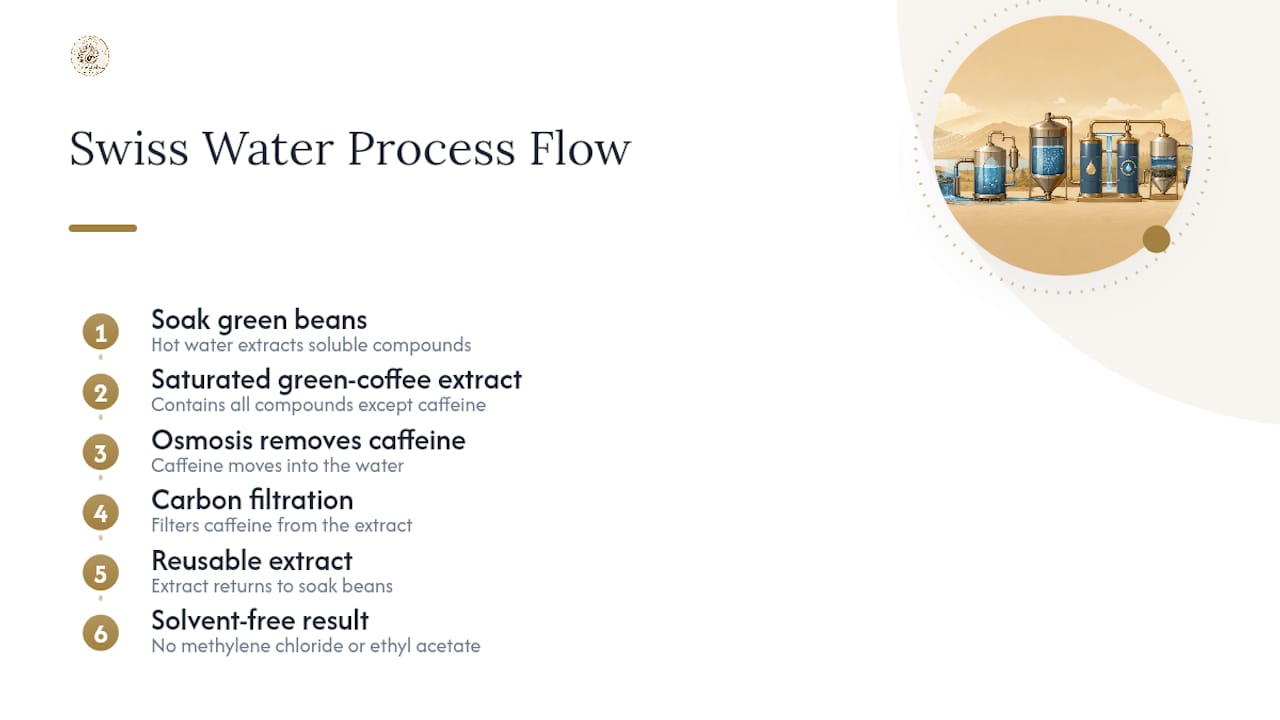
That matters because methylene chloride, still used in some cheaper decaf, carries documented workplace hazards serious enough that OSHA regulates its industrial handling. Swiss Water sidesteps the question entirely.
On taste, recent decaf roundups name Swiss Water and CO₂ processing among the methods best at preserving flavor, while BBC coverage notes Swiss Water tends toward clarity and origin faithfulness, sugarcane/EA leans sweeter, and CO₂ lands somewhere balanced. The trade-off: Swiss Water can occasionally run a touch lighter in body than EA decaf, though a good roast profile usually closes that gap.
How Do You Choose the Best Swiss Water Decaf?
Not every bag labeled “decaf” earns a place in your grinder. Run through this before buying:
- Confirm the process is named on the label. If a bag just says “decaf” with no method listed, that’s often a signal it’s solvent-based and mass-produced.
- Check for a roast date, not a “best by” date. A roast date within the last few weeks tells you far more than a vague expiration window.
- Match roast level to your taste. Lighter roasts show off origin acidity; medium and dark roasts favor body and chocolate notes.
- Pick a named origin if terroir matters to you. Single-origin decaf from a specialty single-origin collection shows more personality than generic blends.
- Start with a sample pack before committing to a full bag, especially with an unfamiliar roaster.
- Choose whole bean over ground whenever you have a grinder at home.
Pro Tip: If a decaf bag lists no origin, no roast date, and no decaffeination method, assume it’s a commodity blend built for shelf life, not flavor.
Expect specialty Swiss Water decaf to cost somewhat more than grocery-store decaf. That premium buys you traceability and a fresher roast, not just a fancier label.
Getting the Best Cup From Swiss Water Decaf
Decaf beans behave almost identically to caffeinated beans at the grinder and in the kettle, with one caveat: they can taste thinner if you brew them exactly like you’d brew a lighter-roast caffeinated coffee.
- Pour-over: Use a slightly finer grind than usual and a 1:15 coffee-to-water ratio; decaf’s lower density can make standard ratios taste weak.
- AeroPress: A 1:12 ratio with a 90-second steep pulls more body out of decaf without over-extracting bitterness.
- Drip machines: Bump your usual scoop count up by roughly 10% if the cup tastes watery.
- If it still tastes thin: Go coarser on grind size first, then adjust dose. Grind size affects extraction more than most people assume.
Storage matters as much as brewing. Decaf stales at the same rate as regular coffee. Keep beans in an airtight container away from light and heat, and try to use whole bean within a few weeks of the roast date for the brightest flavor. Buying larger bags to save money defeats the purpose if half the bag goes stale before you reach it.
Why Trust These Picks: Qahwat Al’ard’s Proof Points
Qahwat Al’ard sources with full traceability back to specific growing regions, including Colombia, Peru, Bali, and Uganda, and roasts to order rather than pulling from stale warehouse stock. That fresh-roast model is exactly what decaf needs most, since decaf loses aromatics on the same timeline as caffeinated coffee. The coffee journal breaks down the Swiss Water Process step by step for readers who want the mechanics behind the cup, not just a marketing claim.
When Swiss Water Is the Right Call
Swiss Water earns its reputation when origin clarity is the point. If you’re chasing the specific character of a Peru or a Bali and just want the caffeine gone, this is the process to buy. It’s not the sweetest decaf on the shelf. That crown often goes to sugarcane or EA processing. But clean, solvent-free, and honest to the bean is worth more to most serious drinkers than an extra half-point of sweetness. Try a sample pack, take notes, and see if you agree.
— Yasin Sofyian Ayesh
Try Swiss Water Decaf Without Committing to a Full Bag
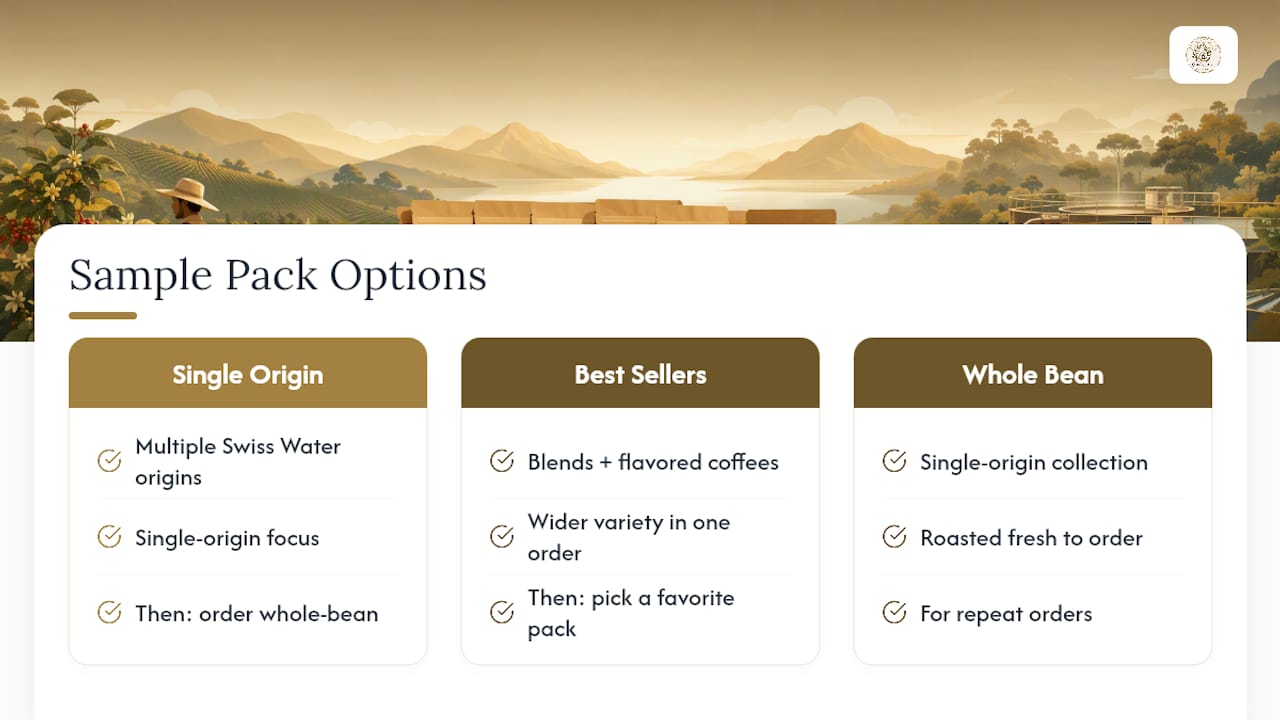
Decaf and specialty coffee sold with fresh roasting to order and the origin and process stated plainly, not buried in fine print. The easiest way in is the Single Origin Favorites Sample Pack, which lets you taste multiple Swiss Water origins before you settle on a favorite. If you’d rather sample blends and flavored coffees alongside single origins, the Best Sellers Sample Pack covers more ground in one order. Once you know what you like, order it whole bean and roasted fresh from the single-origin collection. Start with a sample pack this week, and let your own cup settle the debate.
Sources
Technical claims in this guide draw from Swiss Water’s own process explanation, Scientific American’s breakdown of caffeine removal, BBC’s reporting on decaffeination methods, OSHA’s methylene chloride hazard guidance, and The Spruce Eats’ tested decaf roundup.
- The 8 Best Decaf Coffees of 2025, Tested & Reviewed
- Methylene chloride — OSHA
- How do you decaffeinate coffee? — BBC
FAQ
Is Swiss Water Decaf Better Than Ethyl Acetate Decaf?
Swiss Water is solvent-free and tends to preserve origin clarity better, while ethyl acetate (often marketed as “sugarcane processed”) tends to produce a sweeter cup. Neither is objectively better; BBC’s coverage frames it as a flavor trade-off, not a quality gap.
Does Swiss Water Decaf Have Zero Caffeine?
No decaf process removes 100% of caffeine, but Swiss Water removes the vast majority while using no chemical solvents in the process. A cup of Swiss Water decaf still contains trace caffeine, just far less than a regular cup.
What’s the Best Swiss Water Decaf for Beginners?
The Single Origin Favorites Sample Pack from Qahwat Al’ard is the simplest entry point, since it lets you compare multiple origins in one order without committing to a full bag.
How Long Does Swiss Water Decaf Stay Fresh?
Decaf stales at roughly the same rate as caffeinated coffee, so whole bean is best used within a few weeks of the roast date. Buy smaller bags more often rather than one large bag that sits open for months.
Is Methylene Chloride Decaf Unsafe to Drink?
The safety concerns around methylene chloride relate mostly to industrial handling and occupational exposure, as OSHA documents, rather than trace residue in finished coffee. Even so, many specialty roasters avoid it in favor of solvent-free methods like Swiss Water.


