


Whole beans hold peak flavor for about two weeks once you open the bag, or a few weeks if it stays sealed. Ground coffee gives you a few days of real flavor after opening. Brewed coffee is good for a few hours, cold brew concentrate for a week or so in the fridge. None of that means the coffee turns unsafe after those windows. It just stops tasting like anything worth drinking, and the fix is simple: an airtight, opaque container, a cool, dark spot, and smaller bags bought more often.
TL;DR:
- Coffee in whole bean form remains peak flavor for about one to three weeks once opened, but stale beans are safe to drink and still usable in other ways.
- Proper storage with an airtight, opaque container in a cool, dark location extends freshness, especially when using smaller, more frequent purchases.
- Ground coffee stales within three to five days, significantly faster than whole beans, due to increased surface area exposed to oxygen.
- Freezing sealed, portioned coffee can help preserve flavor for a few months, but excessive frost exposure and thawing practices can speed staling.
- Coffee’s freshness heavily depends on roast date rather than printed expiry dates, so selecting freshly roasted beans and planning consumption accordingly enhances flavor.
Table of Contents
- How Long Does Coffee Last? Shelf Life by Form
- Practical Storage Methods to Maximize Freshness at Home
- What Actually Makes Coffee Go Stale
- Should You Freeze or Refrigerate Your Coffee?
- Is Your Old Coffee Still Good? A Quick Test
- How Qahwat Al’Ard Handles Freshness From Roast to Doorstep
- My Own Two-Week Coffee Routine
- Try Freshly Roasted Coffee That’s Built for Actual Freshness
- Sources
- FAQ
How Long Does Coffee Last? Shelf Life by Form
The gap between “still fine” and “still delicious” is bigger than most people assume. Coffee rarely spoils in the way milk or bread spoils. It stales. The flavor compounds fade, the oils turn rancid, and what’s left is a flat, cardboard version of what you paid for. Here’s how that plays out across the forms coffee actually comes in.
- Whole beans, sealed: Peak flavor lasts roughly three to four weeks from the roast date, according to Day9. The bag’s one-way valve is doing real work here, letting CO₂ escape without letting oxygen in.
- Whole beans, opened: Once you break the seal, that window shrinks to about one to three weeks, per Healthline’s shelf-life breakdown. Every time you open the bag, you swap out some of that protective gas for room air.
- Ground coffee, opened: Three to five days for peak flavor, sometimes stretching to two weeks if you’re not picky. Grinding shreds the bean into thousands of tiny fragments, and each fragment is a new surface for oxygen to attack.
- Instant coffee: This is the outlier. Sealed instant coffee can last months to years because the freeze-drying process removes almost all the moisture and oil that normally goes rancid. Once opened, it’s still far more forgiving than beans or grounds, mostly a matter of humidity control.
- Coffee pods: Good until the best-by date printed on the box, typically eight months to a year from packaging, since the sealed plastic or foil housing keeps oxygen out almost entirely.
- Brewed coffee, black: Best within thirty minutes to an hour off the burner or machine for flavor. Refrigerated, it holds up to three to four days before it turns bitter and flat, per Healthline.
- Cold brew concentrate: Seven to ten days refrigerated. Diluted cold brew, or anything you bought pre mixed from a shop, drops to three to four days.
Notice what’s missing from that list: the printed “best by” date. That date usually reflects packaging law, not flavor science. A bag stamped nine months out might already taste dull if it sat on a shelf for six months before you bought it. The roast date matters far more than any expiration stamp, because staling starts the moment the roaster pulls the beans out of the drum, not when a warehouse decides to print a label.
Practical Storage Methods to Maximize Freshness at Home
Good storage isn’t complicated, but it does require a few specific choices instead of whatever container happens to be sitting on the counter.
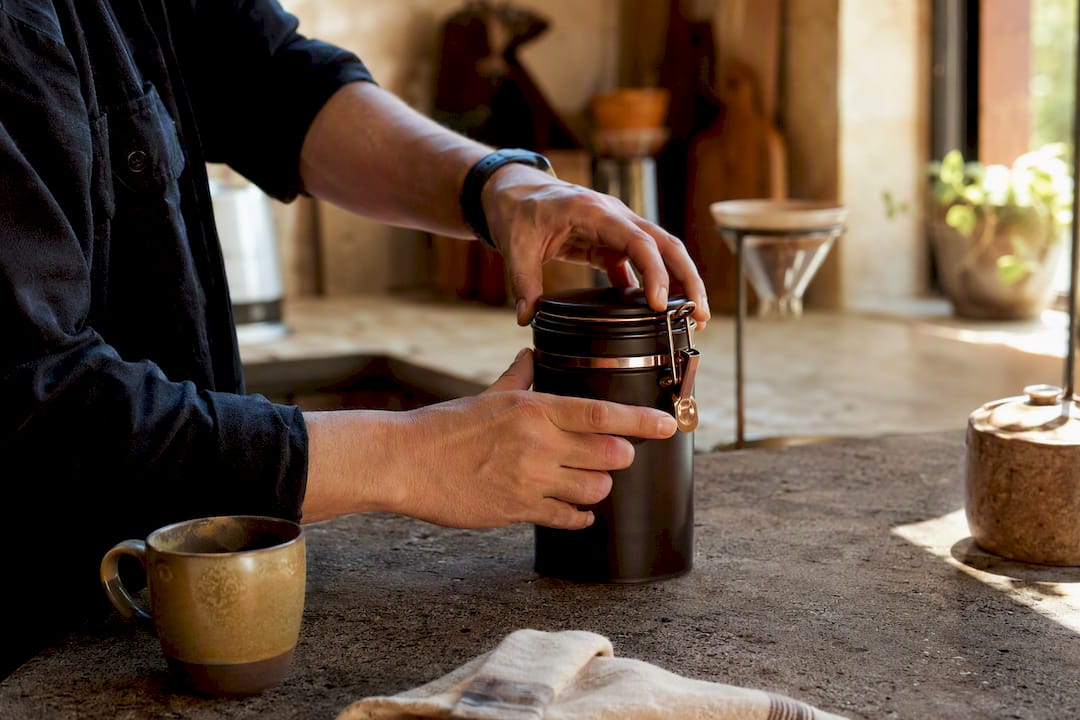
- Pick a container that actually seals. A true airtight canister with a rubber gasket or a locking clamp beats a bag folded over and clipped. The ScienceDirect closure study found that screw-cap packaging preserved aroma better than tape or clip closures, because the seal resists the constant, tiny air exchanges that a loose clip allows.
- Keep the bag’s one-way valve if it has one. Those valves let CO₂ escape during degassing without letting oxygen back in. If your coffee came in a valve bag, don’t transfer it to a jar right away; use the bag until it’s empty, then switch containers for future batches.
- Store in a dark, cool spot. A pantry shelf works. The counter next to your oven or a sunny window does not. Heat and light both accelerate oil breakdown, which is why that pretty glass jar next to the stove is actually working against you.
- Buy less, more often. Two weeks’ worth of beans is the sweet spot for most home drinkers. If you’re going through a 12 ounce bag in ten days, that’s roughly right. If it’s taking you six weeks, you’re buying too much at once.
- Grind only what you need, right before brewing. Grinding is what starts the fast clock. Serious Eats notes that ground coffee stales within minutes to days of grinding, compared to weeks for whole beans, because grinding multiplies exposed surface area by an enormous factor. A basic burr grinder pays for itself within a month if you’re still buying pre-ground.
- Minimize how often you open the container. Every open and close cycle swaps out some of the protective gas inside for ambient air. The packaging research behind this is specific: headspace oxygen replaces CO₂ within days of repeated opening, which is why decanting a whole week’s coffee into a small daily jar, then leaving the main container sealed, beats digging into the big bag every morning.
Pro Tip: Keep two containers going: a small one on the counter for daily grinding and a larger sealed one in the pantry for backup. You open the small one constantly, but the bulk of your coffee stays undisturbed and lasts longer.
For humid kitchens, a canister with a tight gasket matters even more than usual, since moisture in the air is what eventually causes clumping and, in bad cases, mold. If you live somewhere sticky in summer, consider a smaller container size so you’re cycling through coffee faster rather than storing more than you’ll use before humidity becomes a problem. And if you care about aroma specifically, resist the urge to smell-test your beans by opening the bag repeatedly. That habit alone can shave days off the peak window.
What Actually Makes Coffee Go Stale
Two chemical processes are doing almost all the damage: degassing and oxidation. Understanding them explains why every storage rule above works the way it does.
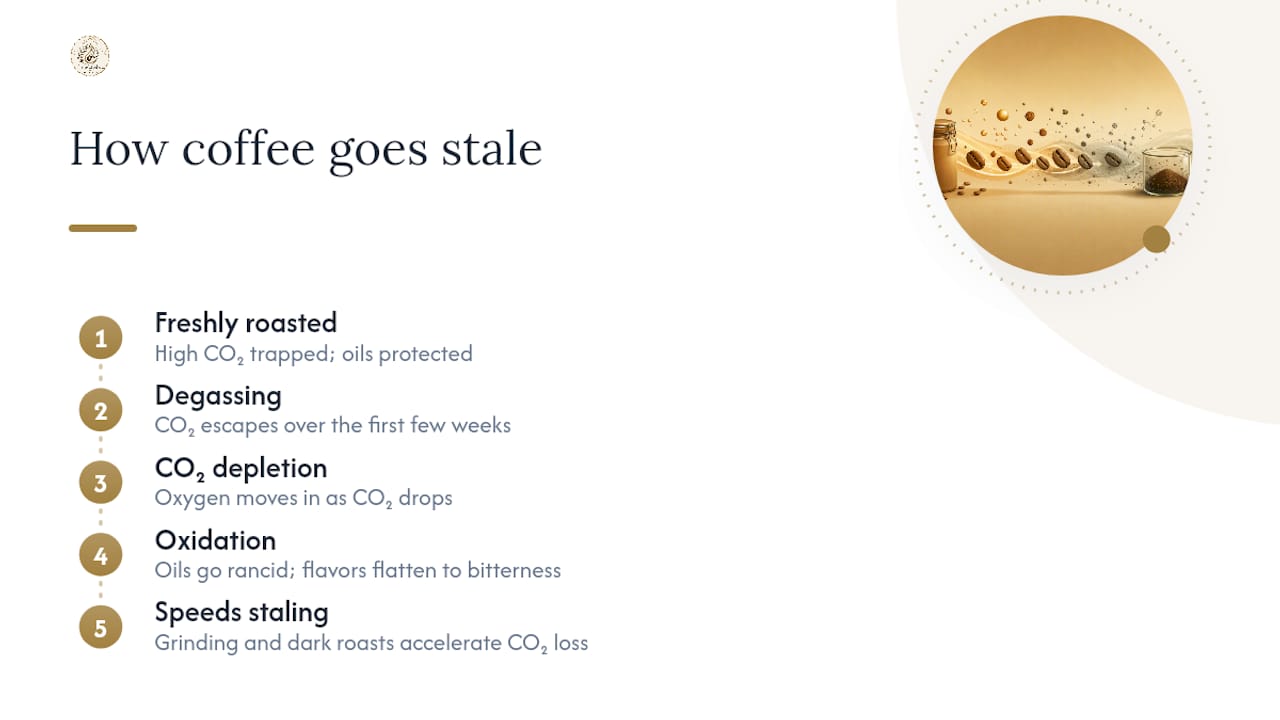
Freshly roasted beans are full of CO₂, trapped there by the roasting process itself. The Specialty Coffee Association explains that this gas escapes gradually over the first few weeks after roasting, and that outgassing is actually protective. CO₂ pushes outward, keeping oxygen from settling in and attacking the aromatic oils. That’s why a bag of beans “burps” a little air when you first open it, and it’s also why brand-new roasted beans can taste slightly muted before they’ve had a day or two to rest.
Once enough CO₂ has escaped, oxygen moves in, and oxidation takes over. This is the same basic chemistry that turns cut apples brown or makes leftover cooking oil smell off. The oils in coffee beans go rancid, and the bright, specific flavor notes that make specialty coffee interesting flatten into a generic bitterness.
Grind size and roast level both speed this up. Ground coffee stales faster than whole beans because grinding exposes far more surface area to oxygen. Darker roasts also tend to stale faster than lighter ones, since the roasting process leaves them more porous and prone to faster CO₂ loss, according to coffee-storage guidance from Martha Stewart. If you’ve noticed that a dark roast seems to go flat faster than a light roast you bought the same week, that’s not your imagination.
Should You Freeze or Refrigerate Your Coffee?
The refrigerator is one of the worst places for coffee, despite feeling like the “safe” choice. Coffee is porous and absorbs odors readily, and a fridge is full of them: onions, leftovers, whatever’s in the cheese drawer. Refrigerator humidity also creates the exact moisture problem that speeds up staling and, in extreme cases, invites mold.
The freezer is a different story, but only under specific conditions.
- Freeze only sealed, portioned batches. Split beans into airtight, vacuum-sealed portions sized for a week or two of use each, rather than one large bag you open and reclose repeatedly.
- Pull one portion out and let it come fully to room temperature before opening it. Opening a cold container exposes the beans to warm, moist air, and that’s what causes condensation to form directly on the beans.
- Once thawed, treat it like a fresh bag: transfer to your daily container and don’t refreeze the leftovers.
- Frozen, well-sealed beans can hold reasonable quality for a few months, though flavor still drifts slowly even at freezer temperatures.
- Skip the freezer for instant coffee and pods. Their sealed packaging already resists staling well at room temperature, and the moisture risk from freeze/thaw cycles isn’t worth it.
If you live somewhere humid, the freezer approach is worth the extra step specifically because it keeps beans away from ambient moisture between uses. For most people in a normal kitchen, though, a good pantry container beats freezer logistics for anything you’ll finish within a month.
Is Your Old Coffee Still Good? A Quick Test
Run three quick checks before you toss anything. First, smell it. Fresh coffee has a sharp, specific aroma; stale coffee smells faint, flat, or vaguely cardboard-like. That’s staling, not spoilage, and it’s safe to drink even if it won’t taste great.
Second, if you’re brewing, watch the bloom. Fresh grounds puff up and bubble when hot water hits them, a visible sign of CO₂ escaping. Old, stale grounds barely react at all. Third, taste it. Stale coffee tastes flat and one-note rather than bitter or sour.
The one exception worth taking seriously: any sour, musty, or rotten smell, or visible mold, means toss it immediately. That’s a moisture problem, not a staling problem, and it’s the one scenario where coffee genuinely isn’t safe.
Stale but safe beans still have uses. Grind them for a garden compost boost, steep a strong batch for a homemade cleaning rinse that cuts grease and neutralizes fridge odors, or turn them into cold brew, since the long, cold extraction is more forgiving of lackluster beans than a quick hot pour-over.
How Qahwat Al’Ard Handles Freshness From Roast to Doorstep
Every bag starts with a roast date, not a guess. That single piece of information tells you more about how a coffee will taste than any expiration stamp ever could, which is why roast date and traceability sit at the center of how Qahwat Al’Ard packages and ships coffee.
Take the Whiskey Barrel Aged beans. The barrel-aging process adds delicate, layered notes that fade faster than a standard roast if the bag sits open on a counter, so it’s worth treating that one with extra care: smaller portions, sealed tight, used within a couple of weeks. The 6 Bean Blend is built from multiple origins roasted to balance each other, and that balance is easiest to taste in the first few weeks after the roast date on the bag. Mint carries a flavor note that’s especially sensitive to oxidation, since infused aromatics tend to fade faster than the coffee’s base flavor. For all three, the same rule applies: check the roast date first, then store it properly once it arrives.
My Own Two-Week Coffee Routine
I buy roughly what I’ll drink in two weeks, never a giant bag “for value.” Beans go straight into a small opaque canister with a tight seal; the rest of the bag, if there’s leftover, gets folded down hard and clipped, then used up fast. I grind right before brewing, every single time, because the difference between grinding fresh and grinding two days ahead is obvious once you’ve tasted it side by side. Once a week I wipe out the grinder hopper. It’s a small habit, but it keeps stale coffee dust from tainting the next batch, and buying smaller amounts more often means less coffee ever gets the chance to go flat.
— Yasin Sofyian Ayesh
Try Freshly Roasted Coffee That’s Built for Actual Freshness
Most coffee sold on grocery shelves has already lost its peak flavor before you even see it, since nobody prints the roast date and the bag may have traveled through a warehouse for months. Qahwat Al’Ard roasts to order and puts the roast date right on the bag, so you know exactly what window you’re working with instead of guessing. That single detail changes how you buy: instead of grabbing whatever’s on the shelf, you can time your order to when you’ll actually drink it.
If you want to put the storage advice in this article to use, start with something specific. The Whiskey Barrel Aged is worth trying fresh, since its layered notes are most vivid in the first couple of weeks. The 6 Bean Blend is a solid everyday option for two-week buying cycles, and Mint is a good pick if you want to taste how fast infused flavors fade without proper storage. Check the roast date on any product page before you order, and plan your container and portioning around it from the day it arrives.
Sources
- Coffee Decoded: What is “freshly roasted” coffee? — Specialty Coffee Association
- Study on coffee staling and packaging closures — ScienceDirect
- Day9
- Best way to store coffee — Serious Eats
- How long does coffee last? Storage & Shelf Life FAQ — Healthline
FAQ
How long do coffee beans last after opening?
Whole beans hold peak flavor for about one to three weeks after opening, according to Healthline, even though they remain safe to drink well beyond that window.
Does coffee go stale or does it actually expire?
Coffee stales rather than expires; it loses aroma and flavor through oxidation and CO₂ loss but rarely becomes unsafe unless exposed to moisture or mold.
What is the best way to store coffee at home?
An opaque, airtight container kept in a cool, dark pantry, away from the oven or windows, is the most reliable setup, backed by closure research showing tight seals outperform clips or tape.
Should I keep coffee in the fridge or freezer?
Skip the fridge, since humidity and odors degrade beans faster; the freezer works only for sealed, portioned batches you don’t open and reclose repeatedly.
How long does ground coffee stay fresh compared to whole beans?
Ground coffee peaks for three to five days after opening, while whole beans last one to three weeks, because grinding exposes far more surface area to oxygen, per Serious Eats.
How can I tell if my coffee has gone bad?
Check the smell first: flat or cardboard-like means stale but safe, while sour, musty, or moldy smells mean it should be thrown out.


