


Cold climate coffee tastes different because slower cherry maturation and cooler growing seasons concentrate sugars and preserve delicate aroma precursors that roasting and brewing later turn into floral, layered cups. That’s the mechanism, and it’s backed by evidence, not marketing copy. Two things matter here: peer-reviewed sensory chemistry research on how extraction temperature changes what you taste, and climate data from NOAA on how cooler conditions shape pest pressure and ripening.
One distinction trips up almost everyone: cold-climate coffee describes where and how a bean grew. Cold brew describes how you extract it at home. They’re unrelated, and conflating them is why so much coffee marketing sounds confused.
- Slower ripening → more sugar and aroma precursor accumulation in the cherry
- Cooler air, not necessarily higher altitude, drives the “cold climate” signature
- Qahwat Al’Ard sources several lots that reflect these traits directly
The core fact: sensory researchers found floral flavor scored measurably higher in coffee brewed at 4°C compared to 92°C, while bitterness, sourness, and rubbery notes climbed at hot temperatures. That’s extraction chemistry. Cold climate growing sets up the raw material; brewing temperature decides what gets pulled out of it.
Key Takeaways
Cold climate coffee tastes distinct because slower cherry maturation concentrates sugars and preserves aroma precursors that light roasting and careful brewing then reveal as floral, clean, nuanced cups.
| Point | Details |
|---|---|
| Origin vs. extraction | Cool-climate growing and cold brewing are separate variables that both push flavor toward floral and less bitter, through different mechanisms. |
| Slower ripening builds flavor | Extended seed fill in cool climates lets sugars and aroma precursors accumulate more fully before harvest. |
| Roast level controls preservation | Light roasts retain more of the volatile aromatics that cool-climate growing develops; dark roasts mute them. |
| Terroir compounds the effect | Richer soils and lower pest pressure in many cool regions contribute to cleaner, more precise cups. |
| Qahwat Al’Ard sources traceably | Product pages list origin region, harvest and roast details, and processing method so buyers can confirm cool-climate traits themselves. |
Table of Contents
- Why Cold Climate Coffee Is Unique: Latitude vs. Altitude
- How Cool Temperatures Reshape Cherry And Bean Development
- Terroir In Cool Climates: Soil, Pests, And Cup Clarity
- Harvesting And Processing When Maturation Runs Long
- The Chemistry Behind Floral, Nuanced Cold Climate Cups
- Cold Climate Origin vs. Cold Brew: Don’t Confuse The Two
- Sources
- FAQ
Why Cold Climate Coffee Is Unique: Latitude vs. Altitude
Most coffee drinkers assume “cool climate” just means “high elevation,” but that’s only half the picture. Altitude cools tropical coffee farms near the equator, sure, but true cold-climate coffee can also come from lower latitudes with maritime influence or genuine four-season weather, places like subtropical Australia or southern Brazil, where thermal stress works on a totally different timeline than elevation-driven cooling does in Colombia or Ethiopia.
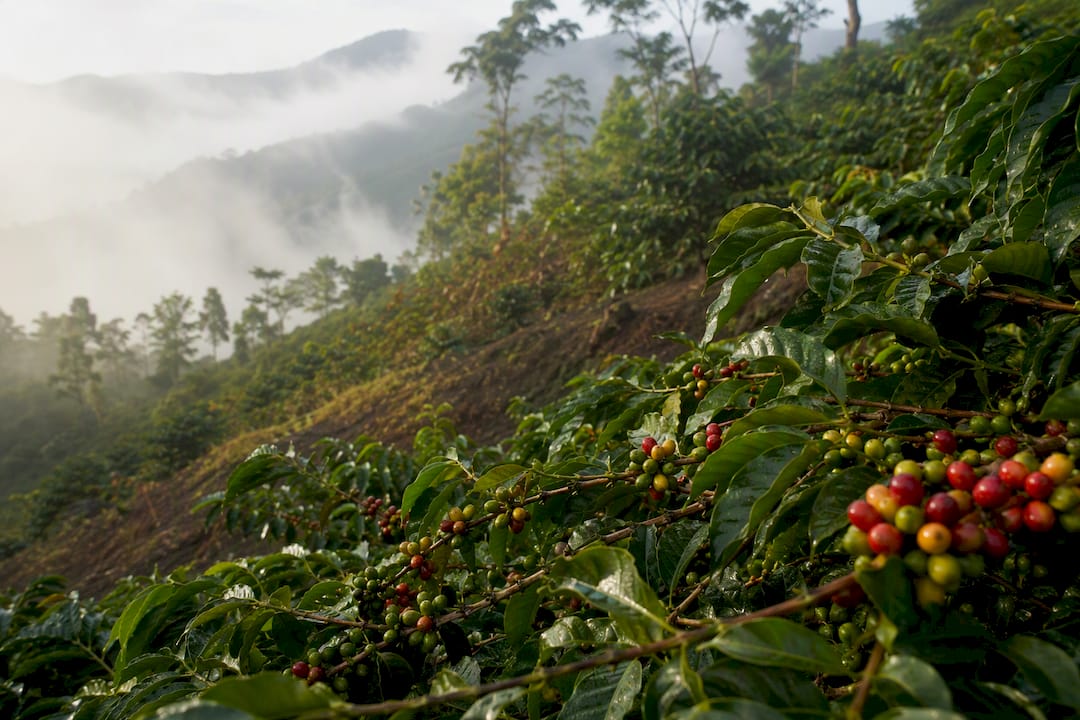
Latitude-based cool climates put trees through actual seasonal swings: warm summers, cold winters, and everything between. Altitude-based cooling in the tropics gives you consistently mild days year-round without the seasonal whiplash. Both slow things down, but not identically.
What tends to define a genuinely cool-growing environment:
- Average growing-season temperatures that stay below the typical tropical optimum
- Maritime or coastal moderation that prevents extreme heat spikes
- Four distinct seasons, or at least a marked cool season, rather than uniform tropical mildness
- Diurnal swings, big gaps between day and night temperatures, that stress the plant just enough to slow fruit development
This classification matters because it predicts flavor outcomes. A bean grown under sustained cool stress develops differently than one grown at 1,800 meters near the equator with mild temperatures all year, even if both get labeled “high-quality” on a bag.
How Cool Temperatures Reshape Cherry And Bean Development
Coffee cherries ripen on a schedule set almost entirely by temperature. Warmer air speeds up cell division and sugar deposition, pushing cherries to ripeness fast. Cooler air does the opposite: it stretches out the maturation window, sometimes by weeks, sometimes by a couple of months, depending on the region.
That extra time matters more than most growers realize. Here’s the sequence:
- Slowed phenology. Flowering to harvest stretches out, giving the plant more days to move sugars, lipids, and organic acids into the developing seed.
- Extended seed fill. Longer fill periods let sucrose and chlorogenic acid precursors accumulate more fully before the cherry hits full ripeness.
- Denser cellular matrix. Slower-grown beans often develop tighter, denser cell structures, which changes how they behave during roasting: they tend to need slightly longer roast times to develop evenly, since heat penetrates a denser bean less predictably.
Pro Tip: If you’re roasting cool-climate beans at home, drop your roast rate slightly and extend total roast time by 30 to 60 seconds compared to a similarly sized tropical high-grown bean. Dense beans scorch on the outside before the inside catches up if you rush them.
There’s a real risk side to this too. Coffee is a tropical plant at heart, and it has genuine frost thresholds. Climate suitability modeling shows that even coastal, non-tropical regions can support viable coffee cultivation under the right thermal management, but push too close to freezing and you lose the crop entirely, not just quality. Growers in marginal cool zones are constantly balancing the reward of concentrated flavor development against the real chance of a frost event wiping out a season. That tension is part of why cool-climate lots often carry a price premium: the yield risk is baked into the cost.
Terroir In Cool Climates: Soil, Pests, And Cup Clarity
Cool air rarely travels alone. Regions with cooler growing seasons often pair that temperature profile with richer volcanic or alluvial soils, steadier rainfall patterns, and, in a lot of cases, meaningfully lower pest pressure than tropical lowland farms deal with.
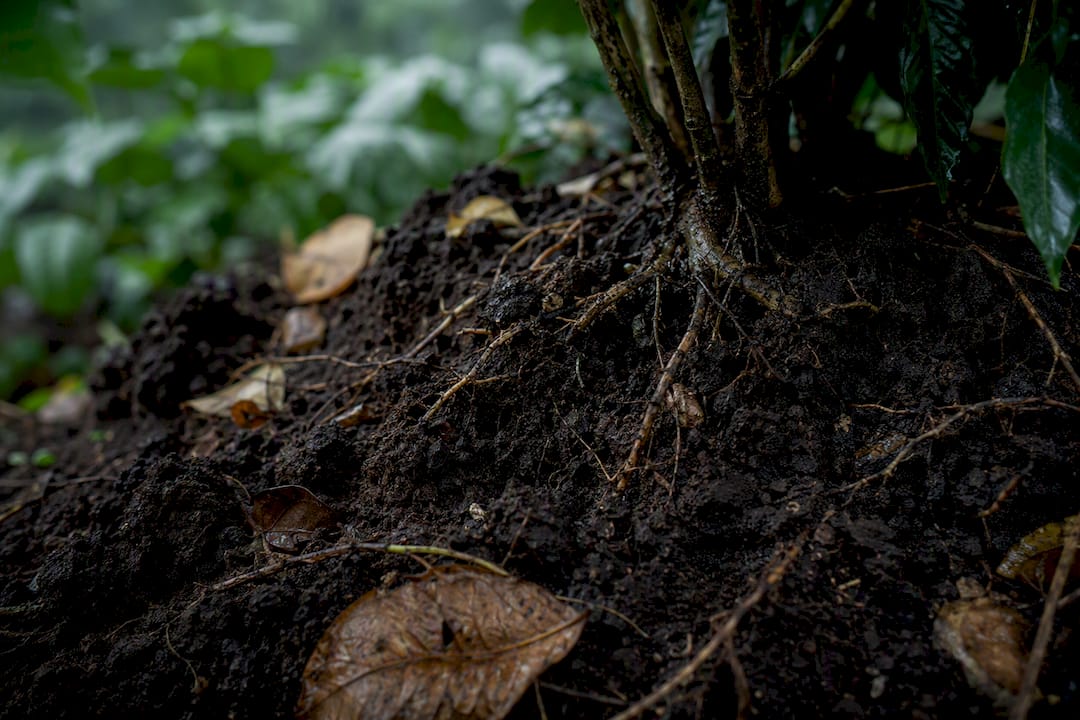
That combination shows up directly in the cup. Fewer pests generally means less reliance on aggressive chemical intervention, which several trade sources on cool-climate growing point to as a factor in cup cleanliness. It isn’t that chemical-free automatically equals better flavor. It’s that fewer disease and insect pressures mean fewer defects making it into the lot, and defect-free cherries roast and taste more consistently.
What tends to compound with cooler air to build a distinctive cup:
- Soil fertility. Richer, often volcanic soils supply the minerals that support dense, well-developed seeds.
- Moisture stability. Regions without harsh dry-season stress tend to produce more even cherry development across a harvest.
- Shade and canopy management. Growers frequently use partial shade to further moderate temperature swings, adding another layer of stress control.
- Lower disease load. According to NOAA’s climate research, coffee’s viability and management needs shift directly with pest pressure tied to climate, and cooler zones often see less of it.
Map those agronomic factors onto sensory outcomes and you get the traits cool-climate coffee is known for: clarity (fewer muddying defects), precision (distinct, separable flavor notes rather than a blurred profile), and pronounced floral or fruity top notes that don’t get buried under earthiness or fermentation funk. It reads less like a rulebook and more like what happens when a plant gets to develop on its own schedule instead of being rushed.
Harvesting And Processing When Maturation Runs Long
A longer maturation window sounds like a simple win, but it creates real logistical headaches for anyone actually running the farm. Cherries on the same branch ripen at different rates over a stretched timeline, which means selective hand-picking becomes non-negotiable if you want a clean, uniform lot.
Here’s how growers typically manage the trade-offs:
- Extend the harvest window deliberately. Multiple passes through the same trees, sometimes six to eight weeks apart, catch cherries at peak ripeness instead of forcing one bulk harvest.
- Adjust drying methods for cooler, often wetter conditions. Raised beds with better airflow and, in some regions, mechanical drying assistance prevent mold and uneven moisture loss when ambient humidity is working against you.
- Control fermentation more tightly. Cooler ambient temperatures slow fermentation naturally, which can be a feature (more controlled acid development) if growers monitor it closely, or a defect risk if they don’t.
Pro Tip: When you’re comparing cool-climate lots, check the processing method listed on the bag. Washed processing tends to showcase the floral, high-clarity side of cool-climate beans, while honey or natural processing pushes sweetness and body forward at the expense of some of that delicate top-note precision.
The processing choice isn’t neutral. It decides which part of the cool-climate signature actually makes it into your cup.
The Chemistry Behind Floral, Nuanced Cold Climate Cups
Slow ripening changes the raw chemistry a roaster has to work with, and that chemistry is measurable, not just anecdotal. Volatile aromatic compounds, sucrose, chlorogenic acids, and the phenolics that eventually become melanoidins during roasting all accumulate differently in a cherry that had extra weeks to develop compared to one rushed through a hot growing season.
Roast level decides how much of that raw material survives to the cup:
- Light roasts preserve more of the original volatile aromatics and organic acid profile, which is exactly why cool-climate beans are frequently recommended at lighter roast levels; darker roasting drives off or transforms many of the same floral compounds that slow maturation worked to build up.
- Darker roasts generate more melanoidins through the Maillard reaction, adding body and a caramelized sweetness, but they also mute the more delicate floral and fruit-forward notes that make cool-climate beans distinctive in the first place.
- Cold extraction compounds the effect. A peer-reviewed study on hot versus cold brew chemistry found that cold water extracts fewer melanoidins and shows a roast-sensitive shift in total antioxidant capacity, meaning cold brewing pulls a genuinely different chemical subset than hot water does, regardless of the bean’s origin.
That’s the mechanistic link: slow ripening builds the aromatic precursors, light roasting preserves them, and the extraction method decides how much actually ends up dissolved in your cup. A controlled sensory panel backed this up directly, finding floral flavor scored significantly higher in 4°C brews than in 92°C brews of the same coffee, while bitter and sour notes climbed with heat. Origin and roast interacted strongly with those results, meaning the effect isn’t uniform across every bean, but the direction holds consistently.
Cold Climate Origin vs. Cold Brew: Don’t Confuse The Two
This is the mix-up that causes the most confusion in coffee shops and online forums alike. A bean’s origin climate and your brewing temperature are two completely separate variables that happen to push flavor in a similar direction, floral, less bitter, but through entirely different mechanisms.
Cold brew, iced coffee, and hot-brew-then-chill are not the same thing, even though people use the terms interchangeably:
- True cold brew steeps coffee in cold or room-temperature water for 12 to 24 hours, extracting slowly and selectively.
- Iced coffee is typically hot-brewed at full strength, then poured over ice, which dilutes it and changes the extraction profile very little from a standard hot brew.
- Hot-brew-then-chill extracts everything a hot brew would, including more bitterness and acidity, then simply serves it cold.
Only true cold brew meaningfully changes what gets extracted. Research from the Specialty Coffee Association found cold brew runs about 0.1 to 0.2 pH units higher than chilled hot brew when strength is controlled for, meaning it tastes measurably less acidic even though the numbers look small.
Cool-climate beans with naturally high floral character reward true cold brewing because the method’s gentler extraction doesn’t drown those notes in bitterness. But if you want to actually taste the terroir, brew light-roasted, cool-climate beans hot, at 195 to 205°F, and let the aromatics bloom the way roasting intended.
For practical brewing: use a medium-coarse grind for true cold brew extraction, steep 16 to 18 hours, and expect a smoother, less acidic result. For hot brewing, stay closer to 200°F with a shorter contact time to keep those floral top notes intact rather than baking them out.
Tasting And Buying: What Actually Works
Taste cool-climate coffees side by side, same brew method, same water temperature, or you’re comparing brewing variables instead of bean quality. Start with a light-roast pour-over at 200°F to catch the floral ceiling, then repeat as a cold brew to hear what changes.
It slows extraction just enough to let the floral compounds come forward without dragging up excess bitterness.
Try These Cool Climate Coffees For Yourself
Reading about floral top notes and concentrated sugars only gets you so far. The real test is in the cup, and Qahwat Al’Ard’s catalog gives you a direct way to taste the mechanisms this article just walked through, without guessing whether a bag’s marketing copy matches its actual chemistry.
The Cold Brew Coffee lineup showcases beans selected specifically for how they behave under slow, cool extraction, smooth, low-acid, and floral rather than sharp. If you’d rather explore a single-serve format while still getting full origin traceability, the Mexico Coffee Pods give you a convenient way to sample a region known for balanced, nuanced profiles without committing to a full bag. Every product page lists origin region, roast details, and tasting notes, so you can check the clues yourself before buying. Pick one, brew it the way this article recommends, and taste the difference between origin and extraction firsthand.
Sources
Traceability is the only real way to confirm a bean actually carries cool-climate characteristics instead of just a marketing label. Qahwat Al’Ard builds its sourcing around full origin traceability, working directly with growing regions like Colombia, Peru, Bali, and Uganda, and roasting fresh to order so those delicate aroma compounds discussed above haven’t had months to degrade on a shelf.
When you’re evaluating a product page for cool-climate signals, look for:
- How cold brew differs from chilled hot brew — Specialty Coffee Association (SCA)
- Sensory analysis of full immersion coffee: cold brew is more floral, and less bitter, sour, and rubbery than hot brew
- Physiochemical characteristics of hot and cold brew coffee chemistry: The effects of roast level and brewing temperature on compound extraction
- Climate
Pro Tip: Cross-check the tasting notes against the processing method. A washed Colombian lot describing itself as “floral and bright” is chemically plausible; a natural-processed lot claiming the same thing deserves a second look, since natural processing usually pushes fruit-forward, winey notes instead.
The Cold Brew Coffee and Mexico Coffee Pods product pages both list this kind of detail if you want to see it applied directly.
FAQ
Why Does Gen Z Prefer Cold Coffee?
Younger coffee drinkers often gravitate toward cold brew because its smoother, less acidic profile is more approachable than traditional hot-brewed coffee, and its convenience fits an on-the-go lifestyle better than a hot cup does.
Is Cold Coffee Healthier Than Hot Coffee?
Cold brew isn’t inherently healthier; it extracts a different chemical profile, including lower melanoidin content and a shift in antioxidant measures depending on roast, but neither method has a clear overall health advantage over the other.
Is The World Becoming Too Hot For Coffee?
Rising temperatures are shrinking traditional growing zones and increasing pest pressure in many regions, which is why climate suitability research is actively mapping cooler, sometimes nontraditional areas as future production alternatives.
What Country Produces 40% Of The World’s Coffee?
Brazil is the world’s largest coffee producer, and its cooler subtropical growing zones are frequently cited as examples of the long-maturation, cool-climate flavor development discussed throughout this article.


