


Washed coffee processing, also called the wet method, strips the cherry skin, pulp, and sticky mucilage from the bean before drying, so what ends up in your cup reflects the bean’s origin with unusual clarity. The result is a clean, bright cup with high acidity and lighter body.
Three things to know upfront:
- Cup profile: Bright acidity, floral or citric aromatics, lighter body, and transparent origin character. Washed coffees taste like where they grew, not like the fruit they came from.
- Why producers choose it: Consistency. Removing the fruit before drying gives roasters a predictable, readable bean and lowers defect rates when the process is well-managed.
- Main tradeoff: Water demand is high, equipment costs more than dry-process setups, and untreated effluent can damage local waterways.
Want to taste the difference? Qahwat Al’Ard’s House Blend, Mexico Coffee Pods, and Cold Brew Coffee each reflect how processing shapes what lands in your cup.
Key Takeaways
Washed coffee processing removes fruit before drying, producing a clean, bright cup that expresses origin character more directly than natural or honey methods.
| Point | Details |
|---|---|
| Core definition | Washed processing removes skin, pulp, and mucilage before drying to reveal origin character. |
| Target moisture | Beans must reach 10–12% moisture to stay stable through storage and shipping. |
| Fermentation rule | Judge fermentation by smell and feel, not a fixed clock; timing varies with temperature and altitude. |
| Environmental tradeoff | Water demand is high; effluent management (recycling, sedimentation ponds) is needed to protect local waterways. |
| Qahwat Al’Ard | The House Blend, Mexico Coffee Pods, and Cold Brew Coffee show how processing shapes what you taste. |
Table of Contents
- How washed coffee processing works, step by step
- Washed vs. natural vs. honey: how the three methods compare
- What washed coffee actually tastes like
- Why producers choose washed processing, and what it costs them
- What coffee professionals want you to know
- Taste the difference processing makes with Qahwat Al’Ard
- Sources
- FAQ
How washed coffee processing works, step by step
The washed process sequence moves from ripe cherry to stable green bean in six stages. Timing at each stage varies with altitude, ambient temperature, and the producer’s equipment.
-
Harvest and sorting. Only ripe, red cherries should enter the process. Producers sort by hand or use flotation tanks, where underripe or damaged cherries float and are removed. Starting with uniform ripeness is the single biggest quality lever.
-
Depulping. A mechanical depulper strips the outer cherry skin and most of the pulp in seconds, leaving the bean coated in a layer of mucilage. Drum-style and disc depulpers are both common; the choice affects how much mucilage remains.
-
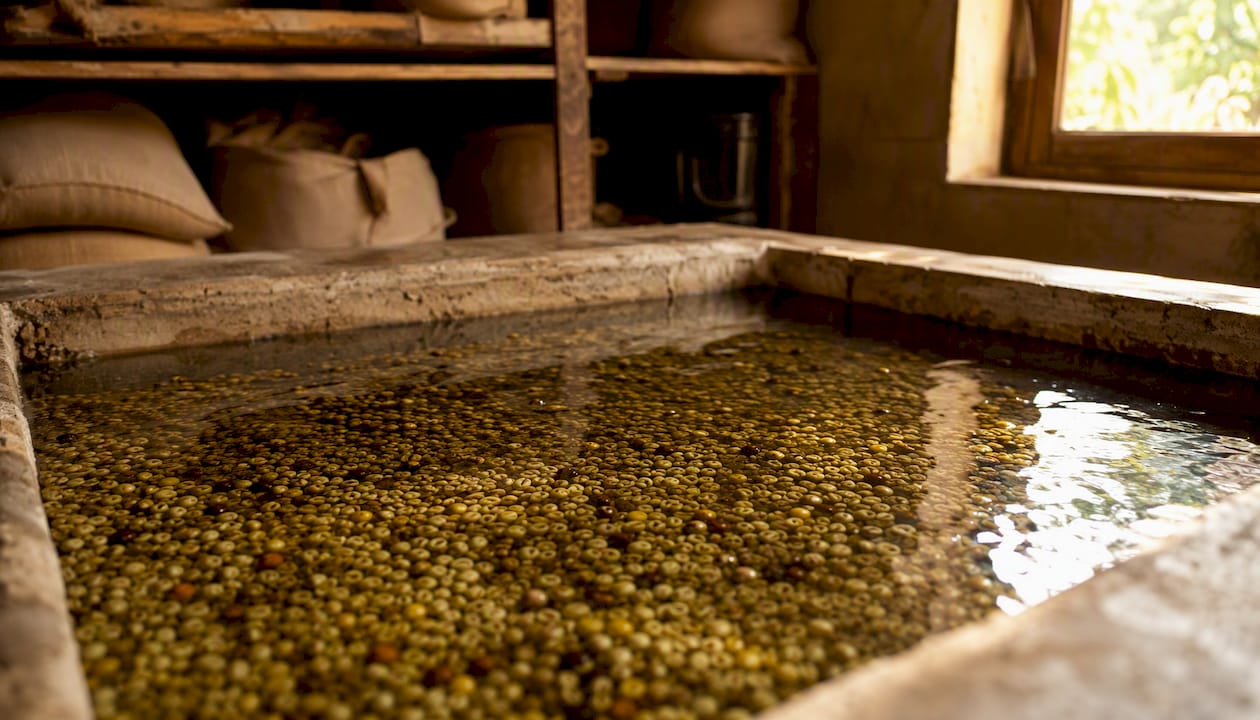
Fermentation. Beans sit in fermentation tanks, often concrete or food-grade plastic, while naturally occurring microorganisms break down the remaining mucilage. Temperature, altitude, and the microbial environment all affect how long this takes. According to FnB Tech’s practical guide, fermentation commonly runs 12–72 hours, but producers should judge readiness by sensory cues, not a fixed clock. More on that in Section 7.
-
Washing. Once fermentation is complete, beans move through washing channels where flowing water carries away the loosened mucilage and any floaters. High-quality stations run beans through multiple stages, including a final polishing channel, to protect cup clarity.
-
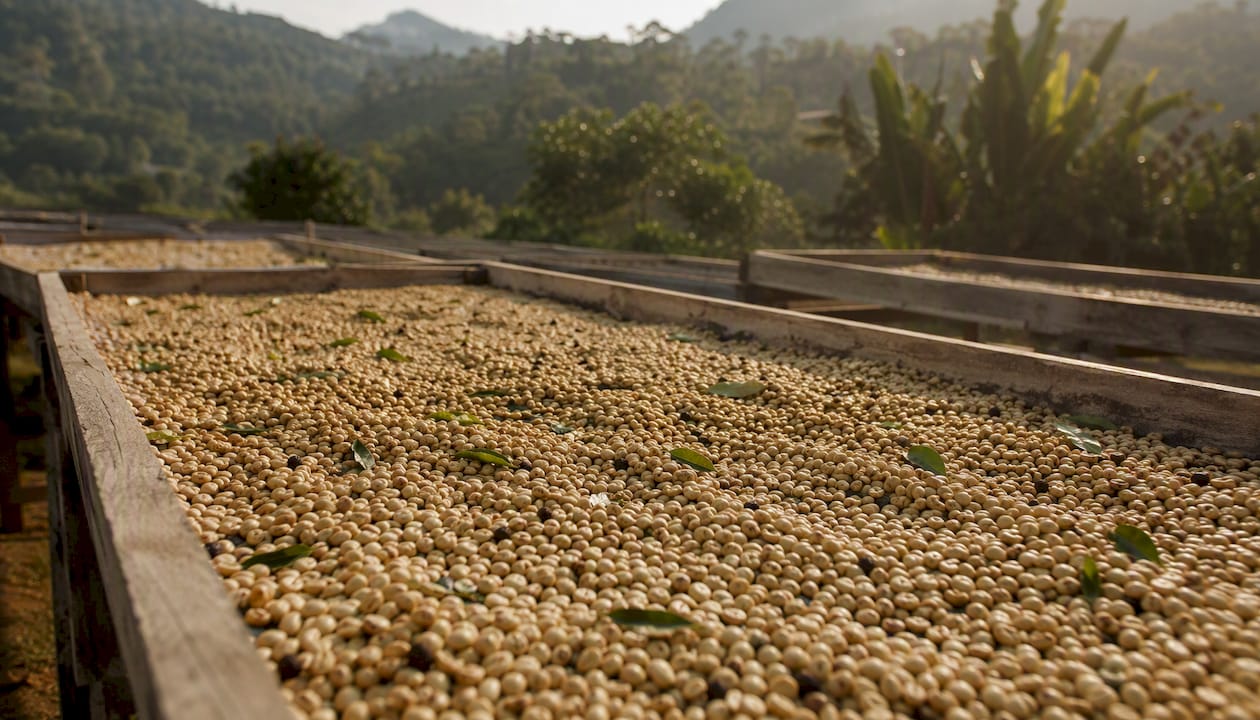
Drying. This is the riskiest phase. Beans spread onto raised drying beds or solar dryers and are turned regularly to prevent mold. Many producers combine sun-drying with a mechanical drier finish to hit the 10–12% moisture target reliably. Under-dried beans mold in storage; over-dried beans become brittle and chip during milling. Drying can take several days to more than two weeks depending on weather and method.
-
Hulling and milling. A huller removes the dried parchment layer surrounding the bean. A destoner then clears any rocks or heavy debris before the green coffee is graded, sorted, and bagged for export.
Washed vs. natural vs. honey: how the three methods compare
Processing method is one of the most powerful variables in coffee flavor, yet it is rarely labeled clearly on retail bags. Here is how the three main approaches differ across the dimensions that matter most.
| Dimension | Washed | Natural (Dry) | Honey |
|---|---|---|---|
| Cup profile | Bright acidity, high clarity, lighter body | Full body, low acidity, fruity/jammy sweetness | Medium body, balanced acidity, mild sweetness |
| Processing steps | Depulp → ferment → wash → dry | Dry whole cherry intact | Depulp, leave mucilage on, dry |
| Water use | High | Very low | Low to moderate |
| Environmental impact | Effluent risk without treatment | Minimal | Low |
| Consistency | High when well-managed | Variable (weather-dependent) | Moderate |
| Equipment cost | Higher (depulper, tanks, channels) | Low | Moderate |
| Typical regions | Colombia, Kenya, Guatemala, Ethiopia (highland) | Ethiopia (Yirgacheffe dry), Brazil, Yemen | Costa Rica, Brazil, El Salvador |
When does each method make sense?
- Washed suits producers who want to showcase terroir and supply quality-focused roasters. Washed processing dominates Arabica production in Colombia, Kenya, and highland Guatemala precisely because it highlights what the altitude and soil contribute.
- Natural fits dry climates where water is scarce and producers want a sweeter, heavier cup. The tradeoff is higher variability and more sorting labor.
- Honey is an intermediate choice, preserving some fruit sweetness while reducing water use versus a full washed process.
- For a deeper look at the natural processing method and how it compares cup-by-cup, Qahwat Al’Ard’s guide covers the contrast in detail.
What washed coffee actually tastes like
Washed coffees are defined by what they don’t have as much as what they do. Strip away the fruit, and the bean’s own character comes forward: the soil, the altitude, the variety.
Six tasting cues to look for when cupping or buying:
- Brightness — a lively, almost sparkling acidity on the front palate
- Clarity — flavors are distinct and separate, not blended into a single impression
- Floral notes — jasmine, bergamot, or rose, especially in Ethiopian highland washed lots
- Citrus — lemon, lime, or grapefruit zest rather than tropical fruit
- Clean finish — the aftertaste is short and crisp, not lingering or syrupy
- Lighter body — the mouthfeel is closer to tea than to whole milk
Roast level shapes how much of this comes through. A light to medium roast preserves acidity and floral aromatics; push into a darker roast and the washed clarity fades, replaced by roast-driven bitterness. For brewing, pour-over and filter methods (Chemex, V60, Kalita Wave) are the natural fit because they amplify clarity and acidity. Avoid over-extraction: a slightly coarser grind and a shorter brew time keep the brightness intact. Understanding coffee grind settings helps you dial in that balance at home.
Why producers choose washed processing, and what it costs them
The washed method’s biggest advantage is control. When the fruit is removed before drying, the bean’s flavor development is less dependent on ambient conditions. That predictability matters enormously to specialty roasters who need to calibrate their profiles across multiple harvests.
Advantages for producers:
- Lower defect rates when fermentation and washing are well-managed
- Cleaner cup that rewards high-altitude, high-quality Arabica
- Easier for roasters to profile consistently across seasons
- Terroir expression is more direct, which supports premium pricing
Drawbacks:
- Equipment investment is real: depulpers, fermentation tanks, washing channels, and mechanical driers all add cost
- Water demand is significant, and untreated effluent is acidic and oxygen-depleting
- Fermentation mismanagement (over-fermentation, contamination) can ruin an entire lot
- Labor intensity is higher than natural processing
Sustainability mitigation: Barista Magazine notes that water-conservation technology and improved effluent management are increasingly standard at quality-focused wet mills. Practical options include closed-loop water recycling, sedimentation ponds, constructed wetlands, and reduced-water depulpers that cut water use significantly. Mechanical mucilage removal (eco-pulpers) is another option that reduces fermentation time and water use simultaneously.
Pro Tip: Monitor fermentation by smell and feel, not the clock. When the mucilage releases cleanly from the parchment and the tank smells clean rather than vinegary, the batch is ready. Ambient temperature shifts the timeline dramatically, so a fixed-hour rule is a liability, not a guide.
Key terms and equipment in washed processing
- Depulper: Machine that removes cherry skin and pulp; leaves mucilage on the bean. Drum or disc styles are most common. Affects how much mucilage remains for fermentation.
- Mucilage: The sticky, sugar-rich layer between pulp and parchment. Its breakdown during fermentation is the core chemical event of washed processing.
- Parchment: The papery husk surrounding the green bean after depulping. Protects the bean through fermentation, washing, and drying until hulling.
- Fermentation tank: Concrete or food-grade plastic vessel where mucilage breaks down. Size and material affect temperature stability and microbial environment.
- Washing channel: Flowing-water channel that carries away loosened mucilage and floaters after fermentation. Multiple stages improve cup clarity.
- Raised drying bed: Elevated mesh or screen surface that allows airflow under the bean during sun-drying. Reduces mold risk versus ground-level drying.
- Mechanical drier: Drum or conveyor drier used to finish or accelerate drying. Helps hit the 10–12% moisture target consistently regardless of weather.
- Hulling/destoner: Huller strips dried parchment; destoner removes rocks and heavy debris before export grading.
- Moisture content (10–12%): The stable range for green coffee storage. Below this, beans become brittle; above it, mold risk rises sharply during shipping.
What coffee professionals want you to know
George Howell, one of specialty coffee’s most cited voices, describes washed processing as a method that uses water as the principal medium to move, ferment, and clean the beans. The result, as Perfect Daily Grind summarizes, is a more predictable, clean cup that lets origin character speak without fruit interference.
Fermentation timing should be judged ‘until ready’ — not by a fixed number of hours. Sensory cues (smell, the feel of mucilage releasing from parchment, tank temperature) are the reliable signals. A batch at 1,800 meters altitude in cool weather may need twice the time of one at 1,200 meters in heat. The clock is a rough guide at best.
Three myths worth correcting:
- “Washed” does not mean hygienically superior. The term describes fruit removal before drying, not sanitation. Poorly managed fermentation tanks can introduce off-flavors just as easily as any other method.
- Longer fermentation is not always better. Over-fermentation produces vinegary, astringent cups. The FnB Tech guide is explicit: the goal is readiness, not duration.
- Water quality affects cup clarity. Mineral-heavy or contaminated wash water carries its character into the bean. High-end stations use staged water systems and polishing channels for this reason.
Pro Tip: If you manage a wet mill, run a final polishing channel with clean water after the main wash. It removes residual impurities that survive earlier stages and shows up as a cleaner, brighter cup at the roaster.
A note from the writer
Knowing how a coffee was processed changes what you taste and what you buy. When I see “washed Ethiopia” on a bag, I’m already expecting jasmine and lemon zest, not blueberry jam. That’s not guesswork; it’s literacy. Qahwat Al’Ard’s emphasis on traceability means the processing method is part of the story, not a footnote. Try the House Blend or Mexico Coffee Pods side by side and you’ll hear the difference processing makes.
Taste the difference processing makes with Qahwat Al’Ard
Reading about washed processing is one thing. Tasting it against a natural or honey lot is where the understanding locks in.
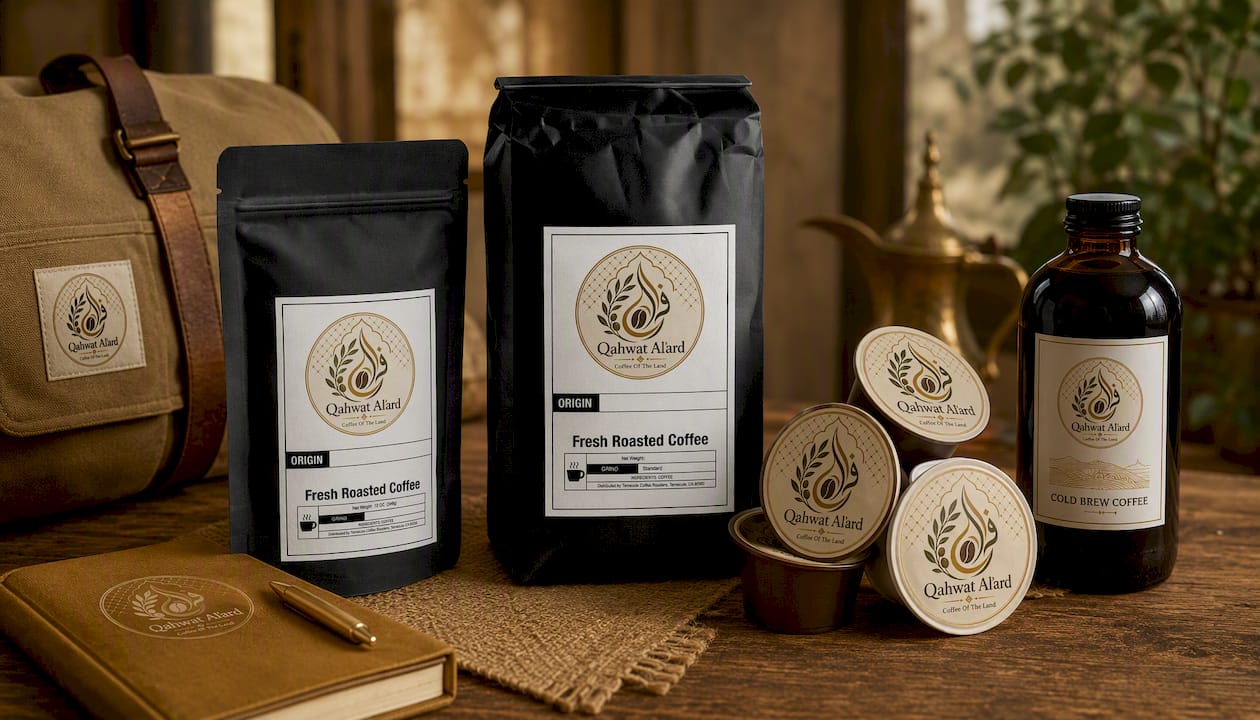
Qahwat Al’Ard sources single-origin coffees with full traceability, so the processing method is never a mystery. The House Blend gives you a starting reference point. The Mexico Coffee Pods show how washed processing translates into a single-origin pod format, clean and consistent cup after cup. And the Cold Brew Coffee demonstrates how a washed bean’s lighter body and bright acidity hold up in a cold-extraction format. Browse the full selection at Qahwat Al’Ard and order the coffee that matches what you just learned.
Sources
- Washed Coffee Process: A Practical Guide to a Clean Profile - FnB Tech
- Processing 101: What Is Washed Coffee & Why Is It So Popular? - Perfect Daily Grind
- Washed Process (Wet Process) - Roastopedia | The world’s coffee encyclopedia.
- Understanding the process part 2: Washed/Wet - Barista Magazine
FAQ
Is washed coffee better than natural processed?
Neither is objectively better; they serve different preferences. Washed coffees offer clarity and bright acidity; natural coffees deliver fuller body and fruit sweetness. The right choice depends on what you want in the cup.
Which coffee processing method is best for specialty coffee?
Washed processing is the most common choice for quality-focused Arabica because it highlights terroir and produces consistent, roaster-readable beans. Natural and honey methods suit different flavor goals and growing conditions.
Does washed processing make coffee healthier or cleaner?
“Washed” refers to fruit removal before drying, not sanitation. It does not make coffee nutritionally different or hygienically superior to other methods; poorly managed fermentation can introduce off-flavors regardless of process.
What is the cleanest-tasting way to brew washed coffee?
Pour-over methods like a V60 or Chemex best showcase washed coffee’s clarity and acidity. Use a slightly coarser grind and avoid over-extraction to keep the bright, clean character intact.
Recommended
- Types of coffee processing methods: a guide for enthusiasts | Qahwat Al’ard
- What Is Natural Processed Coffee? Flavor and Method Guide | Qahwat Al’ard
- Coffee terroir explained: How origin shapes flavor and quality | Qahwat Al’ard
- Coffee Degassing Explained: Science, Timing, and Flavor | Qahwat Al’ard


