


Yes: well-run cooperatives materially improve farmers’ market access, bargaining power, and the odds of building a sustainable, value-added coffee trade. In parts of Indonesia, only 0.78% of coffee farmers sell their main crop to cooperatives, while a very large share sell to traders instead. That gap matters because the research on cooperative membership shows the benefit isn’t automatic. It depends on governance, transparency, and how engaged members actually are.
- Cooperatives with strong governance often out-earn farmers who sell through traders alone.
- Certification bodies like Fairtrade rely heavily on cooperative structures to manage compliance and premiums.
- Qahwat Al’Ard sources coffee with traceability commitments that mirror what healthy cooperatives already track internally.
Key Takeaways
Cooperative impact on the coffee trade is real but conditional. Governance, transparency, and member engagement determine whether cooperative membership translates into higher prices, better sustainability outcomes, and durable market access.
| Point | Details |
|---|---|
| Governance predicts outcomes | Democratic control and transparent finances matter more than cooperative membership alone. |
| Direct export pays more | Cooperatives that export directly often capture higher, value-added returns than those selling through traders. |
| Co-ops act as a yardstick | Efficient cooperatives push private traders to offer more competitive terms locally. |
| Sustainability gains are conditional | Radical transparency between partners advances sustainability, but scale and resilience remain limits. |
| Traceable sourcing is available now | Qahwat Al’Ard offers traceable, single-origin and blended coffee for buyers who want documented sourcing. |
Table of Contents
- What Is the Role of Cooperatives in Coffee Trade Structures?
- How Do Cooperatives Benefit Farmers and Buyers?
- Do Cooperatives Improve Sustainability and Fair Trade Outcomes?
- Why Does Cooperative Impact Vary So Much?
- How Should Roasters and Importers Evaluate a Cooperative Partner?
- What Does a Real Cooperative Success Story Look Like?
- What Would Help Cooperatives Scale and Export More Value-Added Coffee?
- Why This Matters More Than the Certification Label
- Where to Find Cooperative-Sourced Coffee You Can Actually Trace
- Sources
- FAQ
What Is the Role of Cooperatives in Coffee Trade Structures?
A coffee cooperative is a farmer-owned organization built on one core principle: one member, one vote, regardless of farm size. Members pool resources, share services, and sell collectively instead of negotiating alone against buyers who almost always have more leverage than an individual smallholder.
The coffee value chain runs on a few recognizable cooperative models:
- Small producer cooperatives — a village or district-level group handling shared wet-mills, drying patios, and warehouse storage.
- Cooperative unions or federations — several primary co-ops joined together for export volume and stronger negotiating weight.
- Multi-stakeholder cooperatives — combine producers with processors, exporters, or even retailers under one governance structure.
- Co-op-to-co-op chains — farmer cooperatives selling directly to worker-owned importer or roaster cooperatives, cutting out several middle layers.
These structures commonly handle pooled processing, bulk export logistics, certification paperwork, pre-harvest financing, technical training, and lot-level traceability. A five-person producer group and a national union both call themselves cooperatives, but their scale, and their leverage in the cooperative coffee supply chain, can differ by orders of magnitude.
How Do Cooperatives Benefit Farmers and Buyers?
Cooperatives change outcomes through a handful of concrete mechanisms, not vague solidarity. Collective bargaining lets members negotiate as one large seller instead of hundreds of small, price-taking ones. Shared infrastructure, wet-mills, drying beds, cupping labs, turns raw cherry into export-grade coffee without every farmer needing to own that equipment individually.
- Pooled financing gives members cash advances during the lean season, when traders often exploit desperation for grain money.
- Coordinated certification management (Fairtrade, organic, Rainforest Alliance) spreads the administrative cost of compliance across many farms instead of one.
- Aggregated traceability lets specialty buyers trace a bag back to a specific cooperative, sometimes a specific lot, which most individual smallholders cannot offer alone.
Evidence from Indonesian cooperatives shows direct export can yield higher realized prices than selling through intermediaries, and in some cases lets cooperatives sell roasted, value-added coffee rather than green beans alone. A separate industry analysis describes efficient cooperatives acting as a competitive yardstick: when a co-op offers fair terms, private traders in the same region often have to match them to keep suppliers from switching.
What does a roaster actually get from sourcing this way? Usually consistency in lot quality, verifiable origin documentation, and sometimes visibility into community projects funded by cooperative premiums. That’s a different purchasing experience than buying from a single farm with no shared quality control.

Do Cooperatives Improve Sustainability and Fair Trade Outcomes?
Cooperatives can genuinely advance sustainability, but the evidence is more conditional than most marketing copy suggests. Premiums distributed transparently to members fund things like shade-tree planting, soil restoration, and clean water projects. Extension services delivered through the co-op help farmers adopt practices that protect long-term yield instead of chasing short-term output.
- Pooled funds can finance environmental projects no single farmer could afford alone.
- Fair-trade certification pathways favor cooperatives because they already have the administrative capacity, member records, financial ledgers, meeting minutes, to satisfy auditors.
- Co-op-to-co-op models channel premiums and social-investment funds directly to producer communities, which is about as short and transparent as a supply chain gets.
The limits matter just as much. A transdisciplinary case study between a U.S. intermediary and a Mexican roastery found that cooperation built on radical transparency, an “open cards” approach where both sides shared costs and margins, improved compliance with several sustainability principles. It also exposed real constraints on economic resilience and how far the model could scale beyond a pilot relationship.
Pro Tip: Ask a prospective cooperative partner to show you exactly how last year’s fair-trade premium was spent, line by line. If they can’t produce that breakdown quickly, transparency is probably weaker than their marketing suggests.
Why Does Cooperative Impact Vary So Much?
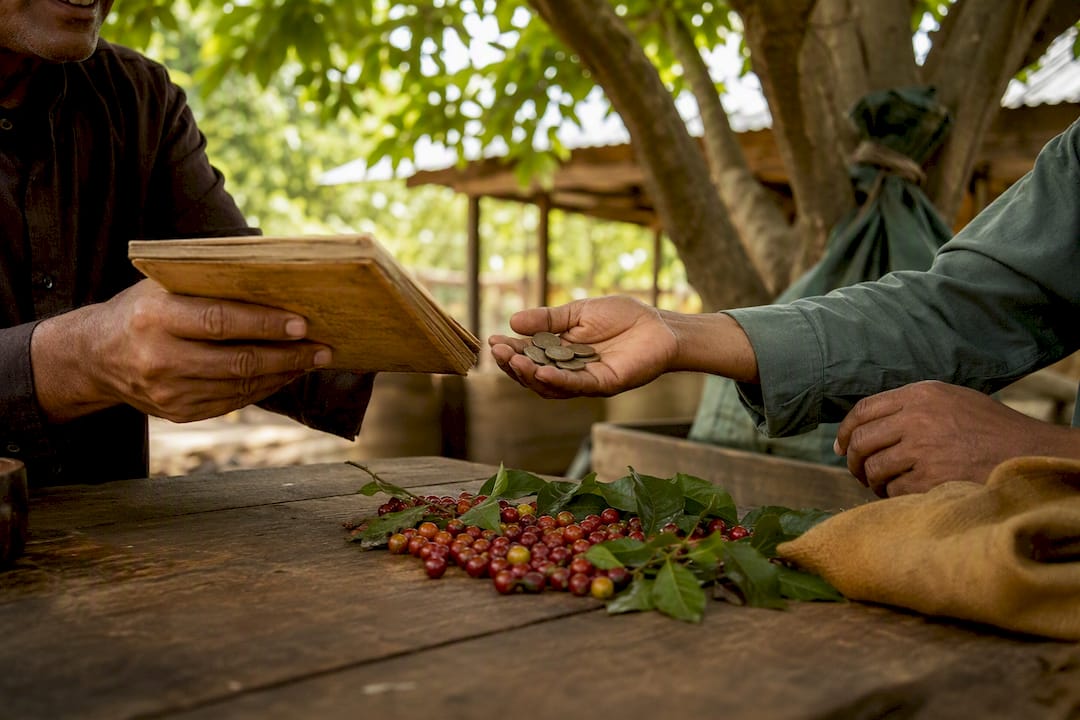
Cooperative membership does not guarantee better outcomes. A study from southwest Ethiopia found that cooperative membership significantly increased staple crop production and input use, but showed no clear effect on food expenditure or household income. Belonging to a co-op changed farming behavior without necessarily changing family welfare.
The risks that drive this heterogeneity tend to repeat across regions:
- Weak democratic control, where a small clique makes decisions without real member input.
- Opaque finances that hide how premiums or export revenue actually get distributed.
- Low member engagement, which lets poor leadership go unchecked for years.
- Concentration of power in one manager or family, common in cooperatives that started small and never professionalized governance.
- Exposure to market volatility that a small, thinly capitalized co-op can’t absorb the way a large union can.
The practical fallout looks like delayed payments to farmers, premiums that quietly disappear, inconsistent lot quality, or outright collapse when one intermediary relationship falls apart.
Pro Tip: Before committing to a partnership, ask for the last two years of audited financial statements and attendance records from general assembly meetings. Low turnout at member meetings is often the earliest warning sign of a cooperative in trouble.
How Should Roasters and Importers Evaluate a Cooperative Partner?
Sourcing from a cooperative should start with the same diligence you’d apply to any long-term business relationship, not just a sustainability checkbox.
- Confirm legal registration and request financial statements covering at least two harvest cycles.
- Verify governance structure: is voting genuinely one member, one vote, and are elections documented?
- Ask for existing buyer relationships and reference contacts from at least one other current partner.
- Request processing protocols, recent cupping reports, and lot-level traceability records.
- Clarify sample turnaround timelines before committing to a purchase contract.
Commercial terms deserve equal scrutiny:
- How exactly are premiums distributed among members versus retained for co-op operations?
- What social or environmental funds exist, and who approves how they’re spent?
- Are price floors or minimum purchase commitments part of the standard contract?
Build your due-diligence questions directly into the memorandum of understanding: payment timing, a dispute-resolution process, and any capacity-building commitments your organization is offering in return. A traceability guide is a useful reference for the documentation standards worth requesting up front.
What Does a Real Cooperative Success Story Look Like?
The clearest recent evidence of cooperation working comes from a pilot project pairing a U.S. coffee intermediary with a Mexican roastery cooperative. Researchers ran stakeholder workshops and field visits to test whether full financial transparency between the two parties, sharing actual costs, margins, and pricing logic, could support a more sustainable trading relationship.
- The intermediary and roastery openly shared cost structures instead of negotiating from opposite sides of an information gap.
- Cooperation advanced several recognized sustainability principles, particularly around fair pricing and trust-building.
- Economic resilience and scalability remained limits: a two-party pilot proves a concept, not a model ready for national volume.
Cooperation grounded in “open cards” transparency, sharing costs, margins, and constraints honestly, let this small supply chain advance sustainability commitments that arm’s-length trading relationships rarely reach. But the same case shows why scale and resilience remain open questions even when trust is high.
The lesson for buyers: short supply chains and radical transparency build sustainability faster than certification alone, but they work best as a foundation to grow from, not a finished formula.
What Would Help Cooperatives Scale and Export More Value-Added Coffee?
Cooperatives face capital and policy constraints that individual pilots can’t solve alone. Targeted financing for warehouses and processing equipment would let more co-ops pursue direct export instead of relying on intermediaries. Streamlined export documentation support would cut the administrative burden that keeps smaller unions locked out of international buyers.
- Governments can design tax or subsidy structures that specifically reward value addition, like roasting before export, rather than only rewarding raw volume.
- Cooperative networks benefit from peer learning programs and shared investment in quality labs and digital traceability tools.
- Donors can offer blended finance and governance capacity-building, plus catalytic funds aimed at pilot value-added projects rather than only emergency relief.
Why This Matters More Than the Certification Label
Buyers chase certification logos because they’re easy to compare. But the governance quality inside a cooperative predicts outcomes far better than whether a Fairtrade sticker sits on the bag. I’d rather see two years of clean financial statements and high member meeting turnout than any single certification alone.
If you’re building sourcing relationships, use the due-diligence checklist above before signing anything. Prioritize cooperatives that can show, not just claim, democratic governance and transparent premium spending.
Where to Find Cooperative-Sourced Coffee You Can Actually Trace
Reading about cooperative sourcing is one thing. Buying coffee where you can see the sourcing commitments in writing is another. Qahwat Al’Ard builds traceability into every product listing, so you’re not guessing which farms or cooperatives your coffee came from.

If mornings run on convenience, the 12 Pack Single Serve Coffee Capsules deliver traceable sourcing without the brewing routine. For a straightforward daily cup, the Instant Coffee line skips the extra steps while keeping the same origin transparency. And if you want a flagship blend built for depth and consistency, the Max Caf Blend is worth a taste test. Browse the full single-origin collection if you’d rather pick a specific origin story, and reach out to the sourcing team directly if you’re a roaster or NGO exploring a cooperative partnership of your own.
Sources
- When small intermediaries cooperate with ‘open cards’ they can advance sustainable coffee supply (Frontiers in Sustainable Food Systems)
- Cooperatives and coffee value chains (ADB working paper excerpt)
- Coffee cooperatives and competition (Chr. Michelsen Institute research brief)
- Do coffee cooperatives improve food security? (SAGE)
- A different kind of coffee supply chain (Middlebury Food Co-op)
FAQ
What Is the Main Role of Cooperatives in the Coffee Trade?
Cooperatives pool smallholder farmers into a single bargaining unit, giving them access to shared processing, financing, certification support, and export channels they couldn’t manage individually.
Do Cooperatives Guarantee Fair Trade Prices?
No. Fair trade certification and cooperative structure both help, but outcomes depend heavily on the cooperative’s governance and transparency, not on membership alone.
How Do Cooperatives Affect Coffee Prices for Farmers?
Efficient cooperatives can raise farmgate prices directly through collective bargaining and act as a competitive yardstick, pressuring private traders to offer better terms nearby.
What Should Buyers Check Before Partnering With a Cooperative?
Verify legal registration, request two years of audited finances, confirm one-member-one-vote governance, and ask for lot-level traceability and recent cupping reports.

Where Can I Buy Coffee Sourced Through Traceable Cooperative Models?
Qahwat Al’Ard sells single-origin beans, blends, and single-serve capsules with sourcing traceability built into each product listing.


