


TL;DR:
- Ethiopian coffee brewing centers around the jebena, a clay pot that seasons over time and enhances flavor. The traditional process involves roasting beans over charcoal, hand-grinding, and brewing through decoction in a three-round ceremony that fosters social connection. Regional spices and cultural rituals shape the distinct flavors and deep cultural significance of the ceremony.
Ethiopian coffee brewing methods are defined by the jebena, a handmade clay pot that transforms raw green beans into a deeply aromatic, ceremonial experience shared across generations. This is not a quick pour-over routine. The traditional process, known formally as the buna ceremony, demands patience, specific tools, and an understanding of cultural etiquette that shapes every step. From roasting over charcoal to serving three consecutive rounds with spiritual meaning, Ethiopian coffee preparation is one of the most complete sensory rituals in the world. This guide walks you through every stage, from the tools you need to the moment you accept the final cup.
What are the essential tools for Ethiopian coffee brewing?
The jebena is the centerpiece of every authentic Ethiopian coffee preparation. This round-bottomed clay pot features a long neck, a woven grass stopper, and a side spout. Its unglazed interior seasons over time, absorbing coffee oils with each brew, much like a cast-iron skillet builds flavor through repeated use. Cleaning it with soap strips that seasoning entirely. Water only.
Beyond the jebena, you need a specific set of tools to brew correctly:
- Mukecha and zenezena: A wooden mortar and pestle used to hand-grind roasted beans to a medium-coarse consistency
- Charcoal brazier (mogogo): The heat source for both roasting and brewing; gas burners work as a substitute but lose the smoky character
- Flat roasting pan (menkeshkesh): A shallow iron pan used directly over the charcoal to roast green beans
- Woven grass strainer: Filters grounds before pouring; some families use a small cloth filter instead
- Small handleless cups (sini): Traditional ceramic cups that hold about 60–80 ml per serving
The coffee itself starts as green Arabica beans, sourced fresh and unroasted. Ethiopia’s Yirgacheffe, Sidamo, and Harrar regions each produce Arabica with distinct floral, fruity, and earthy notes. Freshness matters more here than in most brewing methods because you roast the beans yourself, minutes before brewing.
Optional additions include rue (called rua locally), cardamom pods, cinnamon bark, or a pinch of salt. These are not garnishes. They are regional ingredients with deep cultural roots, and their inclusion or exclusion signals where a family is from.
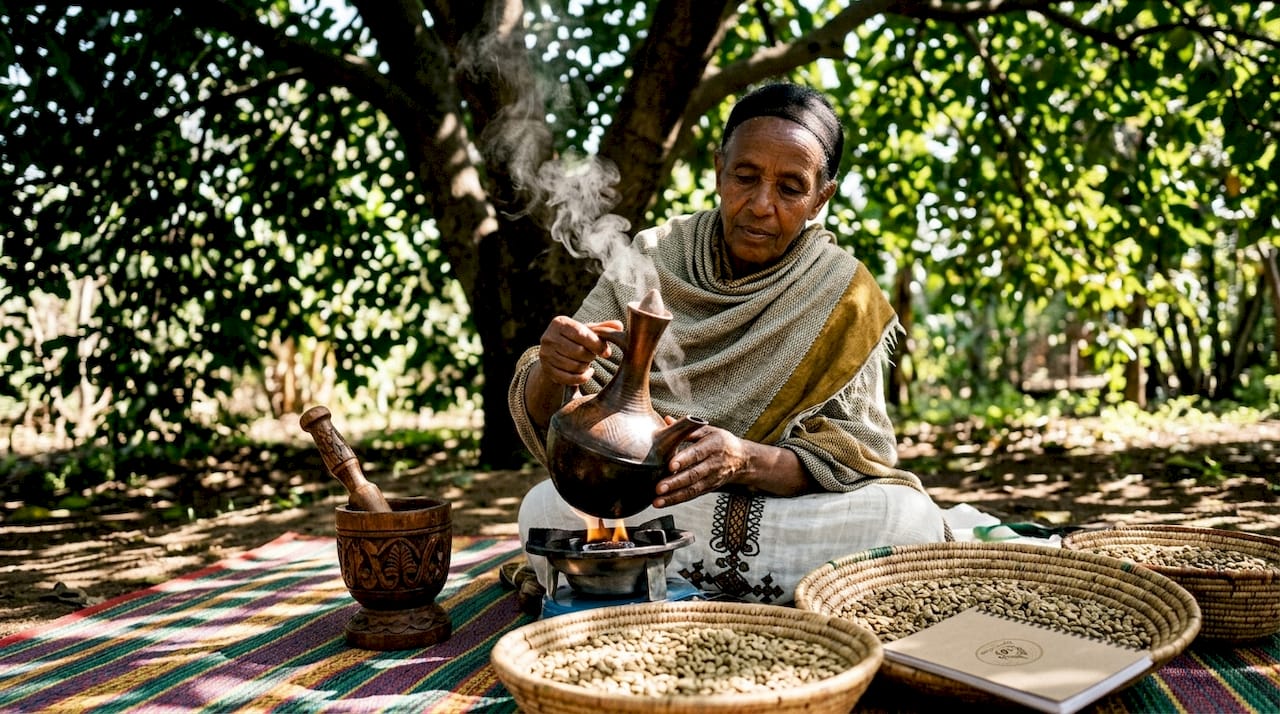
Pro Tip: Season a new jebena before first use by filling it with water and a tablespoon of used coffee grounds, then simmering for 20 minutes. Discard and repeat twice. This closes micro-pores and primes the clay for flavor absorption.
How do you brew Ethiopian coffee using the jebena method?
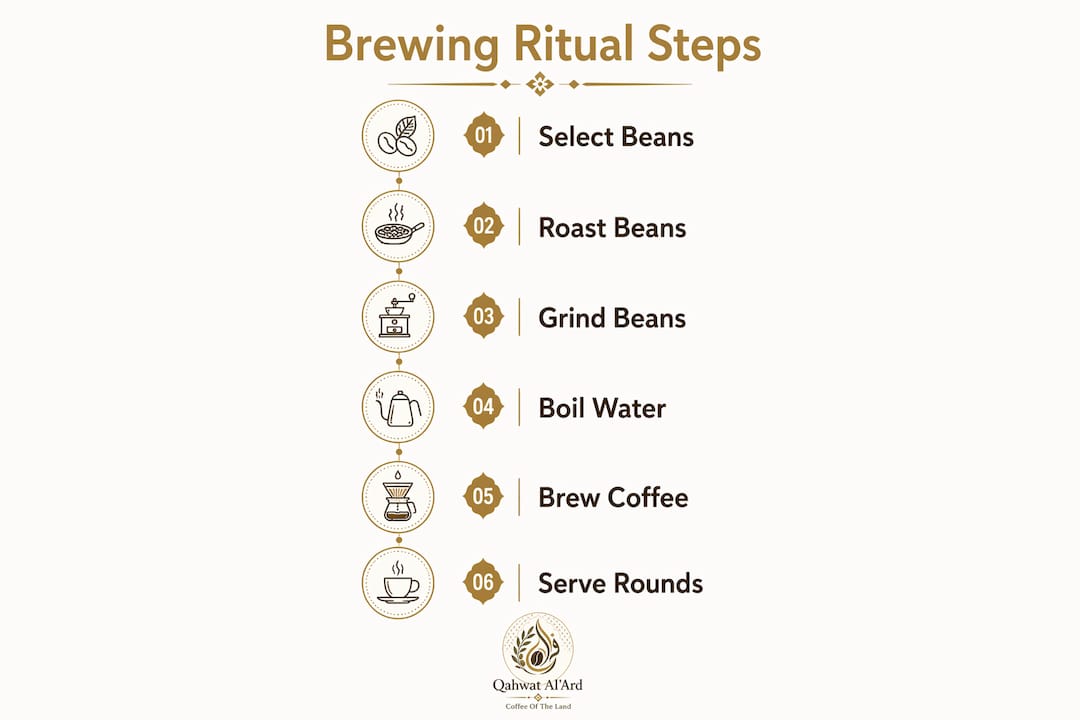
The full jebena brewing process runs in five distinct stages. Each one builds on the last, and skipping any step produces a noticeably inferior cup.
-
Roast the green beans. Place raw Arabica beans in the flat iron pan over the charcoal brazier. Stir constantly with a long-handled spoon. Roasting takes 10–15 minutes at roughly 200–230°C. Stop when beans reach a medium to dark brown color and the second crack is audible. The charcoal heat imparts a light smokiness that complements the decoction brewing style.
-
Grind immediately. Transfer hot beans to the mukecha (mortar) and grind with the zenezena (pestle) using a rhythmic pounding motion. Target a medium-coarse grind, coarser than espresso but finer than a French press. Grinding while beans are still warm releases more aromatic oils.
-
Fill the jebena and brew. Add cold water to the jebena, then add the ground coffee directly. Place the jebena over the charcoal brazier and bring to a boil. The decoction method means the grounds brew directly in boiling water for 15–20 minutes, not in a separate filter. This produces a heavy-bodied, intensely flavored brew.
-
Manage the sediment. Remove the jebena from heat and let it rest for two minutes. Grounds settle to the bottom. Insert the woven grass stopper into the spout to catch any remaining particles.
-
Pour from height. Hold the jebena about one foot above the cup and pour in a steady arc. Pouring from height aerates the coffee and keeps sediment in the pot. Each cup holds roughly 60–80 ml. The pour itself is considered part of the ceremony, not just a transfer of liquid.
Jebena brewing at a glance
| Stage | Action | Duration |
|---|---|---|
| Roasting | Pan roast green Arabica over charcoal | 10–15 minutes |
| Grinding | Pound in wooden mortar to medium-coarse | 5–8 minutes |
| Brewing | Decoction boil in jebena | 15–20 minutes |
| Resting | Settle grounds before pouring | 2 minutes |
| Serving | Pour from 1 foot height into sini cups | Per round |
Pro Tip: After the first round, refill the jebena with fresh water and return it to heat. The same grounds brew three times. Each round extracts less intensity, which is exactly the point.
What regional variations exist in Ethiopian coffee brewing techniques?
No single flavor profile defines traditional Ethiopian coffee. Regional spice additions reflect geography, climate, and centuries of local practice, not personal preference or modern customization.
The most documented regional differences include:
- Kafa region: Adds salt and butter directly to the cup, producing a savory, almost broth-like coffee that surprises most Western drinkers
- Sidamo region: Cardamom pods are cracked and added during brewing, lending a floral, slightly sweet warmth to the cup
- Northern Ethiopia (Tigray and Amhara regions): Cinnamon bark is the preferred addition, creating a spiced, aromatic brew closer in character to Middle Eastern coffee traditions
- Oromia region: Rue (rua) is the most common additive, a bitter herb that cuts through the coffee’s natural acidity and adds a distinctive herbal note
These variations matter because they connect directly to how origin shapes flavor. The same Arabica bean tastes fundamentally different depending on which spices accompany it and how dark the roast runs. Kafa’s preference for lighter roasts with fat additions produces a completely different cup than Sidamo’s medium-roast cardamom blend.
The practical takeaway for you is that there is no wrong version. Experimenting with these regional additions is not cultural appropriation. It is how the tradition has always evolved, carried forward by families adapting to what grows around them.
What are the three serving rounds and their cultural significance?
A traditional Ethiopian coffee ceremony lasts between 2 and 3 hours, structured around three consecutive brewing rounds from the same grounds. That duration is not inefficiency. It is the entire point.
The three rounds each carry a name and a distinct social meaning:
-
Abol: The first and strongest round, brewed from freshly roasted and ground beans. Abol opens the ceremony, signals respect for guests, and sets the tone for conversation. The host serves elders and honored guests first.
-
Tona: The second round, brewed by refilling the jebena with water and returning it to heat. Tona is lighter in body and marks the midpoint of the gathering. By this stage, conversation has deepened and the social purpose of the ceremony is fully active.
-
Baraka: The third and lightest round, translated as “blessing.” Refusing Baraka is considered a breach of etiquette. Accepting it signals that you receive the host’s blessing and honor the relationship. Leaving before Baraka ends the ceremony prematurely and carries social weight.
“The ceremony’s slow, labor-intensive preparation is designed for conflict resolution, conversation, and respect.” — Barista Magazine
The atmosphere surrounding the ceremony reinforces its meaning. Frankincense or myrrh incense burns throughout, and fresh green grass is spread on the floor beneath the setup. These are not decorative choices. The incense purifies the space and honors guests. The grass signals that the home is prepared and welcoming.
The ceremony functions as what Barista Magazine calls “hospitality architecture”, a structure deliberately designed to slow time and create space for genuine human connection. That framing recontextualizes every step. The long roasting, the hand grinding, the three rounds, all of it serves a social function that no espresso machine can replicate.
Key Takeaways
Ethiopian coffee brewing is defined by the jebena decoction method, three ceremonial rounds, and regional spice traditions that together make it one of the most culturally complete coffee rituals in existence.
| Point | Details |
|---|---|
| Jebena is the core tool | The unglazed clay pot seasons with use and must be cleaned with water only to preserve flavor. |
| Roast fresh, grind by hand | Green Arabica beans roasted at 200–230°C and ground in a mortar produce the authentic base flavor. |
| Three rounds, one set of grounds | Abol, Tona, and Baraka each extract different strengths from the same grounds across 2–3 hours. |
| Regional spices define character | Cardamom, rue, salt, butter, and cinnamon reflect geographic tradition, not personal taste trends. |
| Ceremony is the method | The ritual structure, incense, fresh grass, and communal seating, is inseparable from the brewing itself. |
What the jebena taught me about slowing down
The first time I attempted the full ceremony at home, I underestimated how much the rhythm matters. I rushed the roast, pulled the jebena too early, and poured without letting the grounds settle. The result was gritty, flat, and nothing like what I had experienced in Addis Ababa. The method punishes impatience in a way that a French press or a V60 simply does not.
What struck me most was how the ceremony reframes the entire purpose of coffee. In most Western contexts, coffee is fuel. You make it fast and drink it faster. The jebena method inverts that completely. The preparation is the event. The grinding, the smoke, the smell of roasting beans filling a room, these are not inconveniences before the coffee. They are the coffee.
My practical advice: season your jebena properly before the first brew, and do not skip the height pour. Pouring from one foot above the cup is not theater. It genuinely aerates the liquid and keeps sediment where it belongs. Also, brew with someone else present. The ceremony loses most of its meaning when you do it alone. Understanding how processing methods shape flavor also deepens your appreciation for why Ethiopian beans taste the way they do before you even light the charcoal.
The deepest insight I took from this practice is that the three-round structure is not about caffeine delivery. It is about giving people a reason to stay. That is a design principle worth borrowing far beyond coffee.
— Anthony-Yasin
Qahwatalard’s picks for your jebena brewing practice
Authentic jebena brewing starts with the right beans. Single-origin Arabica with traceable sourcing produces the cleanest, most expressive results when you roast and grind by hand at home.

Qahwatalard sources single-origin coffees from renowned growing regions, with full traceability from farm to bag. For enthusiasts who want to experience African coffee traditions in a different format, the African Espresso blend captures the bold, fruit-forward character of the continent’s finest Arabica in a ready-to-brew form. Every product ships fresh-roasted, which matters most when you are working with a method as flavor-sensitive as the jebena ceremony. Visit Qahwatalard to find the beans that match your brewing ambitions.
FAQ
What is the jebena and why is it used for Ethiopian coffee?
The jebena is a handmade clay pot with an unglazed interior that seasons over time, absorbing coffee oils to enhance flavor with each brew. It is the traditional vessel for Ethiopian coffee preparation and central to the ceremonial process.
How long does a traditional Ethiopian coffee ceremony take?
A full ceremony lasts 2–3 hours and includes three consecutive brewing rounds from the same grounds. Shorter ceremonies are considered unusual and outside the cultural norm.
Can I use pre-roasted beans for jebena brewing?
You can, but the ceremony traditionally starts with green Arabica beans roasted fresh over charcoal. Pre-roasted beans skip the communal roasting stage and lose the smoky character that charcoal roasting imparts.
What does Baraka mean in the Ethiopian coffee ceremony?
Baraka means “blessing” and refers to the third and lightest round of coffee. Refusing it is considered a social breach, as it signals rejection of the host’s goodwill and hospitality.
How is Ethiopian coffee different from other traditional brewing methods?
Ethiopian coffee uses the decoction method, boiling grounds directly in water for 15–20 minutes, which produces a heavier body than filtered methods like pour-over or drip. The ceremonial structure and regional spice additions also set it apart from other traditional brewing approaches.


