


TL;DR:
- Sustainable coffee supports ecosystems, farmers’ livelihoods, and climate health through agroforestry and certifications like Rainforest Alliance and Fairtrade. Choosing transparent, farm-specific, and regeneratively certified options ensures environmental and social benefits beyond marketing claims. Most importantly, long-term supply relationships and verified impact data are key to genuine sustainability in coffee.
Sustainable coffee products are defined as beans grown, processed, and traded using methods that protect ecosystems, support farmers’ livelihoods, and reduce environmental harm. The case for buying eco-friendly coffee goes far beyond personal preference. Certifications like Rainforest Alliance, Fairtrade, and Bird Friendly exist because conventional coffee farming carries measurable costs: deforestation, soil degradation, and poverty wages for growers. When you choose sustainable coffee, you are funding a supply chain designed to reverse those outcomes. This guide breaks down exactly what you get, environmentally, socially, and in your cup, when you make that choice.
Why buy sustainable coffee products for the environment
Coffee farming and climate health are directly connected, and the farming method determines whether that connection helps or harms. Agroforestry-based arabica systems conserve biodiversity and improve soil health compared to conventional monoculture, according to UNCTAD. These systems integrate native trees alongside coffee plants, supporting pollination, pest resilience, and the kind of soil biology that keeps farms productive for decades without synthetic inputs.
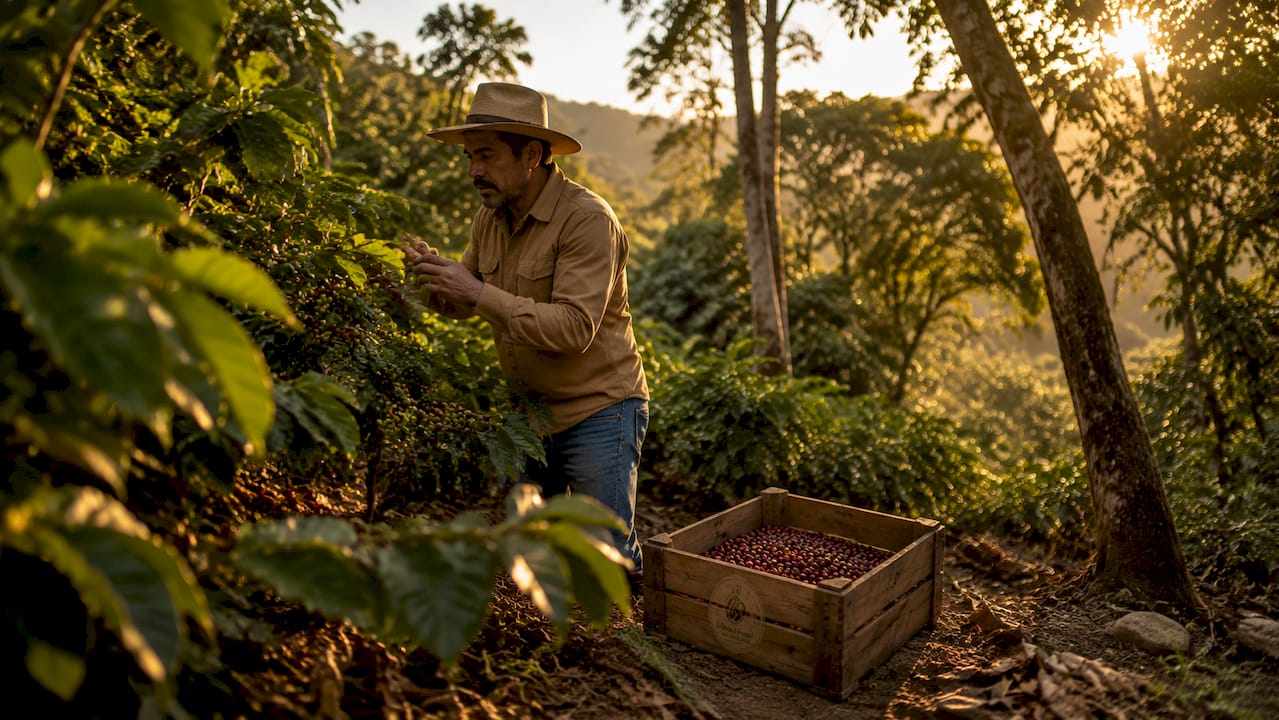
The carbon math is equally compelling. Only 24% of global coffee land is managed under diverse agroforestry, meaning the majority of the world’s coffee is grown in ways that offer little to no carbon sequestration benefit. The Specialty Coffee Association identifies protecting existing shade-grown coffee as the single most effective climate action available to the sector right now. That statistic reframes every purchase decision: buying from farms in that 24% actively defends one of the most carbon-efficient agricultural systems on earth.
Biodiversity benefits extend beyond carbon. Shade-grown farms create habitat corridors for migratory birds, support native insect populations, and maintain the genetic diversity of plant species that monocultures eliminate. However, not all shade claims are equal. Diverse agroforestry with native tree variety delivers significantly more climate and biodiversity benefit than simple canopy coverage. A farm with 40 native tree species performs differently from one with a single shade species planted in rows.
| Cultivation method | Shade coverage | Biodiversity value | Carbon sequestration |
|---|---|---|---|
| Diverse agroforestry | High, multi-species | Very high | High |
| Scant shade monoculture | Low, single species | Low | Minimal |
| Full sun monoculture | None | Negligible | None |
| Certified Bird Friendly | High, native species | Highest | High |
The table above illustrates why the farming system behind your coffee matters more than any single label. Buying eco-friendly coffee means asking which column your purchase supports.
How does sustainable coffee support farmers and communities?
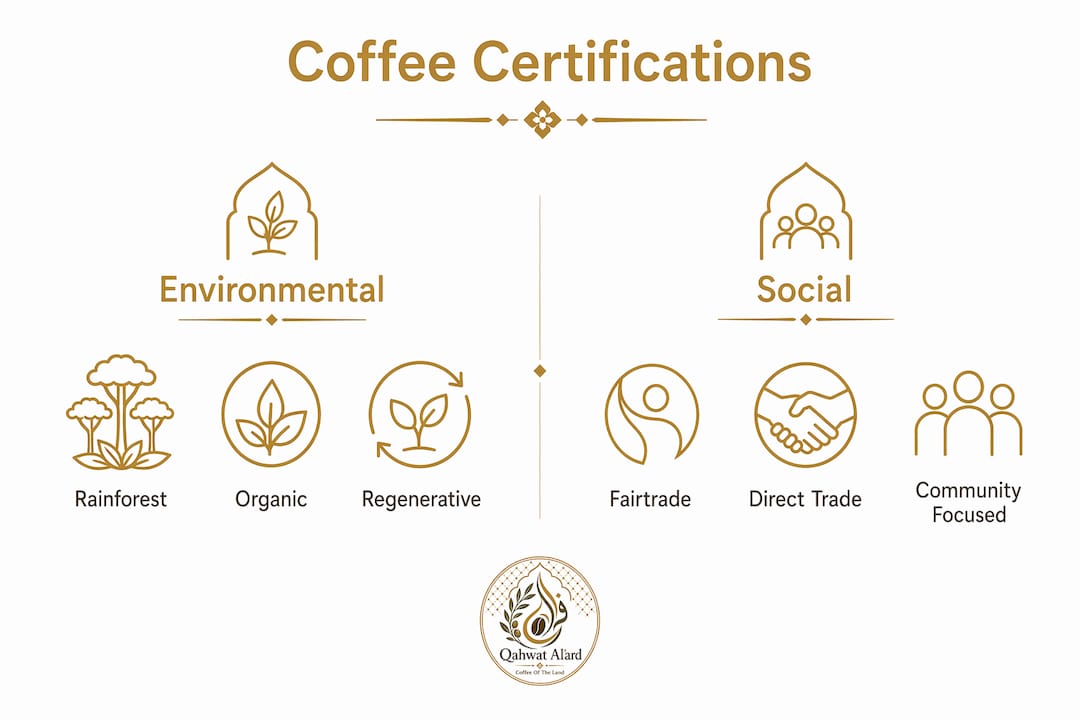
The social impact of ethical coffee choices is concrete and measurable, not abstract. Fairtrade certification modestly increases net income but significantly strengthens farmers’ organizations and their access to capital, according to Oxfam research. That institutional capacity, the ability to negotiate contracts, access credit, and invest in infrastructure, is what separates a farming community that survives a bad harvest from one that collapses.
One of the most direct examples of sustainable coffee’s community impact comes from the Dominican Republic. A forest conservation program links payments for avoided emissions to rural job creation, with a specific focus on empowering women in coffee-growing communities. Funds generated through the program cover technical training, supply chain traceability systems, and employment tied directly to sustainable land management. This is what the premium price in your sustainable coffee bag is funding.
Sustainability premiums reflect real costs including more labor, better infrastructure, and community investments that conventional farming skips entirely. Higher prices are not a marketing markup. They are the mechanism that makes the entire system work.
Specific social benefits tied to certified sustainable coffee purchasing include:
- Stable income floors that protect farmers from commodity price crashes
- Cooperative strengthening that gives smallholders collective bargaining power
- Women’s employment programs funded through conservation-linked premiums
- Technical training in soil health, traceability, and climate-adaptive farming
- Community infrastructure including clean water access and processing facilities
Pro Tip: When evaluating a brand’s social impact claims, look for named programs, specific regions, and measurable outcomes rather than general statements about “supporting farmers.” Qahwatalard’s ethical sourcing guide explains what genuine supply chain transparency looks like in practice.
Does sustainable coffee actually taste better?
Sustainability and quality are not competing priorities. They are produced by the same farming conditions. Shade-grown agroforestry systems slow the maturation of coffee cherries, which concentrates sugars and develops more complex flavor compounds. Coffee terroir and farm-system design directly shape cup quality, meaning the biodiversity that protects ecosystems also produces the flavor complexity that specialty coffee drinkers seek.
Rainforest Alliance’s Regenerative Agriculture Standard is independently audited and measures defined outcomes in soil health, biodiversity, climate resilience, water stewardship, and livelihoods. Brands like Lavazza have launched regenerative certified lines under this standard, giving consumers verified farm-system performance rather than marketing language. That distinction matters because the specialty coffee market has a greenwashing problem. Vague terms like “responsibly sourced” carry no auditing requirement and no measurable standard.
When selecting sustainable coffee, evaluate these factors in order:
- Certification body — Rainforest Alliance, Fairtrade, Bird Friendly, or USDA Organic each audit different outcomes
- Farm system type — diverse agroforestry outperforms simple shade or sun-grown systems
- Origin specificity — single-origin coffees offer more traceability than blends
- Roaster transparency — does the brand publish farm names, regions, and sourcing relationships?
- Processing method — coffee processing methods affect both flavor and water use at the farm level
Pro Tip: Avoid coffees marketed as “shade-grown” without a certification to back the claim. The Specialty Coffee Association’s research confirms that shade diversity metrics, not just canopy presence, determine real environmental benefit.
How to identify credible sustainable coffee certifications
Knowing which certifications to trust is the practical skill that separates informed buyers from those who pay a premium for a logo. Each major certification focuses on different outcomes and uses different verification methods.
| Certification | Primary focus | Verification method | Key strength |
|---|---|---|---|
| Rainforest Alliance | Biodiversity, livelihoods, climate | Independent third-party audit | Science-based, measurable outcomes |
| Fairtrade | Farmer income, cooperative capacity | Cooperative-level audit | Institutional and economic empowerment |
| Bird Friendly (Smithsonian) | Shade diversity, habitat quality | On-site canopy assessment | Highest biodiversity standard |
| USDA Organic | Synthetic input elimination | Annual certification audit | Soil and consumer health focus |
| Regenerative (RA standard) | Soil, water, biodiversity, resilience | Independent audit with metrics | Most comprehensive farm-system standard |
Structural barriers limit smallholder adoption of these certifications, particularly in Central Kenya and similar regions where bureaucratic complexity and cost make formal certification inaccessible. This is why community cooperatives and direct-trade relationships matter as supplementary criteria. A roaster with a documented 5-year sourcing relationship and published farm data may deliver more genuine sustainability impact than a certified product from a farm you know nothing about.
Farm-system design and supply chain commitments like price premiums and long-term buying agreements build real sustainability outcomes beyond what any certification mark alone can guarantee. When you buy from a brand that names its farms, publishes its premiums, and maintains multi-year relationships with growers, you are participating in a supply chain that reduces the burden on smallholders and produces better outcomes for everyone in it.
Watch for these red flags when buying eco-friendly coffee:
- Generic “eco-friendly” or “responsibly sourced” language with no certification or audit trail
- Shade-grown claims without canopy diversity data or Bird Friendly certification
- No origin information beyond a continent or country name
- Sustainability pages that describe values without naming specific programs or partners
Key takeaways
Sustainable coffee delivers verified environmental, social, and quality benefits that conventional coffee cannot match, making certification and farm-system transparency the most reliable buying criteria.
| Point | Details |
|---|---|
| Agroforestry drives real impact | Only 24% of coffee land uses diverse agroforestry, making those farms the highest-priority purchases for climate and biodiversity outcomes. |
| Premiums fund community programs | Higher prices cover labor, training, and infrastructure that make farming communities resilient, not just profitable. |
| Certification quality varies | Rainforest Alliance’s Regenerative Standard and Bird Friendly offer the most rigorous, independently audited outcomes. |
| Shade claims need scrutiny | Native tree diversity matters more than canopy coverage alone when evaluating environmental benefit. |
| Supply chain relationships matter | Long-term sourcing partnerships and published farm data often signal more genuine sustainability than a label alone. |
The uncomfortable truth about sustainable coffee in 2026
I have spent years reading certification frameworks, visiting sourcing pages, and talking to roasters about what their sustainability commitments actually mean at the farm level. The honest conclusion is that the gap between the best and worst “sustainable” coffees on the market is enormous, and most consumers cannot see it from the bag.
The shift toward regenerative certifications is the most encouraging development I have tracked in recent years. Standards that measure soil carbon, water stewardship, and biodiversity outcomes with independent audits are a genuine upgrade from earlier generations of certification that focused almost entirely on price floors. Lavazza’s move to Rainforest Alliance Regenerative certification is a signal that the market is maturing, not just marketing.
What concerns me is the pace of adoption relative to the scale of the problem. With only 24% of global coffee land under diverse agroforestry, the majority of even “certified” coffee still falls short of what the climate and biodiversity crisis actually requires. Consumers who want to make a real difference need to go one step further than the label. Ask where the farm is. Ask how long the roaster has sourced from it. Ask whether the premium reaches the farmer or stops at the cooperative level.
The smallholders I find most worth supporting are those connected to programs like the Dominican Republic’s conservation employment initiative, where sustainability is not a marketing layer but the economic foundation of the community. Those coffees exist. Finding them requires more than scanning for a logo. It requires buying from brands that treat transparency as a product feature, not a PR strategy.
— Anthony-Yasin
Explore sustainable coffee from Qahwat Al’Ard
Qahwatalard sources every coffee with traceability and sustainability at the center of the decision, not as an afterthought. The platform’s single-origin collection connects you directly to specific farms and regions, with the origin story and sourcing context that makes the cup meaningful. Each product reflects the kind of long-term supplier relationships and farm-system transparency this article describes as the gold standard for ethical coffee choices. If you are ready to put your purchasing power behind coffees that protect ecosystems and support farming communities, explore the full sustainable coffee range at Qahwatalard and find a single-origin or regenerative-certified option that matches your values and your palate.
FAQ
What makes a coffee product truly sustainable?
A truly sustainable coffee product comes from a farm using diverse agroforestry or certified regenerative practices, traded through a supply chain that pays documented premiums to growers. Certifications from Rainforest Alliance, Fairtrade, or Bird Friendly provide independently audited verification of those claims.
Is sustainable coffee more expensive, and why?
Yes, sustainable coffee typically costs more because premiums fund real investments in labor, infrastructure, and community programs that conventional farming does not include. That price difference is the mechanism that makes the entire ethical supply chain financially viable for farmers.
What is the difference between organic and fair trade coffee?
USDA Organic certification focuses on eliminating synthetic inputs to protect soil and consumer health, while Fairtrade focuses on farmer income stability and cooperative capacity building. The two certifications address different parts of the sustainability equation and are most powerful when combined.
How do I spot greenwashing on a coffee label?
Greenwashing typically appears as vague language like “responsibly sourced” or “eco-friendly” with no named certification, audit body, or specific farm data. Credible sustainable coffee brands publish farm names, sourcing relationships, and measurable impact metrics rather than general values statements.
Does shade-grown coffee always mean better environmental impact?
Not automatically. Native tree diversity and habitat complexity matter more than canopy coverage alone for climate and biodiversity outcomes. Look for Bird Friendly certification or documented agroforestry diversity data rather than accepting a shade-grown claim at face value.


