


TL;DR:
- Altitude significantly influences coffee flavor by slowing cherry ripening and producing denser beans with brighter, more complex aromatics. Higher elevations yield beans that require careful roasting and finer brewing adjustments to unlock their full potential, while flavor profiles vary predictably across altitude tiers. Recognizing and respecting these altitude effects enables more intentional selection, roasting, and brewing for optimal coffee experiences.
Altitude is the single most reliable predictor of coffee flavor complexity, and understanding the elevation effect on coffee flavor separates casual drinkers from true coffee professionals. Higher farms produce slower-ripening cherries, denser beans, and cups with brighter acidity and more layered aromatics than anything grown near sea level. The coffee altitude flavor impact is not marketing language. It is a measurable biochemical reality that shapes every roasting decision, every brewing adjustment, and every sip you take.
1. How altitude physiologically affects coffee cherries and beans
The mechanism behind altitude’s influence starts with temperature. The environmental lapse rate drops roughly 6.5°C per 1,000 meters of elevation, which means a farm at 2,000 meters is significantly cooler than one at 500 meters. That cooler air slows the entire cherry development cycle, giving the fruit more time to accumulate sugars and organic acids. The result is a bean with more flavor precursors locked inside before it ever reaches a roaster.
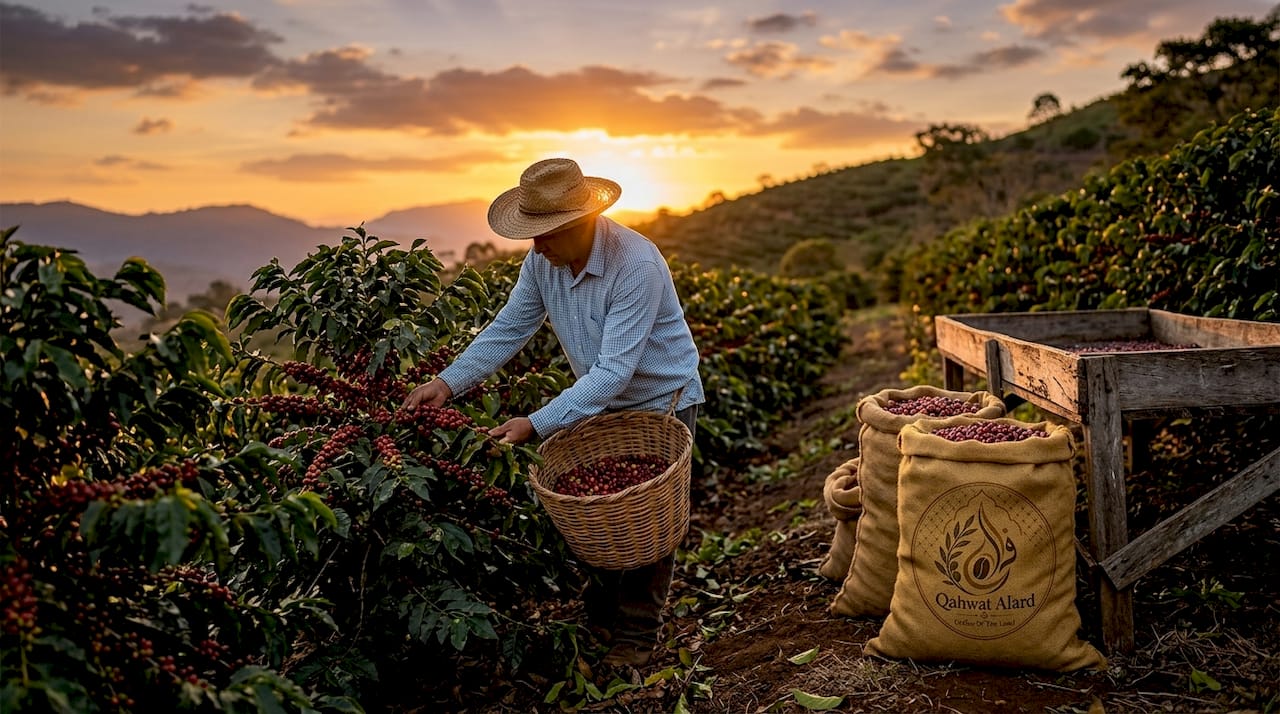
Those extra weeks of slow maturation also change the physical structure of the bean. Higher-elevation coffees produce denser, heavier beans with distinctive biochemical profiles, including variable concentrations of trigonelline and nicotinic acid. Trigonelline breaks down during roasting into compounds that contribute to the roasty, nutty notes you detect in a well-developed cup. Higher concentrations mean more raw material for flavor development.
Bean density is not just a chemistry story. It directly affects how heat moves through the bean during roasting and how water moves through the grounds during brewing. Denser beans resist heat transfer, which means roasters must adjust their profiles carefully to avoid underdevelopment at the core. For you as a brewer, density translates to a bean that behaves differently in your grinder and your brewer.
- Cooler temperatures at altitude slow cherry ripening by weeks or even months
- Extended maturation increases sugar and organic acid accumulation in the bean
- Denser beans contain higher concentrations of flavor-active compounds like trigonelline
- Bean density affects both roasting heat transfer and brewing extraction behavior
Pro Tip: When you buy a bag labeled with a specific farm altitude, treat that number as a density indicator. Beans from above 1,500 meters will almost always need a slightly finer grind and more contact time than low-altitude beans from the same roast level.
2. Coffee flavor profiles by altitude range
The elevation effect on coffee flavor follows a consistent pattern across origins, though variety and processing add their own layers. Understanding these tiers gives you a practical framework for predicting what a cup will taste like before you brew it.
| Altitude range | Typical flavor profile | Example origins |
|---|---|---|
| Below 1,000 m | Earthy, smooth, chocolatey, low acidity, heavy body | Brazil (many regions), Vietnam |
| 1,000 to 1,500 m | Balanced acidity, nutty and caramel sweetness, mild fruit | Colombia (many farms), Honduras |
| 1,500 to 2,000 m | Bright acidity, floral and fruity notes, citrus and berry | Ethiopian Yirgacheffe, Kenyan AA |
| Above 2,000 m | Intense acidity, tea-like body, complex and sometimes polarizing | Yemeni Haraaz, some Peruvian high farms |
Brazilian coffees, grown predominantly below 1,200 meters, deliver the smooth, chocolatey, low-acid profile that makes them the world’s most consumed origin. Ethiopian Yirgacheffe, grown between 1,700 and 2,200 meters, produces the jasmine florals and bergamot citrus notes that make it a benchmark for high altitude coffee taste. Kenyan AA, grown on volcanic soils above 1,500 meters, delivers the blackcurrant and tomato acidity that divides opinion but commands premium prices.
The very high altitude tier above 2,000 meters produces cups that challenge even experienced palates. The acidity is intense, the body is lighter and more tea-like, and the aromatics can shift from floral to savory depending on processing. These coffees reward patience and the right brewing method. They are not universally preferred, but they represent the outer edge of what altitude can produce.
3. How altitude influences roasting and brewing practices
Roasting high-altitude beans demands a fundamentally different approach than roasting low-altitude beans. The density difference means the roaster must apply heat longer and more carefully to develop the core of the bean without scorching the surface. Helix Coffee Co., roasting at approximately 9,100 feet in Breckenridge, Colorado, applies low-temperature, long-duration roasting profiles specifically to preserve the brightness and delicate aromatics that high-altitude beans carry. Their approach illustrates how the roasting environment itself interacts with bean origin altitude.
There is also a secondary altitude effect that most coffee guides ignore: the altitude at which you roast. Water boils at roughly 194°F at 9,100 feet compared to 212°F at sea level. Lower atmospheric pressure changes how heat moves through the drum and how moisture releases from the bean. Roasters at elevation must compensate with longer roast times and adjusted charge temperatures to avoid underdevelopment.
For brewing, higher-altitude coffees extract more due to their denser, harder bean structure, with elevation alone explaining 25.6% of the variation in extraction yield. This means a grind setting that works perfectly for a Brazilian medium roast will likely under-extract a Kenyan or Ethiopian bean at the same dose and brew time.
- Use a finer grind for high-altitude beans to increase surface area and extraction
- Extend brew time slightly for pour-over methods with dense, high-altitude beans
- Avoid dark roasts on high-altitude coffees, since dark roasts mask the brightness and fruit notes that make them distinctive
- Low-altitude coffees benefit from coarser grinds and shorter brews to avoid flat, over-extracted cups
Pro Tip: For Ethiopian or Kenyan beans above 1,800 meters, try a Hario V60 or Chemex with water at 200°F to 205°F. The pour-over format preserves the floral and citrus clarity that altitude builds into the bean. A French press will muddy those notes.
4. What other factors interact with altitude to shape coffee flavor
Altitude is a major driver of coffee flavor, but it does not operate in isolation. Altitude, latitude, temperature, and rainfall collectively shape coffee’s chemical composition and sensory profile, with the final cup determined by the entire production chain from farm to cup. Treating altitude as the only variable leads to real purchasing mistakes.
- Variety genetics. Heirloom Ethiopian varieties like Kurume and Dega express extraordinary floral complexity at altitude that a Catimor or Robusta plant at the same elevation simply cannot match. Variety sets the ceiling for what altitude can unlock.
- Processing method. A naturally processed Ethiopian Yirgacheffe and a washed Yirgacheffe from the same altitude will taste dramatically different. Natural processing adds fruit-forward fermentation notes that can amplify or compete with altitude-driven acidity. Washed processing tends to let altitude’s clarity shine through. Understanding coffee processing methods is as important as knowing the elevation.
- Soil composition and microclimate. Volcanic soils in Kenya and Guatemala add mineral complexity that reinforces altitude’s brightness. The same elevation on sandy or depleted soil produces a thinner, less complex cup. Rainfall distribution within a growing season also affects cherry development timing, even at constant altitude.
- Roast level. This is the factor most buyers underestimate. A dark roast on a 2,000-meter Ethiopian bean will destroy the florals and citrus that altitude spent months building. The coffee terroir that altitude creates only survives in the cup if the roaster respects it.
- Altitude grading systems. Central American countries use grades like SHB (Strictly Hard Bean) to signal beans grown above 1,370 meters, using density as a quality proxy. SHB is a useful consumer signal, but it confirms density, not flavor. Processing and roasting still determine the final outcome.
5. How to use altitude information to select and brew better coffee
Altitude data on a coffee bag is one of the most useful pieces of information a producer can give you, provided you know how to read it. Use it as a starting filter for flavor expectation, not a guarantee of quality.
- Match altitude to your flavor preference. If you prefer smooth, low-acid, chocolatey cups, look for origins below 1,200 meters. If you want bright, fruity, and floral, target beans above 1,500 meters. This single filter eliminates most mismatched purchases.
- Align roast level with altitude. High-altitude beans deserve light to medium roasts. Medium to dark roasts suit lower-altitude beans where the goal is body and sweetness rather than acidity and florals. Checking how roasters shape flavor helps you evaluate whether a roaster is respecting the bean’s origin.
- Adjust your grind based on bean density. High-altitude beans are denser and harder. They require more grinding energy and a finer setting to achieve the same extraction as a softer, low-altitude bean. Understanding coffee grind differences by density is a practical skill that directly improves your cup.
- Choose brewing methods that match the cup style. Pour-over methods like the V60 or Chemex highlight the clarity and brightness of high-altitude beans. Espresso and French press work better with lower-altitude, higher-body coffees where texture and richness are the goal.
- Experiment across altitude tiers. Tasting a Brazilian low-altitude bean alongside an Ethiopian high-altitude bean in the same week is one of the fastest ways to internalize what elevation actually does to flavor. The contrast is immediate and educational.
Pro Tip: When evaluating a new origin, note the altitude before you brew. Then taste without looking at the bag. Compare your sensory experience to the altitude prediction. Over time, this practice builds a reliable internal flavor map that no amount of reading can replace.
Key takeaways
Altitude shapes coffee flavor through slower cherry maturation and denser bean development, and that effect only reaches your cup intact when roasting and brewing decisions respect what elevation built into the bean.
| Point | Details |
|---|---|
| Altitude drives bean density | Cooler temperatures at higher elevations slow ripening and increase sugar and acid accumulation in the bean. |
| Flavor profiles follow elevation tiers | Beans below 1,000 m taste earthy and smooth; beans above 1,500 m deliver bright acidity and floral complexity. |
| Roasting must match bean density | Dense, high-altitude beans need longer, lower-temperature roasts to develop flavor without scorching. |
| Brewing adjustments are non-negotiable | High-altitude beans require finer grinds and longer extraction to balance their sharper acidity and denser structure. |
| Altitude is one factor among several | Variety, processing, soil, and roast level all modify altitude’s contribution to the final cup. |
Altitude is a signal, not a guarantee
I have tasted enough high-altitude coffees to know that the number on the bag is a starting point, not a promise. Some of the most disappointing cups I have encountered came from farms above 2,000 meters that were dark-roasted into oblivion. The altitude was real. The flavor was gone.
What altitude actually gives you is potential. It creates the conditions for brighter acidity, more complex aromatics, and greater flavor depth. Whether that potential reaches your cup depends entirely on what happens after harvest. A skilled roaster working with a 1,600-meter Colombian bean will consistently outperform a careless roaster working with a 2,000-meter Ethiopian. The elevation advantage is real but fragile.
My honest recommendation is to stop treating altitude as a quality badge and start treating it as a flavor style indicator. High altitude means bright and complex. Low altitude means smooth and rich. Neither is better. They are different, and your preference is the only relevant standard. The coffee professionals I respect most are the ones who can articulate why they prefer a particular altitude tier, not just which one scores higher on a cupping sheet.
Experimenting across altitude origins is the fastest way to develop genuine tasting skill. Qahwatalard sources single-origin coffees from multiple elevation tiers precisely because the flavor variation across altitude is that significant and that worth exploring.
— Anthony-Yasin
Explore altitude-driven flavors with Qahwatalard
Qahwatalard sources and roasts coffees from farms across every altitude tier, from smooth Brazilian low-altitude selections to bright, floral East African high-altitude beans. Each roast profile is calibrated to the bean’s elevation, preserving the acidity and aromatics that altitude builds into the cherry over months of slow maturation. If you want to taste the elevation effect directly, the single-origin collection is the clearest way to compare altitude tiers side by side. For a high-altitude African cup with the intensity and complexity that elevation produces, the African Espresso blend delivers exactly that in every shot.
FAQ
What is the best altitude for coffee flavor?
Most specialty coffee professionals consider the 1,500 to 2,000 meter range optimal for flavor complexity, producing bright acidity, floral aromatics, and fruit-forward notes. Above 2,000 meters, flavor intensity increases but the profile becomes more polarizing and tea-like.
How does altitude affect coffee bean density?
Cooler temperatures at higher elevations slow cherry maturation, giving beans more time to develop and resulting in a physically denser, harder structure. That density directly influences how the bean roasts and how efficiently it extracts during brewing.
Does high altitude always mean better coffee?
No. Altitude creates flavor potential through slower ripening and denser bean development, but processing, variety, roast level, and brewing technique all determine whether that potential reaches the cup. A poorly roasted high-altitude bean will taste worse than a well-roasted low-altitude one.
What does SHB mean on a coffee label?
SHB stands for Strictly Hard Bean, a grade used in Central America to indicate coffee grown above approximately 1,370 meters. It signals bean density linked to altitude, which is a useful quality proxy but not a direct flavor guarantee.
Which brewing method works best for high-altitude coffee?
Pour-over methods like the Hario V60 or Chemex are best suited for high-altitude beans because they highlight clarity, brightness, and the floral or fruity notes that elevation produces. Espresso and immersion methods work better with lower-altitude, higher-body coffees.


