


TL;DR:
- Ethiopian coffee includes distinct regional varieties like Yirgacheffe, Guji, Sidama, Harrar, and Limu, each offering unique flavor profiles. High-altitude growing and careful processing are key factors that influence flavor complexity, traceability, and quality. The best brewing methods highlight Ethiopian coffees’ floral and fruity notes, especially pour-over, Chemex, and AeroPress.
Ethiopia is the birthplace of Arabica coffee, and its regional varieties remain some of the most complex and sought-after beans in specialty coffee. Among Ethiopian coffee beans, notable regional varieties include Yirgacheffe, Guji, Sidama, Harrar, and Limu, each offering distinctive flavor profiles. Each comes from a distinct growing zone, and each tastes genuinely different from the others.
Here is a quick snapshot of what sets each apart:
- Yirgacheffe: Floral, jasmine, bright citrus, delicate body. Washed processing is standard.
- Guji: Stone fruit, lime zest, white peach, honeysuckle. Washed and natural lots both excel.
- Sidama: Berry intensity, dark chocolate, rich floral depth. Natural processing amplifies sweetness.
- Harrar: Winey, blueberry, dry chocolate, heavy body. Dry processed and distinctly wild.
- Limu: Smooth, spicy, balanced acidity, pleasantly sweet. Washed and lower-key than the others.
Flavor complexity, regional traceability, and processing quality drive these rankings. Price premiums for the top lots reflect artisanal processing and meticulous handling of high-altitude crops.
How flavor and origin define the best Ethiopian coffee varieties
| Region | Flavor Profile | Processing | Altitude | Expert Cupping Notes |
|---|---|---|---|---|
| Yirgacheffe | Floral, citrus, jasmine, bergamot | Washed (primarily) | high altitude | Delicate body, shimmering acidity, sweet finish |
| Guji | Lime zest, white peach, honeysuckle, chocolate | Washed and natural | high altitude | Sparkling acidity, silky mouthfeel, long finish |
| Sidama | Berry, dark chocolate, floral depth | Natural and washed | high altitude | Plush texture, lively acidity, resonant sweetness |
| Harrar | Winey, blueberry, dry chocolate | Natural (dry processed) | high altitude | Heavy body, wild acidity, fruity complexity |
| Limu | Smooth, spicy, winey, sweet | Washed | high altitude | Balanced body, low acidity, vibrant finish |
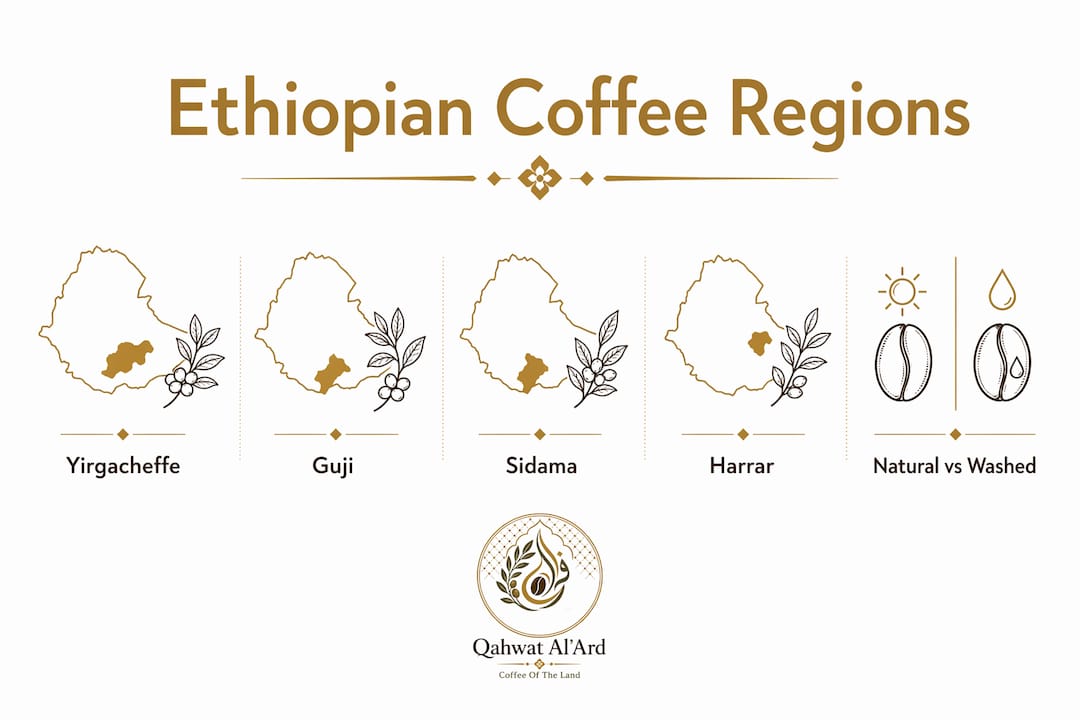
Ethiopian flavor profiles vary sharply by region. Yirgacheffe, grown in the Gedeo Zone of southern Ethiopia, produces the most consistently floral and citrus-forward cups in the country. Guji, a zone within the broader Oromia region, has emerged as a rival to Yirgacheffe for sheer aromatic complexity. Coffee Review’s cupping of a Guji Hambela Bishan Wate washed lot described it as “radiant, floral-driven, intricately sweet” with notes of lime zest, white peach, honeysuckle, and baking chocolate.
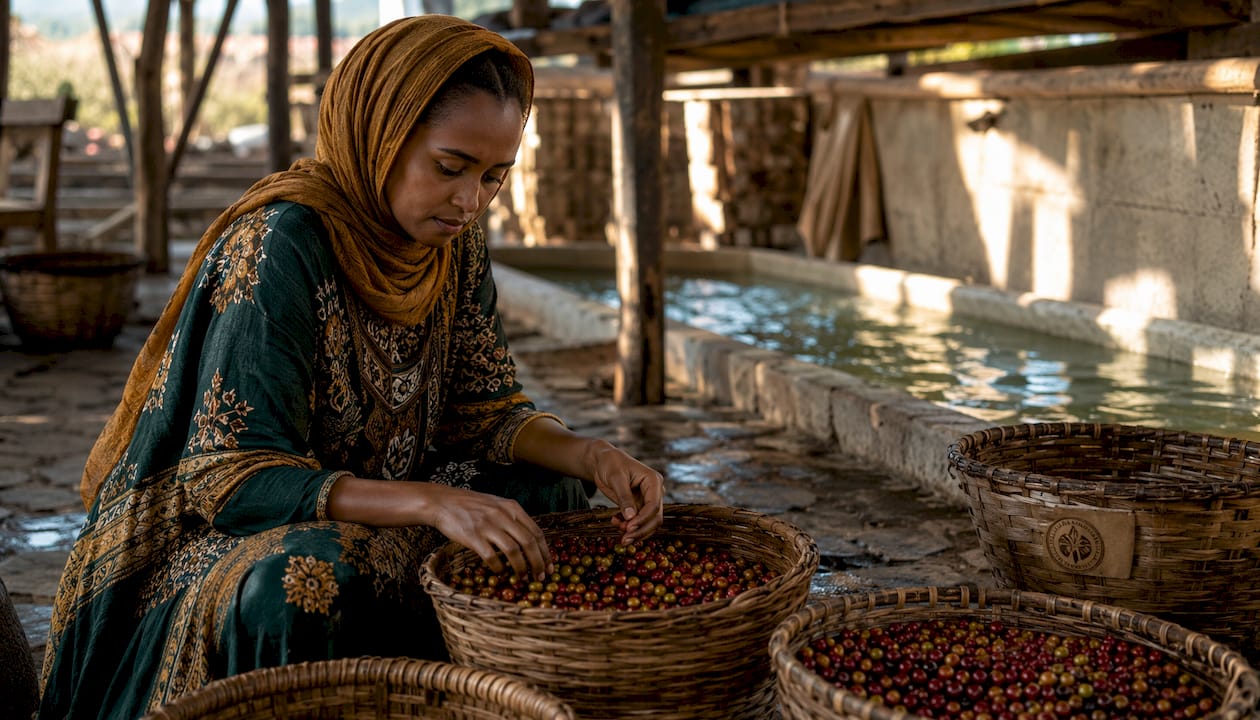
Processing method shapes the cup as much as geography does. Washed coffees emphasize clarity and floral lift. Natural coffees, where the whole fruit dries around the bean, deliver jammy, fruit-forward sweetness. Anaerobic naturals push further still, adding tropical fruit and spice that reads almost exotic. A Coffee Review-scored anaerobic natural Sidama from the Karamo Washing Station showed pineapple, blueberry, violet, cocoa nib, and candied ginger in a single cup.
Harrar stands alone as Ethiopia’s great dry-processed eastern coffee. Its winey, blueberry-driven character comes from the natural fermentation that occurs during sun drying, and the result has a dry edge and heavy body that washed coffees never replicate.
Which brewing methods bring out Ethiopian coffee’s best qualities
The three methods that consistently highlight Ethiopian coffee’s floral and fruit character are pour-over, Chemex, and AeroPress. Each controls extraction precisely and keeps the cup clean enough to let delicate aromatics come through.
- Pour-over (V60 or Kalita Wave): Best for Yirgacheffe and Guji. The slow, controlled pour amplifies floral notes and keeps acidity bright without bitterness.
- Chemex: Ideal for Sidama and Limu. The thick paper filter removes oils and produces a tea-like clarity that suits balanced, sweet profiles.
- AeroPress: Works well for Harrar. Shorter brew time and slight pressure extract the winey, chocolatey depth without over-extracting the wild, dry notes.
Pro Tip: Avoid French press and dark roasts for Ethiopian beans. Immersion brewing muddies delicate florals, and dark roasting burns off the volatile aromatics that make these coffees worth buying. Aim for light to medium-light roasts and water around 200°F.
For a deeper look at Ethiopian brewing rituals, the traditional Ethiopian coffee ceremony itself uses a clay pot called a jebena, which brews strong and unfiltered. It is worth experiencing once, but pour-over is the better daily driver for showcasing specialty lots.
Why traceability and single-origin sourcing matter for Ethiopian coffee
Single-origin Ethiopian coffee is not always a single botanical variety. Most lots are blends of indigenous landrace varieties like Kurume and Welisho, which is why the label “Ethiopian heirloom” can mislead buyers. The term bundles dozens of distinct varietals under one vague name, obscuring what actually grows in the cup.
Traceable sourcing cuts through that ambiguity. Transparency in sourcing boosts consumer trust and deepens appreciation for bean quality and farmer craftsmanship. Naming a specific washing station, like Bishan Wate in Guji or Karamo in Sidama, tells you far more about quality than a regional label alone. The Bishan Wate station, for example, separates cherry deliveries by individual kebele (village), giving each lot an extra layer of traceability.
Key benefits of traceable, single-origin sourcing:
- Confirms the specific washing station and processing method used
- Supports ethical compensation for smallholder farmers
- Preserves regional flavor identity rather than blending it away
- Gives you a meaningful story to share when gifting
Smallholder farmers and dedicated washing stations are the backbone of Ethiopian coffee quality. Most farms average under one hectare, and the farmers deliver cherry daily to nearby stations where trained processors take over.
What actually determines quality in Ethiopian coffee beans
High altitude is the single biggest structural advantage Ethiopian coffee has. Beans grown at high altitudes ripen slowly in cool temperatures, building denser cell walls and more complex sugars. That density translates directly to brighter acidity and layered flavor in the cup.
Processing is the second lever. Natural processed coffees exhibit intense berry and jammy flavors that washed coffees simply do not produce. Anaerobic fermentation adds another dimension entirely, introducing tropical fruit and spice notes that are rare in any other origin.
Freshness matters more than most buyers realize. Roast date is critical to experiencing Ethiopian coffees’ delicate aroma and flavor. Beans more than four to six weeks past roast date lose the volatile compounds that carry floral and citrus notes first. Always check the roast date before buying, and prioritize roasters who print it clearly on the bag.
On price: top Ethiopian lots reflect the labor-intensive handpicking and processing involved, often commanding premium prices at specialty roasters. Sidama and Limu often offer better price-to-quality ratios than Yirgacheffe, which commands a premium partly on name recognition.
How to gift Ethiopian coffee beans well
Ethiopian coffee makes a genuinely impressive gift because the flavor story is easy to tell and the regional variety gives you options for every palate. A few things make the difference between a forgettable bag and something the recipient actually remembers.
Choose by flavor preference. Floral and delicate? Go Yirgacheffe. Bold and fruity? Harrar or a natural Sidama. Smooth and approachable? Limu is the safest bet for someone new to single-origin coffee.
Prioritize roast date. A beautifully packaged bag of stale beans is a disappointing gift. Order from roasters who ship within days of roasting, and aim to give the coffee within two weeks of the roast date.
Pair with a brewing tool. A bag of Yirgacheffe paired with a simple V60 dripper and filters turns a $25 gift into a complete experience. AeroPress kits work well with Harrar for someone who prefers a bolder cup.
Presentation counts. Many specialty roasters offer gift boxes, kraft paper bags with twine, or custom labels. If you are buying for a coffee enthusiast, include a card with the washing station name and tasting notes. That detail shows you paid attention.
Key Takeaways
Ethiopia’s top-ranked coffee varieties each deliver a distinct regional flavor that no other origin replicates, and freshness, processing method, and washing-station traceability are the three factors that separate a great cup from a forgettable one.
| Point | Details |
|---|---|
| Yirgacheffe leads on florals | Washed Yirgacheffe produces the most consistently floral and citrus-forward cups in Ethiopia. |
| Processing shapes flavor dramatically | Natural and anaerobic lots deliver berry and tropical fruit intensity that washed coffees cannot match. |
| Altitude builds complexity | Beans grown at high altitude ripen slowly, producing denser beans with brighter acidity. |
| Roast date is non-negotiable | Buy beans within four to six weeks of roast date to preserve delicate aromatics. |
| Washing station names signal quality | Specific station traceability, like Bishan Wate or Karamo, is a stronger quality indicator than a regional label. |
Qahwatalard’s single-origin collection includes carefully sourced Ethiopian varieties selected for traceability, freshness, and flavor integrity. If you want to explore the full range without committing to one region, it is a good place to start.
FAQ
Which Ethiopian coffee region has the best flavor?
Yirgacheffe consistently ranks highest for complexity and aroma, with its floral, citrus, and jasmine character. Guji is a close rival, especially in washed lots.
What is the difference between washed and natural Ethiopian coffee?
Washed coffees taste cleaner and more floral; natural coffees taste fruitier and jammier because the bean dries inside the whole fruit, absorbing its sugars.
How do I know if Ethiopian coffee beans are fresh?
Check the roast date printed on the bag. Beans more than four to six weeks past roast date have already lost most of their delicate floral and citrus aromatics.
Is “Ethiopian heirloom” a reliable label?
No. The term groups dozens of distinct indigenous landrace varieties under one name. Look for bags that name the specific washing station or farmer for genuine traceability.
What brewing method works best for Ethiopian coffee?
Pour-over and Chemex bring out the most clarity and floral lift. AeroPress suits bolder, natural-processed lots like Harrar or anaerobic Sidama.


