
TL;DR:
- Coffee roast levels are defined by crack milestones along the roasting curve, not color alone, with each stage influencing flavor and aroma. First and second cracks signal specific chemical transitions that determine whether a roast is light, medium, medium-dark, or dark, affecting taste, solubility, and brewing methods. Proper identification of roast level involves analyzing crack sounds, bean color, aroma, and freshness, enabling better control over flavor profiles and extraction.
Coffee roast levels are defined by how far beans travel along the roasting curve, measured primarily by first and second crack milestones rather than color names alone. The spectrum runs from light through medium, medium-dark, and dark, with each stage producing distinct chemical changes that shape flavor, aroma, and how the coffee behaves in your brewer. Understanding roast profiles is the difference between guessing at a bag of beans and knowing exactly what to expect in the cup. This guide covers every stage of the coffee roasting process, the science behind each transition, and how to match roast levels to your brewing method.
1. What are the main coffee roast levels?
Coffee roast types fall into four recognized categories: light, medium, medium-dark, and dark. Each is defined by roasting curve position, specifically where the roast stops relative to first and second crack, rather than a universal color standard. The boundaries between levels are not rigid, and naming conventions vary widely by roaster and region.
Light roast stops just after first crack, which occurs around 196 to 205°C. The beans are dry, dense, and light brown. Flavor leans toward origin character: bright acidity, floral notes, and fruit-forward complexity. Ethiopian single-origins roasted light, for example, often express jasmine and blueberry.
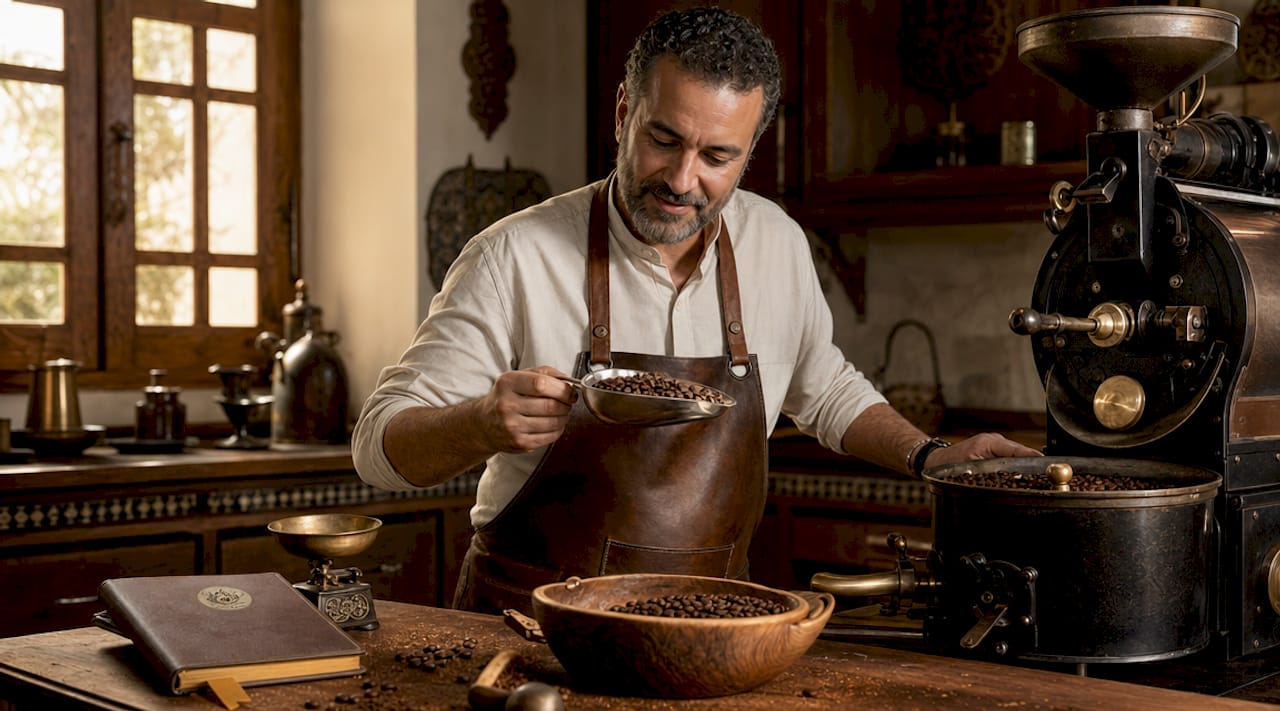
Medium roast develops between first and second crack. Sweetness peaks here as caramelization progresses without overwhelming the origin. Body increases, acidity softens, and the cup becomes more balanced. Traditional names like City and City+ fall in this range.
Medium-dark roast approaches second crack. Chocolate and caramel notes dominate, acidity drops further, and body becomes heavier. Full City and Full City+ are common labels. Surface oils may just begin to appear.
Dark roast pushes beyond second crack, which occurs around 224 to 230°C. Beans develop an oily surface as oils migrate outward. Flavor becomes roast-forward: smoke, bitterness, and dark chocolate. Traditional names like French and Italian sit here, though Italian typically goes darker than French.
Key traits at a glance:
- Light: dry surface, light brown, bright acidity, origin-driven flavor
- Medium: slightly darker, balanced sweetness and acidity, no surface oil
- Medium-dark: richer body, chocolate notes, trace oils possible
- Dark: oily surface, smoke and bitterness dominant, origin character largely masked
Pro Tip: Don’t rely solely on bean color to judge roast level. Color meters like the Agtron scale measure light reflectance, but same roast readings can differ across devices. Use crack timing alongside color for accuracy.
2. How first crack and second crack define roast levels
First crack and second crack are the two most important milestones in the coffee roasting process. They are audible, physical events that signal specific chemical transitions inside the bean, and every roast level is defined in relation to them.
First crack happens around 196°C. Steam pressure builds inside the bean until the cell walls rupture with a sharp popping sound, similar to popcorn. The bean expands, density drops, and light roast territory begins. Stopping here preserves origin character and acidity.
Second crack follows at approximately 224 to 230°C. The sound is softer and more rapid, like crackling rice. At this point, the bean’s cellular structure breaks down further and oils migrate to the surface. This is where medium-dark transitions into dark roast.
The gap between first and second crack is where most specialty roasters work. Development time ratio (DTR) measures how long the roast spends after first crack as a percentage of total roast time. Light roast DTR runs roughly 18 to 22%, medium 20 to 25%, and medium-dark 25 to 30%. A roast pulled too early in this window tastes underdeveloped, not just light.
Common pitfalls to avoid:
- Confusing a soft, rolling first crack with second crack, which leads to underestimating roast darkness
- Pulling the roast too early and calling it “light” when it is actually underdeveloped
- Judging roast level by time alone without tracking temperature or crack sounds
Pro Tip: Crack sounds combined with color and temperature give the most reliable roast level reading. Relying on any single indicator alone leads to inconsistency.
3. How roast level shapes flavor, aroma, and brewing method
Roast level is the single biggest variable controlling what ends up in your cup, more than brewing method or water quality in most cases. The chemical reactions driving this are caramelization, Maillard reactions, and the progressive breakdown of chlorogenic acids and aromatic compounds as temperature rises.
Light roasts preserve origin character. Dark roasts mask origin and shift flavor toward roast-derived compounds like smoke, bitterness, and dark chocolate. This is why a light-roasted Ethiopian Yirgacheffe tastes nothing like a dark-roasted version of the same bean.
Flavor expectations by roast level:
- Light: floral, citrus, stone fruit, bright acidity, tea-like body
- Medium: caramel, milk chocolate, stone fruit, balanced acidity and body
- Medium-dark: dark chocolate, toasted nuts, low acidity, heavier body
- Dark: smoke, bittersweet chocolate, charred notes, minimal acidity
Solubility and extraction differ significantly across roast levels. Light roasts are less soluble and harder to extract because the bean structure remains dense. They require a finer grind, higher water temperature (93 to 96°C), and longer contact time to avoid sourness. Dark roasts are more porous and forgiving, extracting faster with coarser grinds and slightly lower temperatures.
Brewing method matches by roast:
- Light roast: pour-over (Hario V60, Chemex), AeroPress with extended steep, filter drip
- Medium roast: versatile across drip, French press, and AeroPress
- Medium-dark and dark: espresso, moka pot, and milk-based drinks where roast character complements added flavors
The caffeine myth deserves a direct answer. Caffeine content per weight does not vary significantly between roast levels. Dark roast has marginally more caffeine by weight because beans lose mass during roasting. Light roast has more caffeine by volume because the denser beans pack more mass per scoop.
Pro Tip: When switching roast levels, adjust your grind and water temperature before anything else. A grind adjustment guide can help you dial in the right setting for each roast without wasting beans.
4. How to accurately identify roast levels at home
Identifying roast levels without a commercial Agtron meter is entirely possible using sensory cues and a few practical reference points. The key is reading multiple signals together rather than relying on one.
Bean color is the starting point. Light roasts are cinnamon to medium brown with no surface sheen. Medium roasts are medium to dark brown, still dry. Medium-dark roasts show a slight gloss. Dark roasts are visibly oily and dark brown to near-black. Color alone misleads, though, because color meters vary by device and the same visual darkness can represent different roast depths depending on the origin and processing method.
Aroma at rest tells you more. Light roasts smell grainy, fruity, or floral. Medium roasts smell like baked goods or caramel. Dark roasts carry a smoky, charred, or bittersweet aroma even before brewing.
The underdevelopment trap catches many coffee drinkers. A woody, grassy, or papery cup is not a light roast. It is an underdeveloped roast, which is a roasting flaw. A properly developed light roast tastes bright, sweet, and complex. If your “light roast” tastes flat and vegetal, the roaster pulled it too early.
Roast date matters as much as roast level. A dark roast three weeks off-roast will taste flat and stale. A light roast two days off-roast may taste sharp and undegassed. Roast date freshness directly affects how the flavors you expect from each roast level actually show up in the cup.
Roast level comparison table:
| Roast level | Bean color | Surface oil | Flavor notes | Aroma |
|---|---|---|---|---|
| Light | Light to medium brown | None | Floral, citrus, fruit, bright acidity | Grainy, fruity |
| Medium | Medium to dark brown | None | Caramel, milk chocolate, balanced | Baked, sweet |
| Medium-dark | Dark brown | Trace to slight | Dark chocolate, toasted nuts | Rich, warm |
| Dark | Very dark brown to black | Heavy | Smoke, bittersweet, charred | Smoky, bold |
Pro Tip: Start with a medium roast as your baseline. Taste it carefully, then try the same origin at a lighter and darker roast. This side-by-side approach builds your palate faster than reading descriptions alone.
Key takeaways
Roast level is the primary driver of coffee flavor, and understanding it requires reading crack timing, bean color, aroma, and solubility together rather than any single cue.
| Point | Details |
|---|---|
| Roast levels follow crack milestones | Light starts after first crack (~196°C); dark extends beyond second crack (~224°C). |
| Flavor shifts from origin to roast | Light roasts highlight terroir; dark roasts express roast-derived smoke and bitterness. |
| Extraction demands change by roast | Light roasts need finer grind and higher temperature; dark roasts extract more easily. |
| Color alone misleads | Agtron readings vary by device; use color with aroma and crack sounds for accuracy. |
| Underdevelopment is not light roast | Woody or grassy flavors signal a roasting flaw, not a true light roast profile. |
Why roast level changed how I brew coffee
I spent years defaulting to dark roast because it felt like the “serious” choice. Bold, strong, no-nonsense. Then I started paying attention to what I was actually tasting versus what I expected to taste, and the gap was significant.
The shift happened when I tried a well-developed light roast from a washed Ethiopian origin alongside a dark roast from the same farm. The light roast was unrecognizable as the same bean. Jasmine, peach, a clean brightness that dark roasting had been erasing entirely. That comparison made the roast-to-flavor relationship concrete in a way no description had.
What I learned from that experience is that most people who say they dislike light roast have actually had underdeveloped light roast. The sourness and flatness they remember is a roasting flaw, not the roast level itself. A properly developed light roast, brewed at the right temperature with a finer grind, is sweet and layered. It rewards attention.
The specialty coffee world’s growing preference for lighter roasts reflects this. Consumers who value origin character and traceability want to taste the terroir, not just the roaster’s signature char. That does not make dark roast wrong. It makes the choice meaningful. Once you understand what each roast level does to a bean, you stop picking by habit and start picking by intent.
— Anthony-Yasin
Explore Qahwat Al’Ard’s roast selection
Qahwatalard sources and roasts coffee to highlight what each origin does best, which means the roast level on every bag is a deliberate choice, not a default. Whether you want the bright acidity of a light-roasted single origin, the balance of a medium roast, or the bold depth of a dark roast with mushrooms, the selection is built around flavor transparency and freshness. Every roast ships with a roast date so you know exactly where you are in the freshness window. Browse the full coffee collection to find your roast level, or start with a single-origin option to taste how terroir and roast interact without blending variables.
FAQ
What is the difference between light and dark roast?
Light roast stops just after first crack and preserves origin flavors like fruit and floral notes, while dark roast extends beyond second crack and produces roast-forward flavors like smoke and bitterness. The two represent opposite ends of the roasting curve.
Does dark roast have more caffeine than light roast?
Caffeine content is nearly identical by weight across roast levels. Light roast contains slightly more caffeine by volume because the denser beans pack more mass per scoop than lighter, more porous dark roast beans.
Why does my light roast taste sour?
Sourness in light roast is almost always an extraction issue, not an inherent quality of the roast. Light roasts require a finer grind and higher water temperature (93 to 96°C) to extract properly. Underextraction produces sourness regardless of roast level.
What is first crack in coffee roasting?
First crack is an audible popping sound that occurs around 196 to 205°C when steam pressure inside the bean ruptures the cell walls. It marks the beginning of light roast territory and is the primary timing reference for roast level decisions.
How do I know if a coffee is underdeveloped or just lightly roasted?
A true light roast tastes bright, sweet, and complex. An underdeveloped roast tastes woody, grassy, or papery. If your light roast lacks sweetness and has flat or vegetal flavors, the beans were pulled too early in the development phase.


