
TL;DR:
- Ethical coffee sourcing relies on certification standards addressing economic fairness, social conditions, and environmental management. Transparency, long-term relationships, and traceability are vital beyond certifications for verifying true sustainability efforts. No seal guarantees perfection; combining certifications, transparency, and ongoing engagement fosters more ethical and sustainable coffee.
Standing in front of a wall of coffee bags, each one stamped with a different seal or slogan, is a genuinely disorienting experience. Fairtrade, Rainforest Alliance, direct trade, shade-grown, carbon-neutral — the claims pile up fast, and it’s not always clear which ones translate into real benefits for farmers and ecosystems. If you care about where your coffee comes from and who profits from it, you deserve more than marketing shorthand. This guide cuts through the noise, breaking down the core criteria, the major certification systems, and a practical framework for making choices you can feel confident about.
Table of Contents
- What makes coffee ethically sourced?
- Top ethical coffee certifications explained
- Direct trade, traceability, and transparency: beyond the label
- How do ethical standards impact farmers and ecosystems?
- Making confident and ethical coffee choices
- Why “ethical” coffee isn’t always black and white
- Discover exceptional ethical coffee options at Qahwat Al’Ard
- Frequently asked questions
Key Takeaways
| Point | Details |
|---|---|
| Understand core criteria | Truly ethical coffee balances fair pay, good labor practices, and environmental responsibility. |
| Compare certification meaning | Not all labels carry the same weight—third-party verified standards offer stronger oversight and transparency. |
| Direct trade needs scrutiny | Direct trade can be ethical but requires careful vetting of roaster transparency and verification. |
| Impacts vary by region | The benefits of certification depend on region, duration, and indicator—economics, ecology, and more. |
| Transparency is key | Brands that share sourcing details openly, even about limitations, help you make the most responsible choices. |
What makes coffee ethically sourced?
To make sense of the different labels, let’s start with what truly defines ethical sourcing in coffee. The term gets used loosely, but there’s a real structure underneath it. Researchers and industry bodies have converged on three foundational pillars that any credible ethical sourcing program needs to address.
The Fairtrade Coffee Standard outlines that practical ethical sourcing workflows typically require evaluating three pillars together: economic fairness (prices, premiums, and income security), social and labor conditions, and environmental management. Most mainstream standards embed all three and audit against them or define continuous improvement requirements.
Here’s what each pillar actually means in practice:
- Economic fairness: Farmers receive prices that cover their cost of production, plus a premium that can be reinvested in their communities. This prevents the race-to-the-bottom pricing that has historically devastated smallholder livelihoods.
- Social and labor standards: Workers on farms have safe conditions, fair wages, and protections against child labor and forced labor. Community development projects, like schools or health clinics, are often tied to premium funds.
- Environmental management: Farming practices protect soil health, water sources, and biodiversity. This includes limits on pesticide use, requirements for shade trees, and waste management protocols.
Certification is the mechanism most programs use to verify these pillars. A third-party auditor visits farms and companies in the supply chain, checks compliance against a written standard, and either grants or withholds the right to use a label. Verification without certification also exists, but it’s less standardized. Understanding coffee origins and quality adds another layer: where a bean grows shapes not just flavor but also the farming conditions and community structures that ethical sourcing must address.
Pro Tip: Look for brands that disclose their sourcing policies in plain language, not just certifications. A company willing to publish its supplier list or share audit results is signaling a level of accountability that a logo alone cannot.
Top ethical coffee certifications explained
Now that you know the core criteria, let’s break down today’s major ethical certifications. Three systems dominate the specialty coffee conversation: Fairtrade, Rainforest Alliance, and Starbucks C.A.F.E. Practices. Each takes a different approach, and understanding those differences helps you read labels with real clarity.
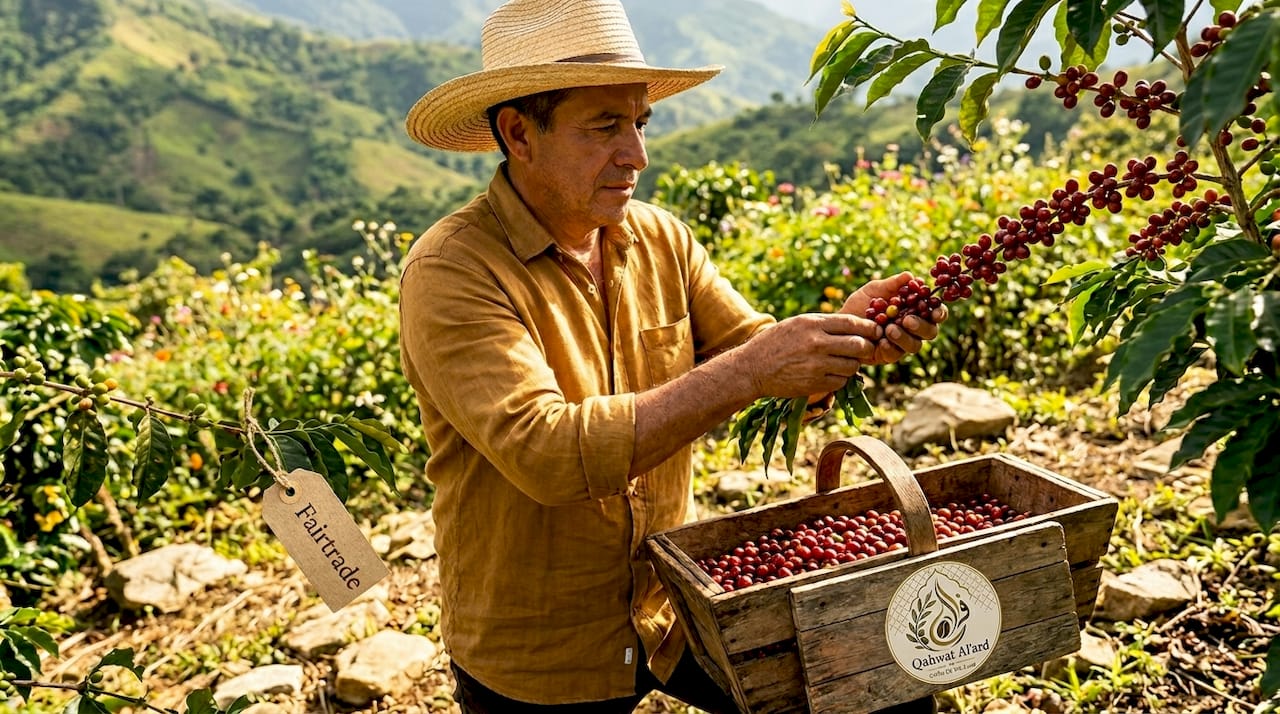
Fairtrade is the most recognized system globally. The Fairtrade Coffee Standard specifies requirements for coffee producers and the companies buying and selling Fairtrade coffee, with auditing and certification applied across roles in the supply chain. Its core mechanism is a minimum price floor combined with a social premium, currently set at $0.20 per pound above the market price for conventional coffee. The premium goes directly to producer organizations to fund community projects.
Rainforest Alliance focuses more heavily on environmental and social outcomes at the farm level. Its Regenerative Agriculture Certification uses an outcomes and impact-area framework, with independent auditors periodically visiting farms and companies to check requirements before the regenerative seal can be used. The 2020 standard update merged Rainforest Alliance with UTZ Certified, creating a larger and more rigorous system.
Starbucks C.A.F.E. Practices (Coffee and Farmer Equity) is a proprietary program developed with Conservation International. Third-party verification programs like C.A.F.E. Practices can operationalize ethical and sustainable sourcing with defined standards, continuous improvement requirements, and independent oversight. Because it’s proprietary, it applies specifically to Starbucks’ supply chain rather than functioning as an open industry standard.
| Certification | Primary focus | Audit type | Economic impact | Social standards | Environmental standards |
|---|---|---|---|---|---|
| Fairtrade | Economic fairness | Third-party | Price floor + premium | Strong | Moderate |
| Rainforest Alliance | Environment + livelihoods | Independent auditors | Market-linked | Moderate | Strong |
| C.A.F.E. Practices | Holistic supply chain | Third-party verifiers | Supplier scoring | Strong | Strong |
Pros and limitations worth knowing:
- Fairtrade pros: Clear price floor, transparent premium use, strong farmer cooperative model
- Fairtrade limitations: Minimum price can still fall below living income in high-cost regions; certification costs can exclude very small producers
- Rainforest Alliance pros: Rigorous environmental criteria, increasingly outcome-focused, broad geographic reach
- Rainforest Alliance limitations: Less emphasis on price guarantees; the seal alone doesn’t tell you how much certified content is in the bag
- C.A.F.E. Practices pros: Comprehensive scoring, continuous improvement built in, covers the full supply chain
- C.A.F.E. Practices limitations: Proprietary to one company; not independently available to other roasters or retailers
You can see the Rainforest Alliance certification impact in action in coffees sourced from regions like Peru, where shade-grown practices and biodiversity protection are measurable outcomes of the standard.
Direct trade, traceability, and transparency: beyond the label
Certifications aren’t the only path to ethical sourcing. Let’s look at direct trade, traceability, and how to verify authenticity when no official seal is present.
Direct trade is a model where roasters buy coffee directly from farmers or cooperatives, often at prices significantly above commodity and Fairtrade minimums. The direct trade model appeals to specialty roasters because it allows for tighter quality control, longer-term relationships, and the ability to pay prices that reflect cup quality rather than just market rates. But here’s the critical nuance: “direct trade” is not a single universally governed certification. Its ethical credibility depends on the roaster’s specific disclosure and verification practices rather than any label-level standardization.
Not all direct trade is created equal. A roaster who visits their farm partners annually, publishes the prices they pay, and shares farmer feedback is operating very differently from one who simply bypasses a cooperative to cut costs. The term itself tells you nothing; the details tell you everything.
This is where traceability becomes a powerful tool. Digital traceability systems link specific coffee batches to real-time farmer data, including the prices paid, the farming practices used, and even GPS coordinates of the farm. A Fairfood case study on climate-smart coffee demonstrates how independent, traceability-linked approaches can substantiate specific sustainability claims — such as deforestation-free sourcing or living-income-related claims — by connecting that real-time farmer data directly to the coffee you’re buying.
| Approach | Governed by | Price transparency | Environmental verification | Accessibility |
|---|---|---|---|---|
| Certification (Fairtrade, RA) | Independent bodies | Partial | Audited | Broad |
| Direct trade | Individual roaster | Varies widely | Self-reported | Specialty market |
| Digital traceability | Tech platforms | High | Claim-specific | Growing |
When evaluating a brand’s direct trade claims, ask these questions:
- Do they publish the prices they pay farmers, not just say they pay “above market”?
- Have they visited the farms recently, and do they share those visit reports?
- Is there any third-party verification of their claims, even if informal?
- Do they name the specific farms or cooperatives they work with?
For those who want to go deeper into the gear and craft side of specialty coffee, exploring premium coffee gear is a natural next step once you’ve locked in your sourcing values.
How do ethical standards impact farmers and ecosystems?
Understanding standards is useful, but how much do they really help farmers and the planet? The honest answer is: it depends, and the evidence is more nuanced than most labels suggest.
Research from Rwanda’s smallholder coffee sector offers some of the most rigorous empirical data available. The study from the University of Göttingen found that sustainability standards’ effects are heterogeneous and time-dependent. Only third-party certification, and specifically the duration of certification, showed significant positive associations with some socioeconomic and ecological outcomes. Interestingly, ecological biodiversity metrics, particularly animal diversity, showed no significant effects from most standards tested.
What this means practically:
- Positive socioeconomic outcomes: Certified farmers in Rwanda showed better income stability and access to training over time
- Shade tree density: Some certifications improved tree cover, which benefits soil health and carbon sequestration
- Animal biodiversity: Results were largely neutral, suggesting certification alone doesn’t restore complex ecosystems
- Time dependency: Benefits tend to accumulate with longer certification periods, not immediately after adoption
The African Espresso sourced from regions like Uganda and Kenya reflects exactly this kind of long-term relationship building, where consistent sourcing partnerships allow farming improvements to compound over multiple seasons.
The Global Coffee Platform’s Coffee Sustainability Reference Code is an emerging framework that creates a common language and measurable KPIs for regenerative outcomes across the sector. This matters because it moves the industry from checkbox compliance toward outcome measurement, tracking things like soil organic matter, water use efficiency, and farmer net income rather than just whether a farm has a certificate on the wall.
Key socioeconomic and ecological impacts of ethical sourcing standards:
- Improved access to credit and financial services for certified cooperatives
- Training in agronomy that can increase yields without expanding farm footprint
- Community fund allocation for schools, health clinics, and infrastructure
- Reduced pesticide use linked to environmental certification requirements
- Shade tree planting that supports carbon storage and soil moisture retention
- Mixed results on wildlife habitat restoration depending on region and standard
Pro Tip: Don’t expect overnight transformation. Certification takes time to produce measurable change, and the most meaningful improvements often show up three to five years after a farm joins a program. Support brands that have maintained long-term sourcing relationships rather than rotating suppliers annually.
Making confident and ethical coffee choices
With all this information, here’s how you can confidently select coffee that matches your ethical values. The goal isn’t perfection — it’s informed, consistent decision-making.
- Check for recognized third-party certification. Look for Fairtrade, Rainforest Alliance, or equivalent seals from credible independent bodies. These aren’t guarantees of perfection, but they represent a minimum verified standard.
- Read the sourcing page, not just the bag. A brand serious about ethics will have a dedicated sourcing or transparency page that names regions, cooperatives, or farms, and explains what they pay and why.
- Look for published data. Annual impact reports, price disclosure, or audit summaries are strong signals. Vague language like “we work with ethical partners” without specifics is a red flag.
- Ask about direct relationships. How long has the brand worked with a given producer? Do they visit? Do they share feedback from farmers? Longevity and dialogue matter.
- Watch for self-certification. Any brand that claims to be “ethically sourced” based solely on its own internal assessment, with no external verification, deserves extra scrutiny.
- Taste across origins. Exploring single origin choices from different regions lets you connect flavor to place, and that connection naturally deepens your interest in the people and practices behind each cup.
Pro Tip: The most ethical brands are often the most transparent about what they haven’t figured out yet. A company that acknowledges gaps in its traceability and explains what it’s doing to close them is more trustworthy than one claiming a flawless supply chain.
Why “ethical” coffee isn’t always black and white
Having seen the main frameworks and real-world impacts, let’s dig into the shades of gray you won’t find on most labels.
Here’s something the certification industry rarely says out loud: no seal guarantees a perfect outcome in every region or every harvest. A farm can be Fairtrade certified and still struggle with living income gaps if local costs of living have risen faster than the price floor. A Rainforest Alliance farm can show excellent shade tree density and still have labor conditions that fall short of what you’d want. Certifications are floors, not ceilings.
We’ve also seen how the economics of certification can create unintended barriers. Smallholder farmers in remote regions often face significant costs to achieve and maintain certification, including audit fees, documentation requirements, and the time investment of compliance. In some cases, the very farmers who most need support are the ones least able to afford the entry ticket to certified markets.
Direct trade relationships, when done with genuine transparency, can sidestep some of these structural problems. But they introduce their own risks: power imbalances between a well-resourced roaster and a small farming family, the absence of any external check on the roaster’s claims, and the challenge of scaling without losing the personal connection that makes direct trade meaningful.
What we believe, after engaging deeply with the origin and impact of coffees from Ethiopia, Yemen, Uganda, Peru, and beyond, is that the most honest approach combines certification as a baseline, traceability as a verification layer, and genuine long-term relationships as the human foundation. No single mechanism is sufficient. The brands pushing the industry forward are the ones treating ethical sourcing as a continuous practice, not a marketing achievement.
Every cup is a chance to vote for the world you want. That’s not a cliche — it’s a supply chain reality. The money you spend signals demand, and sustained demand for verified, transparent, high-quality coffee creates real economic incentives for better practices at every level of the chain.
Discover exceptional ethical coffee options at Qahwat Al’Ard
Ready to taste the difference that ethical sourcing can make in your cup?
At Qahwat Al’Ard, we source with intention. Every coffee in our catalog comes with a clear origin story, and our commitment to transparency means you can trace your beans from farm to roast. We work with producers from Ethiopia, Kenya, Uganda, Peru, and beyond, prioritizing long-term relationships and verifiable sourcing practices over generic sustainability claims.
Whether you’re looking to explore single origin coffees that showcase the distinct character of each growing region, or you want to shop all coffees and find your next favorite roast, our selection is built around the same three pillars this article covers: economic fairness, social responsibility, and environmental stewardship. Put your new knowledge to work and find a coffee that delivers on every level.
Frequently asked questions
How can I tell if coffee is truly ethically sourced?
Look for credible third-party certifications and transparent supply chain disclosures, not just marketing claims. The Fairtrade Coffee Standard specifies requirements and audits across the supply chain, giving you a verified baseline to trust.
Are direct trade coffees more ethical than certified ones?
Direct trade can be highly ethical, but its credibility relies entirely on roaster transparency and independent verification rather than a universal standard. As research confirms, direct trade claims depend on disclosure and verification, not standardized labels, so you need to dig into the details.
Do ethical certifications guarantee better pay for farmers?
Evidence shows third-party certifications can improve economic outcomes for farmers, but results vary by region and take time to materialize. A study of Rwanda’s smallholder sector found that only third-party certification, specifically its duration, showed significant positive associations with farmer socioeconomic outcomes.
Can ethical sourcing protect the environment?
Some certifications improve shade tree density and soil health, but biodiversity results are genuinely mixed and depend on the standard and region. Rwanda research found increased shade trees but no significant animal diversity gains, while Rainforest Alliance’s regenerative framework integrates measurable environmental impact targets to push beyond baseline compliance.
Does traceability really make a difference?
Yes, digital traceability links coffee batches to real-time farmer data, making it possible to prove specific sustainability claims with actual evidence. A Fairfood case study demonstrates how independent, traceability-linked approaches can substantiate claims like deforestation-free sourcing or living-wage compliance in ways that labels alone cannot.


