


TL;DR:
- Peruvian coffee showcases a layered, terroir-driven flavor profile, emphasizing smoothness, floral notes, and subtle citrus.
- Its regional diversity, high-altitude shade-grown cultivation, and careful processing produce cups with balanced sweetness and clarity, often underappreciated.
Peruvian coffee flavor explained simply? It starts by throwing out the assumption that Peru is just a commodity origin. Most coffee drinkers picture Bolivia or Colombia when they think South American specialty coffee, but Peru has been quietly building one of the most layered, terroir-driven flavor traditions in the world. The country’s high-altitude growing regions, shade-grown cultivation, and organic farming practices combine to create cups that are smooth, nuanced, and genuinely surprising. If you have never paid close attention to what’s in your cup when drinking Peruvian beans, this guide changes that.
Table of Contents
- Key takeaways
- Peruvian coffee flavor explained: origins and growing regions
- Key flavor characteristics and Peruvian coffee tasting notes
- How Peruvian coffee compares to other Latin American origins
- Brewing and pairing tips to experience the full flavor
- My honest take on Peruvian coffee’s reputation
- Explore Peruvian coffee for yourself
- FAQ
Key takeaways
| Point | Details |
|---|---|
| Mild yet complex flavor | Peruvian coffee delivers smooth, mellow cups with notes of vanilla, chocolate, nuts, and subtle citrus. |
| Region shapes the cup | Chanchamayo, Cusco, and northern zones like Amazonas each produce noticeably different flavor profiles. |
| Processing matters | Washed and organic methods common in Peru produce cleaner, brighter cups than natural-processed alternatives. |
| Brew method unlocks flavor | Pour-over and drip brewing preserve the delicate sweetness and floral notes that define Peruvian coffee. |
| Underrated by design | Peru’s subtlety is often mistaken for plainness, but careful tasting reveals real complexity and balance. |
Peruvian coffee flavor explained: origins and growing regions
To understand why Peruvian coffee tastes the way it does, you need to look at where it grows. Peru is geographically enormous, and its coffee zones sit across dramatically different microclimates, elevations, and soil types. That geographic diversity is the single biggest reason the flavors of Peruvian coffee range so widely from one region to the next.
The major growing regions include:
- Chanchamayo (central Peru): Sits between 1,500 and 2,000 meters above sea level. Known for bright, clean cups with a pleasant balance of sweetness and mild acidity.
- Cusco (southern Peru): The famous Incan highlands produce beans with richer body, earthy depth, and stone fruit undertones.
- Amazonas and Cajamarca (northern Peru): Cooler temperatures and dense cloud forest produce some of Peru’s most aromatic, florally expressive coffees.
- Piura (far northern Peru): A newer specialty region with drier conditions that contribute to bolder, more chocolatey profiles.
Chanchamayo and Cusco are the most recognized internationally, but northern Peruvian coffees have been gaining serious ground with specialty roasters in recent years. The flavor differences across regions are not subtle. A Cajamarca washed coffee and a Cusco natural can taste like they came from entirely different countries.
| Region | Elevation | Flavor Character |
|---|---|---|
| Chanchamayo | 1,500 to 2,000m | Bright, clean, balanced sweetness |
| Cusco | 1,500 to 1,900m | Earthy, stone fruit, richer body |
| Amazonas / Cajamarca | 1,800 to 2,500m | Floral, aromatic, bright acidity |
| Piura | 1,200 to 1,800m | Bold, chocolatey, lower acidity |
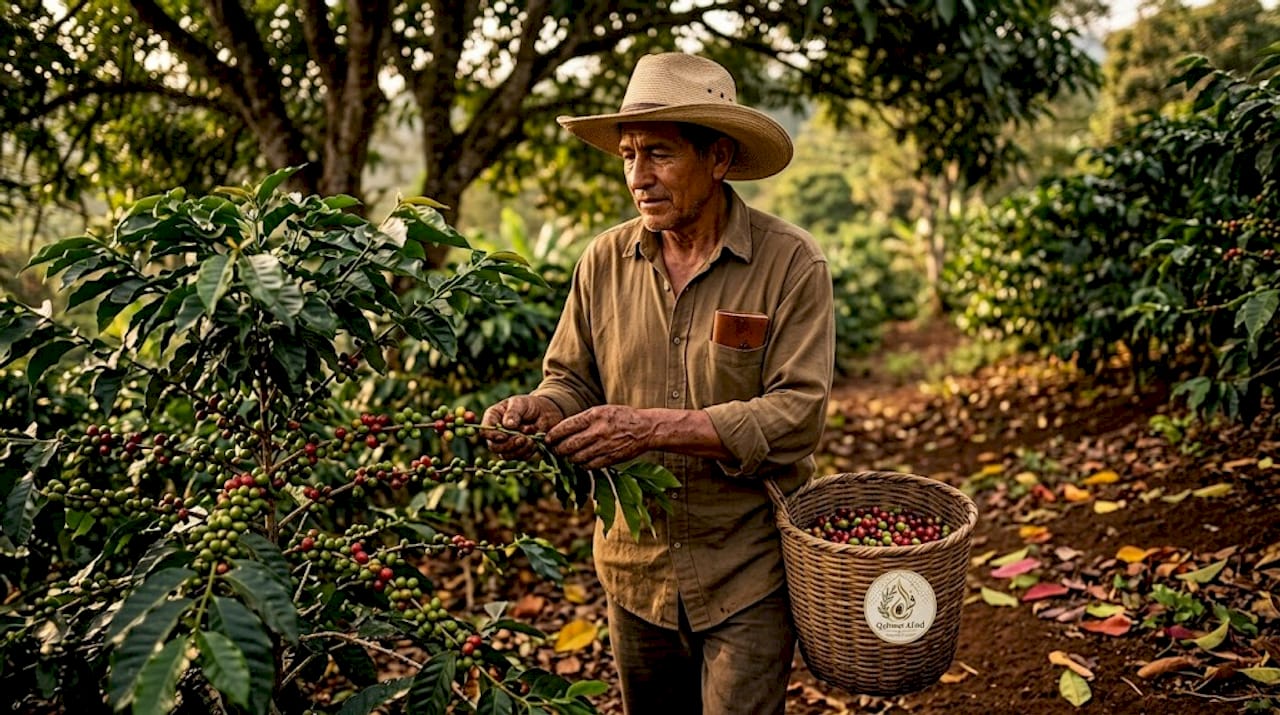
What ties all these regions together is shade-grown cultivation. Shade-grown farming slows the maturation of the coffee cherry, which forces the bean to develop more complex sugars and aromatic compounds over a longer growing period. The result is a richer flavor in the cup and, as a bonus, lower caffeine content.
Key flavor characteristics and Peruvian coffee tasting notes
Here is where most articles either get vague or list generic flavors without explaining why they appear. Let’s be specific.
Peruvian coffee typically delivers smooth, mellow cups characterized by mild acidity and a light to medium body. The most commonly reported Peruvian coffee tasting notes include:
- Vanilla and nutty sweetness: The signature baseline across most Peruvian origins, especially when lightly roasted.
- Chocolate and caramel: Deeper sweetness that surfaces in medium roasts from Chanchamayo and Piura.
- Citrus brightness: Light lemon or orange zest notes that appear in washed coffees from northern highlands.
- Floral and stone fruit: Lavender, jasmine, and peach-like notes typical of high-altitude Cajamarca and Amazonas beans.
One estate worth singling out is Churupampa. Coffees from this source are described as clean and dessert-like, with flavors of chocolate, almond butter, marzipan, and pear all appearing in a single cup. That combination sounds almost improbable, but it reflects how altitude, soil chemistry, and careful processing converge at specific farms to create something genuinely memorable.
Processing method plays a major role in shaping these notes. Peru is predominantly a washed-coffee country, meaning the fruit pulp is removed from the bean before drying. Washed processing preserves the bean’s natural clarity, which is why Peruvian coffee flavor notes tend to read as clean and bright rather than jammy or fermented. When you see natural or honey-processed Peruvian coffees, expect noticeably more fruit-forward, syrupy profiles.
Pro Tip: Buy your Peruvian beans directly from a roaster who specifies the region and processing method. “Peru” without this detail on the label is about as useful as ordering “food” at a restaurant.
How Peruvian coffee compares to other Latin American origins
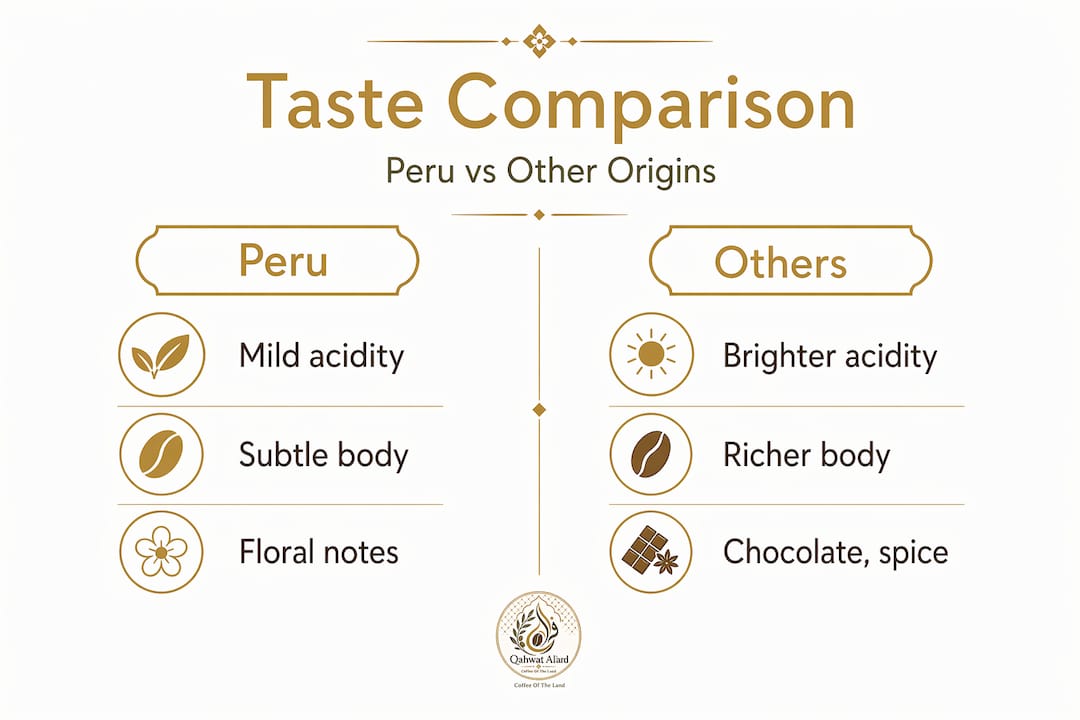
Coffee professionals have a phrase: “Peru plays well with others.” It is a backhanded compliment, but it reveals something real about how the characteristics of Peruvian coffee sit within the broader specialty world.
| Origin | Acidity | Body | Key Flavor Notes |
|---|---|---|---|
| Peru | Mild to balanced | Light to medium | Chocolate, vanilla, floral, citrus |
| Guatemala | Medium to high | Medium to full | Dark chocolate, spice, dried fruit |
| Colombia | Bright and lively | Medium | Caramel, red fruit, citrus, nuts |
| Ethiopia | High and vibrant | Light | Blueberry, jasmine, bergamot, lemon |
| Brazil | Low | Full | Peanut, dark chocolate, earthy |
Where Peruvian coffee distinguishes itself is in what you might call approachable complexity. It does not hit you with the aggressive brightness of an Ethiopian natural or the heavy body of a Brazilian natural. Instead, it offers balanced acidity and a softer juiciness that feels clean without being boring.
This makes Peruvian beans particularly useful in blends, especially as seasonal components when roasters want to add sweetness and floral nuance without overwhelming other origins. A Peru Chanchamayo in a blend acts almost like a brightening lens. It lifts the other components without competing with them. That said, a well-sourced single-origin Peruvian coffee does not need a supporting cast. It stands on its own terms.
The comparison to Guatemalan coffee is instructive. Guatemala tends toward spice, dark chocolate, and a heavier body that makes an immediate impression. Peruvian coffee is more understated on first sip, but the flavor opens up as the cup cools. That temperature shift is where you start noticing the pear, the vanilla, the whisper of bergamot that wasn’t there when the cup was hot.
Brewing and pairing tips to experience the full flavor
Knowing what’s in the cup is useful. Knowing how to draw it out is better. The way you brew Peruvian coffee determines whether you taste all of it or just a fraction.
- Choose pour-over or drip brewing. These methods give you the most control over extraction and best highlight the delicate sweetness and floral notes that define Peruvian coffee. A consistent pour-over technique with a 1:16 coffee-to-water ratio is a reliable starting point.
- Use water around 200°F (93°C). Boiling water (212°F) can scorch lighter roasts and flatten the floral and citrus notes. Just off the boil is the sweet spot.
- Grind medium-fine for pour-over, medium for drip. Understanding coffee grind sizes matters here because Peruvian beans are often lighter in density due to high altitude growth, and a grind that’s too coarse will underextract and taste thin.
- Try a light to medium roast first. Dark roasting Peruvian coffee masks its most interesting characteristics. The vanilla, floral, and citrus notes that make it distinctive start disappearing around the second crack.
- Let the cup cool before final judgment. As mentioned above, Peruvian coffee reveals more flavor as it drops from 160°F to around 120°F. Many tasters form an opinion too early.
For food pairings, mild fruits, chocolate, and roasted nuts work exceptionally well alongside Peruvian coffee. Think dark chocolate almonds, a fresh pear, or a piece of marzipan. These pairings mirror and amplify what’s already in the cup rather than competing with it.
Pro Tip: Try your Peruvian coffee without milk on the first cup. Dairy flattens the delicate acidity and floral notes that separate a quality Peruvian bean from a forgettable one. Once you’ve identified the flavor, add milk to the second cup and notice what changes.
My honest take on Peruvian coffee’s reputation
I have spent more time with Peruvian coffees than most enthusiasts realize is worth their attention, and that is exactly the problem I want to address.
In my experience, Peruvian coffee gets passed over because its subtlety reads as simplicity to drinkers who have been trained by bold, loud origins. When someone new to specialty coffee tries an Ethiopian Yirgacheffe, they immediately understand what makes it special. The blueberry is right there. Peru doesn’t announce itself that way. You have to listen.
What I’ve found is that the more carefully you approach a Peruvian cup, the more it gives back. The quality improvements driven by better producer education and processing consistency over the last decade have transformed what was once a reliable but unremarkable commodity origin into something genuinely worth seeking out. I’ve cupped Cajamarca lots that had more floral complexity than coffees from famous Ethiopian cooperatives, at a fraction of the price.
My honest opinion: Peru is where knowledgeable coffee drinkers go when they are tired of paying for marketing. The flavor is real, the sourcing story is real, and the organic farming tradition adds an additional layer of authenticity that other origins charge a premium to claim. If you haven’t explored single-origin Peruvian coffee with the same attention you’d give a Kenyan or a Guatemalan, you are missing one of the specialty world’s best-kept open secrets.
— Anthony-Yasin
Explore Peruvian coffee for yourself
If this article has shifted how you think about what makes Peruvian coffee unique, the obvious next step is to actually taste the difference.
Qahwatalard sources single-origin Peruvian beans with full traceability, so you know exactly which region and farm your coffee came from. The Peru single-origin collection lets you explore the flavor range across multiple origins, including Peruvian beans that showcase the vanilla-to-chocolate spectrum described in this guide. If you want a low-commitment way to start, the single-origin sample pack puts several origins side by side so you can taste the regional differences firsthand. For everyday convenience without sacrificing quality, Qahwatalard also offers Peru coffee pods that preserve the flavor integrity of freshly roasted beans.
FAQ
What does Peruvian coffee taste like?
Peruvian coffee typically offers a smooth, mellow cup with mild acidity and tasting notes that range from vanilla and nuts to chocolate, caramel, and light citrus. High-altitude estates can also express floral and stone fruit characteristics.
How is Peruvian coffee different from Colombian coffee?
Peruvian coffee tends to be softer and less acidic than Colombian coffee, with more floral and nutty sweetness where Colombian origins often lean toward bright red fruit and caramel. Peru’s washed processing also produces a cleaner, more delicate cup.
What are the best Peruvian coffee types by region?
Chanchamayo is best known for clean, balanced cups, Cusco for earthy depth and body, and Amazonas or Cajamarca for the most aromatic and florally complex profiles. Each region reflects a distinct terroir, so the best type depends on what flavor you are chasing.
Does roast level change Peruvian coffee flavor significantly?
Yes. Light to medium roasts preserve Peruvian coffee’s signature floral, vanilla, and citrus notes, while darker roasts push those characteristics aside in favor of generic chocolate and bitterness. Most specialty roasters recommend stopping at a medium roast.
Is Peruvian coffee good for blends?
Peruvian coffee is an excellent blend component because its balanced acidity and sweetness add brightness and complexity without overpowering other origins. Roasters often use it seasonally to lift and round out espresso or drip blends.


