


TL;DR:
- Most coffee lovers underestimate the importance of roast date, as freshness greatly influences flavor and health benefits. Freshly roasted beans contain volatile aromatics and antioxidants that degrade rapidly after roasting and grinding, resulting in a flat, dull cup of coffee. To enjoy peak flavor and health benefits, it is essential to choose beans with recent roast dates, store them properly, and brew promptly.
Most coffee drinkers assume the bag on the grocery store shelf is fine. It looks sealed, it smells decent when you open it, and the price is right. But why fresh roasted coffee is better than those pre-packaged options comes down to chemistry you can actually taste. Oxidation begins immediately after roasting, stripping away the volatile aromatics that make a great cup genuinely great. By the time that grocery store bag reaches your grinder, you could be drinking chemistry that peaked weeks or months ago. This article covers exactly what you lose, what you keep, and how to fix it.
Table of Contents
- Key takeaways
- Why fresh roasted coffee is better: the chemistry behind it
- What fresh roasting does for your health
- Fresh vs. pre-packaged: what you actually taste
- How to buy, store, and brew for peak freshness
- How the specialty coffee industry is responding
- My take: freshness is the last thing most coffee drinkers think about
- Taste the difference with Qahwatalard
- FAQ
Key takeaways
| Point | Details |
|---|---|
| Freshness has a tight window | Peak flavor occurs between 3 and 14 days after roasting before volatile compounds fade significantly. |
| Oxidation kills flavor and nutrients | Oxygen degrades both aromatic compounds and antioxidants like chlorogenic acids almost immediately after roasting and grinding. |
| Roast date beats expiration date | Always check the roast date on packaging. A roast date within two weeks is the real freshness signal. |
| Storage protects what roasting creates | Airtight, opaque containers in a cool, dry place preserve freshness far better than the original bag alone. |
| Roast-to-order models deliver peak coffee | Specialty roasters who ship within days of roasting give you the flavor and health compounds the roaster actually intended. |
Why fresh roasted coffee is better: the chemistry behind it
When coffee beans are roasted, something remarkable happens inside each bean. The Maillard reaction, the same browning process that creates flavor in seared steak or toasted bread, generates hundreds of distinct flavor compounds in minutes. Caramelization adds sweetness and body. Essential oils form and bind to the bean’s cellular structure, waiting to be released during brewing.
The problem starts the moment roasting ends.
Volatile aromatics and oils begin to degrade as soon as beans hit open air. Oxygen reacts with these compounds in a process called oxidation, flattening the nuanced fruit, floral, and earthy notes that specialty roasters work hard to develop. What was once a bright, complex bean slowly becomes a flat, one-dimensional cup.
There is also CO2 to consider. Freshly roasted beans release carbon dioxide for days after roasting, a process called degassing. CO2 affects extraction and crema quality significantly. Too much gas and your espresso puck will resist even water distribution, creating uneven extraction. Too little gas is a sign the beans are already past their prime.
Here is what the freshness timeline actually looks like:
- First 24 to 48 hours: Beans are too gassy for ideal extraction. Crema may look good but flavor is rough and uneven.
- Days 3 to 14: Peak flavor window for most roasts. Volatile compounds are present and stable. This is your target zone.
- Days 14 to 30: Noticeable fading. Aroma weakens. Brighter notes go first.
- Beyond 30 days: Oxidation is well underway. Staleness is detectable in both smell and taste, even to casual drinkers.
Pro Tip: When you open a bag of fresh beans and hear a soft release of gas, that is CO2 escaping. That slight whoosh is actually a good sign. It means your beans still have life in them.
What fresh roasting does for your health
This is the part most coffee lovers miss. Choosing fresh coffee is not only about taste. It is about what is still in the coffee.
Coffee contains over 1,000 bioactive compounds, and the most valuable ones are the most fragile. Chlorogenic acids, a category of polyphenols, are among the most studied. They carry anti-inflammatory properties and have been linked to cardiovascular support and improved insulin sensitivity. The catch is that they are also among the first compounds to degrade when coffee is exposed to air and heat.
Chlorogenic acids help reduce oxidative stress and support vascular function. But those benefits depend on the compounds being present and intact in your cup, which means the fresher the roast, the greater the potential health payoff.
Grinding accelerates the problem dramatically. Grinding increases surface area exposed to oxygen, and the clock moves faster from minutes to hours rather than days to weeks. Pre-ground coffee sitting in a bag for two months is delivering a fraction of the antioxidants it would have offered freshly ground.
Freshness is not a marketing buzzword. It is a measurable quality indicator. The difference between fresh and stale coffee is detectable not just on the palate but at the molecular level, in compounds with real physiological effects.
A few key health-related realities worth knowing:
- Whole beans preserve antioxidants longer. Grinding immediately before brewing keeps those polyphenols protected until the last possible moment.
- Light roasts tend to retain more chlorogenic acids because the heat of darker roasting breaks them down further.
- Freezing is not a solution. Freezing introduces moisture condensation that damages the delicate oils in coffee beans, often doing more harm than good unless done very carefully with portioned, vacuum-sealed bags.
- Cognitive and mood benefits tied to coffee are partly driven by these same aromatic and bioactive compounds, giving fresh coffee an edge beyond just flavor.
Fresh vs. pre-packaged: what you actually taste
Put a cup of coffee brewed from freshly roasted beans next to one brewed from beans that have been sitting in a sealed grocery store bag for three months. The difference is not subtle.
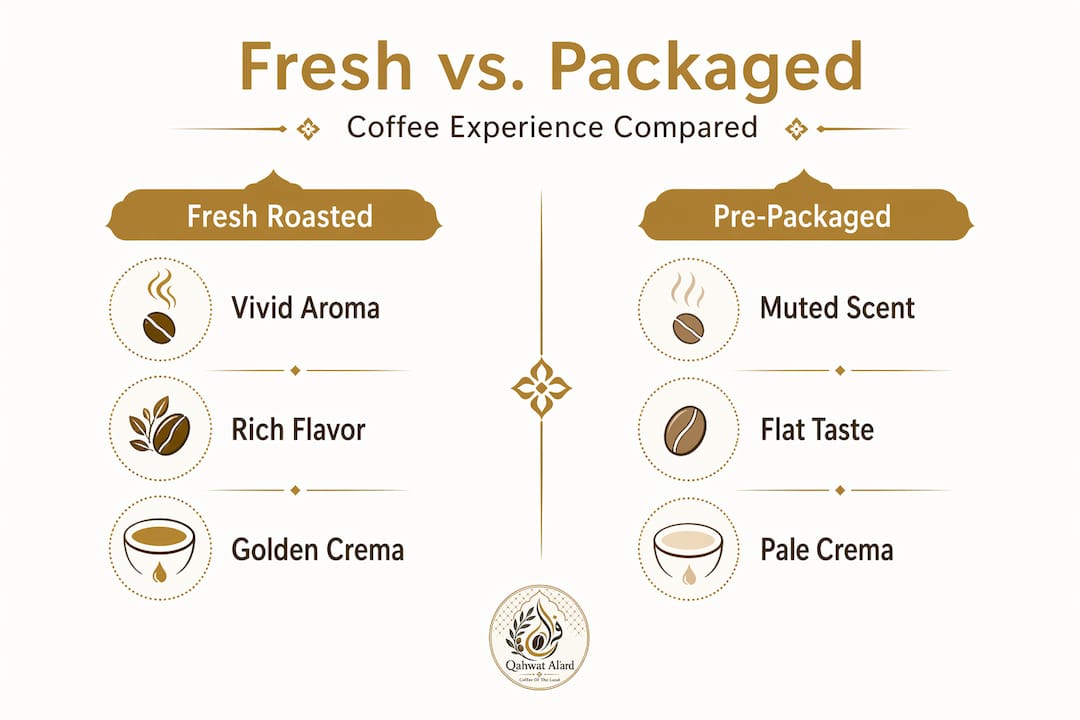
Fresh roasted coffee has a pronounced aroma before it even touches hot water. You can smell complexity in the dry grounds. Floral, fruity, or chocolatey depending on the origin, the top notes hit you immediately. Brewed, it carries brightness and acidity that are dynamic rather than sharp. There is depth. There are layers that change slightly as the cup cools.
Stale coffee smells muted. The aroma is there, but it is flat and one-dimensional. Brewed, it tends toward bitterness and papery, cardboard-like undertones. The mouthfeel is thin. Any inherent sweetness or brightness from the origin is gone.
Here is how fresh and pre-packaged coffee compare across the key sensory dimensions:
| Sensory factor | Fresh roasted (within 2 weeks) | Pre-packaged (3+ months old) |
|---|---|---|
| Aroma | Vivid, complex, origin-specific | Faint, generic, flat |
| Acidity | Bright and dynamic | Dull or absent |
| Body | Full and round | Thin and watery |
| Bitterness | Balanced by sweetness | Dominant and harsh |
| Crema (espresso) | Thick, persistent, reddish-brown | Thin, pale, dissipates quickly |
| Aftertaste | Long, pleasant, evolving | Short, bitter, or papery |
Packaging helps, but only to a point. One-way valves and nitrogen flushing slow aroma loss by reducing oxygen contact. But neither technology stops oxidation entirely. A bag roasted six months ago with a one-way valve is still six months old.
Pro Tip: Look at crema as a freshness proxy. Thin, pale crema on an espresso almost always means the beans are too old, regardless of what the bag says. Rich, thick crema with reddish-brown color is what fresh roasting produces.
How to buy, store, and brew for peak freshness
Getting truly fresh coffee starts before you even grind a bean. The choices you make at the point of purchase set the ceiling for everything that follows.
-
Read the roast date, not the best-by date. A roast date on the bag is the only meaningful indicator of freshness. Best-by dates can be 12 to 18 months after roasting. That tells you nothing useful. Aim for beans roasted within the last two weeks.
-
Choose roast-to-order when possible. Specialty roasters who roast after you place an order and ship within days are your best option for consistent freshness. You will pay slightly more, but you are getting coffee at the beginning of its life rather than the end.
-
Transfer to an airtight, opaque container immediately. Original bags, even with one-way valves, are not ideal for ongoing storage. A ceramic or dark glass canister with an airtight seal keeps light and oxygen out far more effectively. Check out home coffee storage options to find gear that actually protects your investment.
-
Grind immediately before brewing. Every minute between grinding and brewing is a minute of oxidation. Burr grinders give you a consistent grind; blade grinders generate heat that can damage aromatics. The difference is noticeable when beans are fresh enough to show it.
-
Rest your beans for 24 to 48 hours after a very fresh roast. If beans were roasted within the last 24 hours, give them a short rest. Excess CO2 will blow out bitter, harsh notes during extraction. Patience of one to two days pays off in a noticeably cleaner cup.
-
Keep beans away from heat, light, and moisture. A cabinet away from the stove is fine. The freezer is generally not. Understanding the right coffee grind for your brewing method also matters, since grind size affects how quickly those freshly preserved aromatics release into the cup.
Pro Tip: Buy in smaller quantities more frequently rather than buying a large bag to save money. A 250g bag used within ten days is far better value than a 1kg bag that goes stale halfway through.
How the specialty coffee industry is responding
The specialty coffee world has taken freshness from a talking point to a business model. Roast-to-order is no longer a niche practice. Specialty roasters delivering roast-to-order coffee are growing rapidly because consumers are recognizing the difference. When a roaster ships within 48 hours of roasting, you receive beans at day two or three, right at the edge of peak flavor.
Small-batch roasting also plays a role. Large commercial roasters need to produce consistent volumes in advance and hold inventory. That model prioritizes shelf life over peak quality. Smaller specialty roasters can roast smaller quantities more frequently, which naturally keeps their stock fresher.
What this means for you as a consumer:
- You gain transparency when roasters publish exact roast dates rather than vague best-by windows.
- You get flavor quality that reflects what the origin and roast level were actually designed to deliver.
- You benefit from a health-conscious approach where the compounds that make coffee genuinely good for you are still intact when the bag arrives.
- You support smaller operations that prioritize craft over volume, which often means better sourcing, better environmental practices, and better coffee.
Freshness as a measurable indicator is what separates specialty coffee culture from commodity coffee. It is a standard, not a selling point.
My take: freshness is the last thing most coffee drinkers think about
I have tasted a lot of coffee in my career, and the single most common mistake I see among otherwise serious drinkers is ignoring the roast date entirely. People will spend good money on a high-quality single origin, then let it sit on the counter for six weeks before finishing the bag. At that point, the origin character is largely gone. What you are tasting is roast level and little else.
My honest take is that freshness matters more than roast profile, origin, or brewing method in isolation. A freshly roasted single-origin coffee brewed in a simple pour-over will outperform a legendary bean roasted three months ago in the world’s most precise espresso setup.
The challenge is that stale coffee does not taste obviously bad to someone who has never compared it directly to fresh. It just tastes like coffee. The moment you do that side-by-side comparison, though, you cannot go back. The aroma, the brightness, the finish of truly fresh coffee is something you recognize immediately. And then every stale cup afterward feels like a small loss.
Sourcing fresh coffee requires a little more intention than grabbing whatever is on sale. But once freshness becomes your baseline expectation, every other variable in your coffee practice improves alongside it.
— Anthony-Yasin
Taste the difference with Qahwatalard
If this article has you rethinking what is in your grinder right now, Qahwatalard’s full coffee collection is a good place to start over. Every offering is sourced with traceability and roast quality in mind, so you know exactly what you are getting and when it was roasted. For something genuinely different, the mushroom coffee blend combines the antioxidant benefits discussed above with added functional ingredients, all built on a fresh-roasted base. If bold espresso is your preference, the African Espresso delivers the kind of crema and brightness that only fresh roasting makes possible. Fresh coffee is not a luxury. It is the standard you deserve.
FAQ
Why does fresh roasted coffee taste better than older coffee?
Fresh roasted coffee retains volatile aromatic compounds that degrade rapidly through oxidation after roasting. These compounds create the brightness, complexity, and depth that stale coffee simply cannot replicate.
How long does coffee stay fresh after roasting?
Peak flavor typically falls between 3 and 14 days after roasting, depending on roast level. Beyond 30 days, oxidation causes noticeable flatness in aroma and taste.
Is freshly roasted coffee healthier?
Yes. Fresh roasted and freshly ground coffee retains higher levels of chlorogenic acids and polyphenols, which carry anti-inflammatory and cardiovascular benefits that degrade quickly with oxidation.
Should I freeze coffee beans to keep them fresh?
Generally, no. Freezing introduces moisture condensation that damages the delicate oils in beans and can accelerate flavor loss rather than prevent it.
What should I look for on a coffee bag to judge freshness?
Always look for the roast date, not the best-by date. Beans roasted within the past two weeks and shipped promptly by the roaster are your best indicator of genuine freshness.


