


TL;DR:
- Cold brew specialty coffee is made by steeping coffee in cold water for 12 to 24 hours, resulting in a lower-acid, sweeter cup. Beans with low acidity, full body, and chocolate or nutty flavors, such as Colombian Supremo and Brazilian Santos, perform best in cold extraction. Technique, including grind size, ratio, and steep time, has a greater impact on flavor than bean quality alone.
Cold brew specialty coffee is defined as coffee steeped in cold or room-temperature water for 12–24 hours, producing a lower-acid, naturally sweeter cup than any hot-brewed method. This cold brew specialty beans guide covers everything you need to choose the right bean origin, roast level, and processing style for the smoothest possible extraction. Not every bean performs well in cold water. Colombian Supremo, Brazilian Santos, and Sumatra Mandheling each behave differently in long cold steeps, and knowing why gives you a real advantage. Cold brew also lasts 1–2 weeks refrigerated, making batch brewing practical in a way that iced coffee never is.
Which beans are best for cold brew coffee?
The best beans for cold brew come from origins with naturally low acidity, heavy body, and chocolate or nutty flavor notes. Naturally and honey-processed beans are the top choice among specialty coffee professionals because their inherent sweetness and roundness hold up through long cold extraction. Washed beans can work, but they often taste thinner and more muted when cold brewed.
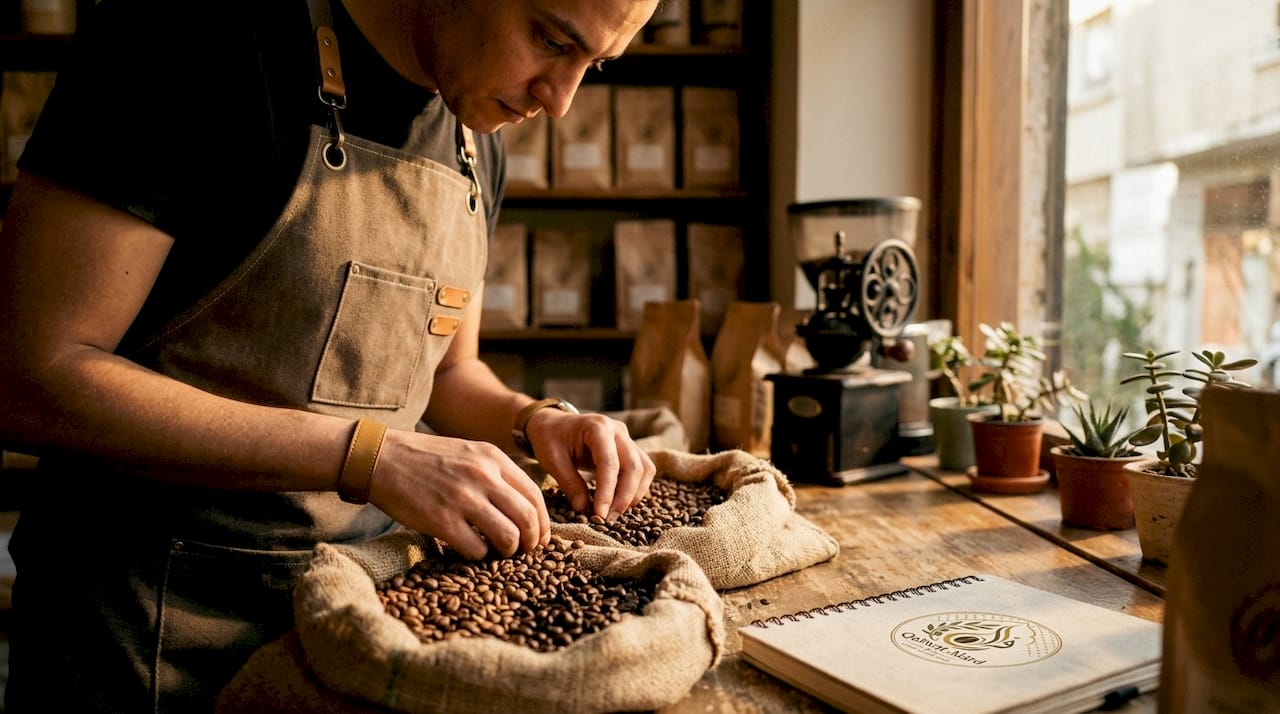
Cold brew extraction flattens origin character, which means delicate, floral beans lose their defining qualities in a long steep. Sturdier origins like Brazilian Santos and Sumatra Mandheling hold up far better than Ethiopian Yirgacheffe, which tends to lose its bright floral notes entirely. That said, Ethiopian beans can still add complexity when blended with a heavier base.
Here is how the most popular cold brew bean varieties compare:
- Colombian Supremo: Chocolate and caramel notes, medium body, balanced acidity. Performs consistently well in cold brew and is widely available.
- Brazilian Santos: Nutty, cocoa-forward, low acidity, and full-bodied. One of the most forgiving beans for cold extraction.
- Sumatra Mandheling: Earthy, syrupy, and very full-bodied. Excellent for cold brew drinkers who want a bold, heavy cup.
- Ethiopian Yirgacheffe: Fruity and floral, but those notes are often muted in cold brew. Better suited to hot brewing or as a minor blend component.
- Guatemalan Antigua: Brown sugar and mild spice notes, medium body. A solid middle-ground option for cold brew.
You can compare coffee origins in depth to understand which flavor profiles translate best to cold extraction.
Pro Tip: Choose beans with chocolate, caramel, or nutty tasting notes and low listed acidity. These descriptors reliably predict a smooth, satisfying cold brew.
How does roast level affect cold brew taste?
Roast level is the single biggest variable you control before brewing. Medium to dark roasts produce smoother, sweeter cold brews because the roasting process breaks down harsh acids and develops caramelized sugars that cold water extracts efficiently. Light roasts, by contrast, retain bright acids and delicate fruit notes that cold water struggles to pull out fully.
The result with light roasts is often a flat, underwhelming cup. The vibrant qualities that make a light roast shine in a pour-over simply do not survive a 16-hour cold steep. You can use light roasts, but you need to grind finer and steep longer to compensate, and even then the results are inconsistent.
Here is what each roast level delivers in cold brew:
- Light roast: Fruity, floral, high acidity. Often tastes flat or thin in cold brew. Requires adjusted parameters to extract properly.
- Medium roast: Balanced sweetness, mild acidity, clean body. Works well for most cold brew drinkers. Colombian Supremo at medium roast is a reliable benchmark.
- Medium-dark roast: Chocolate, caramel, low acidity, heavier body. The sweet spot for most specialty cold brews. Brazilian Santos and Colombian blends shine here.
- Dark roast: Bold, smoky, bitter edge. Works in cold brew when balanced with a naturally sweet bean like Brazilian Santos. Can taste harsh if over-extracted.
You can read a detailed breakdown of roast level flavor profiles to match your preferences before you buy. For most cold brew drinkers, a medium-dark roast from Brazil or Colombia is the safest starting point.
Step-by-step cold brew brewing guide
Good cold brew requires four things: the right grind, the right ratio, enough time, and clean water. Water quality matters more than most people realize. Hard or heavily chlorinated tap water mutes flavor complexity, so filtered water is the standard recommendation.
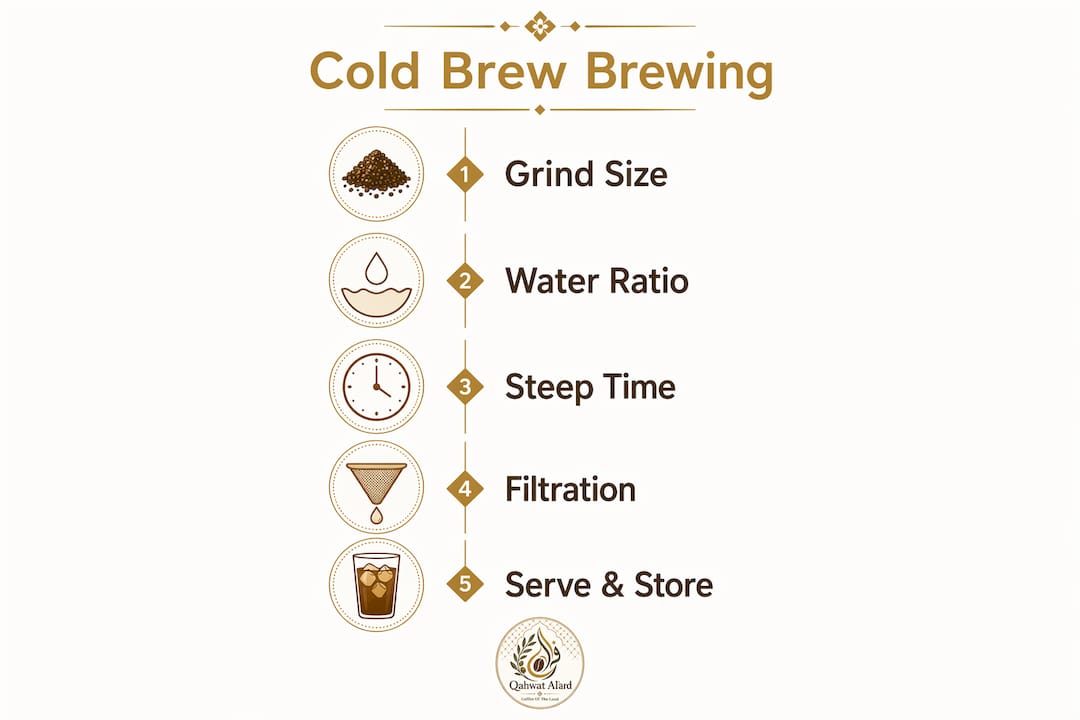
| Parameter | Recommended setting |
|---|---|
| Grind size | Coarse (similar to raw sugar) |
| Coffee-to-water ratio | 1:6 to 1:8 by weight |
| Steep time | 12–24 hours |
| Water temperature | Cold or room temperature |
| Storage after brewing | Refrigerated, up to 2 weeks |
Follow these steps for a clean, well-extracted cold brew:
- Weigh your coffee. Use a kitchen scale. A 1:7 ratio (for example, 100 grams of coffee to 700 milliliters of water) is a reliable starting point.
- Grind coarse. A coarse grind slows extraction and prevents bitterness. Think raw sugar texture, not table salt.
- Combine coffee and water. Add coffee to a mason jar, French press, or dedicated cold brew pitcher. Pour cold filtered water over the grounds.
- Steep. Cover and place in the refrigerator for 12–24 hours. Sixteen hours is the most common sweet spot for specialty beans.
- Filter. Pour the brew through a fine mesh strainer or paper filter to remove all grounds. A French press plunger works as a first pass.
- Store and serve. Transfer to a sealed container and refrigerate. Serve over ice, diluted to taste if you brewed at a high concentration.
Cold brew differs from iced coffee in one critical way. Iced coffee is brewed hot and then chilled, which preserves acidity and brightness. Cold brew never uses heat, so the extraction produces a lower-acid cup with a naturally sweeter, heavier body.
Pro Tip: Brew at a 1:5 ratio for a concentrate, then dilute with water or milk to taste. Concentrates store better and give you more control over final strength.
Common cold brew mistakes and how to fix them
The most common cold brew mistake is grinding too fine. Fine grounds over-extract during a long steep, producing a bitter, harsh cup that no amount of dilution fully fixes. Grind size, brew ratio, and steep time impact cold brew flavor more than the specific bean you choose. Getting these variables right matters more than spending extra on premium beans.
Here are the most frequent mistakes and their fixes:
- Grind too fine: Results in bitterness and over-extraction. Fix: Use a coarser setting. When in doubt, go coarser than you think you need.
- Wrong bean choice: Light, floral beans lose their character in cold brew. Fix: Switch to a medium-dark Brazilian or Colombian bean with chocolate or nutty notes.
- Inaccurate water ratio: Too little water produces an undrinkably strong concentrate. Too much produces a watery, flat brew. Fix: Weigh both coffee and water instead of estimating by volume.
- Insufficient steep time: Under-extracted cold brew tastes sour and thin. Fix: Steep for at least 14 hours. If the cup tastes sour, add two more hours before filtering.
- Poor water quality: Tap water with chlorine or heavy minerals mutes flavor. Fix: Use filtered water every time.
Cold brew is genuinely the most forgiving coffee method available. You can adjust one variable at a time and taste the difference clearly, which makes it an excellent method for learning what you actually prefer in a cup.
Pro Tip: Keep a simple brewing log. Write down your ratio, steep time, and bean for each batch. After three batches, you will know exactly what to adjust.
Key takeaways
Specialty cold brew coffee rewards bean selection, roast choice, and technique in equal measure. The best results come from medium-dark roasted, naturally processed beans from Brazil, Colombia, or Sumatra, brewed at a 1:6–1:8 ratio for 12–24 hours with filtered water.
| Point | Details |
|---|---|
| Bean origin matters | Brazilian Santos and Colombian Supremo hold up best in long cold steeps. |
| Processing affects sweetness | Naturally and honey-processed beans deliver more sweetness and body in cold brew. |
| Roast level is critical | Medium-dark roasts produce the smoothest, sweetest cold brew results. |
| Technique beats bean cost | Grind size, ratio, and steep time improve flavor more than upgrading to premium beans. |
| Water quality is non-negotiable | Filtered water prevents mineral and chlorine interference with cold brew flavor. |
What I have learned from years of cold brew experimentation
Why technique usually beats the bean upgrade
Most cold brew drinkers I talk to assume the answer to a flat cup is a better bean. In my experience, that is rarely true. The first time I switched from a medium-dark Brazilian Santos to a lighter Ethiopian single-origin, I expected a more complex cup. What I got was a thin, slightly sour brew that tasted like a failed experiment. The bean was not the problem. My steep time and grind were calibrated for a heavier bean, and the Ethiopian could not compensate.
The insight that changed my cold brew practice came from accepting that technique can outweigh premium bean effects. I now treat grind size as my primary dial. When a batch tastes sour, I go coarser and steep longer. When it tastes bitter, I go coarser still and shorten the steep. The bean is the starting point, not the solution.
My personal favorite combination is a medium-dark Colombian Supremo steeped for 16 hours at a 1:7 ratio with filtered water. It produces a clean, chocolate-forward cup with enough sweetness to drink black over ice. Store-bought cold brew concentrates have never matched that result. The sterilization process required for shelf stability consistently mutes the flavor complexity that makes specialty beans worth buying. Home brewing with quality beans is simply a different product.
The experimentation process itself is part of the value. Each batch teaches you something specific about how grind, ratio, and time interact. That knowledge compounds over time in a way that no store-bought product can replicate.
— Anthony-Yasin
Specialty cold brew beans worth trying from Qahwatalard
Qahwatalard sources single-origin beans from the world’s most recognized coffee-growing regions, with full traceability from farm to roast. Every bean in their catalog is selected for flavor integrity, which matters especially in cold brew where subtle differences in origin and processing show up clearly in the cup.
Their single-origin collection includes beans from origins that perform well in cold extraction, including options with the chocolate and nutty profiles that cold brew rewards most. For drinkers who want a balanced, ready-to-brew option, the 6 Bean Blend is crafted to deliver consistent body and sweetness across brewing methods, including cold brew. Qahwatalard also carries a dark roast mushroom coffee that brings an unexpected earthy depth to cold brew, worth trying if you enjoy Sumatran-style profiles.
FAQ
What are the best beans for cold brew coffee?
Brazilian Santos, Colombian Supremo, and Sumatra Mandheling are the top choices for cold brew. They offer low acidity, heavy body, and chocolate or nutty notes that hold up through long cold extraction.
How long should you steep cold brew?
Steep cold brew for 12–24 hours using cold or room-temperature water. Sixteen hours is the most reliable starting point for specialty beans at a 1:7 coffee-to-water ratio.
Does roast level matter for cold brew?
Yes. Medium to dark roasts produce smoother, sweeter cold brew. Light roasts often taste flat or sour in cold brew because cold water cannot fully extract their bright, fruity characteristics.
Is cold brew the same as iced coffee?
No. Iced coffee is brewed hot and then chilled, preserving acidity and brightness. Cold brew is never exposed to heat, which produces a lower-acid, naturally sweeter cup with a heavier body.
How long does homemade cold brew last?
Homemade cold brew lasts 1–2 weeks when stored in a sealed container in the refrigerator. This shelf life makes batch brewing practical and cost-effective for regular cold brew drinkers.


