


The most effective sustainable coffee farming examples share a common thread: they replace chemical dependency with ecological intelligence. Shade-grown systems, agroforestry, regenerative soil practices, and integrated pest management are not abstract ideals. They are working methods on real farms right now, producing measurable results in biodiversity, soil health, and farmer income.
Here is what these practices actually look like in the field:
- Agroforestry and shade-grown systems: Coffee grown under a canopy of native trees, reducing temperature stress and supporting wildlife
- Soil restoration: Cover crops, mulch, organic compost, and beneficial microbes rebuilding soil structure and fertility
- Integrated pest management (IPM): Attracting natural predators to control pests like the coffee berry borer, cutting pesticide use
- Water management: Erosion control, efficient irrigation, and wastewater treatment during processing
- Diversified income streams: Timber, honey, fruit, and agritourism layered onto the coffee operation
- Certification pathways: Rainforest Alliance, USDA Organic, and Fair Trade standards guiding and verifying these practices
These categories overlap constantly. A farm that plants shade trees is simultaneously managing temperature, building carbon storage, and creating habitat for pest predators. That interconnection is the whole point.
Real-world sustainable coffee farming examples from the field
La Cumplida, Nicaragua
La Cumplida is the clearest working model of regenerative coffee farming available today. Spread across 5,400 acres in Nicaragua’s northern highlands, the farm became the world’s first to earn Rainforest Alliance Certified Regenerative status. The results are concrete: the farm achieved a 60% reduction in pesticide use through biodiversity enhancement and soil health improvements. Soil organic matter increased by nearly 0.5%, a meaningful gain given that higher organic matter directly supports productivity and long-term profitability.
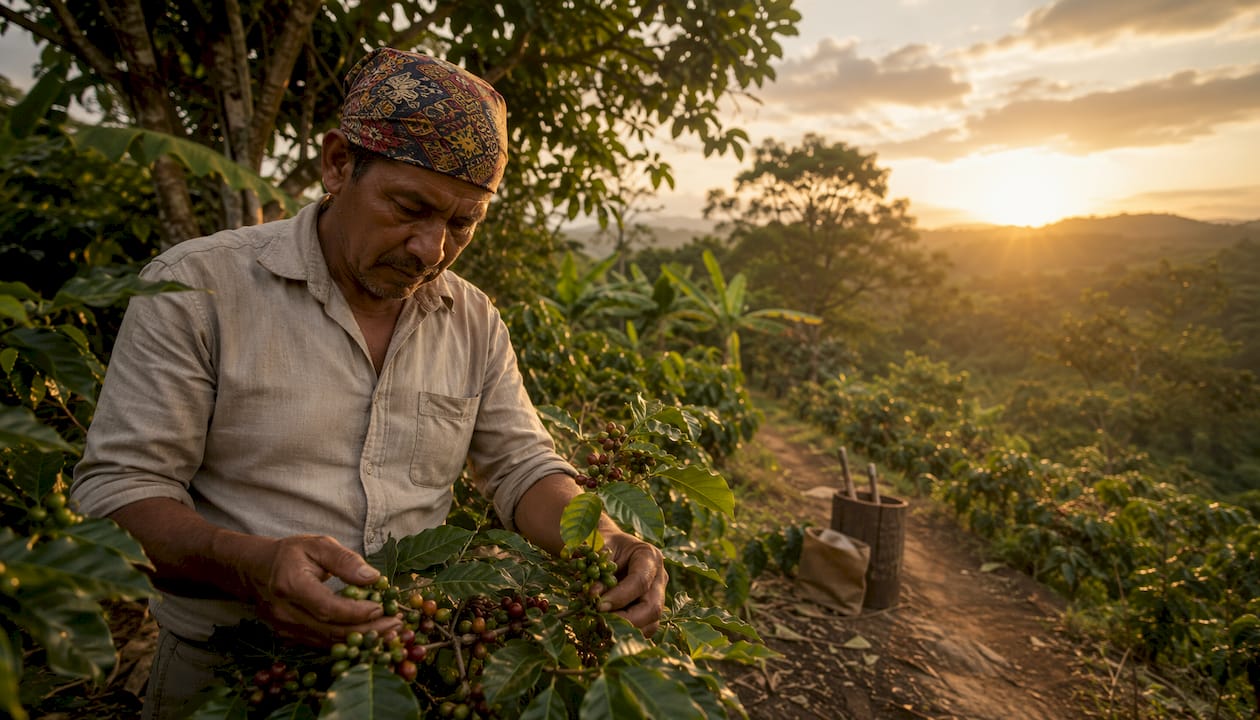
The farm’s approach layers multiple practices simultaneously. Coffee grows under a canopy of native trees including mahogany and walnut, which are sustainably harvested and sold for local construction. Honey production from agroforestry flowers has become a new revenue line. Over 240 bird species now inhabit the farm, including two small species that feed directly on the coffee berry borer, the world’s most destructive coffee pest.
Pro Tip: Leaving standing dead trees on a farm, as La Cumplida discovered, attracts woodpeckers that help control wood-boring insects. Small habitat choices compound over time.
Aquiares Coffee Estate, Costa Rica
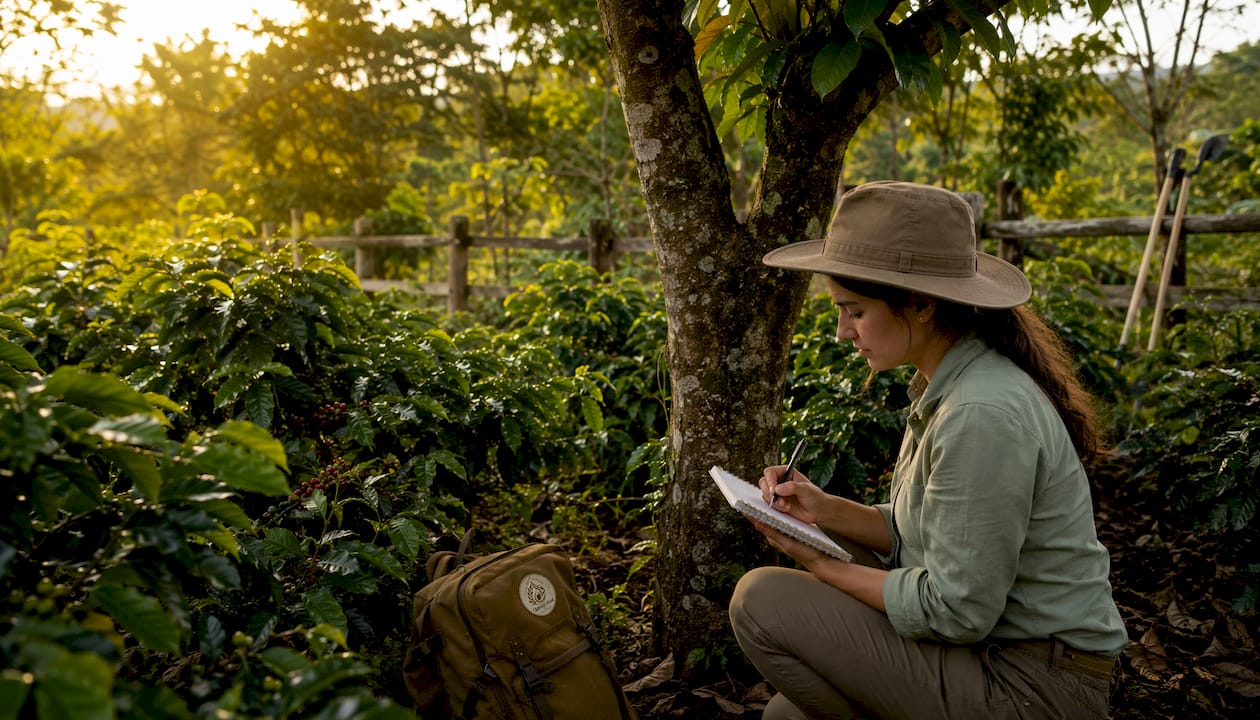
Aquiares planted 50,000 native shade trees, which reduced daily temperatures by 2°C across the farm and measurably increased biodiversity. That temperature buffer matters more than it sounds: coffee plants under chronic heat stress become more vulnerable to pests and disease, so the shade trees are simultaneously a climate adaptation tool and a pest management strategy.
Agroforestry systems broadly
Shaded coffee systems can match or surpass the economic returns of conventional monocultures while storing more carbon. The key variables are shade density, tree species selection, and how well the canopy is matched to local growing conditions. A poorly chosen shade species competes with coffee for light and water. A well-chosen one fixes nitrogen, provides mulch, and generates timber income.
| Practice | Documented Impact |
|---|---|
| Shade tree planting (50,000 trees) | 2°C daily temperature reduction, biodiversity increase |
| Soil organic matter restoration | Nearly 0.5% increase in organic matter |
| Biodiversity-driven pest management | 60% reduction in pesticide use |
| Shaded agroforestry systems | Carbon storage increase, economic returns matching monocultures |
| Climate-smart practices | Improved water quality, biodiversity, regional climate stabilization |
Soil restoration techniques
La Cumplida’s soil program illustrates what active restoration looks like in practice. The team introduced mulch, soft weeds, and cover crops to increase soil cover, then added beneficial microbes to boost nutrient cycling. Before these changes, farm workers entering coffee plots rarely saw spiders or bees. Both are now present, and both signal a recovering ecosystem. Earthworms, fungi, and bacteria returned alongside them, rebuilding the soil structure that supports consistent yields.
Integrated pest management
Natural predators attracted by native vegetation actively control the coffee berry borer, reducing pesticide dependency across farms that invest in habitat restoration. The mechanism is straightforward: more plant diversity at ground level means more insects, which means more birds, which means fewer pest outbreaks. The farms that understand this stop treating pest control as a chemical problem and start treating it as an ecological one.
How sustainable practices benefit the environment and farming communities
The environmental gains from eco-friendly coffee farms are well documented. Climate-smart coffee practices improve water quality, support biodiversity conservation, and help stabilize regional climate patterns. These are not local effects only. When enough farms in a landscape adopt coordinated practices, the benefits scale up to watershed and regional climate levels.
Environmental benefits:
- Carbon sequestration through shade trees and soil organic matter
- Habitat connectivity and biodiversity recovery
- Reduced chemical runoff into local waterways
- Microclimate buffering that protects crops from temperature extremes
- Erosion control through ground cover and root systems
The socio-economic picture is equally strong. Diversified farms growing coffee alongside fruit, timber, and fodder are more resilient to both climate shocks and market volatility than single-crop operations. La Cumplida sells coffee, hardwood timber, and honey, and hosts community programs for neighboring farmworkers. That income diversification is not a side benefit. It is the financial architecture that makes long-term sustainability investment possible.
Socio-economic benefits:
- Multiple income streams reducing dependence on coffee price fluctuations
- Community investment in housing, water access, and education
- Improved crop resilience reducing yield losses from climate events
- Long-term farm profitability through lower input costs
Understanding why sustainability matters in coffee goes beyond environmental ethics. It is a financial argument for farmers who face volatile commodity markets.
Which certifications actually guide sustainable coffee farming?
Certifications translate sustainable farming principles into verifiable standards. They give farmers a roadmap and give buyers a way to confirm what they are purchasing.
- Rainforest Alliance: Covers soil health, biodiversity, water management, and worker welfare. La Cumplida’s Regenerative Agriculture Certification extends this standard further into active soil restoration and climate resilience metrics.
- USDA Organic: Prohibits synthetic pesticides and fertilizers, requiring farms to build soil fertility through natural means. Organic certification often serves as a gateway to other certifications.
- Fair Trade: Focuses on fair pricing, safe working conditions, and community development funds. Producer cooperatives are typically the unit through which smallholder farmers access Fair Trade markets.
- Rainforest Alliance Certified Regenerative: A newer, more demanding standard measuring soil fertility, biodiversity recovery, and climate resilience as active outcomes rather than minimum thresholds.
Cooperatives play a central role in making certification accessible. Individual smallholders rarely have the resources to pursue certification alone. Cooperatives pool costs, share technical knowledge, and provide the institutional structure that certification bodies require. A buyer’s guide to certifications can help you decode what each label actually guarantees on the bag.
Emerging standards in regenerative agriculture are pushing beyond “do less harm” toward measurable ecosystem recovery. The Rainforest Alliance’s regenerative standard, which La Cumplida earned first, is the clearest current example of this shift.
What the latest research confirms about sustainable coffee farming
The research picture in 2026 is more detailed than it was a decade ago, and the findings consistently support the practices described above.
“Regenerative agriculture is no longer a choice — it’s a necessity now.” — Juliana Jaramillo, Rainforest Alliance
A systematic review of 46 peer-reviewed studies on coffee agroforestry systems found that carbon stocks are consistently higher in systems with moderate to high shade, greater structural complexity, and lower management intensity. The same systems that store more carbon also tend to provide microclimate buffering, soil protection, and moisture retention. These are not separate benefits. They emerge from the same structural choices.
The research also confirms that multifunctionality is a key strategy for economic and climate resilience. Farms that generate income from timber, fruit, fodder, and other products alongside coffee are better positioned to absorb both market shocks and climate disruptions than single-crop operations.
The main barrier to transition is upfront cost and the temporary yield dip that often occurs when farms stop using agrochemicals. Coffee yields can decline initially before natural fertilizers and pest control take effect. Policy support, NGO partnerships, and cooperative structures are the mechanisms that help smallholder farmers bridge that gap. Without them, the financial risk of transition falls entirely on the farmers least able to absorb it.
Taste the farms behind the practices
The farms and methods described here are not abstract. They produce the coffee in your cup. Qahwatalard sources from regions where these practices are standard, not exceptional. The Single Origin Favorites Sample Pack lets you taste traceable, sustainably farmed coffees side by side, from origins like Peru, Mexico, and Bali. For a broader introduction, the Best Sellers Sample Pack covers six distinct profiles from farms that prioritize soil health and ethical sourcing. If convenience matters, the Bali Coffee Pods deliver single-origin quality without the prep time.

Key Takeaways
Sustainable coffee farming works because it replaces chemical inputs with ecological systems that deliver better long-term outcomes for soil, biodiversity, and farmer income.
| Point | Details |
|---|---|
| Agroforestry drives multiple gains | Shade trees reduce temperatures, store carbon, and create habitat that cuts pest pressure. |
| Soil restoration is measurable | La Cumplida increased soil organic matter by a measurable amount, directly improving productivity. |
| Pest management goes ecological | Native vegetation attracts natural predators, enabling a 60% reduction in pesticide use. |
| Diversified income builds resilience | Farms growing timber, honey, and fruit alongside coffee withstand market and climate shocks better. |
| Certifications verify and guide | Rainforest Alliance, USDA Organic, and Fair Trade set enforceable standards for soil, biodiversity, and labor. |
FAQ
What are some sustainable practices in coffee farming?
The most widely used practices include shade-grown cultivation, agroforestry, cover cropping, integrated pest management, and organic composting. These methods reduce chemical inputs, improve soil health, and support biodiversity on working farms.
What are some examples of eco-friendly coffee farms?
La Cumplida in Nicaragua and Aquiares Coffee Estate in Costa Rica are two well-documented examples. La Cumplida became the world’s first Rainforest Alliance Certified Regenerative farm; Aquiares planted 50,000 native trees, reducing daily temperatures by 2°C.
What are the four main threats to coffee crops?
The coffee berry borer (a destructive beetle pest), leaf rust fungus, climate-driven temperature extremes, and soil degradation from chemical overuse are the four primary threats. Sustainable farming practices directly address all four.
Does Starbucks use sustainable coffee?
Starbucks has published commitments around ethical sourcing and works with certification programs, but the depth and verification of those commitments vary by supply chain. For full traceability and verified sustainable sourcing, single-origin specialty roasters with published farm relationships offer more transparency.
How do certifications help farmers farm more sustainably?
Certifications like Rainforest Alliance and Fair Trade provide farmers with specific standards for soil health, biodiversity, and labor practices, along with technical support and access to premium markets that reward compliance with better prices.


