


TL;DR:
- Coffee dialing in involves systematically adjusting brewing variables to achieve the best flavor and balance. It requires changing one factor at a time, such as grind size or brew ratio, based on tasting results to fine-tune extraction. Proper technique and consistency are more important than expensive equipment for mastering this process.
Coffee dialing in is defined as the systematic process of adjusting brewing variables to extract the best possible flavor and balance from your beans. The industry term is “dialing in,” and it applies to every brew method, not just espresso. The process involves adjusting grind size, dose, brew ratio, and extraction time in a deliberate sequence, guided by what you taste in the cup. Home baristas who master this process stop guessing and start brewing with real consistency and confidence.
What is coffee dialing in and why does it matter?
Dialing in is the controlled, repeatable process of adjusting brewing parameters until your cup tastes balanced. A balanced cup sits between two failure zones: sour and bitter. Sour means under-extraction. Bitter means over-extraction. Every adjustment you make moves the cup toward or away from that sweet spot.
The process matters because coffee is not static. A new bag of beans, a change in roast level, or even a shift in humidity can throw off a recipe that worked perfectly last week. Dialing in gives you a method to respond to those changes without starting from scratch every time.
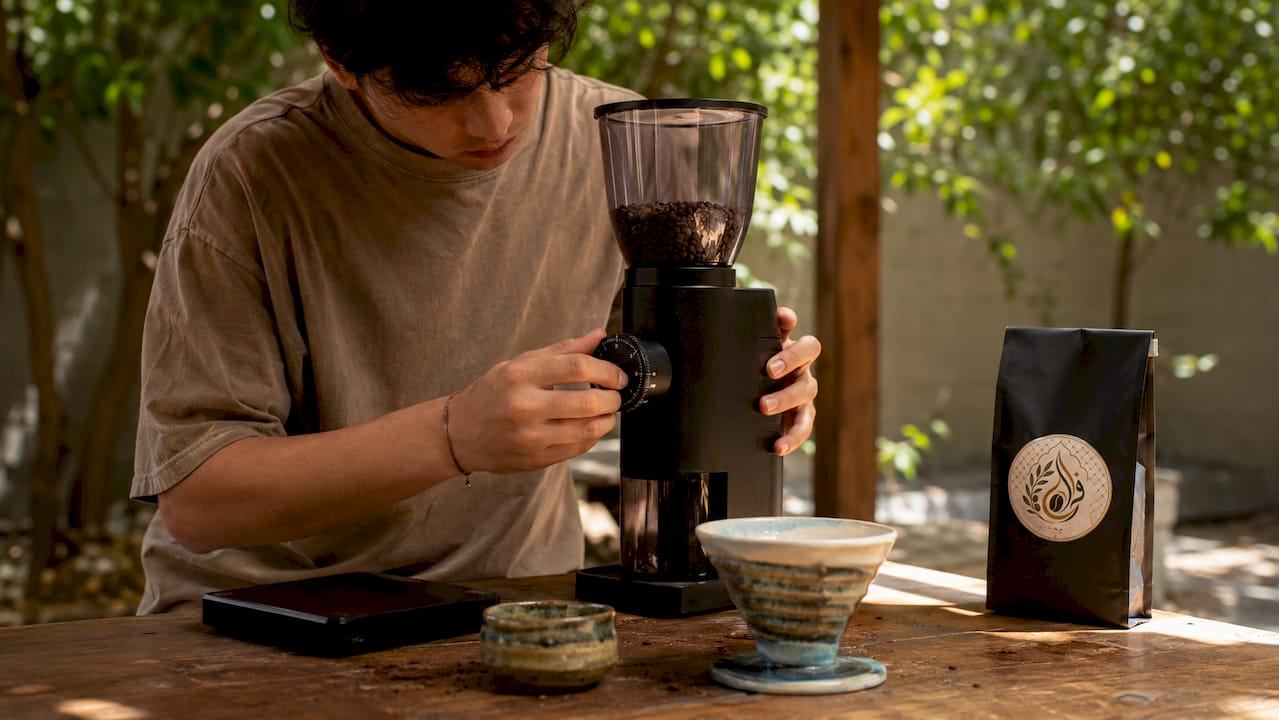
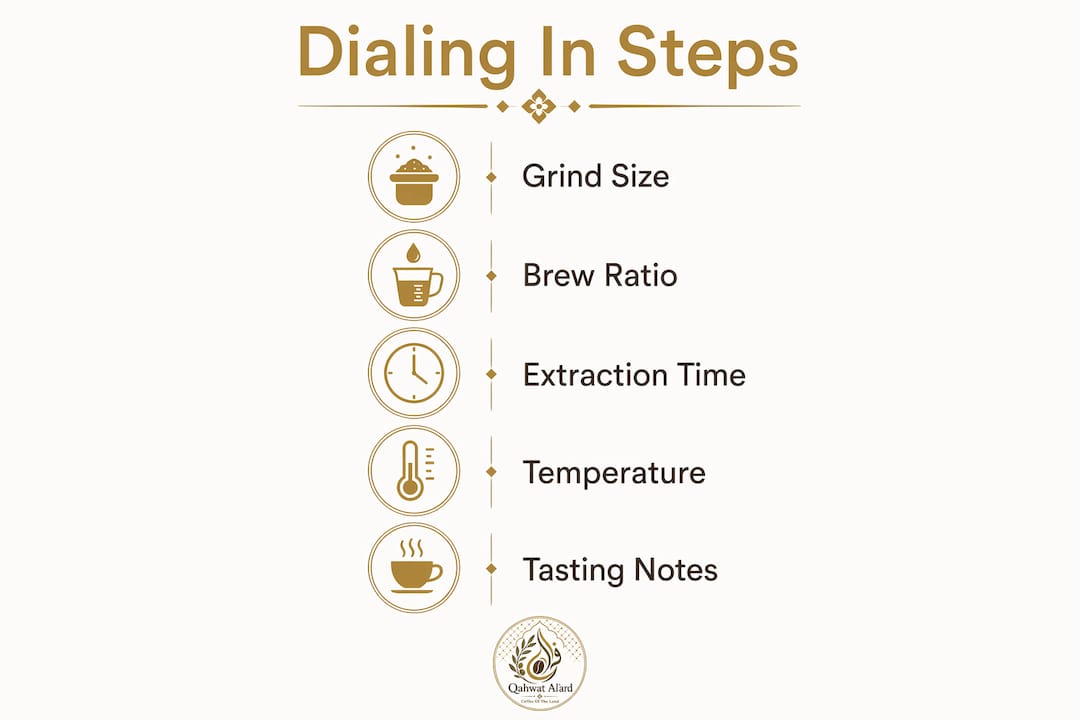
The core variables are grind size, dose, brew ratio, and extraction time. Temperature is a secondary lever most home baristas reach for last. Each variable affects extraction differently, and understanding that relationship is the foundation of every good brewing session.
Which variables do you adjust when dialing in coffee?
The recommended adjustment order is grind size first, then brew ratio, then time or temperature. This sequence isolates each variable’s effect and prevents you from chasing your tail through random changes.
Grind size
Grind size controls how fast water moves through the coffee bed and how much surface area it contacts. A finer grind slows extraction and pulls more compounds from the bean. A coarser grind speeds it up and pulls fewer. If your cup tastes sour and sharp, grind finer. If it tastes bitter and flat, grind coarser. Understanding grind size impact is the single most important skill in dialing in.
Dose and brew ratio
Dose is how much coffee you use. Brew ratio is the relationship between that dose and the water or yield. For espresso, the standard baseline is 18g of coffee in and 36g of liquid out, a 1:2 ratio brewed in 25–35 seconds. For pour-over, a 1:15 or 1:16 ratio is a reliable starting point. Changing the dose shifts strength. Changing the ratio shifts both strength and extraction.
Extraction time and temperature
Time and temperature are fine-tuning tools, not starting points. Brew time is largely a result of grind size and dose, so adjusting it independently often masks the real problem. Water temperature between 195°F and 205°F covers most home brewing scenarios. Lighter roasts extract better at higher temperatures. Darker roasts need slightly lower heat to avoid bitterness.
Pro Tip: Write down every variable before you change anything. A simple notebook log lets you track what worked and repeat it without relying on memory.
How to dial in coffee at home, step by step
A structured session produces results faster than random tasting. Follow this sequence for any brew method.
-
Set a consistent dose. Weigh your coffee with a digital scale every time. Scoops vary with bean density and grind size. A scale removes that variable entirely and gives you a true baseline.
-
Brew your first cup using a standard recipe. For espresso, use the 18g in, 36g out, 25–35 second baseline. For pour-over, use a 1:15 ratio with a 3–4 minute total brew time. Do not taste yet. Let the cup cool slightly so heat does not mask flavor.
-
Taste carefully and identify the dominant flaw. Sour or acidic with a thin body means under-extraction. Bitter, dry, or hollow means over-extraction. A flat or muddy cup with no clarity often points to a grind that is too coarse for the method.
-
Adjust one variable. If the cup is sour, grind finer. If it is bitter, grind coarser. Do not change dose and grind at the same time. Changing multiple variables simultaneously makes it impossible to know which change fixed or broke the cup.
-
Brew again and taste. Repeat the cycle. Most home baristas find their target within three to five brews when they change only one variable per session.
-
Lock in the recipe. Once the cup tastes balanced, write down every number: dose, yield or water volume, grind setting, brew time, and water temperature. This is your repeatable recipe.
For espresso specifically, a bottomless portafilter gives you a live view of extraction. Channeling, where water cuts through the puck unevenly, shows up as spraying or uneven flow. That visual cue tells you whether to adjust grind or improve your puck preparation before changing anything else.
Pro Tip: Taste your espresso at the 30-second mark after pulling the shot. The flavor evolves as it cools, and that window gives you the clearest read on extraction balance.
Common mistakes to avoid when dialing in at home
Most home baristas hit the same walls. Knowing these pitfalls in advance saves a lot of wasted coffee.
-
Changing multiple variables at once. This is the most common mistake. If you adjust grind size and dose in the same brew, you cannot tell which change moved the flavor. Change one thing, brew, taste, then decide.
-
Using stale beans. Beans roasted within 2–4 weeks are far easier to dial in than older stock. Stale beans behave unpredictably because CO2 has dissipated, which changes how water interacts with the grounds. If your recipe keeps shifting for no clear reason, check the roast date first.
-
Skipping the scale. A digital scale is the single most impactful tool for consistent brewing. Scoops vary by several grams depending on grind size and bean density. That variation alone can make a good recipe taste completely different the next day.
-
Chasing lab numbers instead of flavor. Baselines like 25–30 seconds for espresso or 3–4 minutes for pour-over are diagnostic starting points, not targets. The best dial-in is the one that tastes balanced to you, not the one that hits a specific timer reading.
-
Tasting too many cups in one session. Palate fatigue is real. After four or five espresso shots, your ability to detect subtle flavor differences drops sharply. Limit sessions to five or six brews. Drink water between tastes and use a spittoon if you are pulling multiple shots.
-
Ignoring visual cues. For espresso, watch the flow rate and color. A fast, pale, watery pull means the grind is too coarse. A slow, dark, syrupy pull that takes over 40 seconds means it is too fine. These visual signals often tell you what to fix before you even taste the cup.
How does dialing in differ across brewing methods?
Dialing in applies to every brew method, from espresso to cold brew. The core logic is identical: adjust variables, taste, and repeat. The specifics change based on how each method extracts coffee.
| Brew method | Typical ratio | Grind size | Key adjustment lever |
|---|---|---|---|
| Espresso | 1:2 (18g in, 36g out) | Very fine | Grind size, then yield |
| Pour-over | 1:15 to 1:16 | Medium fine | Grind size, then pour technique |
| French press | 1:12 to 1:15 | Coarse | Steep time, then grind |
| Drip / batch brew | 1:15 to 1:17 | Medium | Grind size, then ratio |
| Cold brew | 1:8 to 1:10 | Extra coarse | Steep time, then ratio |
Espresso is the most sensitive method. Small grind changes produce large flavor shifts because the brew time is short and pressure is high. Pour-over gives you more room to adjust through pour speed and water temperature. Immersion methods like French press are the most forgiving because the coffee and water stay in contact for a fixed time regardless of grind variation.
For home baristas who brew multiple methods, the extraction principles stay constant. Sour means under-extracted. Bitter means over-extracted. The fix is always the same direction, just applied to the lever that matters most for that method.
Key Takeaways
Dialing in coffee requires adjusting grind size, dose, brew ratio, and extraction time in a fixed sequence, guided entirely by sensory evaluation of the cup.
| Point | Details |
|---|---|
| Adjust in the right order | Change grind size first, then ratio, then time or temperature to isolate each variable’s effect. |
| Use a digital scale every time | Weighing your dose removes the single biggest source of inconsistency in home brewing. |
| Taste for sour vs. bitter | Sour signals under-extraction; bitter signals over-extraction. Let flavor guide every adjustment. |
| Change one variable per brew | Changing multiple parameters at once makes it impossible to know what fixed or broke the cup. |
| Fresh beans make dialing in easier | Beans roasted within 2–4 weeks behave predictably and respond clearly to grind adjustments. |
Why patience is the real skill in dialing in
I have watched home baristas spend $800 on a grinder and still pull sour espresso every morning. The equipment was not the problem. The habit of changing two things at once and then blaming the machine was.
The truth is that technique and variable control produce more flavor improvement than any gear upgrade. I have dialed in excellent cups on modest setups by doing one thing consistently: changing only one variable per session and writing down every number. That discipline is boring. It is also the only thing that actually works.
What surprises most home baristas is how quickly confidence builds once they start tracking their sessions. After ten or fifteen brews with a new bag, you develop a feel for how that specific coffee responds to grind changes. You stop second-guessing and start predicting. That shift from reactive to intentional is where brewing becomes genuinely satisfying.
My honest advice is to resist the urge to fix everything at once. Brew one cup, taste it slowly, identify the single biggest flaw, and change only that. The cup will tell you what it needs. Your job is to listen carefully enough to hear it. Explore specialty brewing methods when you are ready to apply this process across different techniques.
— Anthony-Yasin
Where to find coffee worth dialing in
The dialing-in process only reveals what is already in the bean. Starting with quality, fresh-roasted coffee gives you something worth refining. Qahwatalard sources single-origin and blended coffees from renowned growing regions, with roast dates you can actually verify. The single-origin collection is a strong starting point for home baristas who want to taste how origin and roast level respond to grind and ratio changes. For those who prefer a consistent, high-caffeine blend to practice with, the Max Caf Blend delivers repeatable results across multiple brew sessions. Every bag from Qahwatalard comes with enough flavor character to make the dialing-in process genuinely rewarding.
FAQ
What is the first variable to adjust when dialing in?
Grind size is always the first variable to adjust. It has the largest and most direct effect on extraction speed and flavor balance.
How many brews does it take to dial in a new coffee?
Most home baristas reach a balanced cup within three to five brews when they change only one variable per session and taste carefully between each brew.
Does dialing in work for pour-over, or just espresso?
Dialing in applies to every brew method, including pour-over, French press, drip, and cold brew. The same logic of adjusting grind, ratio, and time applies across all of them.
Why does my dialed-in recipe stop working with a new bag?
A new bag of beans, even the same roast, can behave differently due to freshness, density, or slight roast variation. Start your dial-in process again from the baseline when you open a new bag.
Do I need expensive equipment to dial in coffee at home?
A digital scale and a grinder with consistent settings are the two tools that matter most. Technique and variable control produce more improvement than equipment upgrades alone.


