


For moka pots, choose a fresh, medium to medium-dark roast whole bean, ground finer than drip but coarser than espresso. Start with a single-origin sample pack to find your preferred profile, or go straight to a chocolatey house blend if you already know you like body over brightness. Capsules and instant coffee cover you on rushed mornings. The rest of this guide covers exactly how to brew it right.
TL;DR:
- Fresh medium to medium-dark roast beans with a coarse grind are essential for balanced flavor and avoiding bitterness in moka pot brewing.
- Single-origin samples help identify preferred flavor profiles, while blends like Max Caf provide consistent results for daily use.
- Moka pots produce a full-bodied, concentrated coffee that sits between drip and espresso, requiring specific bean choices and extraction techniques.
- Using pre-ground coffee labeled as moka or stovetop grind offers better results than generic drip grind, but whole beans and fresh grinding are preferred.
- Proper brewing involves starting with hot water, avoiding tamping, and pulling the pot from heat as soon as the brew turns pale to prevent bitterness.
Table of Contents
- Which Beans Work Best for Moka Pot Brewing?
- Why Doesn’t a Moka Pot Brew Like Espresso?
- What Roast and Grind Should You Use for a Moka Pot?
- Best Coffee for Moka Pot: Detailed Picks and How to Prepare Them
- How Do You Brew Coffee in a Moka Pot Step by Step?
- How Do You Choose the Right Beans When Shopping?
- Where Qahwat Al’ard’s Sourcing Fits Into This Guide
- An Editorial Take on Buying Coffee for a Moka Pot
- Ready to Start Brewing? Here’s Where to Begin
- Sources
- FAQ
Which Beans Work Best for Moka Pot Brewing?
You don’t need to overthink this, but you do need a starting point that won’t waste a bag of coffee on a bad first attempt. Here’s the shortlist worth trying first.
- Single Origin Favorites Sample Pack: the smartest first move if you’ve never dialed in a moka pot before. It lets you test roast and grind variables against multiple origins instead of guessing with one bag.
- Max Caf Blend: a classic, chocolatey profile built to hold up under moka heat without turning ashy or bitter. This is the “safe bet” pick if you want consistency over novelty.
- Bali Blue or Mexico Coffee Pods: two single-origin directions that show how far flavor can swing. Bali Blue tends toward earthy, low-acid richness; Mexico leans brighter and nuttier.
- Instant Coffee or 12 Pack Single Serve Coffee Capsules: the convenience lane. Neither replaces a proper moka brew, but both solve the “I don’t have time to grind” problem.
The pattern here matters more than any single product. A sample pack teaches you what you like before you commit to a full bag, a blend gives you a dependable daily driver, and single origins let you chase specific flavor notes once you know your palate. Capsules and instant coffee aren’t moka-pot coffee at all, technically, but they belong on this list because real households use all four categories depending on the morning.
Why Doesn’t a Moka Pot Brew Like Espresso?
A moka pot never produces true espresso; that single fact explains almost every bean decision that follows. Espresso machines force water through grounds at roughly 9 bars of pressure. A moka pot works with steam pressure from a sealed lower chamber, which is nowhere close to that force. What comes out is a concentrated, full-bodied cup that sits between drip coffee and espresso, not a shot in the espresso sense.
That middle ground changes what you want from a bean. Espresso baristas often chase acidity and brightness because the machine’s pressure and short contact time can showcase delicate notes without letting them turn sour. A moka pot doesn’t have that luxury. Lower pressure combined with longer, hotter contact with the grounds means the brew leans hard into body and midrange flavor. A very light roast, the kind that sings in a pour-over, can taste thin and papery once it goes through a moka pot’s slower, gentler extraction. A very dark roast, on the other hand, tips into ashy or burnt territory fast, because the moka pot’s heat is already pushing the coffee toward bitterness before you factor in the darker roast’s lower sugar content.
This is also why freshness matters more here than with almost any other brew method. A moka pot is unforgiving. It exaggerates whatever is already happening in the bean, good or bad. Stale coffee that might pass unnoticed in a drip machine turns flat and cardboard-like under moka heat. Roast defects, like uneven development or scorched batches, show up as harsh, ashtray notes that a French press or espresso machine’s crema can sometimes mask. If you’ve ever wondered why the same bag of coffee tastes better from one brewer than another, this is usually the reason: moka pots highlight midrange body and can reveal sweetness in lighter roasts when the extraction is tuned carefully, but they punish sloppy roasting just as visibly.
None of this means moka pot coffee has to taste harsh or one-note. It means the bean has to be right for the method, not just generically “good coffee.” A bean that tastes incredible as a pour-over might disappoint you in a moka pot, and that’s not the bean’s fault or the pot’s fault. It’s a mismatch in extraction style. Once you understand that, the roast and grind recommendations in the next section make a lot more sense. For a deeper look at how extraction actually works across brew methods, this flavor guide breaks down the mechanics in more detail.
What Roast and Grind Should You Use for a Moka Pot?
The short version: medium to medium-dark roast, and a grind finer than drip but noticeably coarser than espresso. Here’s why each piece matters and how to nail it without expensive equipment.
Roast level. Testers consistently point to medium-to-medium-dark roasts as the sweet spot for moka brewing, because that range balances acidity against body without tipping into burnt bitterness. Go too light and the cup can taste sour or hollow once the moka pot’s heat and pressure finish with it. Go too dark and you’re fighting an uphill battle against ashy, scorched flavor that no amount of technique can fully rescue.
Grind size. Picture table salt, slightly coarser. That’s roughly where moka grind should land. If your grinder has drip and espresso settings, aim for something between them, closer to the drip side. Too fine and water can’t push through the basket at a reasonable pace, which stalls the brew and pulls out bitter compounds. Too coarse and water rushes through too fast, leaving you with a thin, sour, underdeveloped cup.
Testing this by eye and by time works better than obsessing over a specific micron number:
- If your brew takes less than 4 to 5 minutes on medium heat and tastes sour or watery, go finer.
- If it gurgles violently, sputters, or takes forever and tastes burnt or bitter, go coarser.
- If the basket feels packed down hard and water struggles to rise, you’re both too fine and probably tamping when you shouldn’t be.
That last point trips up a lot of people who come from espresso. Moka pots don’t want tamped grounds. Fill the basket level, give it a gentle shake or a light tap to settle it, and leave it alone. Tamping creates the kind of resistance that leads to stalled brews and bitter extraction, the opposite of what you want.
Pro Tip: If you’re buying pre-ground coffee because you don’t own a grinder yet, look specifically for “moka” or “stovetop” grind labeling rather than generic “drip grind.” Most drip grinds run too coarse for a moka basket. A basic burr grinder costs less than you’d think and gives you control that pre-ground coffee simply can’t match.
Whole bean with a home grinder beats pre-ground almost every time, mainly because grind size directly controls your extraction speed and you lose that control the moment the bag is opened at the roastery. If pre-ground is your only option, buy from a roaster that grinds fresh to order and states the intended brew method on the bag.
Best Coffee for Moka Pot: Detailed Picks and How to Prepare Them
Here’s where the specific bean recommendations turn into brewing instructions. Dose figures below assume a standard 3-cup moka pot filled with a moderate amount of ground coffee. Scale up or down proportionally for 1-cup, 6-cup, or larger pots.
Single Origin Favorites Sample Pack
This is the pack built for people who want to learn their own palate before committing to a full bag. Grind each origin to the same moka setting, brew back to back over a few days, and take notes on body, sweetness, and finish. Most people discover they gravitate toward one region’s profile (earthy and low-acid, or bright and fruit-forward) within two or three tries. Use the same 1:10 ratio across every origin in the pack so your comparisons stay fair.
Max Caf Blend
A medium to medium-dark roast blend with a chocolate and nut-forward profile, this is the closest thing to a “you can’t go wrong” pick on this list. Dose it the same as any other bean, around 17 grams for a 3-cup pot, ground just coarser than espresso. The roast’s sweetness holds up well against moka heat, which is exactly why blends built for consistency tend to outperform delicate light roasts in this brew method.
Bali Blue
Bali Blue leans earthy, low-acid, and full-bodied, which happens to be almost a perfect match for what a moka pot naturally emphasizes. If you’ve tried moka pot coffee before and found it too sharp or acidic, this is worth trying specifically because it shines in exactly the areas a moka pot amplifies. Keep the grind on the slightly coarser end of the moka range to avoid over-extracting the low acidity into bitterness.
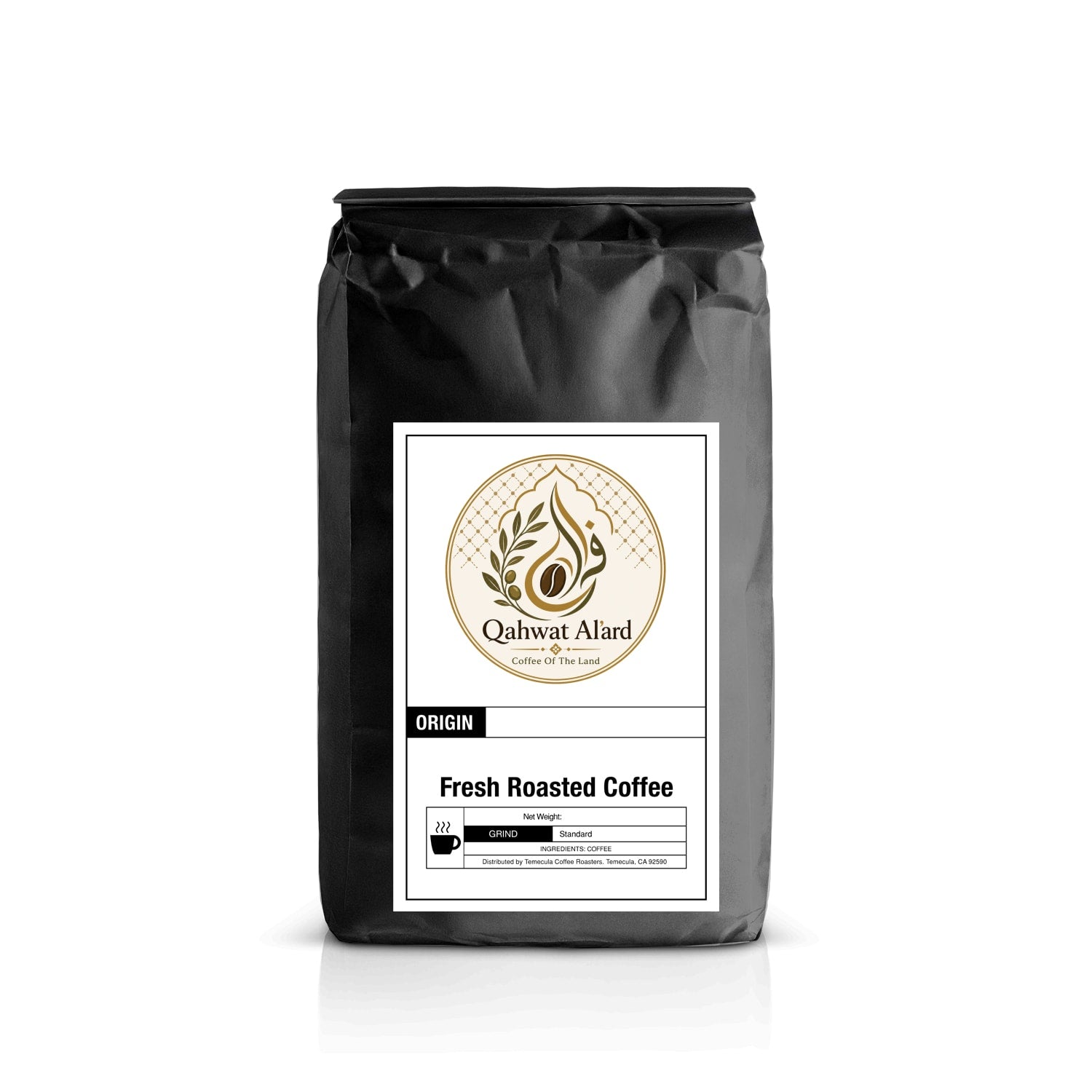
Mexico Coffee Pods
For readers using a compatible capsule system rather than a traditional stovetop pot, Mexico Coffee Pods deliver a brighter, nuttier profile than the Bali option. Capsule brewing isn’t true moka extraction since there’s no stovetop pressure buildup, but it’s the closest single-origin convenience option if grinding isn’t practical for your morning routine.
Instant Coffee
Instant coffee will never replicate what a moka pot does, full stop. There’s no extraction happening at all, just dissolved soluble coffee in hot water. That said, instant coffee has a real place for travel, camping, or genuinely rushed mornings. If you want to boost body and mimic some of that moka richness, use less water than the package suggests and stir vigorously or use a small frother. It won’t fool a coffee snob, but it closes some of the gap.
Cold Brew Coffee and English Breakfast
Neither of these belongs in a moka pot, and that’s fine. Cold Brew Coffee is a cold-steeped, low-acid concentrate meant for pouring over ice, not stovetop brewing. English Breakfast is a black tea blend, not coffee at all. Both sit in the same catalog because they solve different problems: cold brew for hot afternoons when you don’t want to fire up the stove, and English Breakfast for anyone in your household who simply prefers tea. Worth knowing they exist, not worth reaching for when moka pot coffee is the goal.
How Do You Brew Coffee in a Moka Pot Step by Step?
The recipe below targets a coffee-to-water ratio of roughly 1:10 by weight, which testing consistently shows produces the most reliable, balanced extraction across different pot sizes. For a 3-cup pot, aim for a coffee-to-water ratio near 1:10 by weight, though your specific basket size may shift that slightly.
- Fill the basket, not the chamber, with your measured grounds. Level it off with a light tap. Do not tamp.
- Start with hot, not cold, water in the lower chamber. Starting hot shortens the time grounds spend exposed to rising heat, which cuts down on bitter and burnt notes. Handle the base carefully since it’s already hot when you screw the pot together.
- Assemble the pot and place it on medium, not high, heat. Leave the lid open so you can watch the brew.
- Listen and watch as coffee begins to stream into the top chamber. A steady, honey-colored stream is the goal.
- Pull the pot off the heat the moment the stream turns pale and sputters or hisses. That sound means you’re pulling steam, not coffee, and continuing past this point adds bitterness for no benefit.
- Give the pot a few seconds to stop actively brewing, then pour immediately. Coffee sitting in a hot moka pot keeps cooking and turns bitter fast.
Quick troubleshooting, because something will go sideways eventually:
- Gurgling or sputtering early: usually a loose seal or worn gasket letting air through. Check the rubber gasket and tighten the assembly.
- Slow drip or stalled brew: grind too fine, or the basket is packed too tight. Loosen up the grind size next time.
- Burnt or ashy taste: heat too high, or you let it brew past the point the stream turned pale. Lower the heat and pull it sooner.
- Watery, thin cup: grind too coarse, or your ratio is off. Recheck your dose against the 1:10 target and adjust grind finer.
If you keep running into the same problem, brew after brew, it’s worth ruling out equipment first. For a broader rundown of what typically goes wrong at each stage, this troubleshooting guide covers issues beyond moka-specific quirks.
How Do You Choose the Right Beans When Shopping?
A quick mental checklist saves you from buying a bag that looks great on the shelf but disappoints in the pot. Run through these before you check out:
- Roast date, not just “best by.” Look for a date within the last two to four weeks. Beans past that window have already lost aromatic complexity.
- Roast level clearly stated. Medium to medium-dark is your target range for moka; skip anything labeled extra-light or Italian dark roast unless you enjoy troubleshooting.
- Whole bean over pre-ground. Grinding fresh at home preserves flavor and gives you control over the moka-specific grind setting.
- Packaging with a one-way valve. This lets carbon dioxide escape without letting oxygen in, which keeps beans fresher longer on your shelf.
- Single-origin for exploration, blend for consistency. Reach for single origin when you want to learn a specific flavor profile; reach for a blend when you want the same reliable cup every morning without variation.
Storage matters just as much as the purchase decision. Keep beans in an airtight container away from direct light and heat, and resist the urge to refrigerate or freeze your everyday bag since moisture cycling does more harm than good. Buy in quantities you’ll finish within three to four weeks rather than stocking up on a huge bag that goes stale before you’re halfway through it. The same logic applies to your moka pot itself: rinse it with water only (no soap, which can strip the seasoning that builds up inside), dry it fully before storing, and replace the rubber gasket every year or so since a worn gasket is one of the most common causes of weak or leaking brews.
Where Qahwat Al’ard’s Sourcing Fits Into This Guide
Every recommendation above assumes you’re starting with traceable, honestly roasted coffee, and that’s the foundation Qahwat Al’ard builds its catalog on. Beans are sourced with full traceability from growing regions including Colombia, Peru, Bali, and Uganda, and roasted fresh to order rather than sitting in a warehouse for months before reaching your kitchen. That freshness is exactly what a moka pot rewards, since the brew method exposes staleness and roast flaws that gentler methods can mask.
This guide reflects a practical, brew-focused approach rather than lab-grade extraction science. The recommendations come from understanding how moka pots behave, not from claiming to have run controlled trials. That distinction matters if you’re the kind of coffee drinker who wants tested advice you can actually use tomorrow morning, not theoretical brewing chemistry.
An Editorial Take on Buying Coffee for a Moka Pot
Most advice about moka pot coffee treats the pot like a lesser espresso machine, which is exactly backwards. It’s not a cheap substitute. It’s a different brewing method with its own strengths, and pretending otherwise leads people toward beans that fight the process instead of working with it.
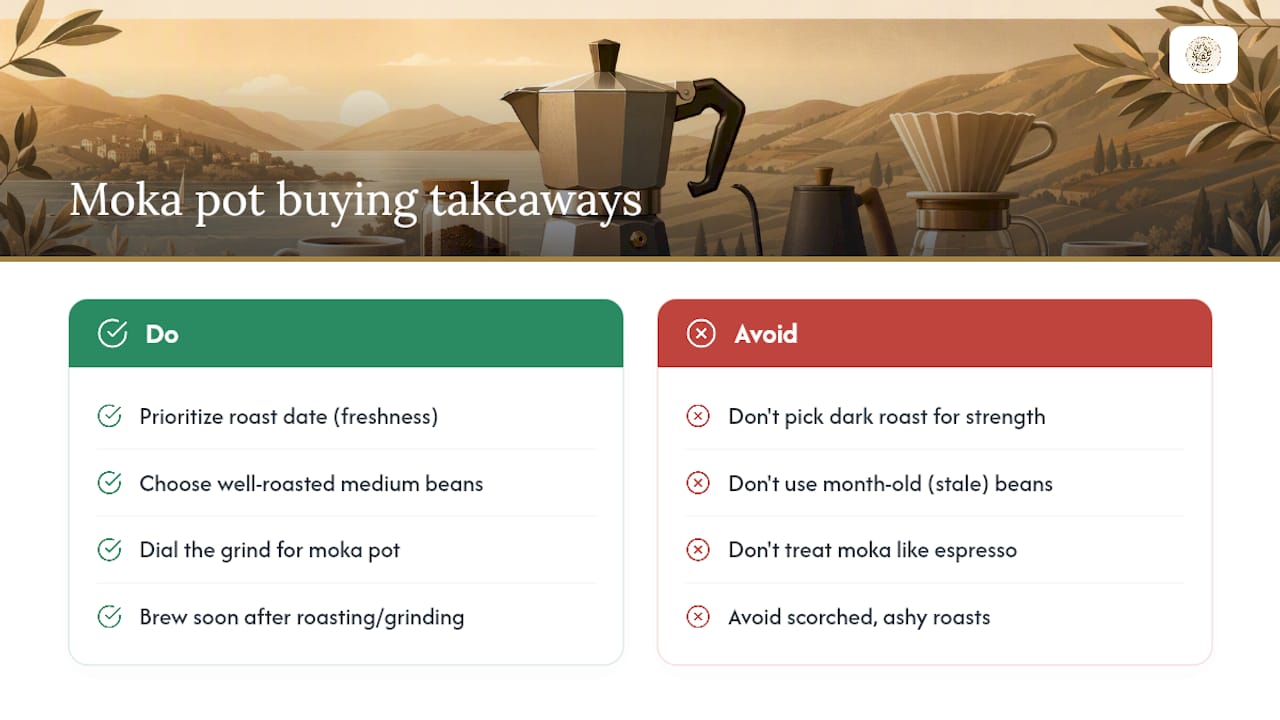
The conventional wisdom oversells dark roasts for stovetop brewing, mostly because dark roast has become shorthand for “strong” in a lot of home kitchens. Strength and roast level aren’t the same thing, and a scorched dark roast in a moka pot tastes like ash, not strength. What actually matters, based on how this brew method behaves, is freshness and roast clarity above almost everything else. A well-roasted medium bean, brewed fresh with a dialed grind, will beat a stale dark roast every time.
If you take one thing from this guide, prioritize the roast date over the roast level. A fresh medium roast forgives more mistakes than a month-old dark roast ever will.
— Yasin Sofyian Ayesh
Ready to Start Brewing? Here’s Where to Begin
If you’re still deciding where to start, don’t overthink it. Qahwat Al’ard’s Single Origin Favorites Sample Pack gets you tasting multiple profiles without committing to a full bag of something you haven’t tried, and every bean ships roasted fresh to order rather than pulled from a warehouse shelf. If you already know you want that dependable, chocolatey daily cup, the Max Caf Blend is built for exactly that.
Shipping is straightforward and roasts go out fresh rather than sitting in inventory, so what arrives at your door is close to what left the roaster. A solid starter order looks like this: one sample pack to explore, plus a 12-pack of single serve capsules for the mornings you don’t have time to grind and brew properly. Browse the full single-origin collection when you’re ready to commit to a favorite, and place your first order today.
Sources
- The 4 Best Moka Pots of 2026, Tested & Reviewed
- The Best Moka Pot — A Hands on Comparison and Review | Honest Coffee Guide
- The Best Moka Pots of 2026, Tested and Reviewed - Food & Wine
FAQ
Do Italians Prefer Moka Pot Coffee or Espresso?
Both hold a place in Italian coffee culture, but moka pots are the everyday home brewer, while espresso is typically reserved for cafes and bars with dedicated machines. The moka pot’s popularity at home comes down to simplicity and the fact that it produces a strong, concentrated cup without needing a bulky machine.
What Are the Downsides of a Moka Pot?
Moka pots require more hands-on attention than a drip machine, since you have to watch the brew and pull it off heat at the right moment to avoid bitterness. They also demand regular gasket replacement and careful cleaning, and a worn gasket or wrong basket size are common causes of weak or leaking brews.
What Is the Best Coffee for a Moka Pot?
A fresh, medium to medium-dark roast ground finer than drip but coarser than espresso performs best, since that roast range balances body and sweetness without turning bitter under moka heat. Qahwat Al’ard’s Max Caf Blend and single-origin options like Bali Blue both fit that profile well.
What Coffee Do Italians Typically Use for a Moka Pot?
Italian households commonly use medium to medium-dark roast blends rather than single origins, prioritizing consistency and a familiar chocolate-toned flavor over experimentation. That same logic is why a dependable blend, rather than a delicate light roast, tends to perform best in a moka pot at home.
Should I Tamp the Coffee in a Moka Pot Basket?
No. Tamping creates too much resistance for the moka pot’s lower pressure to push through cleanly, which stalls the brew and pulls bitter compounds into the cup. Fill the basket level and give it a light tap to settle the grounds instead.


