


TL;DR:
- Soil determines coffee flavor by controlling nutrient availability, cherry ripening, and aromatic development.
- Understanding soil pH, minerals, organic matter, and texture helps predict taste profiles and quality.
Soil is the primary determinant of coffee flavor, governing how nutrients reach the plant, how cherries mature, and which aromatic compounds develop in the bean. The role of soil in coffee flavor is not metaphorical. Soil chemistry, biology, and texture directly control the metabolic pathways that produce sweetness, acidity, and body in the cup. Coffee professionals call this influence “terroir,” a term borrowed from wine that describes how land shapes taste. Understanding terroir in coffee production gives you a concrete framework for reading flavor notes on a bag and knowing exactly why they exist.
How does soil pH and mineral composition affect coffee flavor profiles?
Coffee plants thrive in soils with a pH range of 5.5–6.5. Outside that window, nutrient uptake collapses. Phosphorus becomes locked in alkaline soils. Iron and manganese become toxic in soils that are too acidic. Either condition stresses the plant and produces flat, underdeveloped cups.
Minerals tell a more specific story. Calcium strengthens cell walls in the cherry, supporting even ripening and a clean finish. Magnesium sits at the center of every chlorophyll molecule, driving photosynthesis and sugar production. Potassium regulates water movement through the plant, directly influencing body and mouthfeel. When these three minerals are present in balanced supply, the cup reflects it in brightness, sweetness, and weight.
Soil type determines which minerals dominate and in what ratios. The table below shows how three major soil categories translate to sensory outcomes.
| Soil type | Key minerals | Typical flavor notes |
|---|---|---|
| Volcanic (andisol) | Phosphorus, potassium, iron | Bright acidity, clean aroma, citrus |
| Clay-heavy | Calcium, magnesium | Full body, low acidity, earthy sweetness |
| Calcium-rich (limestone) | Calcium, bicarbonate | Smooth, creamy, mild acidity |
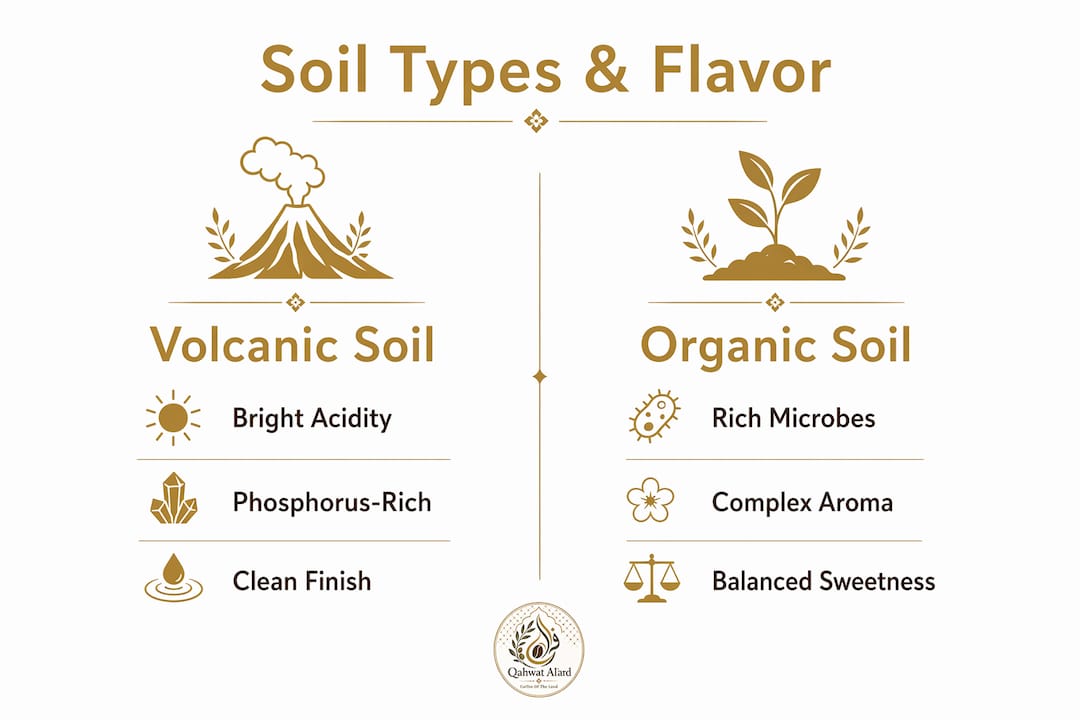
Volcanic soils rich in phosphorus and potassium produce the bright, acidic profiles that specialty coffee buyers prize. That mineral density explains why coffees from volcanic regions in Ethiopia, Guatemala, and Colombia consistently score high on acidity and aroma clarity. Clay-heavy soils retain water longer, slowing drainage and producing fuller-bodied cups with less pronounced acidity. Limestone-derived soils buffer pH naturally, creating smooth, low-acid profiles that appeal to coffee lovers who prefer a gentler cup.
Pro Tip: When you read “volcanic origin” on a coffee label, expect citrus-forward brightness and a clean finish. That flavor is not marketing. It is geology.
What role does organic matter and soil biology play in coffee quality?
Soil organic matter is the engine of flavor development, not just a fertility metric. Microbial communities in healthy soil break down organic material and release nutrients in plant-available forms. One key indicator of this activity is urease, an enzyme that converts urea into ammonium that coffee roots can absorb. Without active microbial populations, even mineral-rich soil underperforms.
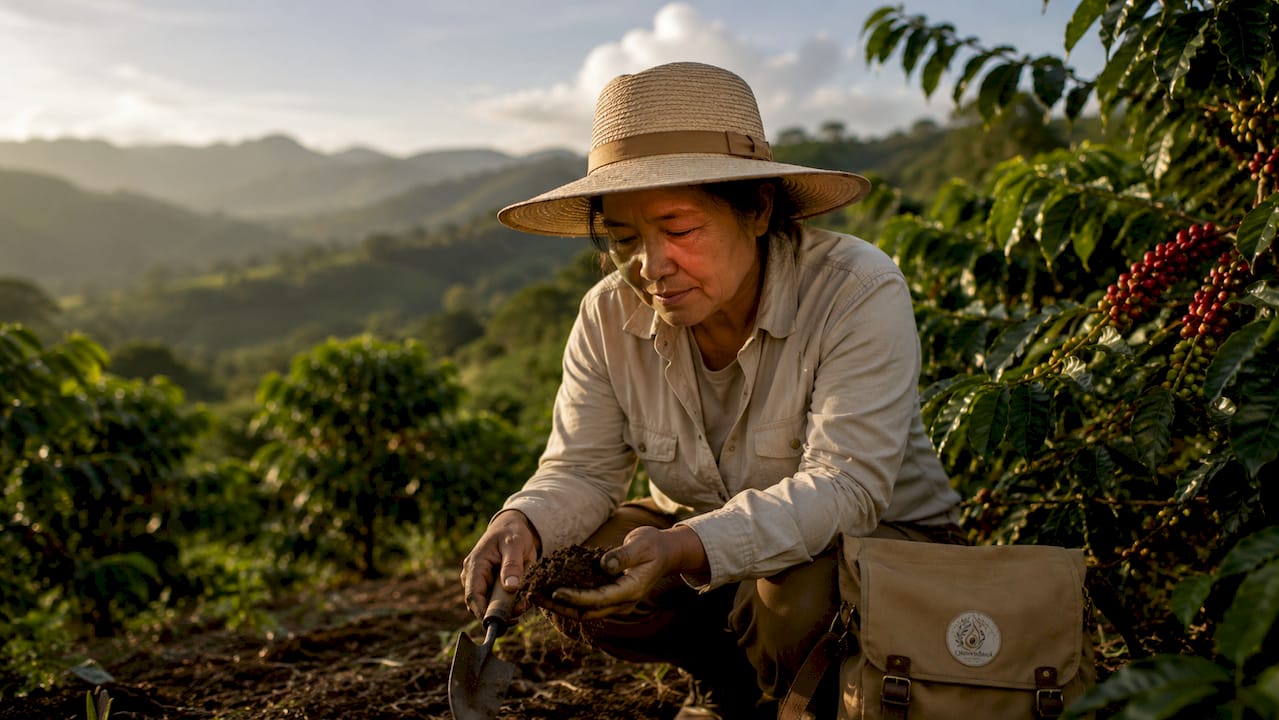
Biochar-compost blends improve soil base saturation by 24% and urease activity by 21% in a single growing season. That is a significant shift in nutrient cycling capacity. Higher urease activity means more nitrogen reaches the plant, supporting leaf growth and cherry development simultaneously.
Shade trees add another layer of biological richness. Species like Albizia gummifera drop leaf litter that decomposes into organic matter, feeding soil microbes and stabilizing moisture. Shade trees enrich soil through litter fall and root decomposition, which slows cherry ripening and builds flavor complexity. Slower ripening gives the cherry more time to accumulate sugars and aromatic precursors. The result is a denser, more layered cup.
Key practices that build soil biological health in coffee farms include:
- Composting coffee pulp and husks to return nutrients to the soil after harvest
- Applying biochar-compost blends to increase microbial biomass and base saturation
- Planting shade trees to add organic matter through litter fall and moderate soil temperature
- Minimizing synthetic inputs that disrupt microbial enzyme activity
Organic amendments from coffee residues through composting and pyrolysis increase calcium and magnesium levels while stimulating microbial biomass. This approach closes the nutrient loop on the farm and reduces dependence on synthetic fertilizers. Qahwatalard sources from farms that prioritize these practices, which is why traceability matters as much as the roast profile.
Pro Tip: Ask your roaster or retailer whether the farm uses shade trees or compost amendments. Those two practices are the clearest signal that the soil is being managed for flavor, not just yield.
How do soil texture and altitude interact to shape coffee terroir?
Soil texture and altitude do not operate independently. They amplify or constrain each other in ways that directly affect the cup. Cation exchange capacity (CEC) is the measure of how well soil holds onto positively charged nutrients like calcium, magnesium, and potassium. CEC correlates strongly with organic matter content (r=0.71) and clay content (r=0.62). High CEC soils act as nutrient reservoirs, releasing minerals steadily rather than losing them to rainfall. That steady supply supports consistent cherry development and predictable flavor.
Altitude changes the equation in two ways. Higher elevations tend to have lower temperatures, which slow cherry maturation and allow more time for sugar and aroma compound synthesis. But soils at lower altitudes often carry higher base saturation and cation exchange capacity, meaning they offer richer nutrient environments. The best growing regions balance both factors. Think of the mid-altitude volcanic slopes of Colombia’s Huila department or Ethiopia’s Yirgacheffe zone, where well-drained andisols meet moderate temperatures. The soil drains fast enough to prevent waterlogging but retains enough nutrients to feed steady maturation.
Slow, steady maturation enabled by well-draining soils facilitates complex sugar and aroma precursor synthesis. That process is the direct link between soil drainage and cup quality. Poorly drained soils rush maturation by stressing the plant, producing fermented or flat flavors. Well-drained volcanic soils let the cherry develop on its own timeline. The coffee altitude and flavor connection reinforces this point: altitude shapes soil conditions as much as it shapes temperature.
Improving soil organic matter by 1.5–2.5% can double coffee yields by enhancing nutrient retention and resilience against climate variability. That yield improvement matters, but the flavor implication is equally significant. Higher organic matter means more stable nutrient supply, which means more consistent cup quality across harvests.
How can coffee lovers use soil knowledge to choose better coffee?
Soil knowledge is a practical tasting tool, not just academic background. When you understand how soil types affecting coffee translate to sensory outcomes, you can predict flavor before you brew. That skill separates informed coffee lovers from casual drinkers.
Start with the origin label. Single-origin coffees from volcanic regions signal bright acidity and clean aromatics. Coffees from clay-heavy soils in lower-altitude regions tend toward full body and earthy sweetness. Coffees grown under shade trees in organically managed farms often show greater complexity and longer finish. These are not guarantees, but they are reliable starting points.
Use soil-informed vocabulary when tasting:
- Volcanic origin: Look for citrus, stone fruit, and floral notes with a clean, bright finish
- Clay-heavy origin: Expect chocolate, caramel, and a heavier mouthfeel
- Shade-grown, organic soil: Anticipate layered complexity, dried fruit, and a lingering sweetness
- High-CEC soils: Often produce balanced cups with consistent sweetness across the flavor arc
Building a coffee flavor vocabulary grounded in soil science makes tasting notes meaningful rather than decorative. When a roaster writes “bright citrus acidity,” that note traces back to phosphorus-rich volcanic soil and slow maturation. When you read “full body with cocoa finish,” think clay retention and lower altitude.
Roasters who understand soil also make better roast decisions. A coffee from a high-CEC volcanic soil can handle a lighter roast because the bean already carries complex sugars. A coffee from a lower-organic-matter soil may need a medium roast to develop sweetness that the plant could not fully synthesize. Understanding how roasters shape flavor alongside soil knowledge gives you the full picture from ground to cup.
Pro Tip: Most consumers focus entirely on roast level when choosing coffee. Soil origin is a stronger predictor of flavor character. A light roast from poor soil will always underperform a medium roast from great volcanic ground.
Key Takeaways
Soil is the metabolic foundation of coffee flavor, and its pH, mineral content, organic matter, and texture collectively determine every sensory attribute in the cup.
| Point | Details |
|---|---|
| Optimal soil pH matters | Coffee plants need pH 5.5–6.5 for full nutrient absorption and flavor development. |
| Volcanic soils drive acidity | Phosphorus and potassium-rich volcanic soils produce the bright, clean profiles specialty buyers prize. |
| Organic matter doubles yield and quality | Raising soil organic matter by 1.5–2.5% can double yields and stabilize flavor consistency. |
| CEC determines nutrient stability | High cation exchange capacity soils release nutrients steadily, supporting even cherry maturation. |
| Shade trees build flavor complexity | Litter fall from shade trees enriches soil biology and slows ripening, adding depth to the cup. |
Why soil is the most underrated variable in your coffee
Most coffee conversations start with roast level and end with brew method. Soil rarely enters the picture. That is a mistake I have seen repeated across tasting rooms and barista competitions alike.
Soil does not add flavor directly. It controls the conditions under which flavor can develop. A coffee plant growing in depleted, low-CEC soil cannot synthesize the sugars and aromatic precursors that produce a complex cup, regardless of how skilled the roaster is. The ceiling is set in the ground before the cherry even forms.
What I find most overlooked is microbial health. Farms that compost coffee residues and integrate shade trees are not just being environmentally responsible. They are actively managing the enzymatic activity that makes nutrients available to the plant. That biological layer is invisible on a label but present in every sip. When I taste a coffee with unusual depth and a long, clean finish, I look first at soil management practices, not the roast curve.
The coffee terroir concept deserves more attention from everyday coffee lovers. Terroir is not mysticism. It is soil chemistry expressed as flavor. The more you understand what the land contributes, the more you appreciate what ends up in your cup. And the more you demand traceability from the brands you buy from.
— Anthony-Yasin
Coffees shaped by the land, curated by Qahwatalard
Every soil type tells a different story in the cup. Qahwatalard sources single-origin coffees from regions where soil composition, altitude, and farming practices combine to produce distinct, traceable flavor profiles. Whether you are drawn to the bright citrus clarity of volcanic-soil Arabica or the full-bodied sweetness of shade-grown lots, the collection reflects real terroir, not blended averages.
The 12-pack single-serve capsules offer an accessible way to taste how different origins express themselves in the same brew format. Each capsule preserves the flavor character that the soil and farming practices built. Qahwatalard’s commitment to traceability means you know where the land behind your cup actually is.
FAQ
What is the ideal soil pH for growing coffee?
Coffee plants grow best in soils with a pH of 5.5–6.5. Outside this range, nutrient uptake drops and cherry development suffers, directly reducing cup quality.
How do volcanic soils affect coffee taste?
Volcanic soils are rich in phosphorus and potassium, which promote bright acidity and clean aromatics. Coffees grown on volcanic ground consistently show citrus and floral notes prized in specialty coffee.
Why does soil organic matter matter for coffee flavor?
Soil organic matter fuels microbial activity that releases nutrients to the plant. Higher organic matter levels support steady cherry maturation, which builds the sugars and aroma compounds that create complex flavor.
What does cation exchange capacity mean for coffee quality?
Cation exchange capacity (CEC) measures how well soil holds nutrients like calcium and magnesium. High-CEC soils release these minerals steadily, supporting even ripening and consistent flavor across a harvest.
Can shade trees really improve coffee flavor?
Shade trees enrich soil through leaf litter decomposition and slow cherry ripening by moderating temperature. Both effects give the coffee plant more time to develop sugars and aromatic precursors, producing a more complex cup.


