


Fermentation is the single most powerful processing variable in specialty coffee. Before a bean ever meets a roaster, microbial and biochemical activity in the fermentation stage transforms mucilage sugars, amino acids, and other precursor compounds into the organic acids, esters, and alcohols that define a coffee’s final aroma and taste. Both spontaneous and starter culture fermentations increase SCA scores by 0.6 to 1.4 points, a measurable jump in a scoring system where tenths of a point separate good from exceptional. The role of fermentation in coffee flavor development is not decorative. It is structural.
Here is what fermentation actually does to your cup:
- Mucilage breakdown: Microorganisms digest the sticky fruit layer surrounding the bean, releasing sugars and organic acids that penetrate the seed coat.
- Precursor conversion: Amino acids and simple sugars are metabolized into volatile esters, ketones, and alcohols that survive drying and roasting to express as fruity, floral, and caramel notes.
- Acidity modulation: Lactic and acetic acid production during fermentation shapes the perceived brightness and balance of the finished cup.
- Aroma complexity: Controlled fermentation enriches the volatile compound profile, producing notes that unfermented or poorly fermented coffee simply cannot reach.
- Sensory ceiling: Terroir and genetics set the flavor potential; fermentation is what unlocks that potential rather than inventing new flavors from scratch.
How fermentation methods shape coffee flavor development
The three dominant processing methods — dry (natural), semidry (honey), and wet (washed) — each involve fermentation at different stages and with different intensities. Understanding how each one works explains why the same variety grown on the same farm can taste radically different depending on how it was processed.
Dry (natural) processing
Whole cherries are dried on raised beds or patios for several weeks, with fermentation occurring inside the intact fruit. The extended contact between pulp and bean drives deep fruit-forward flavors: blueberry, tropical fruit, and wine-like notes are characteristic. Temperature and humidity during drying directly control fermentation speed, and without careful management, the process tips into over-fermentation, producing fermented, barnyard, or vinegary off-notes.
Semidry (honey) processing
The skin is removed but varying amounts of mucilage are left on the bean before drying. Yellow, red, and black honey variants correspond to progressively more mucilage retained and longer fermentation exposure. Black honey coffees often approach the fruit intensity of naturals while retaining more structural clarity.
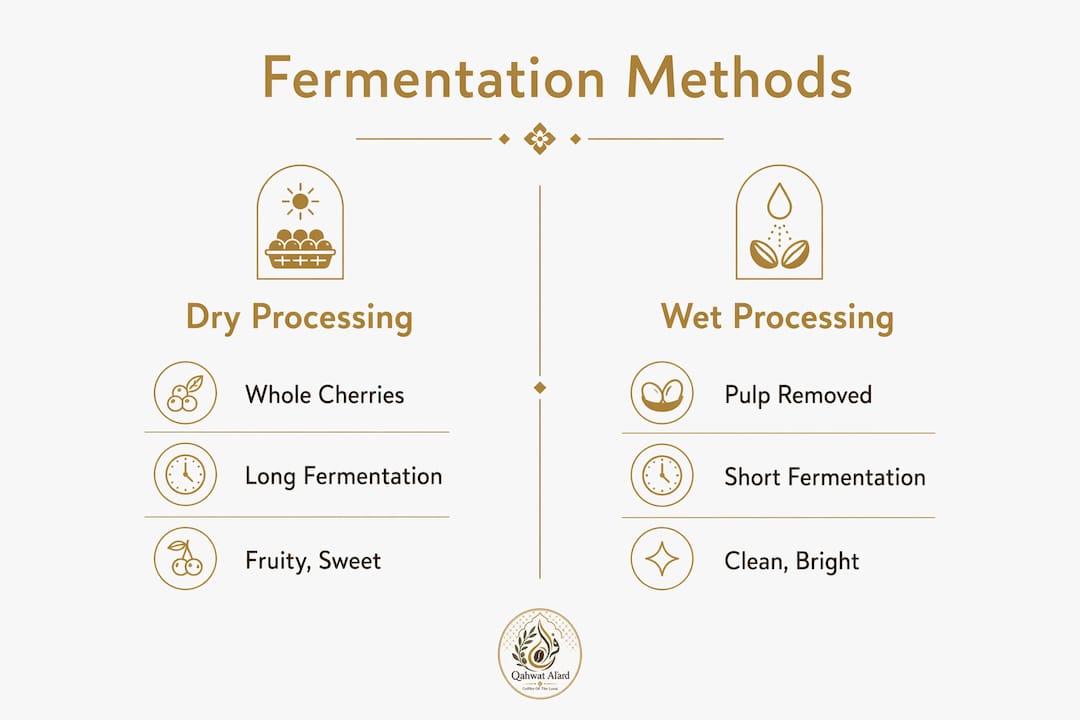
Wet (washed) processing
Pulped beans ferment in water tanks for 12–72 hours, allowing microorganisms to break down the remaining mucilage before washing. This method gives producers the most direct control over fermentation duration and environment. The result is typically a cleaner, brighter cup with pronounced acidity and clarity of origin character.
Key fermentation parameters across methods:
- Duration: 12 hours to several weeks depending on method and ambient conditions
- Temperature: Lower temperatures (below 20°C) slow microbial activity and extend fermentation; higher temperatures accelerate it and increase spoilage risk
- Oxygen exposure: Aerobic fermentation favors acetic acid bacteria; anaerobic conditions shift the balance toward lactic acid bacteria and yeast-driven ester production
- pH: Falling pH signals active fermentation; monitoring it prevents over-fermentation
| Processing Method | Fermentation Site | Typical Duration | Primary Flavor Outcomes |
|---|---|---|---|
| Dry (natural) | Inside whole cherry | 2–6 weeks | Fruity, wine-like, heavy body |
| Semidry (honey) | Mucilage on bean | 1–3 weeks | Stone fruit, sweetness, medium body |
| Wet (washed) | Water tank | 12–72 hours | Bright acidity, clean, floral |
| Anaerobic natural | Sealed tank, whole cherry | 48+ hours | Intense fruit, complex, wine |
| Anaerobic washed | Sealed tank, pulped | 48+ hours | Tropical fruit, clarity, structured acidity |
Regional practices add another layer of variation. Ethiopian natural coffees fermented at high altitude (above 1,800 meters) develop differently than Brazilian naturals processed at lower elevations, because ambient temperature, humidity, and native microbial populations all shift with geography. A Yemeni coffee dried on rooftops in arid heat follows a fermentation trajectory that no amount of controlled processing can replicate elsewhere. For a deeper look at how origin shapes these outcomes, coffee terroir and flavor explains the connection between geography and sensory profile.
What microbes actually do inside a fermenting coffee
The microbial community driving coffee fermentation is not a single organism. It is a succession of yeasts, lactic acid bacteria (LAB), acetic acid bacteria (AAB), and various fungi, each dominating at different stages as pH drops and substrate availability shifts.
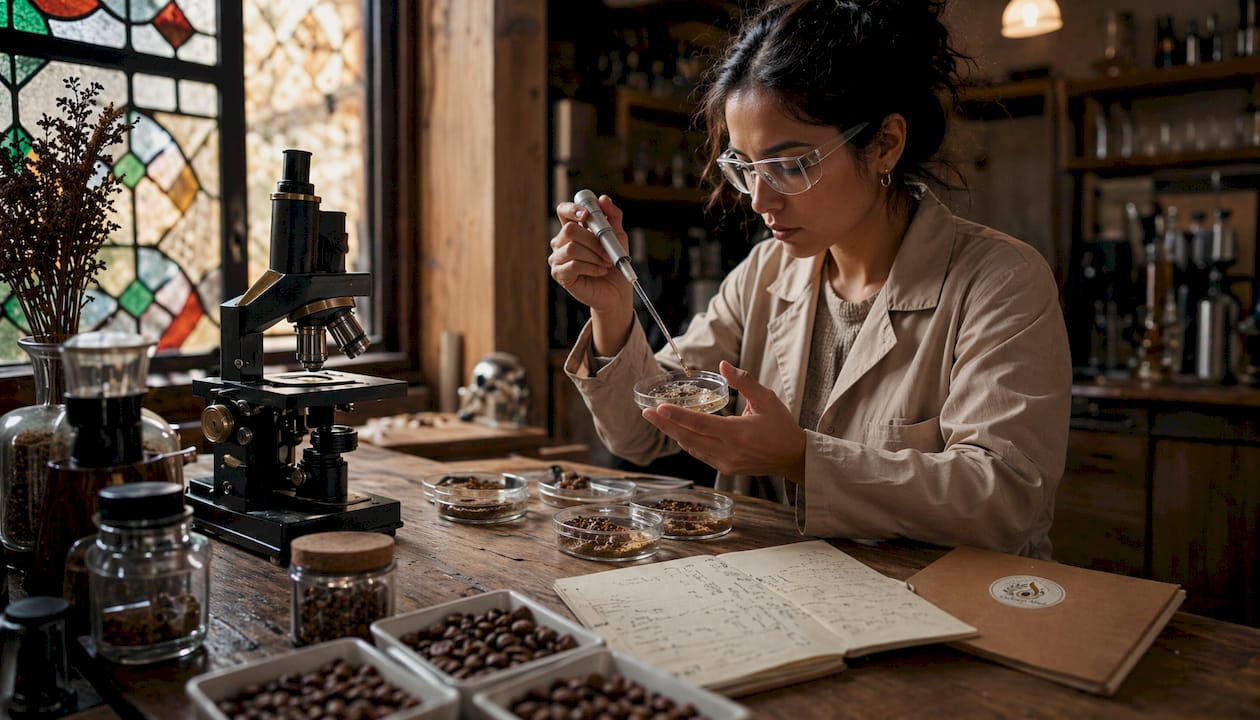
Genera like Saccharomyces, Pichia, Lactobacillus, and Leuconostoc are consistently identified across fermentation environments worldwide. Their enzymatic activity degrades mucilage polysaccharides and simultaneously metabolizes precursors into esters, ketones, and alcohols that become the aromatic backbone of the roasted bean. Saccharomyces cerevisiae produces ethanol and CO₂ while generating fruity esters; Lactobacillus species drive lactic acid accumulation, which contributes to perceived sweetness and clean acidity; Pichia species contribute to floral and fruity volatile production.
Key microbial genera and their flavor contributions:
- Saccharomyces: ethanol, fruity esters, CO₂
- Pichia: floral and fruity volatile compounds
- Lactobacillus: lactic acid, clean acidity, sweetness perception
- Leuconostoc: diacetyl (buttery notes), CO₂
- Acetobacter / Gluconobacter: acetic acid (vinegar notes when dominant)
Microbial succession follows a predictable arc. Early fermentation is dominated by yeasts and heterofermentative LAB that tolerate higher pH and oxygen. As pH drops and oxygen is consumed, homofermentative LAB take over, producing lactic acid almost exclusively. If fermentation continues past this point without intervention, AAB can proliferate and push acetic acid concentrations high enough to produce off-flavors.
Metagenomic analysis has revealed that the fermentation slurry hosts a richer and more diverse microbial ecosystem than the bean surface itself. This means the liquid environment surrounding the beans during wet fermentation is where most of the biochemical action happens, and managing that environment — its pH, temperature, and oxygen level — directly controls which organisms dominate and which flavor compounds accumulate.
- Stage 1 (0–12 hours): Yeasts and heterofermentative LAB dominate; pH begins to drop from ~6.5 toward 5.0; initial ester and alcohol production begins.
- Stage 2 (12–48 hours): Homofermentative LAB take over; lactic acid accumulates; mucilage softens and detaches; fruity and floral volatile concentrations peak.
- Stage 3 (48+ hours): If not halted, AAB and spoilage organisms can proliferate; acetic acid rises; off-flavor risk increases sharply.
Terroir shapes which organisms are present at the start. A farm in Huila, Colombia carries a different native microbiota than one in Sidama, Ethiopia, which is part of why origin shapes flavor complexity in ways that processing alone cannot fully replicate.
How fermentation rewires coffee’s biochemistry to build flavor
The flavor of a roasted coffee is not created at the roaster. It is assembled during fermentation and then revealed by heat. This distinction matters for anyone trying to understand why two coffees roasted identically can taste so different.
During fermentation, microorganisms convert mucilage sugars (primarily sucrose, glucose, and fructose) and free amino acids into a cascade of metabolites. Organic acids — lactic, acetic, citric, and malic — accumulate and lower pH, which affects both the perceived acidity of the cup and the stability of flavor precursors during roasting. Esters form from the reaction of alcohols with organic acids, contributing fruity and floral notes. Aldehydes and ketones add complexity in the caramel and nutty register.
Fermented coffee contains higher concentrations of volatile compounds like 2-methylpyrazine and furfuryl acetate, directly linked to stronger fruity and caramel flavor profiles in the cup. These compounds are not generated by roasting alone; they require fermentation-derived precursors to form at meaningful concentrations. A coffee that skips or shortchanges fermentation arrives at the roaster with a thinner precursor pool, and no roast profile can compensate for that deficit.
| Compound Class | Examples | Sensory Contribution |
|---|---|---|
| Organic acids | Lactic acid, acetic acid, citric acid | Brightness, balance, perceived sweetness |
| Esters | Ethyl acetate, furfuryl acetate | Fruity, floral, wine-like |
| Alcohols | Ethanol, isoamyl alcohol | Body, mouthfeel, fruity |
| Ketones | Diacetyl, acetoin | Buttery, caramel |
| Pyrazines | 2-methylpyrazine | Nutty, roasted, caramel |
| Aldehydes | Furfural, acetaldehyde | Green, fruity, caramel |
Fermentation also modifies the bean’s chlorogenic acid content and protein structure, which influences how Maillard reactions proceed during roasting. A well-fermented bean enters the roaster with amino acids and reducing sugars in configurations that produce more complex Maillard products, deepening the caramel and chocolate notes that specialty roasters work to develop.
The terroir principle applies here with precision: fermentation modifies flavor precursors derived from the bean’s genetics and growing environment, serving as a tool to unlock the bean’s potential rather than creating new flavors independently. A low-altitude Robusta and a high-altitude Ethiopian Heirloom carry fundamentally different precursor profiles. Fermentation amplifies what is already there. It does not manufacture what is not.
Sensory improvements from fermentation are measurable. Both spontaneous and starter culture fermentations increase SCA scores by 0.6 to 1.4 points, a range that in practical terms separates a commercial-grade coffee from a specialty-grade one. For context on how those scores translate to cup quality, cup score coffee explained breaks down the SCA framework in detail.
Modern controlled fermentation techniques that producers use now
Spontaneous fermentation has built the specialty coffee industry, but it also produces inconsistency. The same farm, the same variety, the same harvest month can yield cups that score 87 one week and 83 the next, purely because the native microbial community shifted. Controlled fermentation addresses this directly.
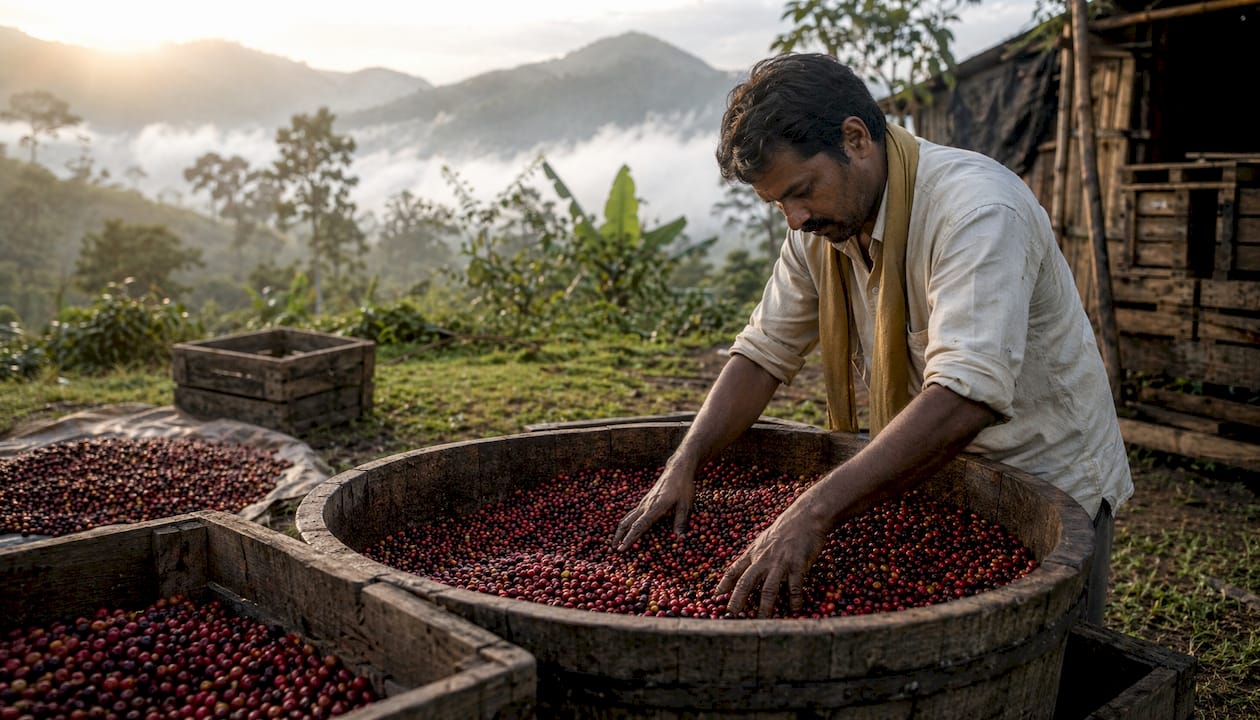
Pro Tip: When evaluating a controlled-fermentation coffee, ask the producer for their starter culture species and inoculation rate. A producer who can answer that question precisely is managing fermentation at a level that correlates with reproducible cup quality.
The core of controlled fermentation is inoculating the fermentation tank with a defined starter culture, typically selected strains of Saccharomyces cerevisiae, Lactobacillus plantarum, or Torulaspora delbrueckii, at a concentration high enough to outcompete native organisms from the start. Selecting specific microbial strains allows producers to design flavor profiles that can be standardized for targeted consumer preferences, moving beyond the variable outcomes of spontaneous fermentation.
- Starter culture inoculation: Selected yeast or LAB strains are added to the fermentation tank at a defined concentration, typically within the first few hours after pulping.
- Environmental control: Temperature is maintained within a target range (often 18–22°C for fruity profiles); pH is monitored every 4–6 hours; oxygen is managed through tank sealing or active aeration.
- Duration management: Fermentation is halted at a predetermined endpoint, usually defined by pH (target: 3.8–4.2) or sensory evaluation of the mucilage.
- Washing and drying: Beans are washed to remove residual metabolites that could cause off-flavors, then dried under controlled conditions to lock in the developed profile.
Semicarbonic maceration, borrowed from wine production, represents one of the most discussed industrial adaptations in specialty coffee. Whole cherries are placed in CO₂-saturated sealed tanks, which suppresses aerobic organisms and drives intracellular fermentation within the fruit. The result is typically an intense, clean fruit profile with wine-like complexity. Long-duration fermentations of 121 hours or more combined with semicarbonic aspersion systems produce the most significant sensory improvements according to meta-analysis data, though they also require the most precise environmental management to avoid spoilage.
| Fermentation Approach | Control Level | Flavor Outcome | Main Risk |
|---|---|---|---|
| Spontaneous (traditional) | Low | Variable, terroir-expressive | Inconsistency, off-flavors |
| Starter culture (selected strains) | High | Targeted fruity/floral profiles | Starter failure, cost |
| Anaerobic natural | Medium-high | Intense fruit, wine-like | Over-fermentation |
| Semicarbonic maceration | High | Clean fruit, complexity | Equipment cost, precision required |
| Bioreactor (industrial) | Very high | Standardized, reproducible | Loss of terroir expression |
The challenge with industrialization is not technical. It is philosophical. Controlled fermentation can produce a coffee that scores consistently at 87 points, but it may also flatten the terroir-driven variability that makes a single-origin coffee from a specific farm worth seeking out. The best producers treat controlled fermentation as a tool for floor-raising, not ceiling-capping: they use it to eliminate defects while preserving the origin character that defines their coffee’s identity.
Controlled fermentation prevents off-flavors and unlocks fruity, floral notes by using defined starter cultures, but the art lies in knowing when to let the native microbiota express itself and when to intervene.
Qahwatalard’s approach to fermentation and flavor optimization
At Qahwatalard, the sourcing philosophy starts with fermentation. Every single-origin coffee in the catalog is evaluated not just on variety and altitude, but on the fermentation protocol used at origin, because that protocol is where flavor is built or broken.
The practical implications of this view show up in how Qahwatalard evaluates producers. A farm managing fermentation with pH monitoring, temperature logs, and defined endpoints demonstrates a level of process control that correlates directly with cup consistency. A farm relying entirely on ambient conditions and time-based endpoints introduces variability that even exceptional roasting cannot fully resolve.
Three fermentation environment factors that Qahwatalard prioritizes in producer evaluation:
- Slurry pH management: The fermentation slurry hosts a richer microbial ecosystem than the bean surface, and managing slurry pH is critical for directing microbial succession toward desirable flavor outcomes.
- Oxygen control: Aerobic conditions favor acetic acid bacteria, which at high concentrations produce vinegary off-notes. Anaerobic or semi-anaerobic fermentation shifts production toward lactic acid and fruity esters.
- Duration discipline: Off-flavors in coffee often stem from uncontrolled fermentation dominated by acetic acid-producing bacteria; proper control directs production toward desirable esters and alcohols instead.
Combining traditional knowledge with scientific monitoring is not a contradiction. The most compelling coffees Qahwatalard sources come from producers who understand their native microbiota well enough to work with it intentionally, adjusting tank management based on seasonal shifts in ambient temperature and microbial populations rather than applying a fixed protocol year-round.
Pro Tip: If you want to taste the direct impact of fermentation on flavor, try coffees from the same origin processed by different methods side by side. A washed and a natural from the same Ethiopian farm, same harvest, will demonstrate exactly what fermentation duration and oxygen exposure do to the cup.
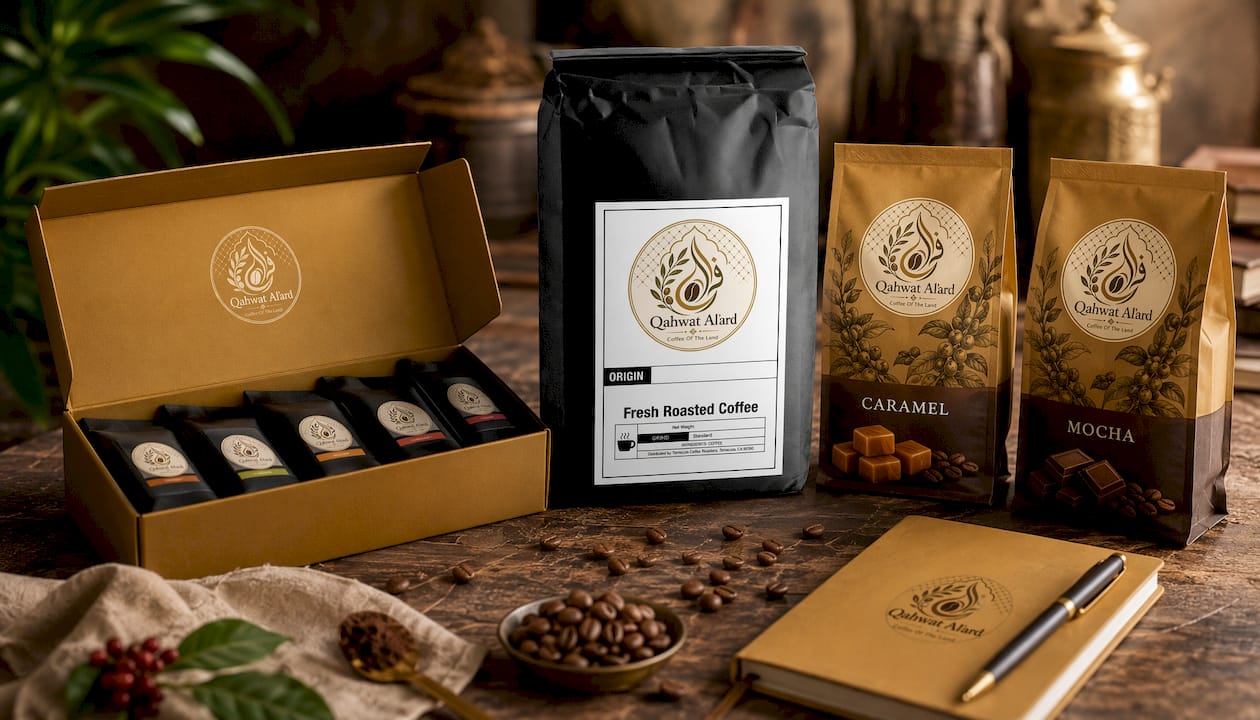
For coffee enthusiasts who want to explore fermentation-driven flavor profiles directly, the flavored coffees sample pack from Qahwatalard offers a curated range of coffees processed using different fermentation methods, making the sensory differences tangible rather than theoretical. The caramel coffee in the lineup demonstrates how fermentation-derived precursors like furfuryl acetate translate into caramel notes in the cup, and the mocha blend shows how controlled fermentation can build the chocolate-adjacent complexity that defines that profile.
Key Takeaways
Fermentation is the biochemical stage that converts mucilage and flavor precursors into the organic acids, esters, and volatile compounds that define specialty coffee’s sensory quality.
| Point | Details |
|---|---|
| SCA score impact | Both spontaneous and starter culture fermentations increase SCA scores by 0.6 to 1.4 points. |
| Microbial succession | Yeasts dominate early fermentation; lactic acid bacteria take over as pH drops; acetic acid bacteria signal over-fermentation risk. |
| Key volatile compounds | 2-methylpyrazine and furfuryl acetate, enriched by fermentation, directly contribute to fruity and caramel flavor profiles. |
| Controlled vs. spontaneous | Starter culture fermentation produces targeted, reproducible flavor profiles; spontaneous fermentation expresses terroir but introduces inconsistency. |
| Terroir and fermentation | Fermentation unlocks the flavor potential set by genetics and growing environment; it does not create new flavors independently. |
FAQ
What is the role of fermentation in coffee processing?
Fermentation breaks down the mucilage surrounding the coffee bean through microbial and enzymatic activity, converting sugars and amino acids into organic acids, esters, and volatile compounds that become the aromatic and flavor foundation of the roasted cup.
How does fermentation affect coffee flavor?
Fermentation enriches the volatile compound profile of the bean, producing fruity, floral, and caramel notes through compounds like 2-methylpyrazine and furfuryl acetate, while also modulating acidity through lactic and acetic acid accumulation.
What is the 15-15-15 rule for coffee?
The 15-15-15 rule is not a recognized standard in coffee fermentation science or specialty coffee processing. It does not appear in current SCA protocols or peer-reviewed fermentation research; definitions of this phrase vary widely across informal sources.
Is fermented coffee better for you?
Research identifies various microbes including Lactobacillus, Saccharomyces, and Pichia in coffee fermentation that correlate with production of health-related active compounds, though the health implications of consuming fermented versus unfermented coffee require further clinical study.
Why does fermentation method matter for specialty coffee scores?
Fermentation method directly determines which microbial communities are active and for how long, shaping the precursor compounds available during roasting. Both spontaneous and starter culture fermentations increase SCA scores by 0.6 to 1.4 points compared to minimal or uncontrolled fermentation.


