


TL;DR:
- Peruvian coffee offers a clean, layered flavor profile that depends on precise brewing methods and fresh, light-medium roasted beans. Selecting high-altitude regional beans and controlling variables like grind size, water temperature, and ratio unlocks their unique characteristics, whether for pour-over, French press, or cold brew. Consistent measurement and proper storage significantly improve the quality and complexity of your home-brewed Peruvian coffee.
Peruvian coffee brewing step by step is a precision practice that balances grind size, water temperature, coffee-to-water ratio, and extraction time to unlock the bean’s clean, layered character. Peru produces specialty-grade arabica from high-altitude regions like Cajamarca, Chanchamayo, and Cusco, each delivering a distinct cup. The right method matters as much as the bean itself. This guide walks you through every stage of the process, from selecting your roast to pulling a flawless pour-over, so you can brew Peruvian coffee at home with the confidence of someone who has done it a hundred times.
What beans and roast levels to choose for authentic Peruvian coffee
The bean you choose sets the ceiling for everything that follows. Peru’s three flagship growing regions each carry a recognizable flavor identity:
- Cajamarca produces beans with bright acidity, stone fruit notes, and a clean finish. It sits at elevations above 1,800 meters, which slows cherry development and concentrates sugars.
- Chanchamayo delivers a more balanced cup with mild acidity, chocolate undertones, and a medium body. It is the most widely exported Peruvian origin and a reliable starting point for home brewers.
- Cusco offers earthy, floral notes with a silky texture. Beans from this region tend to reward slower brewing methods like pour-over or Chemex.
Roast level is where most home brewers make their first mistake. Light-medium roasts (Agtron 55-65) best preserve the clean, acidic, and balanced profile that defines Peruvian specialty coffee. Dark roasts mask the origin character entirely, turning a nuanced Cajamarca bean into something that tastes like any other dark roast on the shelf.
Buy whole beans roasted within the past two to four weeks. Store them in an airtight, opaque container away from heat and light. Never freeze beans you plan to use within a month. Grind only what you need immediately before brewing. These four habits alone will improve your cup more than any equipment upgrade.
Pro Tip: Look for beans carrying organic or fair trade certifications, which signal both quality control and traceability. Certified Q Graders have been trained in sensory analysis across Peru’s coffee regions, and their involvement in the supply chain is a reliable marker of authenticity.
What equipment do you need before you start?
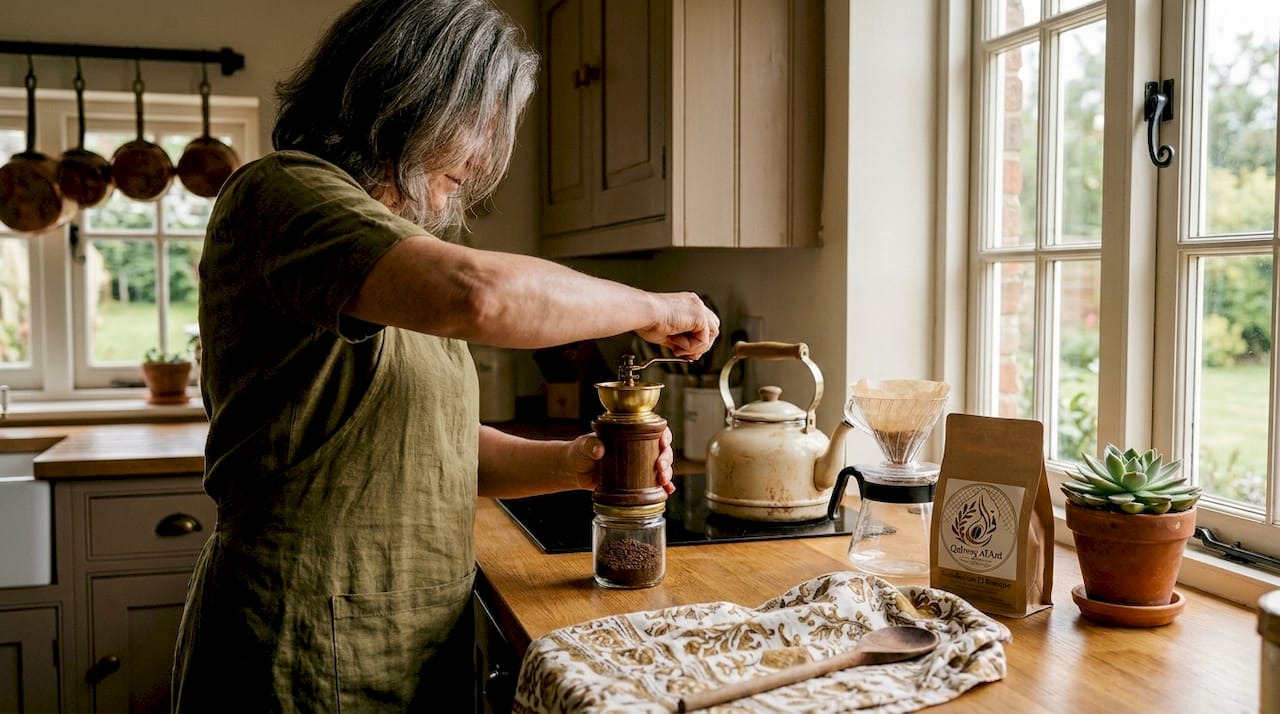
Brewing Peruvian coffee well does not require an expensive setup, but it does require the right tools. The following table covers what you need and why each item earns its place on your counter.
| Tool | Purpose | Recommended option |
|---|---|---|
| Burr grinder | Produces uniform particle size for even extraction | Baratza Encore, Comandante C40 |
| Kitchen scale | Measures coffee and water by weight, not volume | Any 0.1g-precision digital scale |
| Gooseneck kettle | Controls pour rate and direction during pour-over | Fellow Stagg EKG |
| Thermometer or smart kettle | Confirms water temperature before brewing | Built into Fellow Stagg EKG |
| Brewing device | Determines flavor profile and body | Hario V60, Chemex, French press, AeroPress |
Water quality is not optional. Use filtered water or spring water with a mineral content between 75 and 150 ppm. Distilled water produces a flat, lifeless cup. Tap water with heavy chlorine kills delicate floral and fruit notes before they reach your palate.
Water temperature should sit between 195 and 205°F for proper extraction. If you do not own a thermometer, bring water to a full boil and let it rest for 30 to 60 seconds. That window reliably lands you in the correct range.
Before you pour a single drop of coffee, rinse your paper filter with hot water. This removes the papery taste that would otherwise bleed into your cup and preheats your brewing vessel at the same time. Discard the rinse water, then add your grounds.
Step-by-step guide to brewing Peruvian coffee with pour-over
Pour-over is the best Peruvian coffee brewing method for showcasing clarity and sweetness. The Hario V60 and Chemex both work well. Follow these steps precisely.
- Weigh your coffee. Use 18 to 20 grams of whole beans per 300 grams of water. This 1:16 coffee-to-water ratio is the standard starting point for Peruvian pour-over.
- Grind to medium-fine. The texture should resemble coarse table salt. A burr grinder set to the middle of its range is correct. Blade grinders produce inconsistent particles that cause uneven extraction.
- Rinse the filter. Place your V60 or Chemex filter in the device, pour hot water through it, and discard the rinse water. This step takes 15 seconds and noticeably improves the final taste.
- Add grounds and create a well. Pour your ground coffee into the filter and gently shake the device to level the bed. Do not tamp or press the grounds down. Tamping compacts grounds too tightly and causes a bitter, over-extracted cup.
- Bloom the grounds. Pour 40 to 50 grams of water (roughly twice the weight of your coffee) in slow circles over the entire bed. Wait 30 to 45 seconds. You will see the grounds bubble and rise. This releases trapped CO2 and primes the bed for even extraction.
- Pour in stages. Add water in three or four controlled pours, each time moving in slow concentric circles from the center outward. Keep the water level steady. Never pour directly onto the filter walls.
- Finish and time your brew. Total brew time should land between 3 and 4 minutes from the first pour. If it runs faster, your grind is too coarse. If it runs longer, grind finer.
Pro Tip: Pour-over brewing accentuates Peruvian coffee’s clarity and sweetness at a water temperature between 196 and 201°F. Staying in that narrow band rather than using boiling water makes a measurable difference in how the cup tastes.
The target extraction yield is 20 to 22% for Peruvian beans. Deviations in either direction alter the acidity and body balance noticeably. If your cup tastes sour, you are under-extracted. If it tastes harsh and dry, you are over-extracted. Adjust grind size first before changing any other variable.
How do French press, AeroPress, and cold brew compare for Peruvian coffee?
Each brewing method pulls a different character from the same Peruvian bean. Understanding those differences lets you choose the right technique for the flavor you want.
French press highlights body and nutty notes because the metal mesh filter retains the natural oils that paper filters strip away. Use a coarser grind, water at 93°C (199°F), and steep for exactly four minutes before pressing slowly. The result is a heavier, richer cup than pour-over, with Chanchamayo’s chocolate notes coming through clearly.
AeroPress suits brewers who want to highlight fruity and bright notes with a shorter time commitment. Use a fine-to-medium grind, water at around 85 to 90°C, and brew for 90 seconds to two minutes using the inverted method. The pressure-assisted extraction produces a concentrated, syrupy cup that works well diluted with a small amount of hot water.
Cold brew of Peruvian coffee reveals a smooth, low-acid profile with caramel and floral notes through a 16 to 18 hour immersion in cold water. Use a coarse grind and a 1:8 coffee-to-water ratio. Steep in the refrigerator, then strain through a fine mesh or paper filter. Cold brew rewards patience and is particularly well suited to Cusco beans.
| Method | Grind size | Water temp | Brew time | Flavor emphasis |
|---|---|---|---|---|
| Pour-over (V60/Chemex) | Medium-fine | 196-201°F | 3 to 4 minutes | Clarity, sweetness, acidity |
| French press | Coarse | 199°F | 4 minutes | Body, nuttiness, chocolate |
| AeroPress | Fine to medium | 185-194°F | 90 seconds to 2 minutes | Fruit, brightness, concentration |
| Cold brew | Coarse | Cold (refrigerator) | 16 to 18 hours | Caramel, floral, low acid |
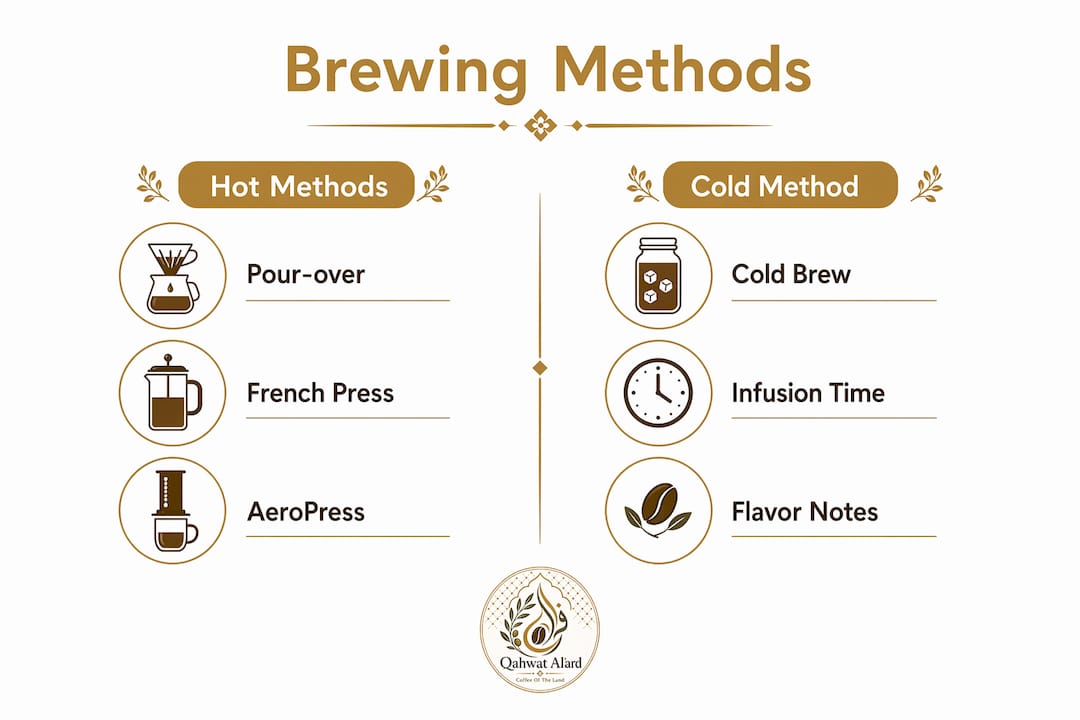
The versatility of Peruvian coffee across these methods is one of its defining strengths. Each technique unlocks a subtly different flavor emphasis, which makes experimenting with the same bag of beans genuinely rewarding.
Troubleshooting common problems in your Peruvian coffee brewing process
Most brewing failures trace back to one of three variables: grind size, water temperature, or ratio. Here is how to diagnose and fix each one.
- Bitter, harsh cup: Your grind is too fine, your water is too hot, or your brew time ran long. Coarsen the grind by one or two steps on your burr grinder and check your temperature. Water above 205°F scorches Peruvian beans and destroys the clean acidity that makes them worth buying.
- Sour, thin cup: Under-extraction. Your grind is too coarse, your water is too cool, or you poured too fast. Slow your pour rate and tighten the grind slightly.
- Flat, lifeless cup: Stale beans or poor water quality. Check your roast date. Beans older than six weeks lose volatile aromatics rapidly. Switch to filtered water if you have been using tap.
- Uneven extraction: Inconsistent grind from a blade grinder or uneven pouring technique. A burr grinder solves the first problem. Practice pouring in slow, steady circles to solve the second.
Pro Tip: After brewing, taste your coffee at three temperatures: immediately after pouring, after five minutes, and after ten minutes. Peruvian coffee often reveals its best flavor complexity as it cools slightly. If the cup improves as it cools, your extraction is close to correct.
Storage is the silent variable most home brewers ignore. Beans exposed to oxygen degrade within days of opening the bag. Use a container with a one-way valve, not a mason jar. Keep it at room temperature, away from your stove or any heat source. Buying smaller quantities more frequently beats buying a large bag that sits open for weeks.
Key takeaways
Brewing authentic Peruvian coffee requires precise control over grind size, water temperature, and a 1:16 coffee-to-water ratio, with light-medium roasted beans from regions like Cajamarca or Chanchamayo delivering the cleanest results.
| Point | Details |
|---|---|
| Choose the right roast | Light-medium roasts (Agtron 55-65) preserve Peruvian coffee’s clean, balanced flavor profile. |
| Use a 1:16 ratio | Measure 18-20g of coffee to 300g of water for consistent pour-over extraction. |
| Control water temperature | Brew between 195 and 205°F to avoid under or over-extraction. |
| Never tamp your grounds | Level grounds with a gentle shake to prevent bitterness from over-compaction. |
| Match method to flavor goal | Pour-over for clarity, French press for body, cold brew for low-acid caramel notes. |
Why I stopped guessing and started measuring
The first time I brewed a Cajamarca single-origin at home, I treated it like any other bag of coffee. I eyeballed the grounds, used boiling water straight off the stove, and poured without timing anything. The result was drinkable but forgettable, which felt like a waste of a bean that had traveled from 1,900 meters above sea level to my kitchen.
What changed everything was committing to a scale and a thermometer for two weeks straight. Not because I wanted to be precious about coffee, but because I wanted to understand what the bean was actually capable of. The difference between water at 212°F and water at 200°F in a pour-over is not subtle. The difference between a 3-minute brew and a 4-minute brew is not subtle either. Once I stopped guessing, the cup I had been chasing appeared.
My honest opinion: most home brewers underestimate how much the bloom step matters. Skipping it is the single most common reason a pour-over tastes flat. Peruvian beans, especially freshly roasted ones, release a significant amount of CO2 during the bloom. That gas, if not released first, creates uneven channels in the grounds and disrupts extraction. Thirty seconds of patience at the start of the brew pays off in every sip.
Experiment with your origin. A Chanchamayo bean brewed in a French press and a Cusco bean brewed cold are not the same drink. They are not even close. That range is what makes Peruvian coffee worth learning properly.
— Anthony-Yasin
Start brewing with the right Peruvian coffee
If you are ready to put these steps into practice, the bean you start with matters as much as the technique.
Qahwatalard sources single-origin Peruvian coffee with full traceability, so you know exactly which region and farm your beans come from. The Peru coffee pods are calibrated for consistent extraction across multiple brew methods, making them a practical starting point whether you are using a pour-over, AeroPress, or French press. For home brewers who want to explore beyond Peru, the single-origin collection covers a range of high-altitude origins with the same commitment to freshness and quality. Every bag ships within days of roasting.
FAQ
What is the ideal coffee-to-water ratio for Peruvian coffee?
Use 18 to 20 grams of coffee per 300 grams of water, which equals a 1:16 ratio. This produces a balanced extraction that highlights Peruvian coffee’s clean acidity and sweetness without over-concentrating the cup.
Which brewing method works best for Peruvian coffee?
Pour-over with a Hario V60 or Chemex is the best method for showcasing Peruvian coffee’s clarity and fruit notes. French press works better if you prefer a heavier body with chocolate and nutty undertones.
What water temperature should I use for brewing Peruvian coffee?
Brew between 195 and 205°F (90 to 96°C). If you do not have a thermometer, boil water and let it rest for 30 to 60 seconds before pouring.
Why does my Peruvian coffee taste bitter?
Bitterness usually signals over-extraction caused by a grind that is too fine, water that is too hot, or a brew time that ran too long. Coarsen your grind by one step and confirm your water temperature is below 205°F.
How should I store Peruvian coffee beans at home?
Keep whole beans in an airtight container with a one-way valve at room temperature, away from heat and light. Grind only what you need immediately before brewing, and use beans within four to six weeks of the roast date for best flavor.


