


TL;DR:
- Oily coffee beans result from natural lipids migrating outward during roasting, indicating roast level. Darker roasts show more surface oil, enhancing flavor but requiring proper storage to prevent rancidity. Proper handling preserves aroma, mouthfeel, and overall coffee quality.
The oily surface on coffee beans is defined as the visible layer of lipids that migrate from inside the bean to its outer shell during roasting. This is not a defect. It is a direct result of heat breaking down the bean’s internal cell structure, forcing natural oils outward. Understanding why coffee beans develop an oily surface tells you everything about roast level, freshness, and what to expect in your cup.
Why do coffee beans get an oily surface?
Coffee beans naturally contain 10–15% lipids stored deep inside the endosperm, the dense inner tissue of the bean. That lipid content is locked in place before roasting. The moment heat is applied, the bean’s cell walls weaken, fracture, and eventually rupture, giving those oils a path to the surface.
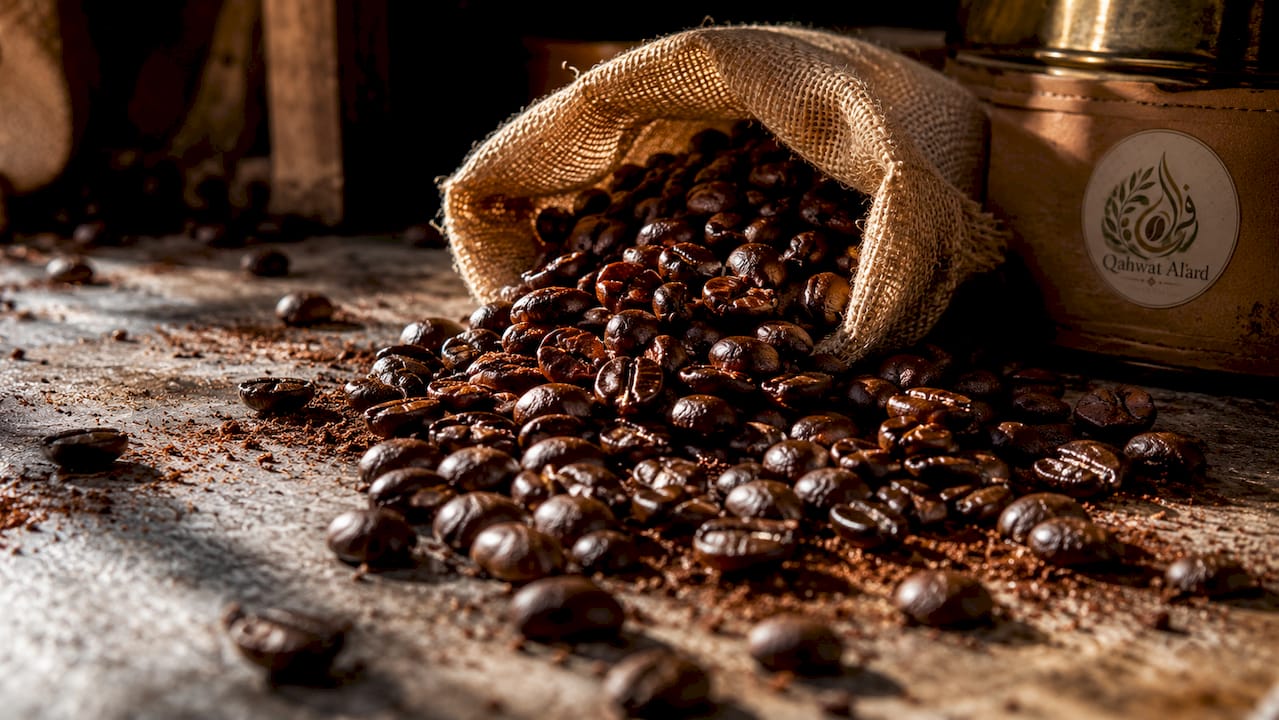
The industry term for this process is lipid migration. As roasting temperature climbs and duration extends, the bean loses moisture rapidly. That moisture loss causes the bean to expand and crack, a stage roasters call “first crack” and “second crack.” Each crack event accelerates the outward movement of oils. By the time a bean reaches a dark roast, its cellular membranes have broken down enough that oils migrate outward visibly, leaving the shiny coat you see in the bag.
The lipids themselves are not a single substance. Coffee oils include linoleic acid, palmitic acid, oleic acid, stearic acid, and diterpenes like cafestol and kahweol. Each plays a different role in flavor and mouthfeel.
| Lipid Component | Approximate Share | Role in Coffee |
|---|---|---|
| Linoleic acid | 40–45% | Primary fatty acid; oxidizes fastest |
| Palmitic acid | 30–35% | Saturated fat; contributes body |
| Oleic acid | ~8% | Monounsaturated; stable, smooth mouthfeel |
| Stearic acid | ~6% | Saturated; minimal flavor impact |
| Diterpenes (cafestol, kahweol) | Trace amounts | Affect cholesterol; carry aromatic compounds |
Pro Tip: If you notice oil on beans within 24 hours of roasting, that is a sign of a very dark roast. Oil appearing days or weeks after roasting on a medium roast may indicate the beans are degassing normally as CO2 pushes oils outward post-roast.
How do roast levels affect coffee bean oiliness?
Roast level is the single biggest factor controlling how much oil appears on the bean’s surface. Light roasts retain oil internally because the cell structure stays largely intact. The bean surface looks dry and matte, but the oils are still there, just locked inside.
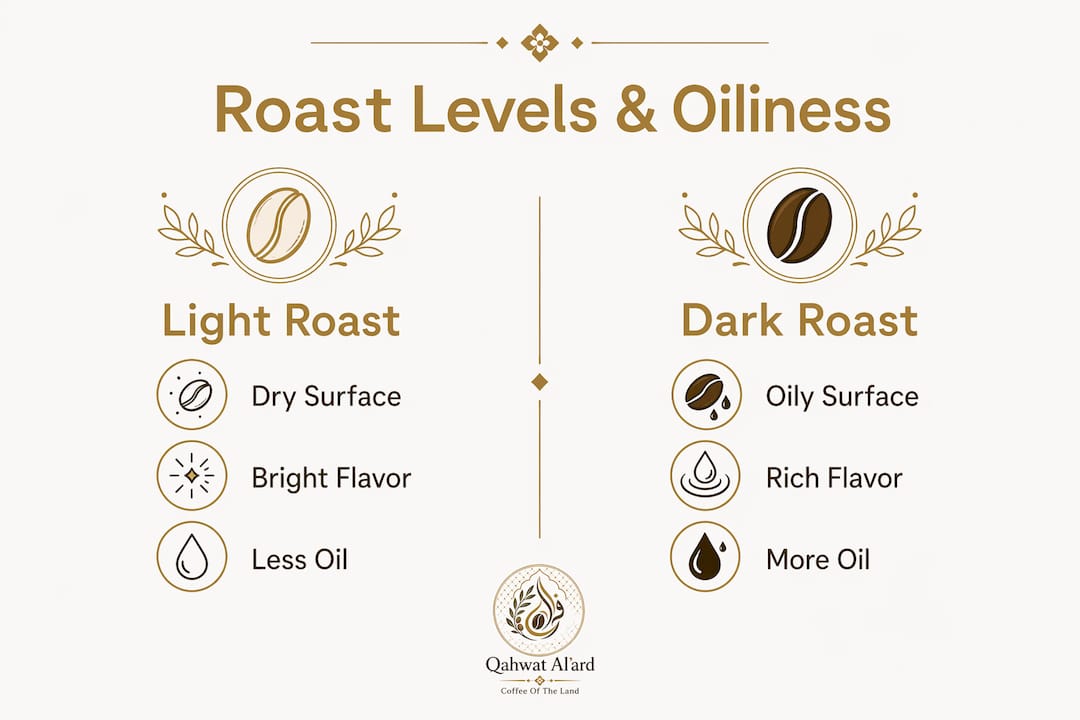
Medium roasts begin to show a faint sheen as the structure loosens slightly. The beans are not dripping with oil, but you may notice a subtle gloss under good lighting. Dark roasts, by contrast, look visibly wet and shiny. Prolonged heat exposure causes full membrane rupture, and the oils coat the entire surface.
| Roast Level | Surface Appearance | Typical Flavor Notes |
|---|---|---|
| Light | Dry, matte | Bright, fruity, floral, high acidity |
| Medium | Slight sheen | Balanced, caramel, nutty, mild acidity |
| Medium-dark | Noticeable gloss | Bittersweet, chocolate, lower acidity |
| Dark | Wet, shiny, oily | Bold, smoky, full body, minimal acidity |
One common misconception is that oily beans are fresher beans. That is not accurate. Oiliness signals roast level, not freshness. A light roast bean can be freshly roasted and look completely dry. A dark roast bean will look oily from the moment it cools. Understanding roast levels and flavor helps you read what you see in the bag correctly.
Pro Tip: Grinding releases oils regardless of roast level. Even a dry-looking light roast will coat your grinder burrs with oil over time. The difference is speed. Dark roast oils appear faster and build up more aggressively.
Is the oily surface on coffee beans good or bad?
The oily surface on coffee beans is both a benefit and a risk, depending on how you handle the beans. On the positive side, surface lipids enhance mouthfeel by coating the palate and act as carriers for volatile aroma compounds. That rich, full-bodied sensation in a well-pulled espresso comes largely from these oils. They are not incidental. They are central to the sensory experience.
The risk is oxidation. Coffee lipids, especially linoleic acid, degrade rapidly when exposed to oxygen, light, and heat. Oxidized oils produce rancid, stale, and flat flavors. This is why a bag of dark roast left open on the counter tastes dull within days. The oils that made the coffee taste rich are the same oils that go bad fastest.
Surface oils also indicate aromatic potential. A shiny bean carries more volatile compounds to the surface, which is why dark roasts often smell intensely aromatic the moment you open the bag. That aroma fades quickly once oxidation begins.
Storage best practices for oily beans:
- Store beans in an opaque, airtight container to block light and oxygen
- Keep the container in a cool, dry location away from heat sources like stoves or direct sunlight
- Avoid the refrigerator unless beans are sealed airtight. Condensation introduces moisture, which accelerates degradation
- Buy in smaller quantities more frequently to reduce the time beans sit exposed
- Proper airtight storage slows oil oxidation and preserves flavor significantly longer than open storage
Pro Tip: Ceramic or stainless steel canisters with one-way CO2 valves are the best storage option for oily dark roast beans. They let gases escape without letting oxygen in.
Practical tips for managing oily coffee beans at home
Oily beans require a bit more attention than dry light roasts, but the payoff in flavor is worth it. These steps keep your beans and equipment in top condition.
- Clean your grinder regularly. Grinding oily dark roasts releases oils that combine with fine coffee particles to create a sticky residue. Burr grinders are especially vulnerable. Run a small amount of uncooked rice or a grinder cleaning tablet through the burrs weekly if you grind dark roasts daily.
- Grind only what you need. Pre-ground oily coffee goes stale faster than whole beans because grinding exposes far more surface area to oxygen. Grind immediately before brewing.
- Mix oily and dry beans strategically. Blending a dark roast with a medium roast reduces overall oiliness while preserving body and complexity. This also extends the life of your grinder between cleanings.
- Inspect beans before buying. A light, even sheen on dark roast beans is normal. Beans that look excessively wet, smell sour, or feel tacky may have oxidized oils. That is a sign of poor storage or old stock, not a fresh roast.
- Use a dedicated grinder for dark roasts. If you regularly switch between light and dark roasts, oil residue from dark beans can contaminate the flavor of lighter, more delicate roasts. A second grinder eliminates this problem entirely.
Understanding bean density and roasting also helps you predict how aggressively a bean will release oil during and after roasting.
How does coffee origin and variety affect oil content?
Coffee origin and variety influence lipid content and therefore how much oil appears on the surface after roasting. This is a less discussed but genuinely important factor for coffee enthusiasts who care about what is in their cup.
Arabica beans generally carry slightly higher lipid content than Robusta beans. That difference contributes to Arabica’s reputation for smoother, more complex flavor. Robusta’s lower oil content and higher caffeine produce a harsher, more bitter profile. When you roast both to the same dark level, the Arabica will often look shinier because it has more oil to release.
Origin also matters through the concept of terroir, the combination of soil, altitude, climate, and processing method that shapes a bean’s physical structure. Beans grown at high altitude tend to be denser, with tighter cell walls. That density can slow oil migration slightly, even at dark roast levels. Beans from lower altitudes or with looser cell structures may release oils more readily.
Key origin-related factors that affect oil expression:
- Altitude: Higher altitude beans are denser and may show less surface oil at equivalent roast levels
- Processing method: Washed (wet-processed) beans tend to have cleaner oil expression; natural (dry-processed) beans can carry more lipid-bound flavor compounds
- Variety: Arabica subspecies like Bourbon, Typica, and Gesha each have slightly different lipid profiles that affect flavor complexity and surface sheen
- Soil composition: Mineral-rich volcanic soils, common in Ethiopia and Guatemala, influence the fatty acid profile of the bean
These variables explain why two bags labeled “dark roast” can look and taste dramatically different. The origin shapes the oil, and the oil shapes the cup.
Key Takeaways
The oily surface on coffee beans is caused by natural lipids migrating outward during roasting, with roast level, origin, and storage all determining how those oils affect flavor and freshness.
| Point | Details |
|---|---|
| Oil migration is natural | Heat fractures bean cell walls, pushing internal lipids to the surface during roasting. |
| Roast level controls visibility | Dark roasts show heavy surface oil; light roasts retain oil internally and look dry. |
| Oils improve and risk flavor | Surface lipids enhance mouthfeel and aroma but oxidize quickly without proper storage. |
| Storage is critical | Opaque, airtight containers at cool temperatures slow oxidation and preserve flavor. |
| Origin shapes oil content | Arabica, altitude, and processing method all influence how much oil a bean releases. |
Oily beans taught me more about coffee than any book
I used to think oily beans were a sign of a sloppy roaster. The logic seemed obvious: a dry bean looked clean and controlled, while a shiny bean looked like something had gone wrong. I was completely mistaken.
The shift happened when I started paying attention to what was actually in my cup rather than what the beans looked like. The darkest, oiliest beans I had ever seen produced some of the most satisfying espresso I had tasted. That full-body coating on the palate, the lingering aroma, the way the crema held together. All of it traced back to those surface lipids.
What I have learned from years of working with different roast levels is that oily beans demand more respect, not less. They require cleaner grinders, better storage, and faster consumption. Neglect any one of those and the oils that should be your greatest asset become your biggest problem. Rancid oil is one of the worst flavors in coffee, and it sneaks up on you if you are not paying attention.
The most common mistake I see is people storing dark roast beans in clear glass jars on the counter. It looks great. It destroys the coffee within a week. Opaque and airtight is the only rule that matters for oily beans.
Embrace the oil. Respect it. Store it properly. The reward is a cup that a dry, under-roasted bean simply cannot deliver.
— Anthony-Yasin
Qahwatalard’s dark roast coffees worth trying
If you want to experience what well-managed coffee oils actually taste like in the cup, starting with a quality dark roast is the clearest path.
Qahwatalard sources and roasts with traceability and origin at the center of every product. The Coffee with Mushrooms Dark Roast is a strong starting point for anyone curious about the full-body, oil-rich experience that dark roasting produces. For those who prefer to compare roast levels side by side, the single-origin collection offers beans from distinct growing regions, each with its own lipid profile and flavor character. Both options ship fresh, so the oils you read about here are the oils you will actually taste.
FAQ
What makes coffee beans look oily after roasting?
Roasting heat fractures the bean’s internal cell walls, forcing natural lipids stored in the endosperm to migrate to the surface. Darker roasts show more visible oil because the cell structure breaks down more completely.
Are oily coffee beans fresher than dry ones?
No. Oiliness reflects roast level, not freshness. A freshly roasted light roast looks dry, while a freshly roasted dark roast looks shiny. Both can be equally fresh.
Do oily coffee beans taste different?
Yes. Surface lipids carry aroma compounds and enhance mouthfeel, giving dark roasts a fuller body and richer sensory profile compared to drier light roasts.
Can oily beans damage my grinder?
Oily beans cause faster buildup in burr grinders. Grinding oily dark roasts combines surface oils with fine coffee particles, creating sticky residue that clogs burrs if the grinder is not cleaned regularly.
How should I store oily coffee beans?
Store them in an opaque, airtight container in a cool, dry place. Avoiding light, oxygen, and heat slows oxidation and keeps the oils fresh and flavorful for longer.


