


The shortest gourmet coffee brewing equipment list that actually works: burr grinder, 0.1 g scale, gooseneck kettle with temperature control, pour-over dripper or AeroPress, paper filters, and an airtight storage canister. Those six items, bought in that order, cover the Specialty Coffee Association’s baseline specs: a 1:15 coffee-to-water ratio, brew temperatures of 197.6–204.8°F (92–96°C), and scale resolution to 0.1 g. Water makes up the vast majority of every cup, so filtration belongs on the list too.
- Burr grinder (conical or flat, manual or electric)
- 0.1 g resolution scale with integrated timer
- Gooseneck kettle with temperature control (electric preferred)
- Pour-over dripper (V60, Chemex, or Kalita Wave) or AeroPress
- Paper or metal filters matched to your brewer
- Airtight storage canister for beans
- Filtered water (carbon pitcher minimum)
Qahwat Al’Ard’s starter kit guides walk through practical bundle options if you want a curated path rather than sourcing each piece separately.
Table of Contents
- Why a burr grinder is the most important item on your list
- Does your kettle actually hold the temperature you set?
- Why 0.1 g resolution on your scale is not optional
- Which brewing device actually shows off single-origin character?
- What does gourmet home espresso actually require?
- Water is over 98% of your cup — treat it accordingly
- What accessories and maintenance actually matter
- How do you prioritize purchases on any budget?
- A repeatable pour-over recipe you can use today
- Key Takeaways
- The gear list is only half the story
- What Qahwat Al’Ard carries for home espresso
- Useful sources
- FAQ
Why a burr grinder is the most important item on your list
Buy the grinder first. Grind consistency is the single biggest lever on extraction quality, and no brewer, kettle, or scale can compensate for uneven particle sizes. A blade grinder chops randomly, producing a mix of powder and chunks that extract at different rates, giving you a cup that is simultaneously bitter and sour. A burr grinder crushes beans between two abrasive surfaces, producing particles that are uniform enough to extract evenly.
Conical vs. flat burrs is the first real choice. Conical burrs are forgiving, run quieter, and retain less coffee between sessions, making them the better pick for home use. Flat burrs produce a more uniform particle distribution and tend to emphasize clarity, which is why many specialty shops use them, but they require more dialing-in and generate more static. For light single-origin roasts, either geometry works well once calibrated.
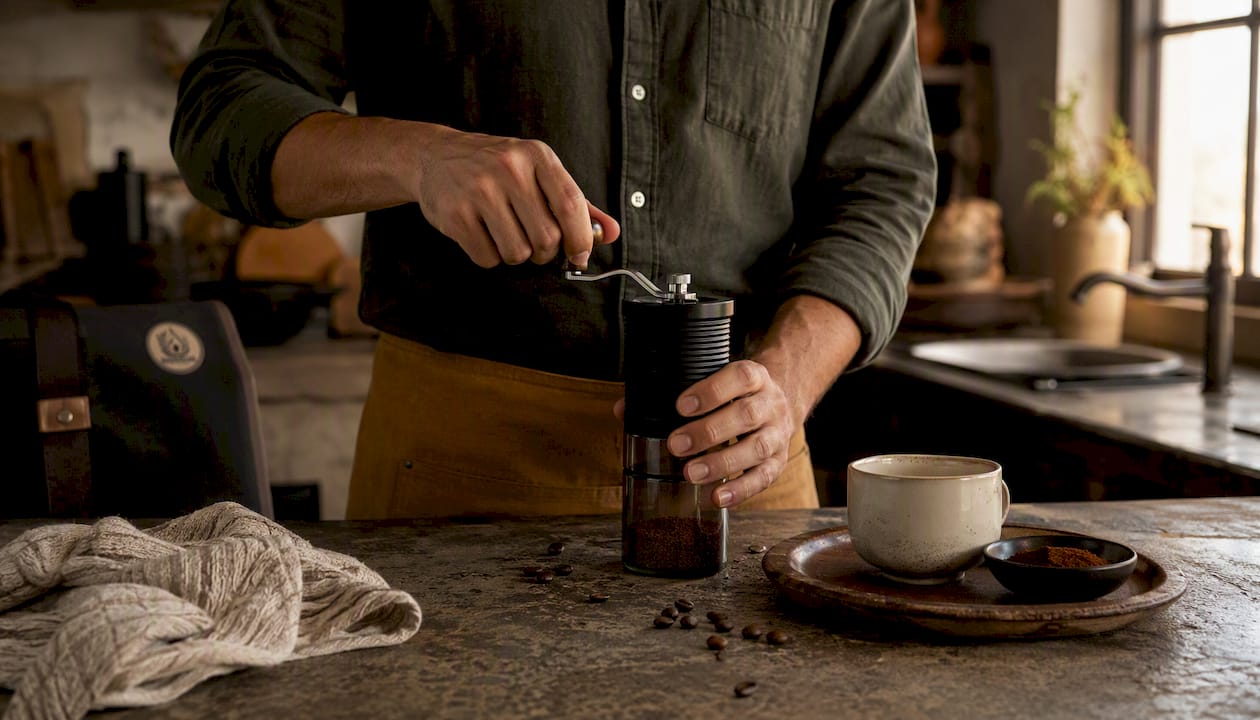
Stepless grind adjustment beats stepped adjustment for single-origin work. Light roasts are dense and often need finer settings than a stepped collar allows between its fixed positions. Stainless steel burrs hold their edge longer than ceramic; ceramic runs cooler, which matters less at home volumes than in a café.
For manual vs. electric: a quality hand grinder like the Comandante C40 or 1Zpresso JX-Pro delivers flat-burr-level consistency at a fraction of the cost of an equivalent electric, and it travels. Electric grinders save time at household volumes. Either way, freshly ground beans retain volatile aromatics that stale pre-ground coffee has already lost, so grinding immediately before brewing matters more than the grinder brand.
Pro Tip: When dialing in a light single-origin roast, start one notch finer than your usual filter setting. Light roasts are denser and need more surface area to extract fully in the same brew time.
Clean burrs monthly with a dry brush or grinder cleaning tablets. Residual oils go rancid and contaminate the next roast’s flavor.
Does your kettle actually hold the temperature you set?
A gooseneck kettle with stable temperature control is essential for repeatable pour-over results. The narrow spout affords precise control over pour rate and direction, which affects water saturation in the coffee bed.
Electric gooseneck kettles typically maintain temperature better than stovetop models, which tend to lose heat during pouring.
What to look for:
- Temperature range covering the typical specialty coffee brewing range with precise increments
- Hold function to maintain temperature for the duration of brewing
- Minimum capacity suitable for typical brew volumes
- Features like splash-resistant base and ergonomic handle
- Gooseneck spout designed for controlled pouring
A basic variable-temperature gooseneck in the $40–$60 range covers everything a home brewer needs. The upgrade to a premium model ($100+) buys you faster heating, a more precise hold, and better build quality. Skip the premium kettle until your grinder is settled.
Water temperature in the low to mid 90s Celsius range is the Specialty Coffee Association’s recommended range for specialty brewing — staying within it preserves the delicate floral and fruity notes that define high-quality single-origin coffees.
Why 0.1 g resolution on your scale is not optional
A scale with only 1 g precision is insufficiently precise for specialty recipes. Even small dosing errors can lead to noticeable imbalances in brew strength, while scales with fine resolution allow for more repeatable results.
Weight-based brewing is the only reliable path to consistency. Volume measurements in tablespoons vary with grind size, roast level, and bean density — the same tablespoon of a light Ethiopian and a dark Guatemalan can differ by over a gram.
Workflow: tare the scale with your dripper and filter in place, dose your coffee by weight, then start the timer the moment water touches the grounds. For espresso, track both dose and yield (the ratio of dry grounds to liquid espresso in the cup).
Pro Tip: Use a scale with a built-in timer rather than a separate stopwatch. One less thing to manage means you can focus on pour rate and technique.
Buying criteria: splash resistance matters because water spills happen. Look for an IP67 rating or at least a silicone-sealed surface. Platform size should accommodate your largest dripper. Budget options from Timemore and Acaia both hit 0.1 g resolution at different price points.
Which brewing device actually shows off single-origin character?
Pour-over drippers highlight clarity and acidity. Immersion methods add body. AeroPress sits in the middle and rewards experimentation. Choosing between them depends on what you want from a single-origin cup.
| Method | Clarity | Body | Best for | Filter type |
|---|---|---|---|---|
| V60 / Chemex / Kalita | High | Light | Floral, fruity light roasts | Paper (clean, bright) |
| French press | Low | Full | Complex, earthy medium roasts | Metal (oils pass through) |
| AeroPress | Medium | Medium | Versatile; travel; experimenting | Paper or metal |
| Clever Dripper | Medium | Medium-full | Beginner-friendly immersion | Paper |
Pour-over methods are the standard recommendation for single-origin work because they let you control flow rate, temperature, and contact time simultaneously. A V60 rewards technique; a Kalita Wave is more forgiving for beginners. Chemex uses a thicker filter that removes more oils, producing an exceptionally clean cup.
French press is the right call when you want the full texture of a natural-processed Ethiopian or a Sumatran with earthy depth. Metal filters let oils and fine particles through, adding body but reducing clarity.
AeroPress is the most flexible device on this list. You can brew it like a pour-over, like an immersion, under pressure, or inverted. For travel or for testing a new bean at multiple recipes in one session, nothing beats it. For specialty coffee brewing methods explained in more depth, Qahwat Al’Ard’s brewing guide covers each device in detail.
What does gourmet home espresso actually require?
Gourmet home espresso runs on four variables: dose, temperature, pressure (9 bar target), and milk texture. That is the
used by specialty espresso developers to translate café technique into home performance.
What the hardware needs to deliver:
- Stable brew temperature (PID-controlled boiler preferred)
- Consistent 9 bar extraction pressure
- A separate steam boiler or thermoblock for milk texturing without temperature compromise
- An espresso-capable grinder with fine, stepless adjustment (this is a separate purchase from your filter grinder)
Entry-level machines ($300–$500) can produce decent espresso but often struggle with temperature stability. Mid-range machines ($600–$1,200) with PID temperature control close that gap significantly. Dual-boiler systems ($1,500+) let you brew and steam simultaneously without waiting for the boiler to recover.
All-in-one machines with built-in grinders are a reasonable starting point, but a dedicated espresso grinder almost always outperforms a built-in one. Budget the grinder as a separate line item.
Water is over 98% of your cup — treat it accordingly
Water is not a background variable. It is the solvent that extracts everything in the cup, and its mineral content determines how much and what it pulls from the grounds.
A basic carbon pitcher filter (Brita, PUR) removes chlorine and off-flavors that mask origin character. That is the right first step for most tap water in the US. Reverse osmosis water and distilled water are usually poor choices because they strip the minerals that drive extraction, producing flat, lifeless cups.
If your tap water tastes noticeably hard or metallic, consider mineral-balanced brewing packets (Third Wave Water is one widely available option) that let you add precise mineral content to distilled water. Test your tap water by taste first: if it tastes clean and neutral, a carbon filter is enough.
Pro Tip: Always use cold, freshly drawn tap water. Water that has been sitting in a kettle or reheated loses dissolved oxygen and picks up off-flavors from the vessel.
For more on how water chemistry affects flavor, Qahwat Al’Ard’s water quality guide covers mineral balance and filtration in practical terms.
What accessories and maintenance actually matter
Essential small tools: an airtight storage canister (opaque, UV-blocking), a tamper if you brew espresso, a soft brewer brush, paper filters in bulk, and a set of water test strips.
Maintenance schedule:
- Daily: Rinse dripper, AeroPress, or French press immediately after use; wipe kettle spout
- Weekly: Deep-clean dripper with hot water and a drop of dish soap; descale kettle if mineral deposits appear
- Monthly: Clean grinder burrs with a dry brush or grinder cleaning tablets; check and replace paper filter stock
- Every 3–6 months: Full descale of electric kettle and espresso machine; inspect burrs for wear and replace if dull
Flavor loss from dirty equipment is real and often mistaken for a bad bean. Rancid oils in a grinder or mineral scale in a kettle will ruin a $30/bag single-origin as effectively as a poor recipe.
How do you prioritize purchases on any budget?
Spend in this order: grinder first, then scale, then brewer, then kettle. An expensive brewer paired with a poor grinder is the most common waste in home coffee setups.
| Budget tier | Grinder | Scale | Brewer | Kettle | Approx. total |
|---|---|---|---|---|---|
| Entry (~$200) | Manual burr grinder | Basic 0.1 g scale | V60 or AeroPress | Basic gooseneck | ~$200 |
| Mid (~$600) | Electric burr grinder | Timer-integrated scale | V60 + French press | Variable-temp electric | ~$600 |
| Premium ($1,200+) | Flat-burr electric grinder | High-precision scale | Chemex + espresso machine | Premium variable-temp | $1,200+ |
At the entry tier, a quality manual grinder and a simple V60 already outperform most café drip. The mid tier adds electric convenience and temperature precision. Premium gear is about refinement and espresso capability, not a step-change in pour-over quality.
Delay the premium kettle upgrade until the grinder is settled. Delay espresso hardware until you have mastered filter brewing and understand what you want from a shot.
A repeatable pour-over recipe you can use today
Recipe: 20 g coffee to 300 ml water (1:15 ratio), water at 200°F (93°C), total brew time 2:30–3:30.
- Pre-brew checklist: fresh beans ground immediately before brewing, equipment rinsed and warmed, filtered water heated to 200°F, scale tared with dripper and filter, timer ready
- Bloom (0:00–0:30): pour 40 ml of water over the grounds, saturating evenly; wait 30 seconds for CO2 to release
- First pour (0:30–1:00): pour to 150 ml total in a slow, steady spiral from center outward
- Second pour (1:00–2:00): pour to 250 ml, maintaining a consistent spiral
- Final pour (2:00–2:30): pour to 300 ml; let the bed drain completely
- Target drawdown: bed should drain by 3:00–3:30; if slower, grind coarser next time; if faster, grind finer
For light single-origin roasts, aim for the finer end of your grinder’s filter range and extend the bloom to 45 seconds. Darker roasts extract faster, so coarsen slightly and shorten the bloom.
- Fresh beans (roasted within the last 2–4 weeks)
- Warmed dripper and server (rinse with hot water first)
- Filtered water at target temperature
- Scale tared and timer ready before first pour
Key Takeaways
A quality burr grinder paired with a fine-resolution scale and filtered water at appropriate specialty coffee brewing temperatures covers the Specialty Coffee Association’s baseline specs and provides the foundation every other piece of gear builds on.
| Point | Details |
|---|---|
| Grinder comes first | Buy a burr grinder before any other gear; grind consistency drives extraction more than any other variable. |
| Baseline specs to remember | Use a 1:15 ratio, target 197.6–204.8°F (92–96°C), and a scale that reads to 0.1 g. |
| Water and freshness matter most | Water is over 98% of the cup; stale beans cause more flavor loss than any hardware gap. |
| Budget by impact | Entry kit runs ~$200; mid-range ~$600; spend the most on the grinder regardless of tier. |
| Qahwat Al’Ard starter kits | Qahwat Al’Ard’s curated guides and starter bundles match the low and mid budget stacks in this list. |
The gear list is only half the story
Most home coffee guides treat equipment as the whole answer. Buy the right grinder, the right kettle, the right dripper, and the cup will follow. That is mostly true, but it misses the part that actually separates a memorable cup from a technically correct one: the bean itself, and how recently it was roasted.
Gear sets a ceiling. Freshness and provenance determine whether you reach it. A $600 mid-tier setup brewing a stale, anonymous blend will consistently lose to a $200 entry kit brewing a traceable single-origin roasted two weeks ago. The hardware gives you control; the bean gives you something worth controlling.
What Qahwat Al’Ard focuses on, and what I think most equipment guides underweight, is the sourcing side of that equation. Knowing the farm, the processing method, and the roast date is not marketing. It is the information you need to dial in your grinder correctly, choose your brew temperature, and decide whether a V60 or a French press will serve that particular coffee better. Traceability is a brewing tool.
The guides Qahwat Al’Ard publishes are built around that idea: gear recommendations that connect back to the origin characteristics of the beans you are actually brewing.
What Qahwat Al’Ard carries for home espresso
If the budget table above pointed you toward the mid or premium espresso path, Qahwat Al’Ard has two home espresso machines worth looking at directly.
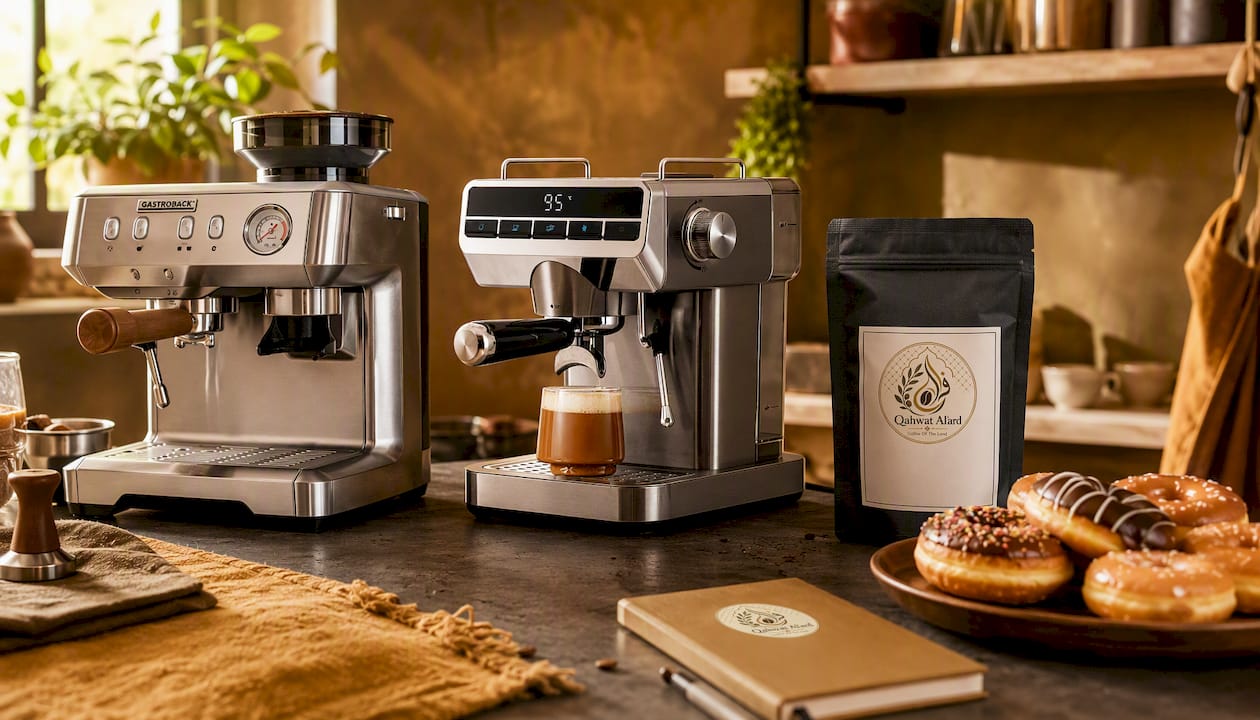
The Gastroback 42625 is a compact home espresso machine built for the 4 keys formula: controlled dose, stable temperature, 9 bar extraction pressure, and steam capability for milk texturing. It fits the mid-tier stack without requiring a separate grinder upgrade immediately.
The NNEDSZ 20 Bar espresso maker is the entry-level option for buyers who want espresso capability at the lower end of the budget range. At 20 bar pump pressure, it exceeds the 9 bar extraction target and suits single-serve home use.
For something to pair with your morning espresso, the Gourmet Donut Shop listing in the Qahwat Al’Ard catalog rounds out a home café setup as a gifting or pairing option.
Browse the full premium coffee gear guide on Qahwat Al’Ard to match your brewing goals to the right equipment stack.
Useful sources
The claims in this article draw on a short list of authoritative sources. The table below maps each source to the specific claims it supports.
| Source | Claims supported |
|---|---|
| Specialty Coffee Association brewing guidelines | 1:15 ratio, 197.6–204.8°F (92–96°C) temperature range, water >98% of cup |
| Best coffee scale feature guidance | 0.1 g resolution requirement; 1 g increments insufficient |
| Brooklyn Coffee Guide: beginner home kit | Entry ~$200, mid ~$600 budget bands; freshness as flavor priority |
| Ultimate Coffee Equipment Guide 2026 | Purchase priority order: grinder → scale → brewer → kettle |
| Specialty espresso 4 keys formula | Dose, temperature, 9 bar pressure, milk texture as espresso essentials |
| Qahwat Al’Ard: what is a coffee brewing starter set | Pour-over for single-origin clarity; grinder-first purchase logic |
| Electric gooseneck kettle guidance | Electric kettles for temperature repeatability; gooseneck pour control |
FAQ
What is the most important item in a home coffee brewing kit?
A burr grinder. Grind consistency affects extraction more than any other variable, and no other piece of gear compensates for uneven particle sizes.
What coffee-to-water ratio does the SCA recommend?
The Specialty Coffee Association recommends a 1:15 ratio as a good starting point, meaning 20 g of coffee to 300 ml of water for a standard pour-over.
Do I need a 0.1 g scale for home brewing?
Yes, if you want repeatable results. A 1 g resolution scale introduces enough dosing error to shift a brew noticeably off-recipe, especially at the smaller doses used for single-cup pour-over.
What brew temperature works best for single-origin coffee?
Target 197.6–204.8°F (92–96°C) per SCA brewing guidelines. Light single-origin roasts often benefit from the higher end of that range to achieve full extraction.
Where can I find curated starter kits for home brewing?
Qahwat Al’Ard’s coffee accessories guide covers beginner kit recommendations, and the site’s product pages include home espresso options like the Gastroback 42625 and the NNEDSZ 20 Bar machine.


