


TL;DR:
- Buying fresh specialty coffee online depends on checking roast dates, origin, and ethical sourcing. Roasters who ship within 24 to 72 hours preserve flavor and ensure quality. Understanding origin profiles and matching grind sizes to brewing methods enhances the coffee experience.
Specialty coffee is defined by the Specialty Coffee Association (SCA) as coffee scoring 80 points or above on a 100-point quality scale. Ordering specialty coffee online means choosing beans based on roast date, origin, flavor profile, and ethical sourcing to get maximum freshness at your door. This ordering specialty coffee online guide cuts through the noise and gives you the exact criteria to buy with confidence, whether you want a single-origin Ethiopian natural or a well-rounded blend.
What to look for when ordering specialty coffee online
Freshness is the single most important factor when you buy specialty coffee online. A visible roast date on every bag is the clearest sign of a trustworthy roaster. “Best by” dates tell you almost nothing useful. They are calculated backward from an assumed shelf life, not forward from the actual roast. A bag roasted six months ago with a “best by” date still two months out is stale coffee.
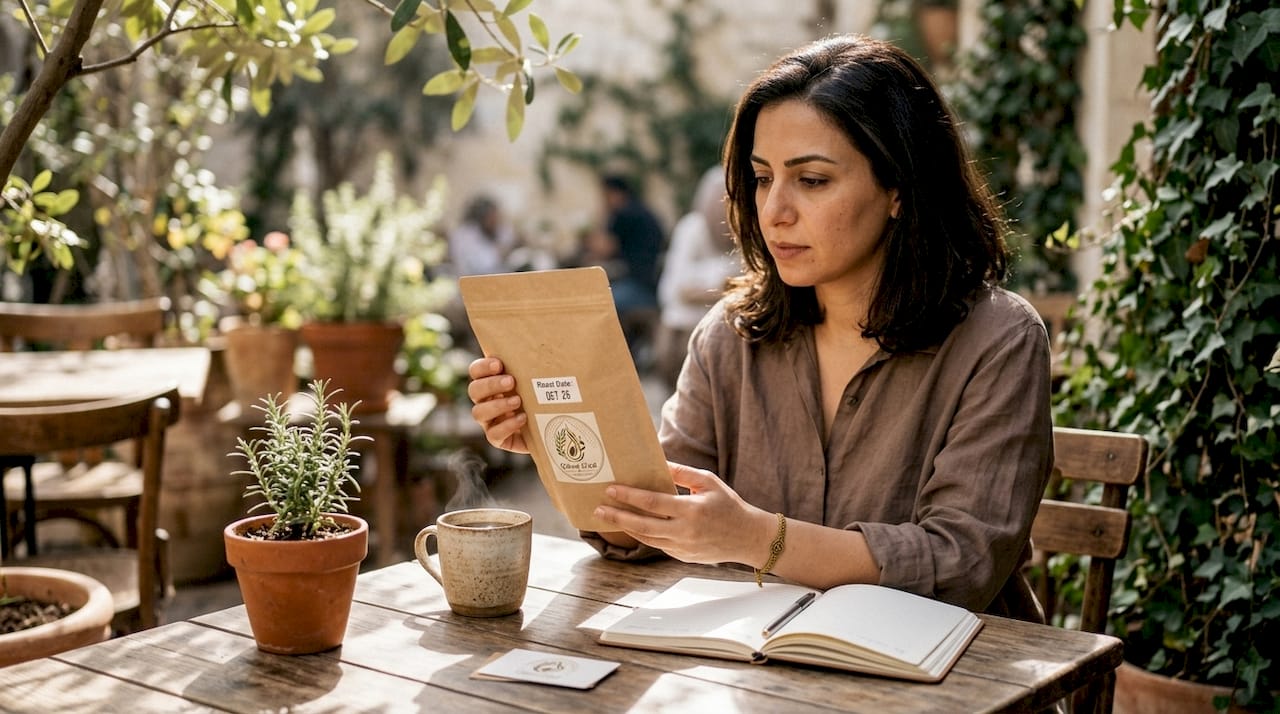
The gold standard for online specialty coffee is a roast-to-order process combined with small-batch roasting. Roasters who roast on demand or in short cycles minimize the time beans sit in a warehouse before shipping. That gap between roast and delivery is where flavor dies. When a roaster ships within 24–72 hours of roasting, you receive coffee at or near peak flavor.
Here is what to check before placing any order:
- Roast date: Printed clearly on the bag, not buried in fine print
- Batch size: Small-batch roasters produce less volume per run, which means faster turnover
- Roast-to-order policy: Stated on the product page or FAQ
- Degassing window: Freshly roasted coffee releases CO2 for 24–72 hours. Most roasters recommend brewing 3–7 days after roast for espresso, and 1–3 days after roast for filter methods
Pro Tip: When shopping online, look for the roast date in the product description or on the bag photo. If neither shows it, email the roaster before ordering. A roaster proud of their freshness will answer immediately.
How does coffee origin affect flavor when ordering online?
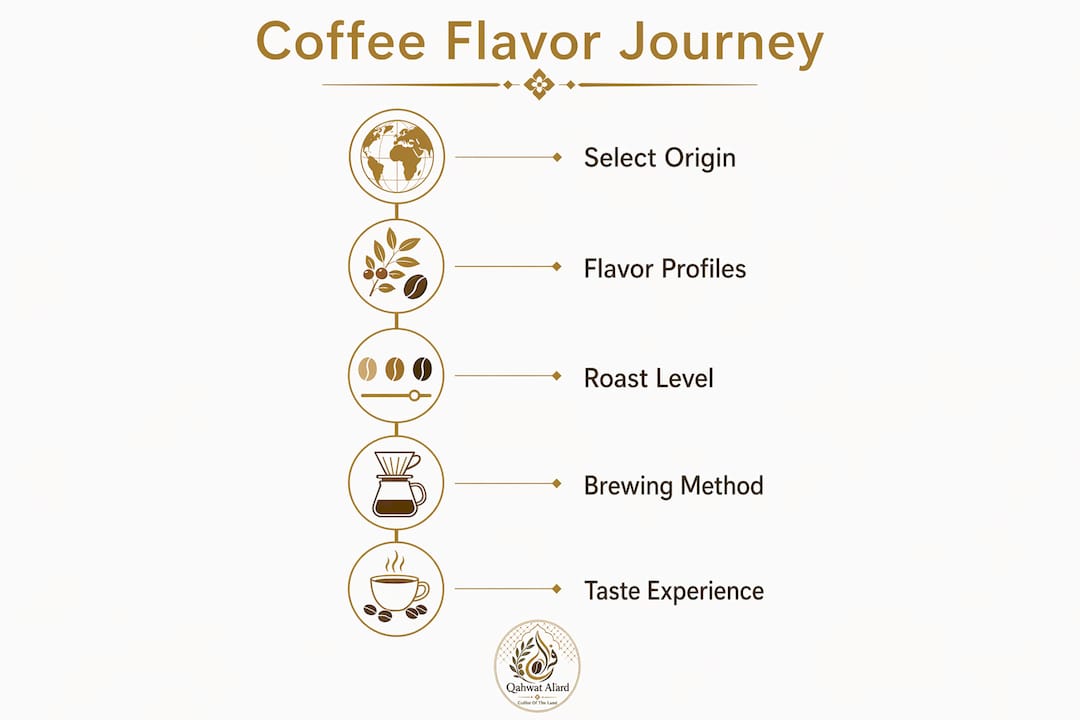
Specialty coffee flavor complexity is shaped by origin more than almost any other variable. The concept behind this is terroir: the combination of soil composition, altitude, rainfall, and processing method that gives each region its distinct character. Coffee terroir explains why an Ethiopian Yirgacheffe tastes of blueberry and jasmine while a Colombian Huila tastes of caramel and red apple. Same species, completely different cup.
Roast level then acts as a volume knob on those origin flavors. Light roasts preserve the most origin character. Dark roasts push toward roast-driven flavors like chocolate, smoke, and bittersweet cocoa. Medium roasts sit in between, balancing origin brightness with body and sweetness.
| Roast level | Flavor character | Best for |
|---|---|---|
| Light | Fruity, floral, tea-like | Pour-over, Chemex, Aeropress |
| Medium | Balanced, caramel, nutty | Drip, French press, flat white |
| Dark | Chocolate, smoky, bold | Espresso, cold brew, milk drinks |
Tasting notes on a specialty coffee bag are not marketing language. They are the roaster’s honest description of what trained tasters detected in that specific lot. Building a flavor vocabulary helps you decode these notes and match them to what you actually enjoy. If you consistently love notes like “brown sugar” and “hazelnut,” you are a medium-roast, washed-process person. If “bright citrus” and “stone fruit” excite you, lean toward light-roasted African naturals.
Key origin flavor profiles to know:
- Ethiopia: Blueberry, jasmine, bergamot, wine-like acidity
- Colombia: Red apple, caramel, milk chocolate, medium body
- Kenya: Black currant, tomato, grapefruit, high acidity
- Peru: Mild, nutty, cocoa, low acidity
- Bali: Earthy, full body, dark chocolate, herbal notes
What customization options are available for online coffee orders?
Grind size is the most practical customization you can make when ordering coffee beans online. Matching grind size to your brewing method directly determines extraction quality and taste. Ordering whole beans gives you the most control, but pre-ground options work well when your grinder is not calibrated for specialty coffee.
| Grind size | Brewing method | Extraction time |
|---|---|---|
| Extra coarse | Cold brew | 12–24 hours |
| Coarse | French press | 4 minutes |
| Medium | Drip, pour-over | 3–4 minutes |
| Fine | Espresso | 25–30 seconds |
| Extra fine | Turkish | Immediate |
Coffee subscription services add another layer of personalization. A good subscription lets you set roast level, grind preference, delivery frequency, and flavor profile. You are not locked into one coffee forever. The best services let you pause, skip, or cancel without friction. That flexibility matters because your taste evolves. What you loved six months ago may not be what you want today.
Subscriptions are also tools for active coffee exploration, not just convenience. Each delivery becomes a structured tasting experience. You can modify your preferences as you learn what you like, which makes subscriptions far more useful than a one-time purchase for someone building their palate.
Pro Tip: Order whole beans and grind immediately before brewing. Pre-ground coffee loses volatile aromatics within 15–30 minutes of grinding. A basic burr grinder costs less than a single bag of premium specialty coffee and pays for itself in flavor quality within weeks.
How do you verify ethical sourcing when buying specialty coffee?
Ethical sourcing in specialty coffee means the roaster can trace each lot back to a specific farm, cooperative, or region, and that the farmers received fair compensation. Transparency is the baseline. If a roaster cannot tell you where their coffee came from, that is a red flag.
Certifications provide a shortcut for verification. Each one signals something specific:
- Fair Trade: Guarantees a minimum price paid to farmers, protecting them from market volatility
- Direct Trade: The roaster buys directly from the farm, often paying above Fair Trade minimums and building long-term relationships
- Organic: No synthetic pesticides or fertilizers used in production
- Rainforest Alliance: Combines environmental, social, and economic sustainability standards
- SCA Specialty Grade: Confirms the coffee scored 80+ on the SCA quality scale, which itself filters out poorly processed or low-care lots
Beyond certifications, look for roasters who publish impact reports, share farm photos, or name the specific producer on the bag. Qahwatalard takes this approach by providing origin stories and traceability details for every product, connecting buyers directly to the land and the people behind each cup.
The most credible roasters also disclose the price they paid per pound to the farmer. That number, when it appears, tells you more than any certification label. A roaster paying $4–6 per pound to a Colombian farmer is operating in a fundamentally different ethical category than one paying commodity prices.
Key Takeaways
Ordering specialty coffee online rewards buyers who check roast dates, understand origin flavor profiles, and verify ethical sourcing before purchasing.
| Point | Details |
|---|---|
| Roast date over “best by” | Always look for the actual roast date printed on the bag to assess true freshness. |
| Origin drives flavor | Terroir, processing method, and region determine the flavor profile before roasting begins. |
| Match grind to method | Use the correct grind size for your brewing equipment to get proper extraction every time. |
| Subscriptions build palates | Flexible subscriptions let you adjust preferences over time and turn each delivery into a tasting session. |
| Ethical sourcing is verifiable | Look for Direct Trade, Fair Trade, or SCA Specialty Grade labels, and roasters who name their farms. |
Why I stopped buying coffee by brand and started buying by roast date
The most common mistake I see from people new to specialty coffee is buying by brand recognition instead of by freshness indicators. A well-known name on the bag means nothing if the coffee was roasted three months ago. I made that mistake myself for years, chasing labels instead of dates.
The shift that changed everything for me was keeping a simple tasting journal. After each bag, I wrote down the origin, roast level, brew method, and three words describing the cup. Within two months, I had a clear map of my own preferences. I knew I wanted light-to-medium roasts from East Africa or Latin America, brewed as pour-over. That clarity made every future order faster and more satisfying.
Subscriptions accelerated the process. I used the flexibility to try one new origin per month while keeping a reliable favorite in rotation. When a delivery did not match my notes, I adjusted the preference settings rather than canceling. That active participation is what separates someone who drinks specialty coffee from someone who truly understands it.
My honest advice: prioritize freshness and ethical sourcing above everything else. A coffee from a small Peruvian cooperative, roasted last week and shipped directly to you, will outperform a famous brand’s stale inventory every single time. The information is on the bag. You just have to know where to look.
— Anthony-Yasin
Qahwatalard’s specialty coffee selection for every brewing style
Qahwatalard sources single-origin beans and blends from renowned growing regions, with full origin transparency and a focus on freshness and ethical supply chains.
The single-origin collection includes options from Peru, Bali, and Africa, each with detailed origin notes so you know exactly what you are ordering. For espresso lovers, the Max Caf Blend delivers a bold, high-caffeine cup built for milk-based drinks. If you want something genuinely different, the mushroom dark roast combines specialty-grade coffee with functional mushroom extracts. Sample packs let you try multiple origins before committing to a full bag, which is the smartest way to build your flavor map without guessing.
FAQ
What does “specialty grade” mean for coffee?
Specialty grade coffee scores 80 or above on the Specialty Coffee Association’s 100-point quality scale. This score is assigned by certified Q Graders who evaluate aroma, flavor, acidity, body, and aftertaste.
How soon after roasting should I brew specialty coffee?
Most specialty roasters recommend brewing filter coffee 1–3 days after roasting and espresso 3–7 days after roasting. Brewing too soon means the coffee is still degassing and flavors are muted.
Is whole bean or pre-ground better for online orders?
Whole bean is better because it preserves volatile aromatics until the moment you grind. Pre-ground coffee loses significant flavor within 30 minutes of grinding, making freshness harder to maintain during shipping.
What is the difference between Fair Trade and Direct Trade?
Fair Trade sets a certified minimum price paid to farmers through a third-party organization. Direct Trade means the roaster buys straight from the farm, often at higher prices, with a direct relationship and no intermediary.
How do I choose the right grind size for my brewer?
Match coarse grinds to French press and cold brew, medium grinds to drip and pour-over, and fine grinds to espresso. Using the wrong grind size causes under-extraction (weak, sour) or over-extraction (bitter, harsh).


