


TL;DR:
- Premium loose leaf tea offers a smoother caffeine effect and measurable health benefits compared to coffee.
- It provides multiple infusions with greater cost efficiency and diverse flavor profiles that evolve over time.
Premium loose leaf tea is defined by its complex, evolving flavor profile, smoother caffeine delivery, and measurable health advantages over coffee. The comparison between premium loose leaf tea vs coffee comes down to three core factors: how caffeine affects your body, how each beverage tastes, and what brewing each one actually requires. Both beverages reward quality sourcing and careful preparation. The difference is in what you want from the experience.
1. How do caffeine levels differ between loose leaf tea and coffee?
Caffeine delivery is the most immediate practical difference between the two beverages. Coffee delivers 80–150 mg caffeine per cup, producing a fast, sharp energy spike. Loose leaf tea provides 30–70 mg per steep, and that caffeine arrives differently.
Tea contains L-theanine, an amino acid that moderates caffeine absorption. The result is calm, sustained focus rather than a jolt. This is why many people report no jitters or crash after tea, even though caffeine is still present.
- Coffee: 80–150 mg caffeine per cup, fast onset, higher crash potential
- Loose leaf tea: 30–70 mg per steep, slower onset, smoothed by L-theanine
- Jitter risk: Significantly lower with tea due to L-theanine buffering
- Crash potential: Coffee drinkers report more pronounced afternoon energy drops
Pro Tip: If you are caffeine-sensitive, start with white or green loose leaf tea. Both sit at the lower end of the 30–70 mg range and deliver the mildest stimulation.
The practical takeaway is straightforward. Coffee is better for a fast morning lift. Tea is better when you need focus without the edge.
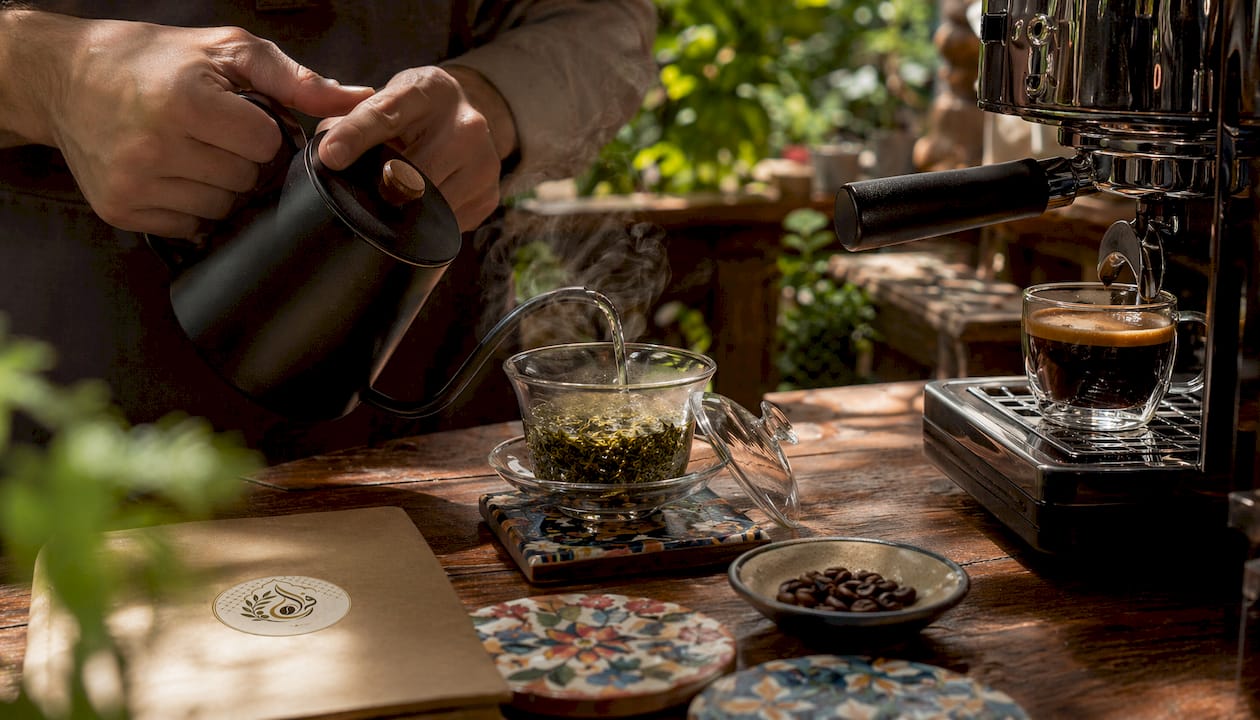
2. What flavor profiles set premium loose leaf tea apart?
Tea contains over 750 identified flavor compounds, while coffee has around 800. The numbers are close, but the experience is not.
Coffee’s flavor is shaped primarily by roast level and origin. A light roast from Ethiopia tastes fruity and floral. A dark roast from Sumatra tastes earthy and full-bodied. The range is real, but it plays out within a single cup. Understanding how coffee terroir shapes flavor helps explain why single-origin beans taste so different from blends.
Tea’s flavor evolves across multiple steeps. A high-grade oolong changes character from the first infusion to the fifth. Green teas like Dragon Well (Longjing) taste grassy and sweet early, then shift toward nuttier notes. Pu-erh develops earthy, almost forest-floor depth over time. White tea stays delicate throughout.
“Whole-leaf integrity and freshness impact flavor more than any certification label. Organic certification alone does not guarantee premium tea quality.”
The major premium tea varieties each occupy distinct flavor territory:
- Green tea: Grassy, vegetal, sweet. Best brewed at 160–175°F.
- White tea: Floral, light, honey-like. The most delicate of all types.
- Oolong: Ranges from floral and creamy to roasted and complex.
- Black tea: Bold, malty, sometimes smoky. Closest to coffee in intensity.
- Pu-erh: Earthy, aged, fermented. Unique among all beverages for its aging potential.
Coffee drinkers who want to explore tea should start with a high-quality black or roasted oolong. The flavor bridge is real.
3. How do brewing methods compare between tea and coffee?
Brewing premium loose leaf tea and specialty coffee both reward precision, but the rituals differ in pace and equipment.
Coffee methods like drip, pour-over, espresso, and Aeropress prioritize speed and consistency. A pour-over takes 3–4 minutes. An espresso shot takes under 30 seconds. The focus is extraction efficiency. Upgrading your home brewing setup makes a measurable difference in cup quality for both beverages.
Gongfu-style tea brewing is a different practice entirely. Brewing time ranges from 3 minutes to over 2 hours in extended gongfu sessions. You use small vessels, short steep times of 15–30 seconds, and many successive infusions. The ritual is the point.
| Method | Brew time | Equipment needed | Infusions |
|---|---|---|---|
| Gongfu tea | 15 sec per steep, up to 2+ hrs total | Gaiwan or teapot, gooseneck kettle | 5–15 per session |
| Pour-over coffee | 3–4 minutes | Dripper, gooseneck kettle, scale | 1 |
| Espresso | Under 1 minute | Espresso machine, grinder | 1 |
| Western-style tea | 3–5 minutes | Teapot or infuser, kettle | 1–3 |
One piece of equipment works for both practices. A variable-temperature gooseneck kettle handles precise pour-over coffee and gongfu tea with equal accuracy. You do not need two separate setups.
Pro Tip: Set your gooseneck kettle to 185°F for green tea, 205°F for black tea, and 200°F for pour-over coffee. One kettle, three settings, no guesswork.
4. What are the health benefits of premium loose leaf tea vs coffee?
Both beverages carry genuine health benefits, but the mechanisms differ. Cardiac dietitians describe tea as a functional beverage for heart health, emphasizing its flavonoid and catechin content rather than caffeine alone.
Consistent tea consumption links to lower cardiovascular disease and reduced type 2 diabetes risk. Green tea’s catechins support metabolic health. White tea holds potent anti-cancer properties, while green tea leads in cardiovascular protection. Coffee improves mental sharpness and associates with reduced risk of neurodegenerative diseases like Parkinson’s and Alzheimer’s.
| Health factor | Premium loose leaf tea | Specialty coffee |
|---|---|---|
| Cardiovascular risk | Reduced with regular consumption | Moderate benefit at 2–3 cups/day |
| Type 2 diabetes | Associated with lower risk | Some protective effect |
| Brain health | Neuroprotective via catechins | Reduced Parkinson’s and Alzheimer’s risk |
| Anti-inflammatory | Strong, especially green and white tea | Moderate |
| Bone density | High intake may reduce calcium absorption | Similar concern at high doses |
The biggest threat to these benefits is not the beverage itself. Sugary bottled teas and flavored coffee drinks cancel out the antioxidant advantages. Plain, freshly brewed tea or black coffee preserves the health value. A bubble tea with tapioca and sweetened milk is not a health drink, regardless of what tea it contains.
Key cautions to keep in mind:
- Caffeine sensitivity affects both beverages equally at high doses
- Tannins in black tea can reduce iron absorption when consumed with meals
- Adding sugar, cream, or syrups reduces the net health benefit significantly
- Decaf versions of both beverages retain most antioxidant properties
5. How do cost and long-term value compare?
Loose leaf tea wins on cost per serving when you account for multiple steeps. An ounce of premium loose leaf tea yields 15–20 servings through multiple infusions. An ounce of coffee beans yields only 1–2 cups. That difference is significant over time.
Home-brewing loose leaf tea costs $0.25–$8.00 per session, while specialty coffee ranges from $0.75–$6.00 per brew. At the entry level, tea is cheaper. At the premium end, both categories reach similar price points.
| Product tier | Loose leaf tea (per session) | Specialty coffee (per brew) |
|---|---|---|
| Entry-level | $0.25–$0.75 | $0.75–$1.50 |
| Mid-range | $1.00–$3.00 | $1.50–$3.50 |
| Premium/micro-lot | $3.00–$8.00 | $3.00–$6.00 |
Pu-erh tea adds a dimension coffee cannot match: aging value. A well-stored pu-erh cake from a reputable region increases in complexity and, in some cases, monetary value over years. Specialty coffee, by contrast, degrades within weeks of roasting. Freshness is the entire game for coffee.
Pro Tip: Buy loose leaf tea in 50–100g quantities and store it in an airtight, opaque container away from heat. This preserves the flavor compounds that justify the premium price.
Key Takeaways
Premium loose leaf tea delivers more servings per ounce, smoother caffeine through L-theanine, and strong cardiovascular benefits, while specialty coffee excels at fast energy delivery and cognitive support.
| Point | Details |
|---|---|
| Caffeine delivery | Tea’s L-theanine buffers caffeine for calm focus; coffee hits faster and harder. |
| Flavor complexity | Tea offers 750+ compounds across multiple steeps; coffee peaks in a single cup. |
| Health advantages | Both reduce chronic disease risk, but sugary versions cancel those benefits. |
| Cost per serving | Tea yields 15–20 servings per ounce vs. 1–2 for coffee, lowering daily cost. |
| Brewing investment | A variable-temperature gooseneck kettle handles both practices precisely. |
Why I stopped choosing between them
Most articles frame this as a competition. After years of working with specialty beverages, I think that framing is wrong.
Coffee is a morning tool. It is fast, social, and culturally embedded in how most people start their day. The ritual is short by design. Why origin matters in specialty coffee is a real conversation, and single-origin beans reward attention the same way premium teas do.
Tea is an afternoon practice. The slower pace of gongfu brewing is not a drawback. It is the feature. When I want to think clearly without the edge of a second coffee, a high-grade oolong or a green tea does something coffee simply cannot replicate.
The consumers I find most interesting are the ones who use both tactically. Coffee in the morning, tea in the afternoon. Not loyalty to one, but awareness of what each does well. The best loose leaf tea and the best specialty coffee share one trait: they both reward you for paying attention to where they came from and how you prepare them.
My honest recommendation is to try both at their best before deciding you prefer one. A mediocre drip coffee and a grocery-store tea bag are not representative of either category.
— Anthony-Yasin
What Qahwatalard offers for serious coffee drinkers
Qahwatalard sources premium coffee with the same traceability and origin focus that defines the best loose leaf teas. Every product traces back to a specific growing region, with freshness and craft at the center of the selection.
For mornings when you want fast, quality caffeine without a brewing setup, the instant coffee range delivers single-origin flavor in under two minutes. If you prefer a pod system, the 60-pack single-serve coffee pods cover a full month of consistent, traceable brews. For something with a functional twist, the Coffee with Mushrooms Dark Roast blends specialty coffee with adaptogenic mushrooms, a category that mirrors tea’s functional beverage tradition. Qahwatalard makes it easy to bring the same quality standard you expect from premium tea to your daily coffee ritual.
FAQ
How much caffeine does loose leaf tea have vs coffee?
Loose leaf tea contains 30–70 mg of caffeine per steep, while coffee delivers 80–150 mg per cup. Tea’s L-theanine moderates that caffeine for a calmer, more sustained effect.
Is loose leaf tea healthier than coffee?
Both beverages carry proven health benefits. Tea links more strongly to cardiovascular protection and anti-inflammatory effects, while coffee associates with cognitive support and reduced neurodegenerative disease risk. Plain, unsweetened versions of both maximize health value.
How many cups can you get from one ounce of loose leaf tea?
One ounce of premium loose leaf tea yields 15–20 servings through multiple infusions. One ounce of coffee beans produces only 1–2 cups, making tea significantly more cost-effective per serving.
What equipment do you need to brew loose leaf tea at home?
A variable-temperature gooseneck kettle, a gaiwan or small teapot, and a scale are the core tools for gongfu-style brewing. The same gooseneck kettle works for pour-over coffee, so the equipment investment overlaps.
Which is better for afternoon focus, tea or coffee?
Tea is the better choice for afternoon focus. The combination of moderate caffeine and L-theanine produces sustained alertness without the crash that a second cup of coffee often causes.


