
TL;DR:
- Coffee sustainability certifications verify farms and supply chains meet specific environmental, social, or economic standards, helping consumers make informed ethical choices. Authentic seals are linked to independent certifiers, publicly available standards, and verifiable registries, distinguishing them from marketing claims or unregulated labels. Each certification covers different aspects, so understanding their scope ensures accurate interpretation and supports genuine sustainable practices.
Coffee sustainability certifications are formal, third-party verified standards that confirm a farm, cooperative, or supply chain meets defined environmental, social, or economic criteria. Reading coffee sustainability certifications correctly separates genuine accountability from marketing language, and that distinction directly affects the farmers, ecosystems, and communities behind every cup. Certifications like Rainforest Alliance, Fairtrade, and Starbucks’ C.A.F.E. Practices each address different facets of ethical coffee production, and knowing what each one actually verifies gives you real purchasing power. This guide breaks down the major coffee sustainability standards, shows you how to spot authentic seals, and explains what certifications do and do not guarantee.
What do the main coffee sustainability certifications verify?
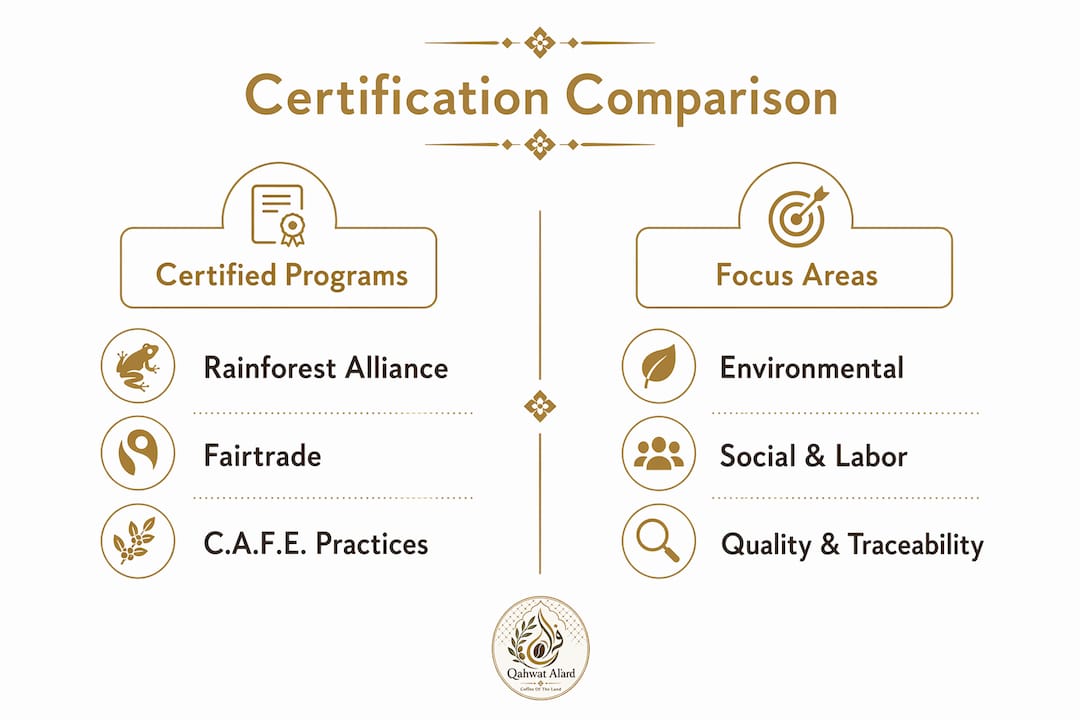
The three certifications you will encounter most often on coffee bags are Rainforest Alliance Certified, Fairtrade, and C.A.F.E. Practices. Each operates under a distinct framework, covers different sustainability priorities, and uses its own audit methodology. Understanding all three is the foundation of reading sustainability labels with confidence.
Rainforest Alliance Certified
Rainforest Alliance Certified means farms and businesses have met rigorous environmental and social standards verified by independent auditors. The green frog seal is the visual marker, and it signals compliance with the Sustainable Agriculture Certification standard. Audits are conducted periodically by accredited third-party Certification Bodies, so the seal is not self-reported. The standard covers biodiversity conservation, water management, worker rights, and climate adaptation, making it one of the broadest environmental frameworks in the coffee industry.
Fairtrade certification
Fairtrade certification requires that producers operate through cooperatives or associations. Individual farms cannot participate. The independent certifier FLOCERT conducts audits and enforces a guaranteed minimum price floor plus a community development premium paid directly to the cooperative. That premium funds schools, healthcare, and infrastructure in producing communities. The cooperative structure is a deliberate design choice: it gives smallholder farmers collective bargaining power they would not have selling individually.
C.A.F.E. Practices
Starbucks’ C.A.F.E. Practices program is a verification program rather than a multi-stakeholder certification scheme. Preferred by Nature serves as the third-party assessor, evaluating farms against more than 200 indicators covering worker rights, water resources, and biodiversity. The distinction matters: C.A.F.E. Practices was designed and is controlled by Starbucks, whereas Rainforest Alliance and Fairtrade are governed by independent organizations with broader stakeholder input. Both approaches use third-party auditors, but the governance structures differ significantly.
Pro Tip: When comparing certifications on a bag, check whether the certifying body is independent of the brand selling the coffee. Governance independence is a strong signal of credibility.
| Certification | Primary focus | Audit body | Key requirement |
|---|---|---|---|
| Rainforest Alliance | Environmental and social standards | ISO17065-accredited Certification Bodies | Farm-level compliance with Sustainable Agriculture standard |
| Fairtrade | Economic fairness and community development | FLOCERT | Cooperative membership; minimum price floor |
| C.A.F.E. Practices | Economic, social, and environmental indicators | Preferred by Nature | 200+ indicator scorecard |
| USDA Organic | Pesticide and synthetic input restrictions | USDA-accredited certifiers | No synthetic pesticides or GMOs |
How do you tell a real certification seal from a marketing claim?
The single most useful rule for reading sustainability labels is this: if a claim lacks a named certifying body and a publicly available standard, it is marketing language, not a certification. Direct Trade is not a certification. It has no governing body, no published standards, and no third-party verification process. Any roaster can print “Direct Trade” on a bag without meeting a single audited requirement. That does not mean every Direct Trade roaster is dishonest, but it does mean the claim carries no enforceable accountability.
Genuine certifications share three observable traits. First, they use precise, legally defined language. Claim accuracy under the EU Empowering Consumers Directive places responsibility on the product seller, meaning companies must use exact wording and correct capitalization. “Rainforest Alliance Certified” is a protected phrase. “Rainforest Alliance approved” or “Rainforest Alliance inspired” are not. Second, genuine certifications display a logo that links to a publicly searchable database of certified holders. Third, they specify a certification cycle with defined audit frequency.
“Consumers should evaluate whether sustainability claims rely on recognized certification schemes rather than marketing buzzwords to avoid misled purchases.” — Rainforest Alliance
Here is a practical checklist for spotting authentic seals versus vague labels:
- Named certifier: The seal identifies a specific organization (Rainforest Alliance, FLOCERT, Preferred by Nature).
- Publicly available standard: You can download or read the full standard online.
- Third-party audit: An independent body, not the brand itself, conducts compliance checks.
- Searchable registry: You can verify the specific product or farm is currently certified.
- Precise language: The claim uses the exact certified phrase, not a loose variation.
Pro Tip: Search the Rainforest Alliance certificate holder database or the Fairtrade product finder before purchasing. Both are free, publicly accessible, and take under two minutes to use.
For consumers focused on ethical coffee sourcing, this verification step is the difference between supporting a genuine program and rewarding a well-designed label.
What do certifications cover, and what do they not guarantee?
A common and costly misreading of coffee sustainability certifications is assuming that one seal covers everything. It does not. Each certification addresses a defined scope, and gaps between certifications are real and significant.
The most widespread misconception involves organic status. Rainforest Alliance Certified does not mean organic. The standard promotes integrated pest management and prohibits GMOs and hazardous pesticides, but it does not require compliance with USDA organic rules. A Rainforest Alliance farm can legally use certain synthetic pesticides that USDA organic certification prohibits. If certified organic coffee is your priority, look specifically for the USDA Organic seal alongside any other certification.
Here is what the major certifications explicitly cover and what they leave unaddressed:
- Rainforest Alliance: Covers biodiversity, water quality, worker rights, and climate adaptation. Does not guarantee organic status or a specific price premium paid to individual farmers.
- Fairtrade: Covers minimum price floor and community development premium for cooperatives. Does not address farm-level environmental practices in the same depth as Rainforest Alliance.
- C.A.F.E. Practices: Covers a broad scorecard of economic, social, and environmental indicators. Applies specifically to Starbucks’ supply chain and is not independently governed.
- USDA Organic: Covers synthetic pesticide and GMO restrictions. Does not address worker rights, fair wages, or community development.
| What certifications cover | What they often do not guarantee |
|---|---|
| Worker rights and safety | Organic pesticide standards (unless USDA Organic) |
| Environmental conservation | Direct price benefits to individual farmers |
| Biodiversity protection | Carbon neutrality or net-zero claims |
| Audit-verified compliance | Full supply chain traceability to the cup |
Understanding these boundaries is not cynicism about certifications. It is the accurate reading that lets you match a certification to your personal sustainability priorities. If you care most about worker welfare, Fairtrade’s price floor and cooperative model is the most directly relevant standard. If biodiversity and climate adaptation matter most, Rainforest Alliance’s environmental scope is stronger.
Pro Tip: Stack certifications when possible. A bag carrying both Rainforest Alliance and USDA Organic seals covers environmental, social, and pesticide standards simultaneously. Single-certification coffee is still meaningful, but dual-certified products close more gaps.
How to read and verify sustainability claims on a coffee bag
Reading a coffee bag label takes less than two minutes when you know what to look for. Follow this process before making a purchase.
- Identify the certification name exactly. Look for “Rainforest Alliance Certified,” “Fairtrade,” or “USDA Organic” as precise phrases. Vague terms like “sustainably grown” or “eco-friendly” with no named certifier are unverified marketing claims.
- Locate the certification logo. Authentic seals have standardized logos: the Rainforest Alliance green frog, the Fairtrade black and blue circle, or the USDA Organic green and white seal. Logos that look similar but are not exact matches signal a problem.
- Check the certifier authority. The bag or brand website should name the certifying body. For Rainforest Alliance, certification cycles run three years with annual and surprise audits by ISO17065-accredited Certification Bodies. That audit frequency is a meaningful accountability mechanism.
- Verify in a public registry. Go to the Rainforest Alliance certificate holder search, the Fairtrade product finder, or the USDA organic integrity database. Enter the brand or farm name and confirm current certification status.
- Read the traceability statement. Some bags include a lot code, farm name, or origin region. This traceability information, combined with a certification seal, is the strongest signal of supply chain transparency. Understanding why origin matters in specialty coffee adds useful context here.
The most common pitfall is accepting a sustainability claim at face value because the packaging looks premium or uses nature-themed imagery. Green colors, leaf graphics, and phrases like “grown with care” are design choices, not certifications. The EU Empowering Consumers Directive now legally requires that sustainability claims in EU markets be backed by third-party verification and publicly available standards. That regulatory pressure is raising the bar globally, but it does not yet apply everywhere. Verification remains your responsibility as a buyer.
Key takeaways
Reading coffee sustainability certifications correctly requires matching each seal to its specific verified scope rather than treating all certifications as equivalent.
| Point | Details |
|---|---|
| Certifications are not interchangeable | Rainforest Alliance, Fairtrade, and USDA Organic each verify different sustainability dimensions. |
| Direct Trade is unregulated | Any roaster can use the term with no audit, standard, or certifying body required. |
| Organic status is not automatic | Rainforest Alliance Certified uses integrated pest management but does not meet USDA organic rules. |
| Verification is public and free | Rainforest Alliance and Fairtrade both maintain searchable registries to confirm current certification holders. |
| Stacking certifications closes gaps | Dual-certified products cover more sustainability dimensions than single-seal options. |
Why I think most consumers are reading these labels backwards
Most people scan a coffee bag for a recognizable logo and stop there. I have done it myself. The problem is that approach treats the seal as the endpoint when it is actually the starting point. The seal tells you a standard exists. What you actually need to know is what that standard covers, who audited it, and when the last audit happened.
The greenwashing risk in coffee is real, and it is not always deliberate. Some brands genuinely believe their sourcing practices are sustainable without understanding that “sustainable” as a standalone word on packaging is legally meaningless in an increasing number of markets. The EU Empowering Consumers Directive is forcing precision, but consumers in markets outside the EU are still largely on their own.
My honest advice: prioritize certifications based on what you personally value most. If worker welfare drives your purchasing, Fairtrade’s cooperative model and price floor are directly relevant. If you are concerned about pesticide exposure or biodiversity loss, Rainforest Alliance’s environmental scope is more aligned with your priorities. If you want both, look for dual-certified options and check the registry before you buy. The two minutes that takes will tell you more than any amount of packaging copy.
The specialty coffee world has made real progress on transparency. Brands like Qahwatalard that publish sourcing details and traceability information are raising the standard for what consumers should expect. The more you know how to read these labels, the more you reward the producers and brands doing the work correctly.
— Anthony-Yasin
Explore certified coffee from Qahwat Al’Ard
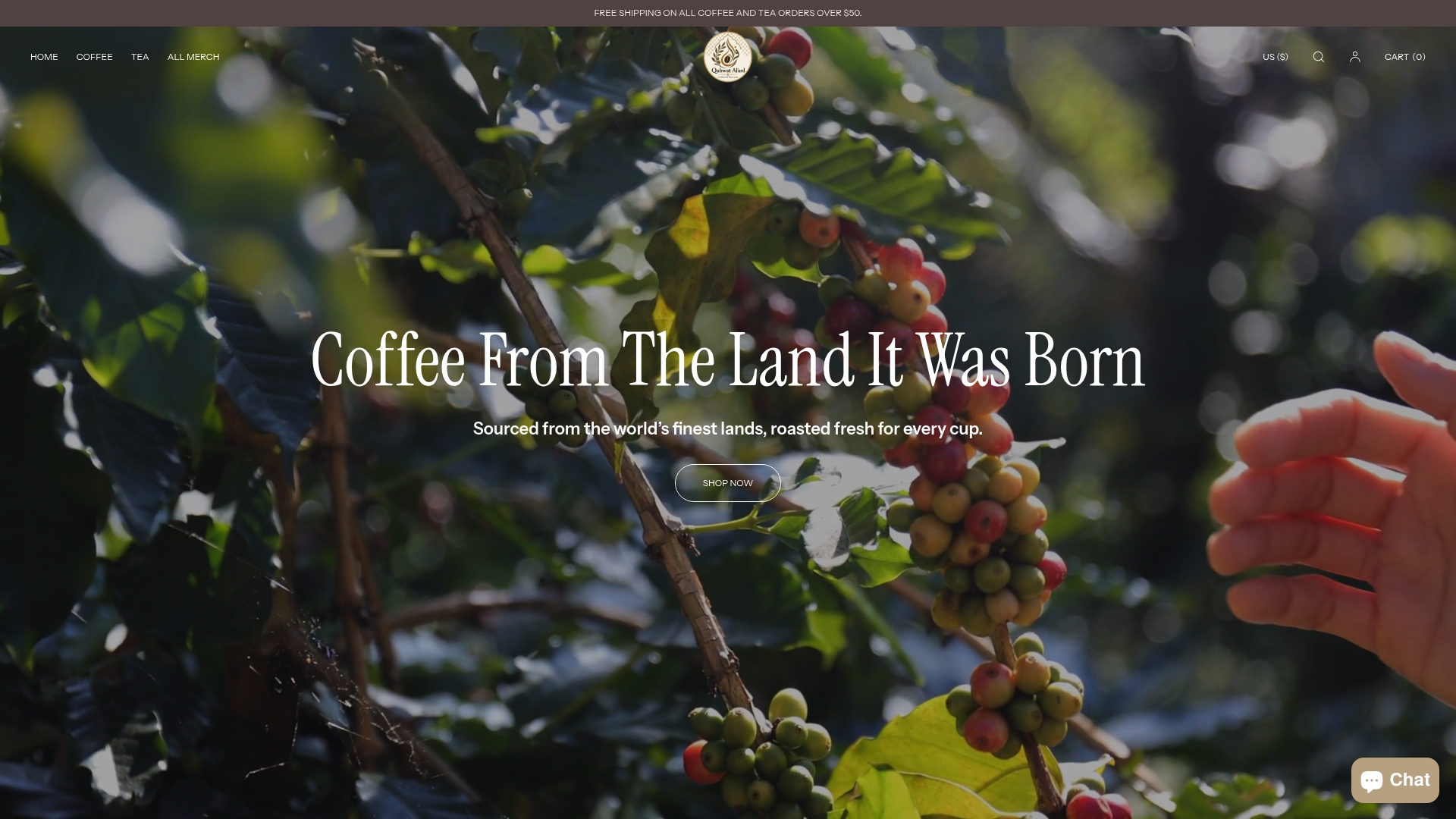
Qahwatalard sources coffee with traceability and sustainability at the center of every decision. The platform’s single-origin collection features beans from renowned growing regions, each selected for quality, origin transparency, and ethical sourcing credentials. For consumers who want verified sustainability without sacrificing flavor, Qahwatalard’s Bali Coffee Pods offer a convenient entry point into certified, responsibly sourced coffee. Every product page includes sourcing details so you can apply exactly the label-reading skills covered in this guide. Explore the full range and find coffee that matches both your taste and your values.
FAQ
What does Rainforest Alliance Certified mean on a coffee bag?
Rainforest Alliance Certified means the farm or business met rigorous environmental and social standards verified by an independent auditor. The green frog seal is the visual identifier, and certification requires periodic compliance checks under the Sustainable Agriculture Certification standard.
Is Rainforest Alliance the same as organic certification?
No. Rainforest Alliance does not require organic status. It promotes integrated pest management and bans hazardous pesticides, but certified farms can still use certain synthetic inputs that USDA Organic rules prohibit. Look for a separate USDA Organic seal if pesticide-free production is your priority.
What is Direct Trade coffee and is it certified?
Direct Trade is not a certification. It has no governing body, published standard, or third-party audit process. Any roaster can use the term freely, so it functions as a marketing claim rather than a verifiable sustainability standard.
How can I verify that a coffee is actually certified?
Use the Rainforest Alliance certificate holder search, the Fairtrade product finder, or the USDA organic integrity database. Enter the brand or farm name to confirm current certification status. These registries are free and publicly accessible.
Does Fairtrade certification benefit individual farmers directly?
Fairtrade certification applies to cooperatives and associations, not individual farms. The program guarantees a minimum price floor and a community development premium paid to the cooperative, which then distributes benefits to its members. Individual farmers outside cooperative structures cannot participate in Fairtrade.


