


TL;DR:
- True sustainability in coffee packaging depends on how well it protects coffee and aligns with local waste systems. Recyclable, compostable, and reusable options each have limitations, making context vital for environmental impact. Consumers should prioritize transparency from brands about materials, testing, and disposal options to make genuinely informed choices.
That green bag sitting on your coffee shelf might not be as eco-friendly as you think. The sustainable packaging space is full of bold claims, leaf logos, and feel-good language that can mislead even the most conscientious coffee drinker. Real sustainability in coffee packaging is not just about what the bag is made of. It is about how it performs, where it ends up, and whether your local waste system can actually handle it. This guide cuts through the noise, explains the most common types of sustainable coffee packaging, and gives you the practical knowledge to make genuinely informed choices.
Table of Contents
- What makes coffee packaging sustainable?
- Types of sustainable packaging for coffee
- How sustainability, shelf-life, and performance interact
- The reality: Local disposal and infrastructure matter
- Life-cycle assessments and ‘green’ claims: What the studies say
- A fresh perspective on choosing truly green coffee packaging
- Discover sustainable coffee and eco-conscious options
- Frequently asked questions
Key Takeaways
| Point | Details |
|---|---|
| Material matters | Look for recyclable, compostable, or reusable packaging—preferably mono-material rather than mixed layers. |
| Disposal is essential | The true eco-impact depends on whether you can properly dispose of the packaging in your local system. |
| Freshness vs. green claims | Effective sustainable packaging balances environmental benefits with coffee protection and shelf-life. |
| Ask the right questions | Don’t trust green looks—seek out info on materials, barriers, and real disposal options. |
What makes coffee packaging sustainable?
The word “sustainable” gets used so freely that it has lost much of its meaning. For coffee packaging specifically, it needs to do two things at once: protect the coffee inside and minimize environmental harm on the outside. That balance is harder to strike than most brands let on.
Sustainable packaging for coffee is packaging designed to reduce environmental impact while still protecting coffee freshness through oxygen, moisture, and light control, using materials and structures that are recyclable, compostable, or reusable. Notice that freshness protection is not optional. Coffee is a perishable product. Oxygen degrades flavor within days. Moisture causes mold and staling. Light accelerates oxidation. Any packaging that fails on these fronts is not actually serving the coffee, no matter how eco-friendly its label claims to be.
The three core pillars of sustainable coffee packaging are:
- Recyclable packaging: Can be processed through existing municipal or retail recycling streams without contamination
- Compostable packaging: Breaks down into natural matter under the right conditions, ideally certified to industrial or home composting standards
- Reusable packaging: Designed for multiple uses, reducing overall material consumption over time
“Sustainability in packaging is not a single feature. It is a system that includes material choice, barrier performance, consumer behavior, and local infrastructure. All four have to work together.”
Making sustainable coffee choices means understanding that a bag can be technically recyclable and still end up in a landfill because of how it was designed or where you live. That context matters enormously, and we will come back to it.
Types of sustainable packaging for coffee
Now that you understand what sustainability in coffee packaging actually requires, let’s look at the most common types you will encounter and what each one really delivers.
The main packaging types compared
| Packaging type | Recyclability | Compostability | Barrier protection | Best use case |
|---|---|---|---|---|
| Mono-material plastic (PE/PP) | High (in most streams) | Low | Moderate to high | Retail bags, pouches |
| Paper-based bags | Moderate (coating dependent) | Sometimes | Low to moderate | Lighter roasts, short shelf-life |
| Compostable/biodegradable | Low (requires industrial facility) | High (with access) | Moderate | Specialty roasters, short runs |
| Reusable canisters or pouches | Very high (long-term) | None | High | Bulk coffee, subscription models |
| Multi-layer laminated bags | Very low | None | Very high | Long shelf-life, export |
Mono-material plastics like polyethylene (PE) and polypropylene (PP) are currently the most recyclable option in many regions. Because they use a single type of plastic, they can enter standard recycling streams without the contamination issues caused by mixed materials. Recyclable mono-material formats with barrier layers represent one of the more practical advances in sustainable coffee packaging, though barrier strength can still vary by manufacturer.
Paper-based bags feel natural and earthy, and consumers tend to trust them instinctively. However, many paper coffee bags include plastic or wax coatings to improve moisture resistance. Those coatings often make the bag non-recyclable through standard paper streams. If the coating is not clearly labeled as compostable or recyclable, assume it is not.
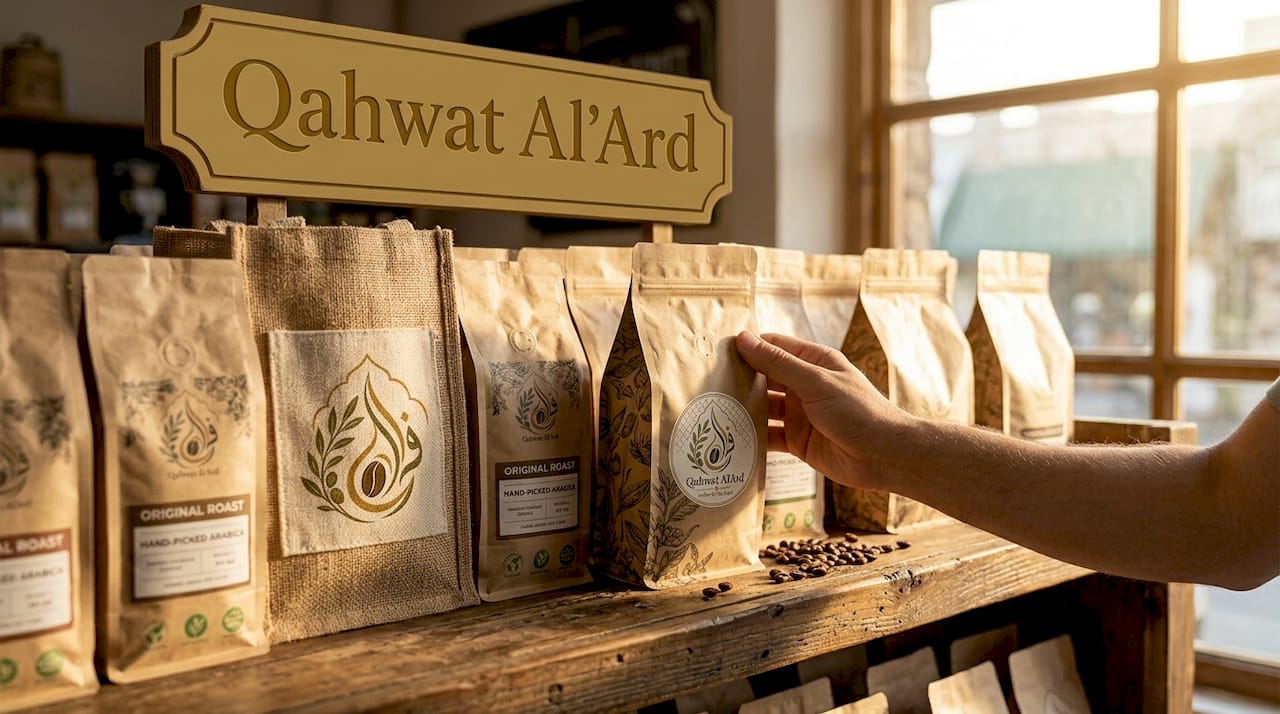
Compostable and biodegradable bags are perhaps the most misunderstood category. These bags are often made from plant-based materials like polylactic acid (PLA) or cellulose. They sound ideal, but compostable coffee packaging only delivers real sustainability benefits when there is access to appropriate industrial composting. Without that infrastructure, these bags can sit in a landfill for decades, behaving just like conventional plastic.
Reusable canisters and pouches are the most resource-efficient option over time but require a behavioral shift. They work best for bulk buyers and subscription coffee customers who refill regularly.
- Check the bag for a recycling code or composting certification before purchasing
- Research whether your local facility accepts that specific material type
- Rinse or clean reusable containers before refilling to prevent flavor contamination
- Never place compostable bags in standard recycling bins, as this contaminates the recycling stream
- Look for brands that offer take-back programs for used packaging
Pro Tip: If you use single serve coffee capsules, look specifically for options labeled as recyclable or compostable pods with clear instructions for your region. The capsule format has improved significantly, but disposal method still varies by brand and location.
How sustainability, shelf-life, and performance interact
Choosing eco-friendly packaging is not just an environmental decision. It is a quality decision. The materials that protect coffee best are often the hardest to recycle, and that tension sits at the heart of every roaster’s packaging challenge.
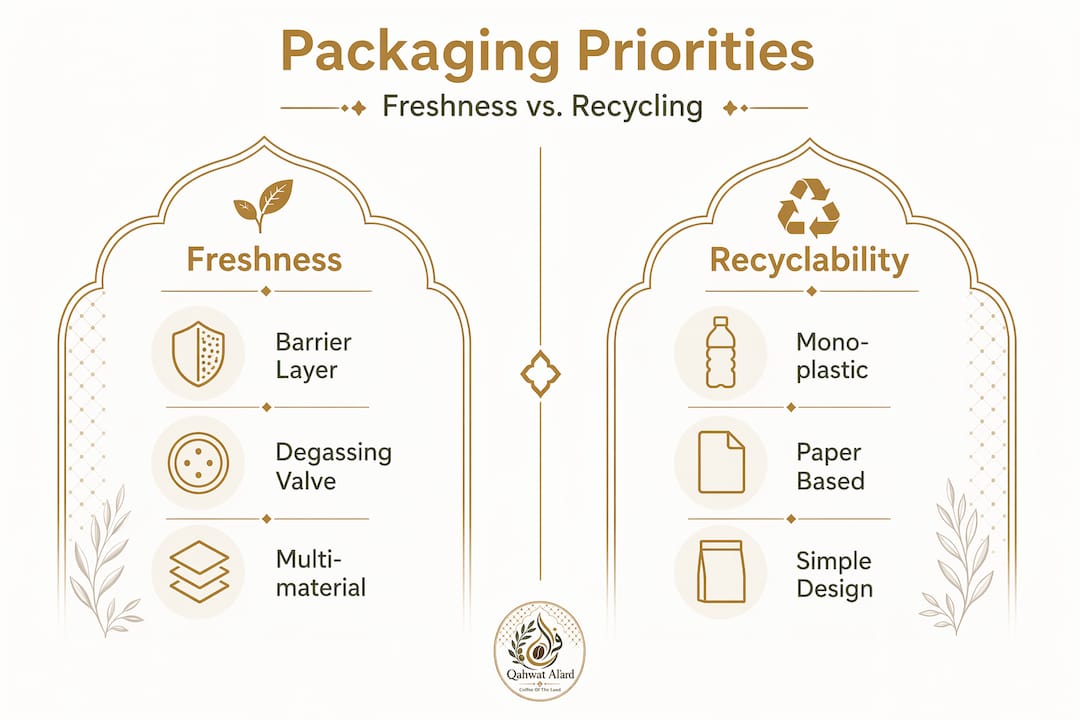
Barrier design and construction directly affect both shelf-life and whether the packaging can be recycled through existing streams. This is the central tradeoff. A bag with multiple laminated layers can keep coffee fresh for 12 to 18 months, but those same layers make it nearly impossible to recycle at a standard facility. A mono-material bag might be fully recyclable but offer only 3 to 6 months of effective freshness protection without additional barrier coatings.
| Packaging feature | Impact on freshness | Impact on recyclability |
|---|---|---|
| Oxygen barrier layer | High positive | Reduces recyclability if multi-layer |
| Moisture barrier coating | High positive | Can prevent paper recycling |
| Degassing valve | Positive (prevents bloat) | Complicates recycling; some recyclable valves exist |
| Resealable zipper | Moderate positive | Adds mixed materials, reduces recyclability |
| Foil lining | Very high positive | Almost always non-recyclable |
Degassing valves deserve special mention. Freshly roasted coffee releases carbon dioxide for days after roasting. Without a one-way valve, that gas builds up and can rupture the bag. Valves are essential for quality, but they add a component that most recycling facilities cannot process. Some manufacturers now produce valves from compatible mono-materials, which is a promising development worth asking about when you buy.
Pro Tip: Understanding how coffee flavor and quality are preserved through origin, roast, and packaging gives you a much clearer picture of why cutting corners on barrier protection always shows up in the cup. Freshness is not a marketing term. It is a measurable quality outcome.
When evaluating packaging for maintaining coffee freshness, ask the roaster directly: how long is the tested shelf life, and what barrier technology makes that possible? Transparency on those two points tells you a lot about how seriously a brand takes both quality and sustainability.
The reality: Local disposal and infrastructure matter
Here is the part of the sustainability conversation that most packaging brands would rather skip. Even the most thoughtfully designed eco-friendly bag fails if you cannot dispose of it correctly in your area.
The effectiveness of compostable and recyclable options depends entirely on local waste management infrastructure availability and efficiency. In cities with robust industrial composting programs, a certified compostable coffee bag is a genuinely excellent choice. In areas without those facilities, that same bag is functionally identical to conventional plastic in a landfill.
“Sustainable packaging is only as good as the system that receives it. The bag is the beginning of the story, not the end.”
Here is what to look for and watch out for:
- Shiny or holographic bags: These almost always contain mixed materials or specialty coatings that make recycling impossible, regardless of what the front label says
- “Biodegradable” without certification: This term has no legal standard in most countries. Look for certifications like TUV OK Compost Industrial, BPI, or DIN CERTCO instead
- Bags without material codes: If there is no recycling triangle or material identifier on the bag, assume it cannot be recycled
- Green-colored packaging: Color is not a sustainability indicator. A green bag can be just as non-recyclable as a black one
Practical steps for consumers:
- Visit your city or county waste management website and search for coffee bag disposal
- Call your curbside recycling provider and ask specifically about flexible plastic pouches
- If your area has a store drop-off program for plastic films, check whether coffee bags qualify
- When in doubt, landfill is better than contaminating a recycling stream with non-accepted materials
Life-cycle assessments and ‘green’ claims: What the studies say
Life-cycle assessments, or LCAs, are the scientific tool used to measure the total environmental impact of a product from raw material extraction through manufacturing, use, and disposal. They are the gold standard for sustainability claims, but they are also widely misunderstood by consumers and sometimes misused by brands.
LCA results for coffee, including packaging contributions, vary substantially across studies due to methodological assumptions and system modeling choices. In plain terms, two studies can look at the same bag and reach very different conclusions depending on what they measure, where they set the boundaries of the analysis, and what local energy grid or recycling rate they assume. This is why you will see conflicting claims about which packaging type is “best.”
Key things to understand about LCA claims:
- System boundaries matter: An LCA that stops at the factory gate looks very different from one that includes end-of-life disposal
- Regional assumptions skew results: An LCA assuming 80% recycling rates in one country does not apply to a region with 20% rates
- Functional unit comparisons: Some studies compare bags by weight, others by number of uses, others by volume of coffee protected. The metric changes the outcome
- Carbon is not the only measure: Some packaging scores well on carbon footprint but poorly on water use or land impact
Multilayer or specialty-decor finishes like holographic or laminated structures present a specific challenge. Even when a bag looks recyclable or carries green branding, mixed materials can make it hard or impossible to recycle in domestic programs. This is one of the clearest examples of greenwashing in the coffee industry, and it is worth calling out directly.
When you see a sustainability claim on a coffee bag, ask three questions: What specific material is this made from? What certification backs the claim? And can I actually dispose of this correctly where I live? If a brand cannot answer all three, the claim is incomplete. Exploring quality assurance in sustainable packaging starts with demanding that level of transparency.
A fresh perspective on choosing truly green coffee packaging
Here is an honest take that most sustainability guides will not give you: chasing the “most eco-friendly bag” is the wrong goal. It leads to decision paralysis, greenwashing traps, and ultimately, worse outcomes for both you and the environment.
The real question is not which bag has the best eco-credentials on paper. It is which packaging choice, in your specific location, with your specific disposal options, actually results in less environmental harm. A recyclable mono-material bag that you correctly recycle beats a certified compostable bag that goes to landfill every single time. Context beats category.
We have seen this play out repeatedly in the specialty coffee space. Brands invest heavily in compostable packaging, print certification logos prominently, and genuinely believe they are doing the right thing. But if their customer base is concentrated in regions without industrial composting access, the environmental benefit evaporates. The bag looks sustainable. The outcome is not.
What we believe matters more than the bag itself is the producer’s transparency. Ask your coffee brand: What is the tested shelf life of this packaging? What material is the barrier layer made from? Is the degassing valve recyclable? Do you have a take-back or return program? A brand that can answer those questions clearly is one that has actually thought through the full system, not just the front-of-bag marketing.
Coffee quality and environmental responsibility are not competing values. They reinforce each other. A roaster who cares enough to source ethically, roast carefully, and communicate honestly about understanding sustainable sourcing is also likely to think seriously about packaging. Look for that alignment. It is a reliable signal of a brand worth trusting.
Discover sustainable coffee and eco-conscious options
Ready to put your new knowledge to work? At Qahwat Al’Ard, we source single origin coffees with transparency at every step, from the farm to your cup, and we think carefully about how our products reach you.
Whether you are looking to shop our coffee collection for ethically sourced beans, explore eco-friendly instant coffee for a convenient and conscious option, or discover single origin coffees from regions like Ethiopia, Yemen, Kenya, and Tanzania, we are here to help you drink well and choose wisely. Every product we offer reflects our commitment to quality, origin integrity, and honest sourcing. Explore the collection and ask us anything about how your coffee is packaged and why.
Frequently asked questions
Is compostable coffee packaging always better for the environment?
Only if you have access to proper composting facilities. Compostable packaging that ends up in a landfill does not break down as intended and offers no meaningful environmental benefit over conventional plastic.
Why can’t all coffee packaging just be recycled?
Mixed-material designs and specialty finishes like holographic or laminated layers make it technically impossible for most domestic recycling programs to separate and process the materials correctly.
Does sustainable packaging affect coffee freshness?
Yes, significantly. Barrier design and construction directly affect how long coffee stays fresh, and the most effective barriers often come at a cost to recyclability, requiring roasters to balance both priorities carefully.
How do I know if my local recycling accepts coffee bags?
Check your city or county waste management website for flexible plastic guidelines, look for a recycling code printed on the bag itself, and call your curbside provider to ask specifically about coffee pouches before placing them in the bin.


