

TL;DR:
- A specialty coffee sampler is a curated collection of high-quality coffees designed to enhance flavor education and exploration. It offers a low-risk way to expand taste skills through origin, roast, and flavor profiles, often including educational materials like cupping notes and brewing guides. These samplers make thoughtful gifts and subscription options, fostering deeper appreciation and confidence in coffee tasting.
Most people assume a coffee sampler is just a collection of random bags thrown together. It is not. A specialty coffee sampler is a curated tasting experience built around quality, origin, and flavor education. Whether you are new to specialty coffee or already chasing single-origin cup notes, samplers offer a low-risk, high-reward way to expand your palate. This guide breaks down exactly what a specialty coffee sampler is, the different types available, how they benefit your coffee tasting experience, and how to pick the right one for your goals.
Table of Contents
- Key takeaways
- What is a specialty coffee sampler?
- Types of specialty coffee samplers
- Benefits of specialty coffee samplers
- How to choose a coffee sampler
- Samplers as gifts and subscriptions
- My take on what samplers actually teach you
- Discover specialty coffee samplers at Qahwat Al’Ard
- FAQ
Key takeaways
| Point | Details |
|---|---|
| Samplers are curated, not random | Specialty coffee samplers are intentionally selected for quality, origin diversity, and flavor education. |
| Multiple sampler types exist | You can choose from origin-focused, roast-profile, flavor-themed, or seasonal sampler formats. |
| Educational materials add real value | Flavor wheels and brewing guides included in samplers increase sampler value by 30 to 50 percent. |
| Samplers reduce discovery risk | Trying small quantities before committing to full bags saves money and builds confidence. |
| Great gift option | Specialty coffee samplers rank among the best specialty coffee gifts for enthusiasts and curious newcomers alike. |
What is a specialty coffee sampler?
A specialty coffee sampler is a carefully assembled collection of small-quantity coffees selected to represent distinct origins, roast profiles, or flavor characteristics. The word “specialty” carries real weight here. To qualify as specialty grade, coffee must score 80 points or higher on the Specialty Coffee Association’s 100-point scale, which accounts for things like green bean quality, aroma, and cup cleanliness. A sampler built around specialty-grade coffee is not just a gift box. It is a structured introduction to what coffee can actually taste like at its best.
What separates a specialty sampler from a generic coffee pack at a grocery store comes down to intent and sourcing. Generic packs bundle whatever is available at a price point. Specialty samplers are built around a theme, like tracing how the same variety tastes across three different countries, or comparing a light roast to a medium from the same farm. Specialty roasters offer multi-origin or multi-roast assortments representing 40 to 50 percent of their total product lines, which shows how central sampling has become to how serious coffee is sold and consumed.
Most specialty samplers include more than just coffee. You will typically find cupping notes that describe what to expect in the cup, a flavor wheel to help you connect what you taste to a name, and sometimes a brewing guide calibrated to each coffee’s roast level. These additions are not decoration. They turn what would otherwise be a passive drinking experience into an active tasting session.
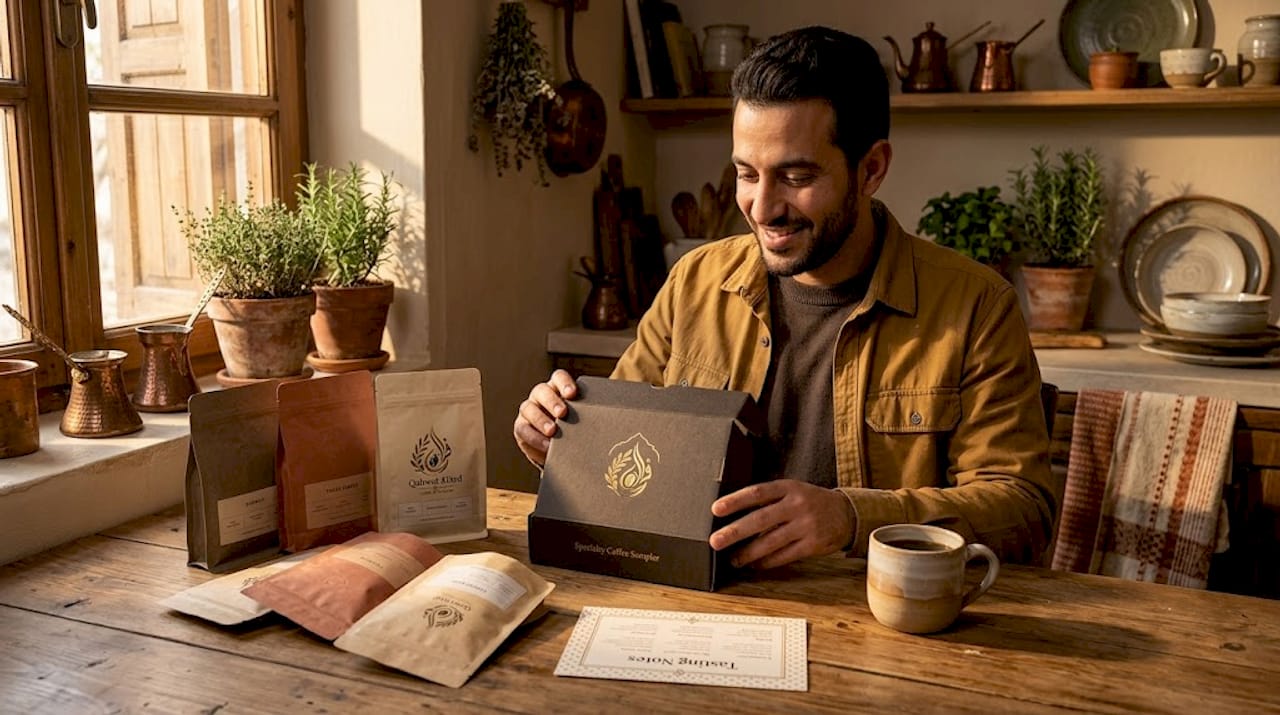
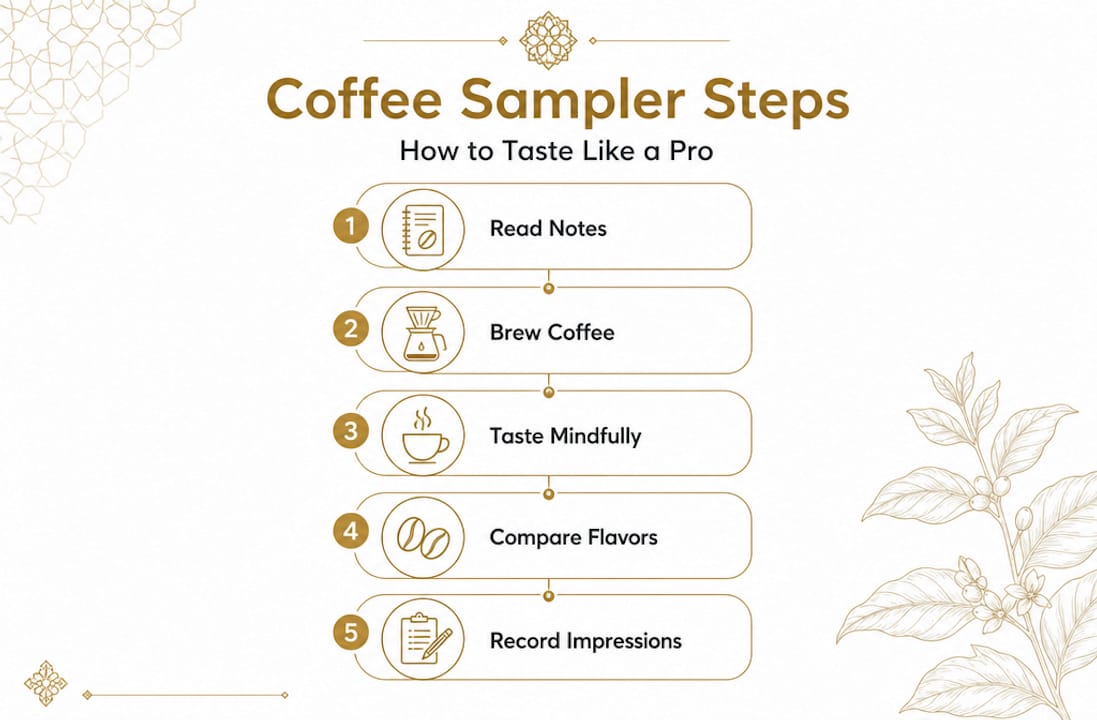
Pro Tip: Before you open your first bag in a sampler, read the tasting notes first. Then brew and taste without looking back at them. Checking your impressions against the notes afterward builds your palate faster than any other method.
Types of specialty coffee samplers
Understanding the different categories of samplers helps you pick one that actually matches what you want to learn or experience. The five most common types are listed below.
- Origin-focused samplers collect coffees from different countries or regions, like Ethiopia, Colombia, and Guatemala, to show how geography and soil affect flavor. These are ideal for anyone curious about how origin shapes flavor and why two coffees from different continents can taste completely unlike each other.
- Roast profile samplers present the same origin or variety across light, medium, and dark roast levels. These are particularly useful for understanding how roasting decisions change the character of a bean, since roasting is one of the most powerful levers in flavor development.
- Flavor-note themed samplers group coffees around a sensory category, such as chocolatey and nutty profiles or bright and fruity ones. These cater to drinkers who already know what flavor directions they enjoy and want to explore deeper within that lane.
- Blind tasting or discovery samplers remove labels and ask you to identify origins or roast levels purely by taste. This format works like a quiz and builds sensory memory fast.
- Seasonal or holiday assortments are often the best specialty coffee gifts, combining accessibility with thoughtfulness. They tend to feature crowd-pleasing profiles and attractive packaging.
Here is how these sampler types compare across key features and typical price ranges:
| Sampler type | Focus | Typical contents | Price range |
|---|---|---|---|
| Origin-focused | Geographic diversity | 3 to 5 single-origin coffees | $30 to $65 |
| Roast profile | Roast level comparison | Same origin in 2 to 4 roast levels | $25 to $55 |
| Flavor-note themed | Sensory category | 3 to 5 coffees grouped by taste | $28 to $60 |
| Blind tasting/discovery | Palate training | 3 to 6 unlabeled coffees + answer key | $35 to $70 |
| Seasonal/holiday | Occasion-based variety | 4 to 8 coffees with seasonal profiles | $40 to $85 |
Bundles that include origin transparency and roast variety command a 30 to 50 percent price premium over simpler blend-focused packs. That premium reflects genuine added value, not marketing. When you know where a coffee came from and why it was roasted the way it was, the experience is fundamentally richer.
Benefits of specialty coffee samplers
The most obvious benefit is discovery without waste. Buying a full 12-ounce bag of something new is a gamble. Buying a 2-ounce sample as part of a curated set is an experiment with controlled risk. You learn whether you like a Kenyan natural process or a Guatemalan washed coffee before committing to a larger quantity.
The sensory benefits run deeper than that. Specialty coffee samplers are designed to develop your ability to recognize and articulate what you are tasting. Distinct primary aromas are key markers that differentiate exceptional coffees from merely adequate ones, which means tasting across multiple profiles in one session trains your nose and palate simultaneously. Over time, this builds a tasting vocabulary that makes every future cup more interesting, not just the ones in samplers.
Here is where samplers provide the most concrete advantages:
- Flavor comparison in real time. Tasting three coffees side by side reveals differences that are nearly invisible when you drink them on separate days.
- Guided vocabulary building. Tasting notes give you language for what you are experiencing, which accelerates learning. Flavor complexity becomes something you can articulate, not just sense.
- Cost-effective exploration. A $45 sampler with five different coffees costs less per coffee than buying five separate full bags, while also giving you a structured tasting arc.
- Increased purchase confidence. Once you have tasted across a range, you stop guessing at what you will enjoy. You buy what you know.
Pro Tip: Brew all coffees in a sampler using the same method, like a pour-over or French press, so you are comparing coffees fairly rather than comparing brewing variables.
Educational materials included in samplers are not afterthoughts. Roasters who add cupping notes and brewing guides enhance their sampler value by 30 to 50 percent and build stronger long-term customer relationships in the process. You get more from the experience. The roaster earns a loyal customer. It works for everyone.
How to choose a coffee sampler
Picking the right specialty coffee sampler comes down to honest self-assessment and matching the sampler’s purpose to your current stage as a drinker. Follow this process:
- Assess your current palate. If you drink coffee mostly for the caffeine and have not explored beyond a standard medium roast, start with a roast profile sampler. It gives you an anchored reference point before introducing origin or flavor complexity.
- Define your goal. Are you trying to find your ideal everyday coffee, or are you trying to develop tasting skills? Gift shoppers want something accessible and beautifully presented. Enthusiasts want challenge and depth.
- Look at what is included beyond the coffee. A sampler with detailed cupping notes, a flavor wheel, and a brewing guide is categorically more useful than one that just sends bags. Understanding how roasting shapes flavor is part of what makes the tasting experience meaningful.
- Match price to intent. Entry-level samplers in the $25 to $40 range are fine for casual exploration. If you want genuine single-origin diversity with strong educational materials, budget $50 to $80 for a set that delivers proportional value.
- Check freshness and roast dates. A specialty sampler is only as good as the coffee inside it. Look for roasters who print roast dates on their packaging and ship within two weeks of roasting.
- Consider your brewing setup. Some samplers are optimized for espresso, others for filter methods. A mismatch between the sampler’s intended brew style and your equipment will give you a skewed tasting experience.
Samplers as gifts and subscriptions
The gift-giving case for specialty coffee samplers is straightforward. They are experiential, personal without requiring specific knowledge about someone’s tastes, and they scale naturally across different price points. A well-packaged sampler with tasting notes feels considered in a way that a single bag of coffee does not.
Subscription models take this further. Instead of a one-time discovery, subscribers receive rotating samplers monthly, each focused on a different origin, roast profile, or seasonal theme. Subscription sampler services show higher customer retention when educational materials are consistently included, because the experience compounds over time. Each delivery builds on the last.
The market data confirms this is not a niche interest. The U.S. specialty coffee variety pack market is projected to grow at a CAGR of 6 to 9 percent through 2035, driven by exactly the kind of low-risk discovery experience that samplers provide. Consumers want to explore coffee the way they explore wine or craft beer. Samplers are the format that makes that possible without the learning curve feeling overwhelming.
The best specialty coffee gifts combine beautiful presentation with genuine educational content. A sampler that includes a flavor wheel alongside a selection of coffees from distinct growing regions gives recipients something to use and learn from, not just consume.
My take on what samplers actually teach you
I have tasted hundreds of coffees over the years, and the ones that genuinely shifted how I understood coffee almost always came through a sampler or tasting flight format. Not because the coffees were necessarily the best I ever had, but because the comparison structure forced me to notice things I would have missed drinking them in isolation.
The most common surprise I hear from people who try a specialty sampler for the first time is that light roasts taste nothing like they expected. They expect sour and harsh. They get blueberry, jasmine, or citrus. That gap between expectation and reality is where real coffee education happens.
What I have learned is that treating a sampler like a mini course changes the results completely. When you sit down with a sampler and actually use the flavor wheel, compare notes between cups, and take time to consider what you are tasting, you retain that sensory knowledge. It accumulates. Two or three samplers into that practice, you develop real preferences and real vocabulary, not just vague feelings about whether something is “too strong” or “kind of fruity.”
The educational potential of specialty samplers is genuinely underappreciated by most drinkers. Most people grab a cup and move on. The ones who slow down and engage with what is in the glass, or rather the cup, are the ones who end up becoming the kind of coffee drinkers who know exactly what they want. That kind of confidence is worth more than any single great coffee you happen to stumble on.
— Anthony-Yasin
Discover specialty coffee samplers at Qahwat Al’Ard
Qahwatalard was built specifically for this kind of discovery. Their curated sample pack collection covers everything from single-origin exploration to flavored coffee experiences, each designed with the educational depth that makes tasting genuinely rewarding. The Single Origin Favorites Sample Pack is a strong starting point for anyone ready to explore how origin shapes flavor across multiple growing regions. For drinkers drawn to more expressive, flavor-forward profiles, the Flavored Coffees Sample Pack pairs rich flavor variety with guides that help you get the most out of each cup. Every sampler Qahwatalard offers reflects their commitment to traceability, freshness, and the kind of quality that makes specialty coffee worth exploring in the first place.
FAQ
What exactly is a specialty coffee sampler?
A specialty coffee sampler is a curated set of small-quantity coffees selected for quality, origin diversity, or flavor contrast, often paired with tasting notes, flavor wheels, or brewing guides to create a structured tasting experience.
How is a specialty sampler different from a regular coffee gift set?
Regular coffee gift sets typically bundle generic or commercial blends for variety. Specialty samplers focus on 80-plus-point scoring coffees with intentional curation, educational materials, and a clear tasting purpose.
What types of coffee samplers are available?
The main types include origin-focused, roast profile comparison, flavor-note themed, blind tasting or discovery, and seasonal assortments. Each format serves a different learning goal or occasion.
Are specialty coffee samplers worth the price?
Yes, particularly when they include educational materials. Cupping notes and brewing guides increase sampler value by 30 to 50 percent and accelerate how quickly you develop real tasting skills.
What makes a specialty coffee sampler a good gift?
Specialty coffee samplers work as gifts because they are experiential, accessible at multiple price points, and personally meaningful without requiring detailed knowledge of the recipient’s exact preferences. They are among the most thoughtful options for coffee enthusiasts.
Recommended
- Flavored Coffees Sample Pack | Qahwat Al’Ard “Coffee of the land”
- Flavor complexity in coffee: What it means and how to taste it | Qahwat Al’ard
- Best Sellers Sample Pack: 6Bean, Cowboy, Breakfast, Peru, Mexico, Bali | Qahwat Al’Ard “Coffee of the land”
- Upgrade Your Home Bar: Must-Have Premium Coffee Gear | Qahwat Al’ard


