


TL;DR:
- Processing methods fundamentally shape coffee flavor before roasting or brewing.
- Understanding techniques like washed, natural, honey, wet-hulled, and anaerobic fermentation helps match coffee profiles to personal preferences.
The flavor in your cup is shaped long before a roaster ever touches the bean. Understanding the types of coffee processing methods unlocks why two coffees from the same Ethiopian hillside can taste wildly different: one clean and floral, the other jammy and wine-soaked. Processing is not a footnote to origin or roast. It is the bridge between a raw coffee cherry and the complex sensory experience you actually drink. This guide walks through every major method, the craft behind each, and how to use that knowledge to choose coffees that genuinely match what you are after.
Table of Contents
- Criteria for choosing a coffee processing method
- Washed (wet) processing: clarity and brightness
- Natural (dry) processing: fruit-forward and body-rich
- Honey (pulped natural) processing: sweetness and balanced complexity
- Wet-hulled processing (Giling Basah): Indonesia’s earthy signature
- Anaerobic fermentation: intensifying fruit and tropical notes
- Comparing coffee processing methods: flavor, technique, and culture
- How to choose the right processing method for your coffee experience
- Why processing method mastery matters beyond taste
- Explore diverse coffees crafted through distinct processing methods
- Frequently asked questions
Key Takeaways
| Point | Details |
|---|---|
| Three core methods | Washed, natural, and honey processing are foundational coffee methods influencing flavor and culture. |
| Regional uniqueness | Wet-hulled is unique to Indonesia, featuring distinct moisture handling and earthy flavors. |
| Flavor shaping | Processing alters coffee chemistry and sensory experience beyond simple taste descriptors. |
| No best method | Selecting a method depends on climate, tradition, and desired flavor profile. |
| Experimentation adds variety | Anaerobic fermentation and other experiments create novel, intense flavor profiles. |
Criteria for choosing a coffee processing method
Not every farm gets to choose freely among different coffee processing methods. Method choice depends on climate, water availability, infrastructure, tradition, and targeted flavor profile. A producer in a water-scarce region simply cannot run the washing stations that washed processing demands. A farm with generations of dry-processing heritage may have no incentive to change, especially when the resulting cup is exactly what their buyers want.
What makes this fascinating for enthusiasts is that constraints become character. The earthy heaviness of Sumatran coffee is not an accident; it is the product of necessity transformed into identity. Processing decisions are inseparable from the origin and processing choices a region makes over decades.
When evaluating a coffee, consider these factors:
- Water availability: High-water regions favor washed processing; dry climates favor natural
- Infrastructure: Mechanized pulpers and fermentation tanks require investment that small producers may lack
- Flavor goal: Clarity and acidity versus body, sweetness, or experimental complexity
- Tradition: Regional preferences deeply embedded in buyer expectations and cultural identity
- Terroir expression: Processing either amplifies or filters the underlying varietal and soil character
Washed (wet) processing: clarity and brightness
Washed processing is the most controlled of all coffee processing techniques, which is precisely why it dominates specialty coffee from East Africa and Latin America. In washed processing, the fruit is removed early; beans ferment in water to break down mucilage, then are washed and dried. The result is a cup where the bean’s intrinsic qualities have nowhere to hide.
Because fruit sugars are removed before fermentation completes, washed coffees read as cleaner, brighter, and more acidic. Ethiopian Yirgacheffe washed lots are the textbook example: jasmine, bergamot, lemon. Kenyan AA washed coffees deliver black currant and tomato. Colombian washed lots tend toward caramel and red fruit with a defined acidity. Every note traces directly back to variety and elevation, not residual fruit.
Understanding washed coffee characteristics helps you match brewing method too. Light-roasted washed beans shine in pour-over and AeroPress, where clarity is amplified.
Key attributes of washed processing:
- Pulping removes the cherry skin mechanically
- Fermentation (12 to 48 hours) breaks down remaining mucilage
- Beans are washed with clean water, then dried on raised beds or patios
- Produces consistent, clean cups with pronounced acidity
- Requires reliable water access and proper fermentation monitoring
Pro Tip: Washed processing demands precise fermentation timing. Over-fermented beans develop a sour, vinegary defect called “ferment.” Ask your roaster for fermentation duration details; it tells you a lot about a producer’s discipline.
Natural (dry) processing: fruit-forward and body-rich
Natural coffee processing is the oldest method on the planet, and it requires almost nothing except sun, time, and careful attention. In natural processing, beans dry inside the whole cherry and sugars and fruit compounds migrate into the seed over several weeks. The coffee absorbs blueberry, strawberry, and wine-like notes directly from the drying fruit around it.
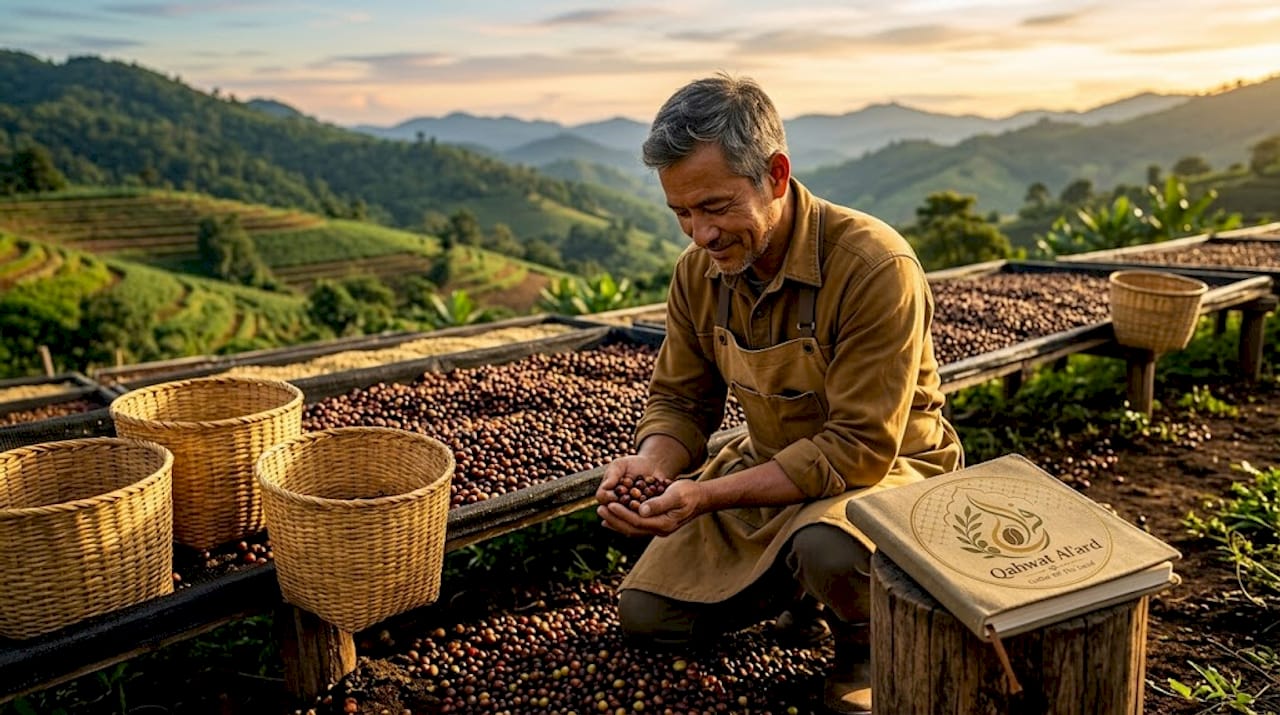
Ethiopia is the birthplace of this method, and natural Sidama or Guji lots showcase exactly why it endures: an almost syrupy body, layered fruit complexity, and a sweetness that washed coffees rarely match. Brazil adopted dry processing out of necessity due to its climate and now uses it at enormous scale, producing consistent chocolatey, nutty naturals at accessible price points.
Visiting the natural process regions makes clear how deeply this technique is woven into local agricultural culture. It is not just a production choice; it is heritage.
Key attributes of natural processing:
- Whole cherries spread on raised beds or patios for 3 to 6 weeks
- Regular turning prevents mold and ensures even drying
- Internal fermentation produces intense fruit and sweetness
- Higher variability in quality compared to washed lots
- Lower water footprint makes it environmentally practical in dry climates
Honey (pulped natural) processing: sweetness and balanced complexity
Honey processing sits between washed and natural, and it does not mean honey is added. Honey process removes the skin but leaves some or all mucilage on the bean during drying, affecting sweetness. The mucilage, which is the sticky, sugary layer between the skin and parchment, behaves almost like a coating that feeds fermentation and dries into the bean during the drying phase.
The color grades matter enormously here, and enthusiasts should know them:
- White honey: Minimal mucilage retained, closest to washed, bright and clean
- Yellow honey: Light mucilage, mild sweetness added, slightly fuller body
- Red honey: Moderate mucilage, more fruit character, longer drying, richer sweetness
- Black honey: Maximum mucilage, longest drying, closest to natural, heavy sweetness and body
Costa Rica pioneered the honey method commercially, and El Salvador has produced some extraordinary red and black honey lots that rival the best naturals in complexity. The honey process flavor profile appeals to drinkers who find naturals overwhelming but feel washed coffees lack depth.
Pro Tip: Black honey lots require up to 30 days of drying and constant attention to prevent mold. That labor intensity is reflected in price, and it is worth paying.
Wet-hulled processing (Giling Basah): Indonesia’s earthy signature
Giling Basah, the Indonesian wet-hulling method, is one of the most misunderstood coffee processing stages in the specialty world. It is not simply a washed or natural variant. Wet-hulled processing removes parchment while the bean is still very wet (around 35 to 40% moisture), then dries the exposed bean down to roughly 11 to 12%. That two-stage exposure fundamentally changes the bean’s cellular structure.
The exposed, swollen bean oxidizes differently during final drying, producing Sumatra’s signature flavor: earth, cedar, tobacco, dark chocolate, and a thick, almost syrupy body with very low acidity. For many connoisseurs, this is exactly what they seek in a dark morning brew. For others, it tastes muddy. Neither reaction is wrong; the method simply creates something unlike any other process.
| Processing step | Washed | Wet-hulled (Giling Basah) |
|---|---|---|
| Moisture at hulling | 11 to 12% | 35 to 40% |
| Parchment removal timing | After full drying | Mid-drying |
| Final drying stage | With parchment on | Exposed bean, no parchment |
| Cup profile | Clean, bright | Earthy, heavy body |
| Primary regions | Ethiopia, Kenya, Colombia | Sumatra, Sulawesi, Flores |
The wet-hulled Indonesian coffee experience is genuinely unlike anything else in specialty. If you have never tried a Balinese or Sumatran lot processed this way, it rewires your expectations of what coffee can be.
Key traits of wet-hulled processing:
- Unique to Indonesian archipelago island regions
- Parchment removed at high moisture; bean surface exposed
- Heavy body, low acidity, earthy and spiced flavor notes
- Green beans appear blueish-green due to moisture exposure
- Requires careful sourcing to distinguish from defective wet processing
Anaerobic fermentation: intensifying fruit and tropical notes
Anaerobic fermentation is where coffee processing becomes something closer to winemaking. Anaerobic fermentation occurs in sealed, oxygen-free containers for 24 to 96 hours, producing fruity, tropical, and wine-like notes at intensities no traditional method can match.
With oxygen removed, yeast and bacteria shift their metabolic pathways, generating esters and lactic acid compounds that add layers of passion fruit, fermented berry, hibiscus, and sometimes even a pronounced carbonic quality reminiscent of natural wine. Producers control temperature and CO2 release valves to dial in specific flavor targets. It is highly technical and requires the kind of precision monitoring that separates skilled producers from those chasing a trend.
The effects of anaerobic fermentation have divided the specialty community. Traditionalists argue it obscures terroir. Experimentalists argue it is terroir, expressed through microbial culture and producer skill. Both positions are defensible.
Key characteristics of anaerobic fermentation:
- Sealed tanks or bags eliminate oxygen exposure during fermentation
- Fermentation duration typically ranges from 24 to 96 hours
- Temperature management is critical to avoid unwanted off-notes
- Produces intense, tropical, wine-like cup profiles
- Requires disciplined process control for batch-to-batch consistency
Comparing coffee processing methods: flavor, technique, and culture
Processing methods produce measurable differences in flavor perception, bitterness, mouthfeel, and balance. Here is a direct comparison across all major methods:
| Method | Flavor profile | Body | Acidity | Key regions |
|---|---|---|---|---|
| Washed | Clean, floral, citrus, bright | Light to medium | High | Ethiopia, Kenya, Colombia |
| Natural | Fruity, blueberry, wine, sweet | Full | Low | Ethiopia, Brazil |
| White/Yellow honey | Clean-sweet, mild fruit | Medium | Medium-high | Costa Rica, El Salvador |
| Red/Black honey | Sweet, stone fruit, caramel | Medium-full | Medium | Costa Rica, El Salvador |
| Wet-hulled | Earthy, cedar, tobacco, dark | Very full | Very low | Sumatra, Sulawesi |
| Anaerobic | Tropical, wine, intense fruit | Variable | Variable | Global experimental |
“The impact of coffee processing on chemical composition is measurable and affects both taste perception and mouthfeel in ways that go far beyond what roast level alone can explain.”
Understanding this comparison table through the lens of the processing method flavor comparison allows you to approach sourcing not as guesswork, but as an informed decision.
Practical takeaways:
- Washed suits those who want clarity and origin-forward flavors
- Natural suits those who prioritize sweetness and intense fruit
- Honey grades offer a spectrum for precision palate matching
- Wet-hulled is essential for understanding Indonesian coffee culture
- Anaerobic suits experimental drinkers comfortable with polarizing intensity
How to choose the right processing method for your coffee experience
No single best method exists; selection depends on constraints and desired flavor outcome. Here is how to apply everything in this guide to real purchasing decisions:
- Identify your flavor priority. Do you want clean and bright, sweet and fruity, earthy and heavy, or intensely experimental? That single question narrows the field immediately.
- Match processing to your brew method. Light, washed coffees reward pour-over precision. Heavy, wet-hulled lots excel in French press or espresso. Naturals work beautifully in both if roast is calibrated right.
- Connect with regional culture. Choosing processing based on terroir deepens your appreciation. A Yirgacheffe washed lot carries centuries of Ethiopian coffee culture in every cup.
- Demand transparency from your roaster. Processing method, fermentation duration, and drying conditions should be on the bag or the product page. If they are not, ask.
- Compare across methods deliberately. Buy the same varietal processed two different ways from the same farm when possible. It is the clearest demonstration of how is coffee processed differently translates into radically different drinking experiences.
Pro Tip: Sampling single-origin coffees from different processing methods in the same week is the fastest way to build a refined, confident palate. Brew them identically to isolate the processing variable.
Why processing method mastery matters beyond taste
Most coffee conversations stop at roast level or brewing recipe. Processing method mastery is rarer, and that gap matters. When you understand that processing method shifts the chemical taste landscape detected by advanced analysis, affecting bitterness and mouthfeel, you stop treating flavor differences as random or subjective. They are predictable, explainable, and traceable.
There is also a cultural obligation in this knowledge. Wet-hulled processing in Sumatra is not a quirk; it is an agricultural adaptation refined over generations that defines an entire regional identity. Natural processing in Ethiopia is not inefficiency; it is the original form of the craft, practiced in the same highlands where coffee was first cultivated. When enthusiasts understand these methods, they become better advocates for the producers who practice them.
The expert view on processing impact that we hold at Qahwat Al’ard is simple: transparency about processing is not optional for specialty coffee. It is the foundation of honest sourcing. A coffee labeled “Ethiopian single origin” without processing details is an incomplete story. Every step from cherry to cup shapes the story your coffee tells, and you deserve to know the full narrative.
Method transparency also drives quality upward across the supply chain. When buyers ask roasters, and roasters ask producers, about fermentation duration and drying conditions, producers are incentivized to control those variables more carefully. That accountability loop benefits everyone.
Explore diverse coffees crafted through distinct processing methods
You have spent time understanding the craft. Now taste it.
At Qahwat Al’ard, we source with processing method transparency as a non-negotiable standard. Our coffee collection spans washed, natural, and honey-processed origins chosen specifically to showcase how method shapes cup character. If you want a structured way to experience the difference firsthand, the single origin sample pack is built exactly for that purpose: side-by-side processing comparison in one shipment. For those who prefer a balanced, approachable daily drinker that still carries craft processing behind it, our medium roast coffee blend delivers exactly that. Every bag comes with sourcing details because you now know those details actually matter.
Frequently asked questions
What are the main types of coffee processing methods?
The main processing types are washed (wet), natural (dry), honey (pulped natural), wet-hulled as practiced in Indonesia, and experimental methods like anaerobic fermentation, each producing a distinct flavor character.
How does honey coffee differ from natural and washed?
Honey process coloration grades correspond to mucilage left on the bean during drying, so honey sits between natural’s sweetness and washed’s clarity, with black honey closest to natural and white honey closest to washed.
What flavor effects does anaerobic fermentation have?
Anaerobic fermentation in sealed containers produces intensely fruity, tropical, and wine-like notes by shifting microbial activity toward ester and lactic acid production, creating flavors traditional methods cannot replicate.
Why is wet-hulled coffee unique to Indonesia?
Wet-hulled processing is unique to Indonesia because it removes parchment at roughly 35 to 40% bean moisture before a final drying phase, exposing the bean to oxidation in a way no other regional method replicates, which creates its signature earthy, heavy-bodied profile.
Is one coffee processing method better than others?
No single best method exists; method choice is about environmental constraints, cultural tradition, and flavor targets, with each approach offering qualities that suit different palates, brewing styles, and coffee experiences.


