


For enthusiasts and gift shoppers, artisan ceramic cups paired with curated apparel bundles are the strongest all-around pick across premium coffee merchandise collections compared by material, giftability, and long-term value. Shop Qahwat Al’Ard for traceable, origin-linked collections with gift-ready presentation built in. Two things anchor that recommendation:
- Premium pricing in specialty coffee reflects sustainable sourcing and small-batch processing, not marketing spend. The same logic applies to merchandise: the best pieces tie directly to a coffee’s origin story.
- The Specialty Coffee Association’s framework treats the vessel as part of the tasting experience, not an afterthought. That means a well-chosen cup is as much a part of the gift as the coffee inside it.
Table of Contents
- Which premium coffee cup material is right for you?
- What makes coffee apparel and accessories genuinely premium?
- How do you compare merchandise collections side by side?
- What do premium coffee merchandise collections cost in the U.S.?
- Does vessel geometry actually change how coffee tastes?
- How do you vet a seller and avoid bad premium merchandise?
- Key Takeaways
- Why merchandise is part of the coffee ritual, not a side category
- Qahwat Al’Ard curated collections: where to shop next
- Useful sources
- FAQ
Which premium coffee cup material is right for you?
The cup you drink from changes what you taste. That is not a marketing claim. Rim thickness, internal slope, and handle ergonomics measurably affect how coffee hits your palate, how long it stays warm, and how satisfying the ritual feels. Here is how each major material stacks up.
Ceramic
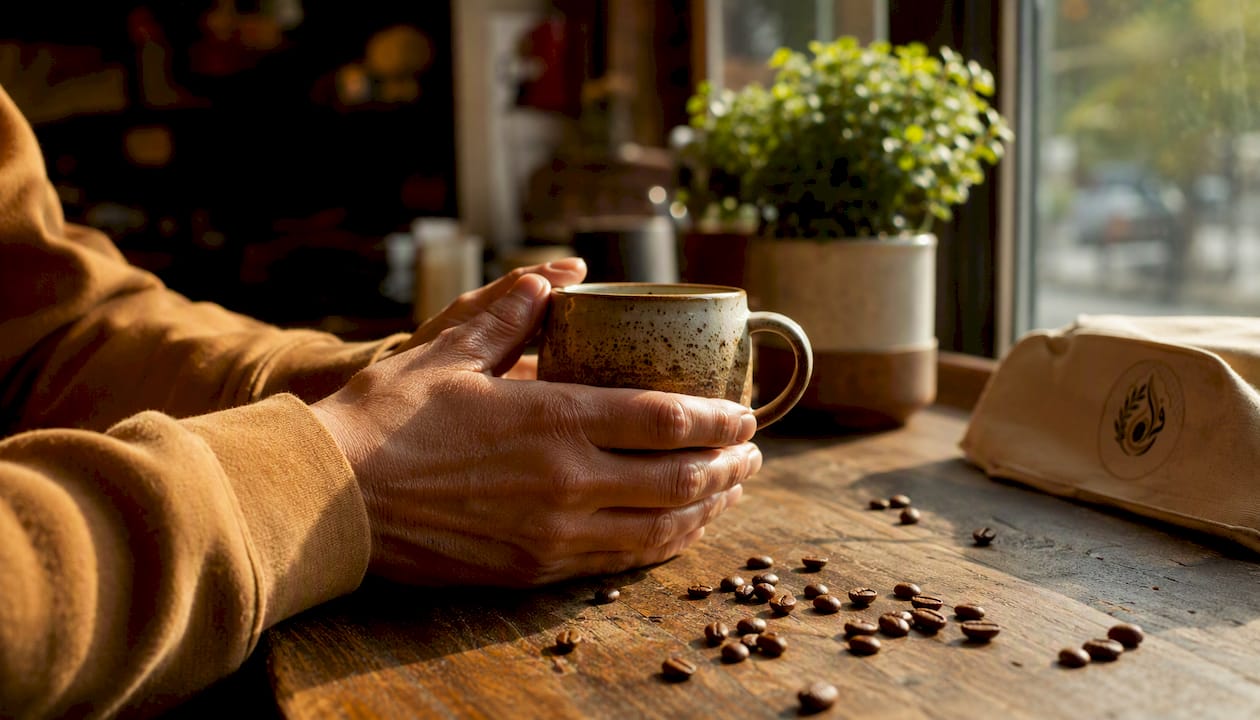
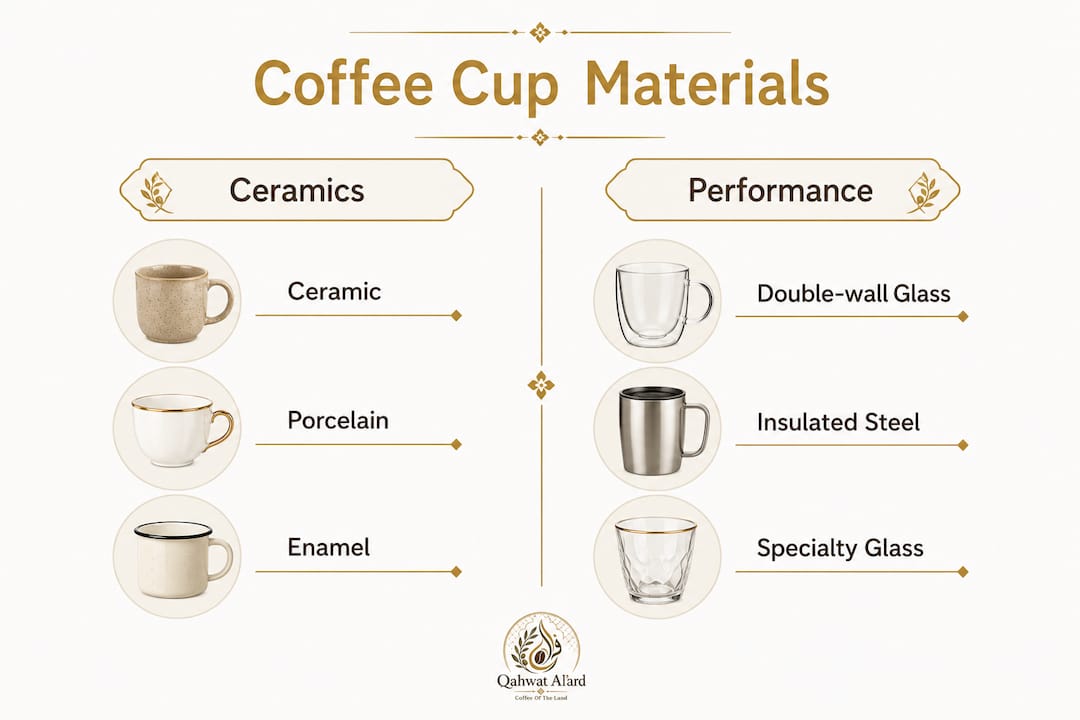
The workhorse of premium collections. Ceramic retains heat well, feels substantial in the hand, and its slight porosity gives it a warmth that glass and steel cannot replicate. Best for: daily black coffee, pour-over, and anyone who wants a mug that improves with use. Downside: chips at the rim if dropped, and a glossy glaze can dull over time in the dishwasher.
Porcelain
Thinner walls, a smoother surface, and a non-porous finish that won’t retain flavors between brews. Porcelain is the go-to for espresso and cupping sessions where flavor neutrality matters. It also photographs beautifully, which is why it dominates specialty café shelves. More fragile than ceramic, but the sensory payoff for espresso drinkers is real.
Double-wall glass
Keeps the exterior cool to the touch while showing off crema and color. The parabolic internal shape common in specialty glassware focuses aroma and lifts crema, which is why serious tasters reach for it. Best for: espresso, cold brew, and anyone who wants to watch the layers. Not ideal for commuting.
Insulated stainless steel
The thermal retention leader. Heated smart mugs and insulated double-wall designs can keep coffee within drinking temperature for 80 or more minutes, far longer than any single-wall option. Best for: commuters, travel, and anyone who drinks slowly. The trade-off is mouthfeel: stainless rims feel harder than ceramic or glass, and the interior can impart a faint metallic note if not well-coated.

Enamel
Enamel mugs carry a strong design heritage and a rustic aesthetic that photographs well. They are durable outdoors but chip if dropped on hard surfaces, and the exposed metal underneath can rust. Best for: camping, outdoor gifting, and collectors who value the visual over the sensory.
Specialty sensory glass
Thin-rimmed, parabolic, and designed specifically for tasting. The geometry focuses volatile aromatics toward the nose while the thin lip delivers coffee to the front of the palate. These are the cups serious tasters use at competitions. Not dishwasher-safe in most cases, and they require careful handling.
Pros and cons at a glance:
- Ceramic: Warm feel, good heat retention, durable. Chips at the rim; glaze fades with heavy dishwasher use.
- Porcelain: Flavor-neutral, elegant, espresso-perfect. More fragile; pricier at the premium end.
- Double-wall glass: Aroma-forward, visually striking. Fragile; not travel-friendly.
- Insulated stainless: Best thermal retention (80+ minutes), travel-ready. Harder rim feel; possible metallic note.
- Enamel: Durable outdoors, strong aesthetic. Chips expose rust-prone metal; not for daily tasting.
- Sensory glass: Competition-grade aroma focus, thin rim. Fragile; hand-wash only.
What makes coffee apparel and accessories genuinely premium?
Logo on a tee is not a collection. Premium coffee apparel earns that label through fabric weight, construction, and the story behind the design. Here is what to look for across the main categories.
Apparel: tees, hoodies, and hats
A premium tee starts at 180–200 gsm fabric weight. Below that, prints crack faster and the garment loses shape after a few washes. Look for ring-spun cotton or a cotton-modal blend, water-based or discharge printing (not plastisol, which sits on top of the fabric and peels), and a hem that lies flat without curling. Hoodies should have a brushed interior and reinforced kangaroo pocket seams. For coffee hats and accessories, structured six-panel caps with embroidered (not printed) logos hold their shape and read as premium on the shelf.
Limited-edition details matter. An artist collaboration or a design tied to a specific farm harvest gives a piece a story that a generic logo never can. That narrative is what separates a collector’s item from a promotional giveaway.
Accessories: totes, pour-over kits, and scales
- Tote bags: Look for 12 oz canvas or heavier, reinforced stitching at the handles, and a gusset base. Printed interior lining signals a premium finish.
- Pour-over kits: The vessel material (borosilicate glass, ceramic dripper) and the filter type (reusable metal vs. paper) determine both performance and perceived value. A kit that includes a gooseneck kettle or a scale reads as a complete gift.
- Scales: Precision to 0.1 g and a response time under two seconds are the functional benchmarks. Waterproof surfaces and a tare function are table stakes for any scale marketed as premium.
- Enamel pins and patches: Small but high-signal for collectors. Soft enamel with a polished metal border is the standard; hard enamel is more durable and commands a higher price.
Apparel quality checklist:
- Check the care label: cold wash, hang dry is the mark of a quality print that the brand trusts.
- Confirm the print method: discharge or water-based over plastisol.
- Look for a numbered or dated limited-edition tag if collector value matters.
- Inspect seams at the shoulder and collar; uneven stitching is the fastest tell for a low-quality blank.
- For gift presentation: tissue paper, a branded box, and a card with the origin story of the design add perceived value without adding much cost.
How do you compare merchandise collections side by side?
The axes that actually drive purchase decisions are material, use case, price, durability, thermal performance, design story, and giftability. Here is how the main cup and vessel categories map across those dimensions.
| Category | Material | Best for | Price range (USD) | Durability & care | Thermal retention | Design narrative | Giftability |
|---|---|---|---|---|---|---|---|
| Everyday ceramic mug | Ceramic | Daily coffee, pour-over | $18 | Dishwasher-safe; chips at rim | Moderate | High if origin-linked | High |
| Porcelain espresso cup | Porcelain | Espresso, cupping | $20 | Hand-wash preferred | Low (thin walls) | High; café-grade aesthetic | High |
| Double-wall glass | Borosilicate glass | Espresso, cold brew, tasting | $25 | Hand-wash; fragile | Good (insulating air gap) | High; visual drama | Moderate |
| Insulated stainless tumbler | Stainless steel | Commuting, travel | higher price range | Dishwasher-safe (check lid) | Excellent thermal retention for an extended period | Moderate; depends on finish | High |
| Enamel mug | Enamel over steel | Outdoor, gifting | $15 | Hand-wash; chips expose metal | Low-moderate | High; heritage aesthetic | High |
| Sensory tasting glass | Specialty glass | Competition tasting | $80 | Hand-wash only | Low | Very high; specialist appeal | Moderate |
How to weigh these axes by buyer type:
- Daily user: Prioritize thermal retention and dishwasher safety. Ceramic or insulated stainless.
- Serious taster or collector: Prioritize material purity, rim geometry, and design provenance. Porcelain or sensory glass.
- Commuter: Insulated stainless, full stop. Nothing else keeps pace.
- Gift shopper: Giftability and design narrative first. Ceramic with an origin story, or a curated bundle that pairs a cup with a traceable coffee.
What do premium coffee merchandise collections cost in the U.S.?
Budget expectations vary widely depending on whether you are buying a single piece or a curated gift set, and whether personalization is involved.
| Item | Typical price range (USD) | Personalization available | Standard shipping | Personalized shipping |
|---|---|---|---|---|
| Everyday premium ceramic mug | $18 | Engraving, custom print | 3–7 business days | 7–10 business days |
| Limited-edition sensory glass | $80 | Rarely; limited runs | 3–7 business days | N/A |
| Insulated stainless tumbler | $65 | Laser engraving common | 3–7 business days | 7–10 business days |
| Premium apparel item (tee/hoodie) | $65 | Embroidery, custom label | 3–7 business days | 10–21 business days |
| Curated gift bundle (cup + coffee) | $45 | Packaging, card | 3–7 business days | 7–21 business days |
A few factors push prices toward the top of those ranges: a documented limited production run, an artist collaboration, a farm or lot tie-in, or premium packaging. Single-origin splurge coffees in the $21–$27 per 12 oz range are a useful benchmark for what “premium” means in the coffee category, and merchandise priced alongside them signals the same sourcing seriousness.
Embroidery on apparel typically adds 7–10 business days to fulfillment. Laser engraving on stainless or ceramic is faster, usually 3–5 additional days. If you are buying for a specific date, add a week of buffer for any personalized item.
Does vessel geometry actually change how coffee tastes?
Yes, and the mechanics are straightforward once you know what to look for. Parabolic internal shapes and thin rims in specialty glassware focus aroma toward the nose and deliver coffee to the front of the palate, where sweetness registers first. A thick rim, by contrast, spreads the liquid across the tongue more broadly and can mute brightness.
“Rim thickness, internal slope, and handle ergonomics all influence how people experience coffee — these are not aesthetic choices, they are functional ones.” — Serious Eats, “The 21 Best Coffee Mugs”
Heat retention compounds the effect. A cup that drops temperature quickly changes the flavor profile of the same coffee as it cools, which is why a thin-walled porcelain cup tastes different at minute one versus minute ten. Insulated designs hold the brew in a narrower temperature window, which some drinkers prefer and others find flattening.
Three-step sensory test you can run at home:
- Brew one batch of the same coffee and pour equal amounts into two different cups simultaneously.
- Taste from each cup at the same moment, noting brightness, body, and finish. Pay attention to where the liquid first hits your tongue.
- Wait ten minutes and taste again. The cup that holds flavor complexity longer is the better vessel for that brew style.
Pro Tip: When evaluating a limited-edition cup for collector value, look beyond the design. Check the production run number (printed on the base or listed in the product description), the artist or origin credit, and whether the piece is part of a documented series. A beautiful cup with no provenance documentation is a decoration, not a collectible.
How do you vet a seller and avoid bad premium merchandise?
Three questions to ask before you buy: What material is this, exactly? What is the return and warranty policy? How many were made?
Buyer’s checklist:
- Inspect materials and specs. Confirm the clay body (ceramic vs. porcelain), glass type (borosilicate vs. soda-lime), or steel grade (18/8 stainless is the standard for food-safe tumblers). Vague listings that say only “high-quality ceramic” without further detail are a yellow flag.
- Check provenance claims. Does the seller name the artist, the farm, or the production facility? Traceable sourcing in coffee sustainability applies equally to merchandise. A design described as “inspired by Ethiopian coffee culture” should name the specific origin or artist.
- Review care and warranty information. A premium piece comes with clear care instructions and at least a defect warranty. No care info usually means no quality control.
- Confirm shipping and personalization timelines. Get the estimated delivery date in writing before checkout, especially for personalized items. “Ships in 2–3 days” for an embroidered hoodie is almost certainly inaccurate.
- Finalize purchase with a clear return window. Thirty days minimum for non-personalized items is the U.S. standard. Personalized items are typically final sale, which is normal, but the policy should be stated clearly before you pay.
Red flags to walk away from:
- Provenance claims with no supporting detail (“artisan-crafted,” “small-batch,” no names or locations)
- Product photos that are inconsistent in color, finish, or shape across listings
- No care instructions or warranty language anywhere on the page
- Delivery estimates under five business days for embroidered or engraved items
- Limited-edition claims with no production run number or documentation; mass-produced lines marketed as scarce rarely appreciate in value
Key Takeaways
Premium merchandise collections are strongest when material, provenance, and giftability align. The cup or apparel piece that carries a traceable origin story and clear care documentation is both a better daily object and a more meaningful gift.
| Point | Details |
|---|---|
| Match material to use case | Ceramic and porcelain for tasting; insulated stainless for commuting; sensory glass for serious collectors. |
| Thermal retention varies widely | Insulated double-wall designs keep coffee at temperature for 80 or more minutes; single-wall ceramic retention varies. |
| Provenance drives collector value | Limited runs with documented artist or origin credits retain value; mass-produced lines with vague claims rarely do. |
| Budget for personalization lead time | Embroidery adds 7–10 business days; laser engraving adds 3–5. Build in a buffer week for deadline gifts. |
| Qahwat Al’Ard for curated gift sets | Qahwat Al’Ard pairs traceable single-origin coffees with apparel and accessories for gift-ready bundles with clear provenance. |
Why merchandise is part of the coffee ritual, not a side category
Coffee merchandise earns its place in a collection when it does something the coffee alone cannot: it makes the ritual visible. A mug tied to a specific farm harvest, or a hoodie designed in collaboration with a roaster, carries the story of the coffee into daily life in a way that a bag of beans, once emptied, cannot. That is the argument for taking merchandise seriously, and it is the reason Qahwat Al’Ard curates its apparel and accessories with the same sourcing discipline it applies to its single-origin beans.
The brands that get this right treat merchandise as functional storytelling. The ones that get it wrong slap a logo on a generic blank and call it premium. The difference is visible in the details: the weight of the fabric, the specificity of the design credit, the care instructions that tell you the brand actually thought about longevity. When those details are present, the piece becomes part of the ritual. When they are absent, it is just a product.
Qahwat Al’Ard curated collections: where to shop next
Qahwat Al’Ard is the direct answer for shoppers who want origin-linked coffee and merchandise in one place, without hunting across multiple storefronts for pieces that actually belong together.
The collections cover the full range of what this article recommends: single-origin beans with documented provenance, 12-pack single serve capsules built for gift bundles, the Max Caf Blend for high-intensity drinkers, and instant coffee options that travel well in a gift set. The apparel follows the same curatorial logic: pieces designed around coffee culture and origin, not generic logo merchandise. Gift packaging and curated bundle options are available at checkout. Browse the full coffee collection to find the right pairing for the person you are shopping for, or start with a holiday gift set template if you want a ready-to-use bundle framework.
Useful sources
- Grand View Research — Coffee Market Analysis: Market-level data on premium pricing drivers and sourcing transparency; useful for understanding why premium merchandise commands the prices it does.
- Serious Eats — The 21 Best Coffee Mugs: Editor-tested mug reviews covering rim thickness, handle ergonomics, and internal shape; the most practical reference for cup selection criteria.
- Bon Appétit — Best Coffee Mugs: Thermal retention data and heated mug performance; useful for comparing insulated options.
- Fellow Products — Sustainable Sourcing Q&A: Expert commentary on vessel choice as part of the coffee ritual; supports the sensory test protocol.
- Ratio Coffee Journal: Practitioner notes on cup geometry and its effect on crema and aroma; the technical backbone for the geometry section.
- Qahwat Al’Ard — Single-Origin Collection: The client’s curated single-origin offerings; the recommended starting point for shoppers building a provenance-linked gift set.
FAQ
What is the most premium coffee brand in the U.S.?
Premium is defined by transparency, direct trade, and distinct flavor profiles rather than by a single brand name. Specialty roasters who publish sourcing details, lot numbers, and processing methods consistently rank highest among enthusiasts.
Does the cup you use actually change how coffee tastes?
Yes. Rim thickness, internal slope, and material all affect where coffee hits the palate and how long aroma concentrates near the nose. Thin-rimmed porcelain and parabolic glass are the most flavor-forward options for tasting.
What makes a limited-edition mug worth collecting?
Production run size, regional exclusivity, and documented artist or origin credits drive collector value. Mass-produced commemorative lines with wide availability rarely appreciate; small, discontinued, or artist-linked runs are more likely to hold or gain value over time.
Where can you buy premium coffee merchandise collections in the U.S.?
Qahwat Al’Ard offers curated bundles that pair traceable single-origin coffees with apparel and accessories, all available online with gift packaging options. Specialty coffee retailers and direct-to-consumer roasters with documented sourcing are the most reliable sources for high-end merchandise.
What is the 15-15-15 coffee rule?
The 15-15-15 rule is an informal brewing guideline suggesting coffee should be ground within 15 minutes of brewing, brewed within 15 minutes of grinding, and consumed within 15 minutes of brewing. It is a hobbyist heuristic for freshness, not an industry standard.


