
The best Qahwat Al’Ard tasting kits for most buyers are the Flavored Coffees Sample Pack for discovery and the Peru Coffee Pods for single-origin gifting. Here’s the fast shortlist:
- Flavored Coffees Sample Pack — Best for discovery. Multiple flavor profiles, traceable origins, and a low barrier to entry for anyone new to specialty coffee.
- Peru Coffee Pods — Best for gifting. Single-origin, convenient pod format, and a clean origin story that makes the gift feel intentional.
- 12 Pack Single Serve Coffee Capsules — Best for beginners. No grinder needed, consistent extraction, and a manageable sample count for building tasting habits.
- 60 Pack Single Serve Coffee Pods — Best value for daily tasters. Larger volume at a lower cost-per-cup once you’ve found a profile you love.
- Max Caf Blend — Best for high-caffeine enthusiasts who want a full-size bag after sampling. Not a sampler itself, but a natural upgrade from the capsule range.
- Instant Coffee — Best for convenience-first tasters. Dissolves in seconds, travels well, and works as a palate-reset between stronger samples.
Sample sizes across Qahwat Al’Ard’s pod and capsule formats are designed for tasting and daily convenience, not bulk brewing. Price-to-value is strong across the range, especially for the pod formats.
Table of Contents
- What do the top coffee tasting kits actually contain?
- How do you choose the right coffee tasting kit for your goal?
- How do you taste coffee from a kit at home?
- What do coffee tasting kits cost, and what are you paying for?
- How long do kit samples stay fresh, and how should you store them?
- Which Qahwat Al’Ard kit should you actually buy?
- Key Takeaways
- Why the “educational value” framing for tasting kits is mostly right, but slightly off
- Qahwat Al’Ard tasting kits: where to start your order
- Useful sources
- FAQ
What do the top coffee tasting kits actually contain?
Consumer reviews consistently flag one surprise: premium tasting kits ship small. Most sample bags weigh 1.5–2.25 oz per pack, enough for a few cups of tasting but not a week of daily brewing. That’s by design. The goal is palate exploration, not pantry stocking.
Here’s how Qahwat Al’Ard’s key SKUs map to the main comparison dimensions:
| Kit / SKU | Kit Type | Sample Count & Size | Best For | Brewing Method | Origin Traceability |
|---|---|---|---|---|---|
| Flavored Coffees Sample Pack | Ground / flavored | Multiple samples, tasting portions | Discovery, gifting | Pour-over, drip | Curated origins, flavor-forward |
| Peru Coffee Pods | Single-origin pod | Individual pods | Gifting, enthusiast | Pod machine | Single-origin, Peru |
| 12 Pack Single Serve Capsules | Capsule | 12 capsules | Beginner, convenience | Capsule machine | Blend/origin noted |
| 60 Pack Single Serve Pods | Pod | 60 pods | Daily taster, value | Pod machine | Blend/origin noted |
| Max Caf Blend | Ground / whole bean | Full-size bag | High-caffeine enthusiast | Any method | Blend, sourcing noted |
| Instant Coffee | Instant | Single-serve packets | Convenience, travel | Hot water | Sourcing noted |
For sensory training at a professional level, FlavorActiV’s Coffee Sensory Complete Kit uses 24 GMP-grade flavor standard packs aligned to World Coffee Research and SCA standards. That’s a different category entirely, built for Q graders and roasters rather than gift buyers. Qahwat Al’Ard’s pod and sample formats sit squarely in the discovery and gifting tier, where most enthusiasts actually start.
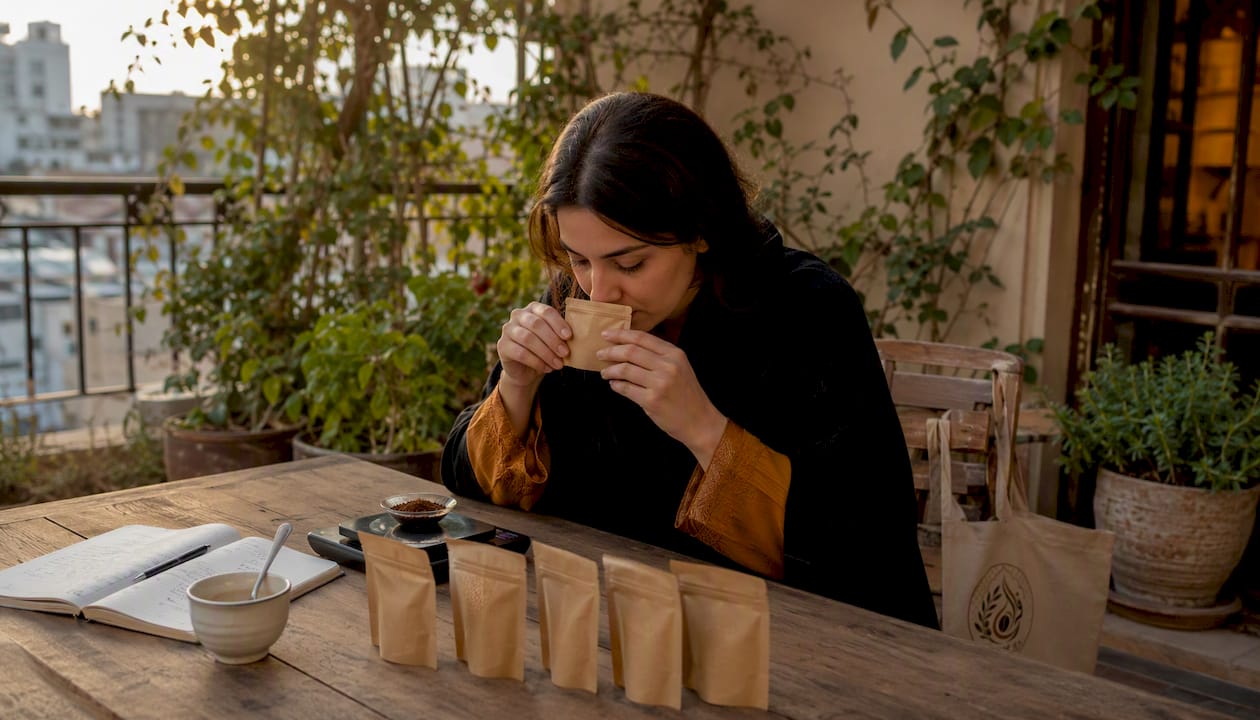
Origin traceability is a real differentiator in the Qahwat Al’Ard range. The Peru Coffee Pods name the growing region directly. Understanding why that matters is worth a few minutes with a guide on comparing coffee origins for flavor complexity.
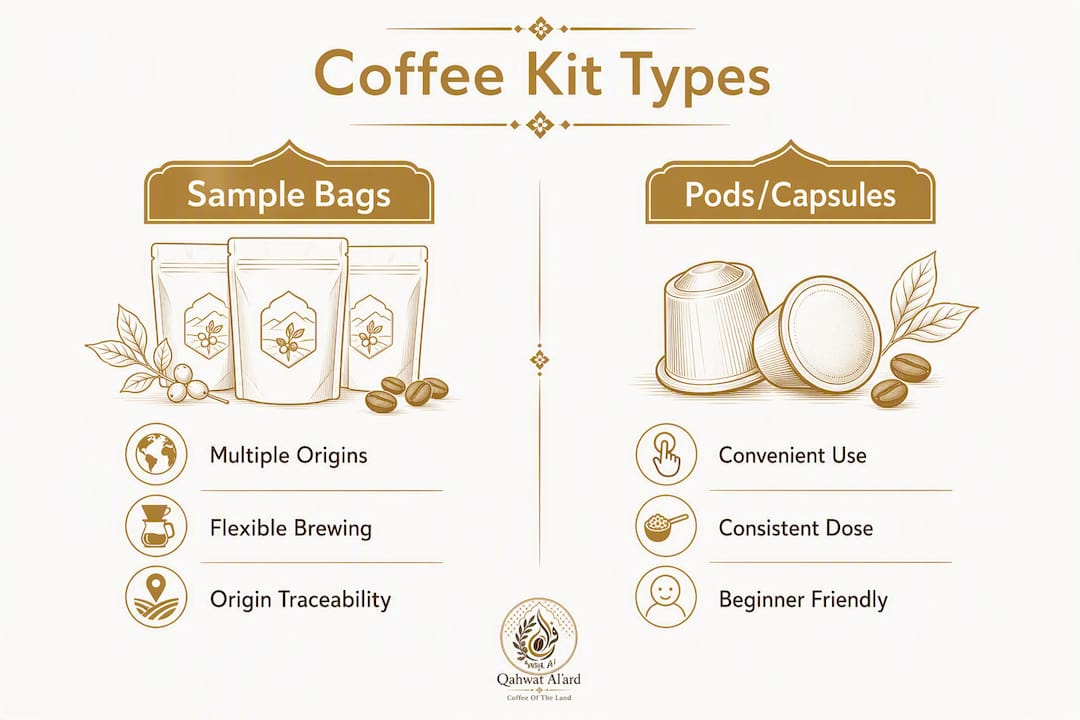
How do you choose the right coffee tasting kit for your goal?
The single most useful question to ask before buying: What am I actually trying to do with this kit? Gift buyers, curious beginners, and serious enthusiasts need different things, and the best coffee tasting kits for each group look nothing alike.
Primary decision axes:
- Goal: Gift (presentation matters most) vs. personal discovery (variety and tasting notes matter most) vs. sensory training (standardized references and repeatability matter most)
- Kit type: Flavored sample pack, single-origin pod set, or professional sensory kit
- Sample count and size: More samples means more variety; smaller bags mean less waste if you dislike a profile
- Roast freshness: Look for a roast date on the packaging. Kits without one are a red flag.
- Grind format: Pods and capsules need no grinder. Ground samples need a brewer. Whole-bean samples need both a grinder and a brewer.
- Ethical sourcing: Traceable origin and sustainability notes signal a roaster who takes sourcing seriously
Purchase checklist:
- Is the roast date printed on the bag or pod packaging?
- How many grams or ounces per sample?
- Are tasting notes or a flavor guide included?
- Does the brewing format match what you already own?
- Is the origin named specifically (country, region, farm) or just vaguely labeled?
Red flags to avoid: missing roast dates, origin claims like “premium blend” with no specifics, no tasting notes, unclear sample weights, and no quality or return policy.
Pro tip: Buy a roaster’s own sampler when you want to explore one brand’s sourcing philosophy. A multi-roaster box is better when you want maximum variety across styles and origins.
Pro Tip: If you’re buying as a gift, check whether the kit includes a coffee origin gift guide or tasting card. That educational layer is often what makes the gift memorable rather than just consumable.
How do you taste coffee from a kit at home?
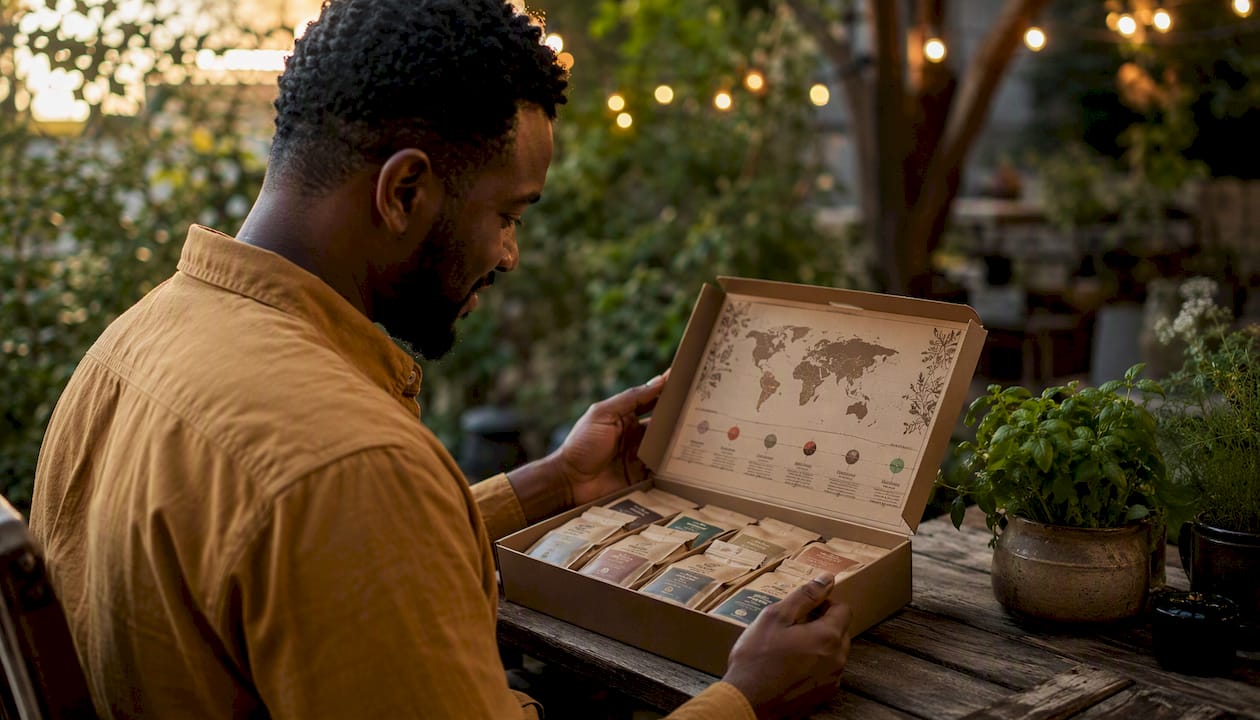
A structured tasting session doesn’t require professional equipment. Here’s a compact cupping protocol that works with small sample sizes of 1.5–2.25 oz:
- Grind fresh — Use a medium-coarse grind for cupping or pour-over. For AeroPress, go medium-fine. Pods and capsules skip this step entirely.
- Weigh your dose — Aim for a 1:15 coffee-to-water ratio by weight. For a small sample, 10–12 g of coffee to 150–180 ml of water works well.
- Smell the dry grounds — Before adding water, note the aroma. Write it down: fruity, nutty, floral, earthy?
- Bloom — Pour a small amount of hot water (195–205°F) over the grounds and wait 30 seconds. This releases CO2 and opens up the aromatics.
- Brew and wait — Complete the pour and let it steep or filter through. For cupping, let it sit 4 minutes, then break the crust with a spoon and smell again.
- Sip and score — Slurp the coffee to aerate it across your palate. Evaluate each dimension below.
- Cleanse — Rinse with water between samples to reset your palate.
- Record and compare — Fill in your scorecard before moving to the next sample.
Simple scorecard template:
| Dimension | What to notice | Your score (1–10) | Notes |
|---|---|---|---|
| Aroma | Dry and wet fragrance | ||
| Acidity | Brightness, citrus, tartness | ||
| Body | Weight and texture in the mouth | ||
| Flavor clarity | Distinct notes vs. muddy | ||
| Aftertaste | Length and pleasantness | ||
| Roast date | Days since roast | ||
| Origin | Country / region |
For flavor vocabulary, the World Coffee Research Sensory Lexicon is the industry standard. Cross-referencing your notes with a flavor wheel helps you move from “tastes good” to “bright citric acidity with a stone-fruit finish.” Qahwat Al’Ard’s guide to building coffee flavor vocabulary walks through exactly this process.
Pro Tip: Run 3–6 samples in a single 30–60 minute session. More than six and palate fatigue sets in; fewer than three and you lose the comparative context that makes tasting kits genuinely educational.
What do coffee tasting kits cost, and what are you paying for?
Price ranges by kit type give a useful frame:
- Budget discovery packs (pod or capsule samplers, 10–15 units): generally the most accessible entry point, with cost-per-cup competitive with café pricing
- Mid-range curated samplers (ground or whole-bean, 4–6 origins): typically $30–$55, with cost-per-ounce higher than grocery coffee but justified by freshness and curation
- Premium gift boxes (presentation packaging, tasting notes, accessories): $50–$80+, where you’re paying for the unboxing experience as much as the coffee
- Professional sensory kits (FlavorActiV-style GMP reference standards): priced for institutional use, not casual gifting
What drives a higher price? Microlot sourcing, roast-to-order freshness, included educational materials like tasting cards and flavor wheels, and premium packaging. A kit with a confirmed roast date and named single-origin beans costs more per ounce than a generic sampler, and that gap is usually earned.
When a higher per-ounce price is worth it: you’re gifting, you’re actively building tasting skills, or you want access to a rare origin you can’t find locally. When to skip the sampler and buy a full bag: you’ve already tasted the profile and loved it. The single-origin collection at Qahwat Al’Ard is the natural next step after a pod or sample pack confirms a preference.
The highest value in a tasting kit isn’t the volume of coffee. It’s the curated educational experience: the tasting notes, the origin story, and the guided vocabulary development that turns a cup into a reference point.
How long do kit samples stay fresh, and how should you store them?
Roasted coffee is perishable. Small sample bags are especially vulnerable because the surface-area-to-volume ratio is higher, meaning oxidation happens faster once a bag is opened.
- Sealed small bags: Best tasted within 2–4 weeks of the roast date for peak aroma and flavor. After 6 weeks, most of the volatile aromatics have faded noticeably.
- Opened bags: Use within a few days to a week. Reseal tightly after each use, pressing out excess air.
- Storage location: A cool, dark pantry or cupboard away from heat sources. Avoid the counter next to the stove.
- Avoid the fridge for short-term storage: Condensation from temperature cycling pulls moisture into the grounds and accelerates staling.
- Airtight containers: If the original bag doesn’t reseal well, transfer to a small airtight jar or clip the bag tightly.
- Freezing: Acceptable for longer-term preservation only if the bag is completely sealed and you won’t open it repeatedly. Freeze once, thaw once, use within a week of thawing.
The roast date on the packaging isn’t just a freshness marker. For tasting purposes, it tells you whether the coffee is in its optimal window. Tasting a sample that’s 8 weeks past roast will give you a muted, flat impression of what the coffee actually tastes like at its best.
Which Qahwat Al’Ard kit should you actually buy?
- Gift buyer: Peru Coffee Pods. Named origin, clean presentation, no equipment barrier for the recipient.
- Beginner explorer: 12 Pack Single Serve Coffee Capsules. Consistent, approachable, and a low-commitment way to build tasting habits.
- Flavor-curious enthusiast: Flavored Coffees Sample Pack. The widest flavor range in a single order.
- Daily convenience taster: 60 Pack Single Serve Coffee Pods. Best cost-per-cup once you’ve settled on a style.
- High-caffeine drinker: Max Caf Blend. A full-size bag for those who’ve moved past sampling.
Best overall: Flavored Coffees Sample Pack, for the combination of variety, traceability, and discovery value. Best value: 60 Pack Single Serve Coffee Pods, for daily tasters who want consistency at scale.
One caveat: pod and capsule formats aren’t designed for espresso dialing-in or complex brew-method experimentation. If a sample wins you over, upgrade to a full single-origin bag for that deeper exploration.
Key Takeaways
The Flavored Coffees Sample Pack is Qahwat Al’Ard’s strongest all-around pick for discovery, while the Peru Coffee Pods deliver the clearest single-origin gifting experience at a pod-friendly price point.
| Point | Details |
|---|---|
| Sample size expectations | Most tasting kit samples weigh 1.5–2.25 oz per pack, enough for tasting but not daily supply. |
| Top buying criterion | Always check for a roast date and named origin before purchasing any tasting kit. |
| Best tasting session format | Taste 3–6 samples in one 30–60 minute session to compare without palate fatigue. |
| Upgrade path | After sampling, move to a full single-origin bag or the 60 Pack pods for daily use. |
| Qahwat Al’Ard recommendation | The Flavored Coffees Sample Pack and Peru Coffee Pods are the top picks for discovery and gifting. |
Why the “educational value” framing for tasting kits is mostly right, but slightly off
The standard pitch for coffee tasting kits goes like this: you’re not buying coffee, you’re buying an education. That’s true, but it obscures something. The education only works if the kit gives you a real reference point, not just a pleasant cup.
A kit with vague origin labels and no roast date teaches you nothing except that you liked or disliked a particular flavor on a particular morning. A kit with a named farm, a confirmed roast date, and a tasting card that uses the same vocabulary as the World Coffee Research Sensory Lexicon gives you a repeatable reference. That’s the difference between a tasting experience and actual sensory training.
What most buyers underestimate is how much the packaging and storytelling shape the tasting itself. When you know a coffee comes from a specific region in Peru, grown at a specific altitude, you taste it differently. That’s not placebo. It’s context activating attention. Qahwat Al’Ard’s emphasis on origin traceability and flavor complexity is exactly the right instinct for a tasting kit to be genuinely useful rather than just enjoyable.
The kits that disappoint are the ones that prioritize presentation over provenance. A beautiful box with anonymous “premium blend” samples is a gift, not a learning tool. If you want both, look for origin names, roast dates, and tasting notes in the same package.
Qahwat Al’Ard tasting kits: where to start your order
Qahwat Al’Ard’s pod and sample range gives you something most generic sampler boxes don’t: a direct line from the cup back to the origin. The Flavored Coffees Sample Pack is the sharpest starting point for anyone who wants variety without committing to a single profile. For a gift with a clear origin story, the Peru Coffee Pods arrive ready to brew with no equipment barrier. And if you’ve already sampled and want to scale up, the 60 Pack Single Serve Coffee Pods or the Max Caf Blend are the natural next step.
Browse the full range and check current availability at qahwatalard.com. Shipping details and bundle options are listed at checkout.
Useful sources
These are the primary references used to build this article’s tasting methodology, kit comparisons, and sensory standards:
- FlavorActiV — Coffee Sensory Complete Kit (WCR/SCA): The professional standard for GMP-grade flavor reference capsules aligned to World Coffee Research and SCA lexicons. Used here for sensory training context.
- FlavorActiV — Flavor Standards and Training: Background on building a consistent flavor vocabulary using industry-calibrated references.
- Cappuccino Oracle — 13 Best Coffee Tasting Kits: Roundup that establishes variety, roast-date transparency, and tasting notes as the top ranking criteria for sampler kits.
- CoffeeExplore — Consumer Overview: Consumer review patterns on small sample sizes and cost-per-ounce tradeoffs in premium tasting kits.
- Driftaway Coffee Tasting Kit: Example of a consumer-facing educational kit with five single-origin samples, a flavor wheel, tasting forms, and origin postcards.
FAQ
What is a coffee tasting gift kit?
A coffee tasting gift kit is a curated set of small-portion coffee samples, typically 1.5–2.25 oz per bag or individual pod, paired with tasting notes, a flavor wheel, or origin cards to guide the recipient through a structured tasting experience.
How many samples should a good tasting kit include?
Most well-reviewed kits include 4–6 distinct samples, which is enough to compare flavor profiles meaningfully in a single 30–60 minute session without palate fatigue.
Are coffee pods a good format for tasting kits?
Yes, especially for beginners and gift buyers. Pod formats like Qahwat Al’Ard’s 12 Pack Single Serve Coffee Capsules require no grinder or brewer skill, delivering a consistent result every time.
What should I look for on a tasting kit label?
Prioritize a printed roast date, a named origin (country or region at minimum), and included tasting notes. Kits missing any of these offer a pleasant experience but limited educational value.
How long do tasting kit samples stay fresh?
Sealed samples are best tasted within 2–4 weeks of the roast date. Once opened, use the sample within a few days to a week for the best aroma and flavor.


