


TL;DR:
- Natural processed coffee is dried with the whole cherry intact, absorbing sugars and flavor during sun-drying. It produces a sweet, fruity, and wine-like cup with a fuller body and lower acidity. This method uses minimal water and is common in arid regions like Ethiopia and Yemen.
Natural processed coffee is defined as coffee dried with the whole cherry intact before any fruit is removed from the bean. Also called dry processing, it is the oldest known processing method in coffee production, predating every modern wet or mechanical technique. The bean absorbs sugars and flavor compounds directly from the surrounding fruit pulp during a sun-drying period that typically lasts 2–4 weeks. The result is a cup that tastes dramatically different from washed coffee: sweeter, fuller in body, and loaded with fruit-forward complexity. If you have ever tasted a coffee described as “jammy” or “wine-like,” you have almost certainly tasted a natural processed bean.
What is natural processed coffee and how is it made?
Natural processing follows a specific sequence from harvest to hulling. Each step directly shapes the flavor in your cup, so understanding the method helps you make better buying decisions.
-
Harvesting ripe cherries. Producers selectively pick only fully ripe, red cherries. Ripe cherries contain the highest sugar content, which transfers directly to the bean during drying. Underripe or overripe cherries introduce off-flavors that no amount of roasting can fix.
-
Sorting and flotation. Cherries go through a flotation tank or manual sorting table. Defective, hollow, or damaged cherries float to the surface and are removed. Sorting quality cherries before drying is non-negotiable because fermentation during drying amplifies every characteristic, good or bad.
-
Drying whole on raised beds or patios. Sorted cherries spread out in a single layer on African raised beds or concrete patios. Raised beds allow airflow beneath the cherries, which reduces the risk of mold. Drying takes 2–4 weeks depending on climate, humidity, and altitude.
-
Turning and monitoring. Workers turn the cherries multiple times each day. Regular turning prevents uneven drying, hot spots, and mold growth. Producers also watch the color of the cherries closely throughout this stage.
-
Hulling. Once dried, a mechanical huller strips away the shriveled fruit layers to reveal the green bean inside. The bean then goes to milling, grading, and export.
Pro Tip: Ask your roaster or retailer whether the natural process coffee you are buying was dried on raised beds or concrete patios. Raised-bed drying generally produces cleaner, more consistent flavor because airflow prevents moisture buildup underneath the cherries.
What flavors define a natural processed coffee?
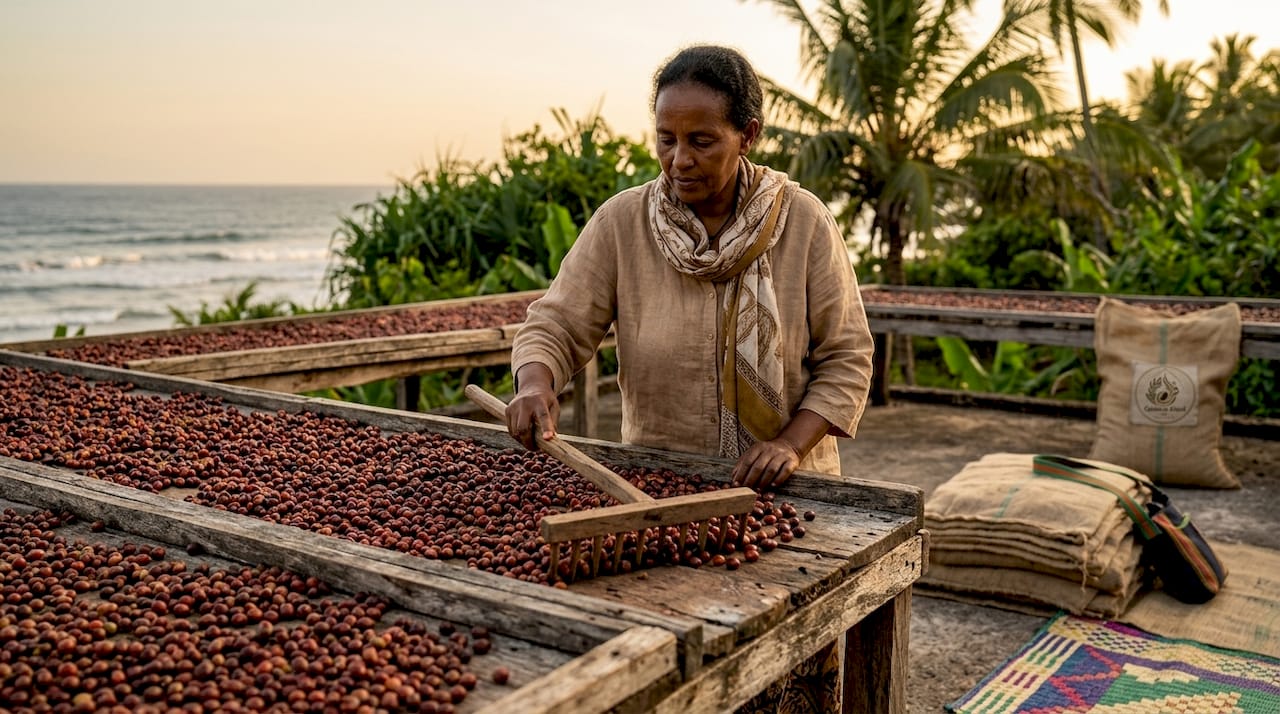
The flavor profile of a dry processed coffee is the most distinctive feature that separates it from every other processing method. Extended contact between the seed and fruit increases sugar absorption, producing higher sweetness and a fuller, heavier body than washed coffees deliver.
Tasters and Q-graders consistently describe natural coffees using a recognizable set of flavor descriptors:
- Fruity and jammy notes: Blueberry, strawberry, and dried fig are common. Ethiopian naturals in particular are famous for intense blueberry character.
- Wine-like complexity: Fermentation during drying creates compounds similar to those in red wine, giving the cup a layered, almost vinous quality.
- Tropical fruit: Mango, papaya, and passionfruit appear frequently in naturals from Yemen and Brazil.
- Syrupy body: The mouthfeel is thick and coating, closer to a fruit juice than a tea.
- Lower perceived acidity: Natural coffees register as less bright and sharp than washed coffees, though the flavor complexity more than compensates.
A 2025 study confirmed that natural processing produces the highest carbohydrate levels among five post-harvest treatments tested on Arabica beans, including honey, wine, fully washed, and semi-washed methods. Higher carbohydrate levels translate directly to greater sweetness and flavor intensity in the roasted cup.
Natural coffees are often called “fruit bombs” in specialty coffee circles. That label captures both the appeal and the challenge: the flavors are bold, but they require careful processing to stay clean and balanced rather than fermented and funky.
Understanding how processing shapes flavor complexity helps you predict what a coffee will taste like before you even brew it.
How does natural processing compare to washed and honey methods?
The three main coffee processing techniques differ in how much fruit contact the bean receives before drying. That single variable changes everything about the final cup.
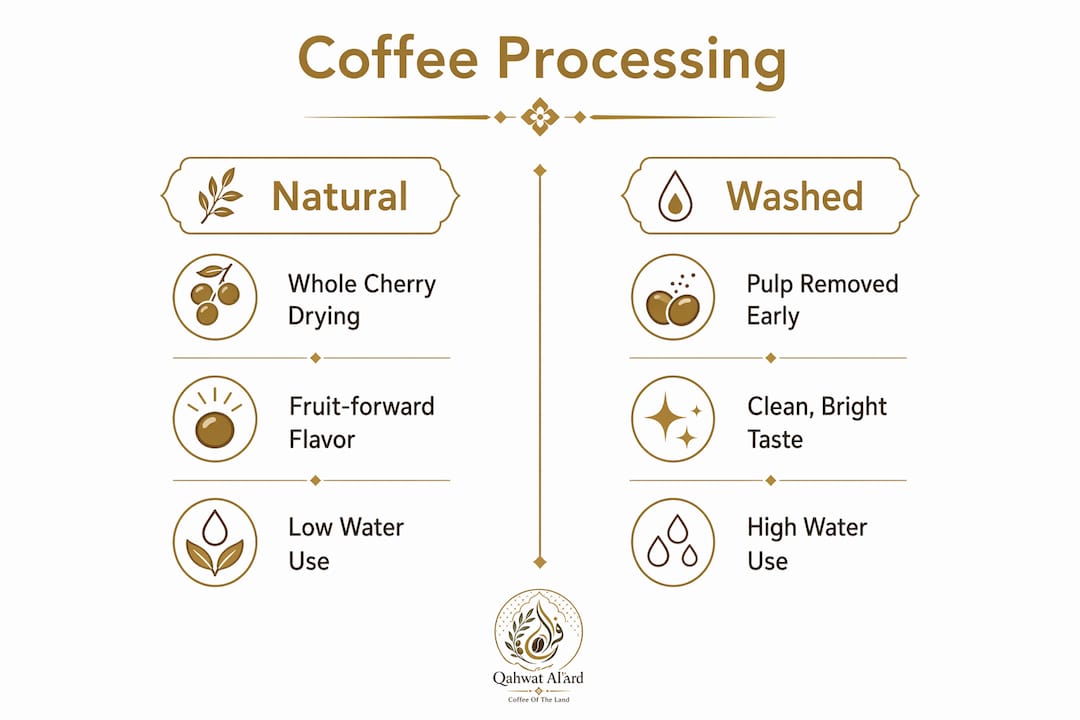
| Processing method | Fruit contact during drying | Flavor profile | Water use | Best suited for |
|---|---|---|---|---|
| Natural (dry) | Full cherry intact | Fruity, sweet, heavy body | Very low | Arid regions, Ethiopia, Yemen, Brazil |
| Honey | Pulp removed, mucilage left on | Balanced, sweet, medium body | Moderate | Costa Rica, El Salvador |
| Washed (wet) | All fruit removed before drying | Clean, bright, high acidity | High | Colombia, Kenya, Guatemala |
Natural processing uses minimal water, making it the preferred method in arid growing regions where water is scarce. Ethiopia, Yemen, and parts of Brazil rely on natural processing not only for its flavor outcomes but also because the climate and infrastructure support sun drying over wet milling.
Washed coffees taste cleaner and brighter because all fruit is removed before drying. The bean’s inherent characteristics, including acidity and terroir, come through without the sweetness overlay. Honey processed coffees sit between the two. The mucilage layer left on the bean adds sweetness and body without the full fermentation intensity of a natural.
Producers choose their method based on climate, water access, market demand, and the flavor profile they want to achieve. Understanding coffee processing techniques across origins helps you match the right coffee to your taste preferences.
Why quality control is critical in natural processing
Natural processing rewards skilled producers and punishes careless ones. The extended drying period creates ideal conditions for fermentation, which is both the source of the method’s best flavors and its biggest risk.
The most common quality failures in dry processing include:
- Mold growth: Insufficient turning or too much moisture during drying leads to mold, which ruins entire batches.
- Over-fermentation: Cherries left too long or dried unevenly develop sour, vinegary, or barnyard flavors that make the coffee undrinkable.
- Under-drying: Beans with too much residual moisture develop mold after hulling during storage and transport.
- Defective cherry contamination: Underripe or damaged cherries that slip through sorting introduce harsh, astringent flavors that amplify during fermentation.
Color change from bright red to dark purple or brown is the primary visual indicator that cherries have reached the correct drying stage. Producers use this color shift, combined with moisture meter readings, to decide when to move cherries to the hulling stage.
Fermentation techniques like anaerobic processing or yeast inoculation are increasingly used alongside natural drying. These fermentation protocols refine flavor profiles but do not replace the core drying method. They add a layer of control over the fermentation that happens naturally during drying, allowing producers to target specific flavor outcomes with more consistency.
Pro Tip: When buying a natural processed coffee, look for producers who specify their drying infrastructure, drying duration, and sorting method on the bag or product page. That level of transparency signals a producer who takes quality control seriously.
Key Takeaways
Natural processed coffee delivers its signature sweetness and fruit-forward body because the bean dries inside the whole cherry, absorbing sugars and flavor compounds that no other method replicates.
| Point | Details |
|---|---|
| Core definition | Natural processing dries the whole cherry intact for 2–4 weeks before hulling the bean. |
| Flavor signature | Expect fruity, jammy, wine-like notes with a syrupy body and lower perceived acidity. |
| Water efficiency | Natural processing uses minimal water, making it ideal for arid regions like Ethiopia and Yemen. |
| Quality control | Sorting ripe cherries before drying is critical because fermentation amplifies both good and bad characteristics. |
| Fermentation role | Anaerobic and yeast-based fermentation enhance but do not replace the fundamental drying process. |
Why I think natural processing is the most honest method in coffee
By Anthony-Yasin
After years of tasting coffees processed every way imaginable, I keep coming back to naturals when I want to understand what a farm is actually doing. Washed coffees are beautiful, but they strip away a lot of the fruit’s contribution. A natural processed coffee shows you the full picture: the soil, the altitude, the cherry variety, and the producer’s skill, all in one cup.
The conventional wisdom in specialty coffee used to treat naturals with suspicion. The fear was fermented, funky cups that masked poor quality. That reputation was earned in an era before producers understood drying infrastructure and sorting protocols. Today, a well-made natural from Ethiopia or Yemen is one of the most complex and satisfying cups you can find.
What I find most interesting is how origin shapes the natural’s character. An Ethiopian natural from Yirgacheffe tastes nothing like a Brazilian natural from Minas Gerais, even though both use the same method. The processing method is the frame. The origin is the painting. You need both to understand what you are drinking.
The rise of anaerobic and yeast-inoculated naturals has added a new dimension. These are not gimmicks. When done well, they give producers a tool to highlight specific flavor compounds that the terroir already contains. The drying method stays the same. The fermentation just gets more intentional.
My honest recommendation: if you have only ever drunk washed coffees, try a natural processed Ethiopian before you decide what coffee is supposed to taste like. It will change your reference point permanently.
— Anthony-Yasin
Qahwatalard’s single-origin coffees worth tasting

Qahwatalard sources single-origin coffees from growing regions where natural processing is part of the cultural and agricultural tradition. Each offering comes with full traceability, so you know the origin, the processing method, and the producer behind the beans. For coffee enthusiasts who want to taste the difference that dry processing makes, the Peru Coffee Pods offer a convenient entry point into origin-specific flavor without sacrificing quality. Qahwatalard’s commitment to transparency means you are never guessing about what is in your cup. Browse the full single-origin collection and find a natural processed coffee that matches your flavor preferences.
FAQ
What is the difference between natural and washed coffee?
Natural processed coffee dries with the whole cherry intact, producing sweeter, fruitier, and heavier-bodied cups. Washed coffee removes all fruit before drying, resulting in cleaner, brighter, and more acidic flavor profiles.
How long does natural coffee processing take?
Drying whole cherries typically takes 2–4 weeks, depending on climate, humidity, and altitude at the drying site.
Is natural processed coffee higher in caffeine?
Processing method does not significantly alter caffeine content. Caffeine levels depend primarily on the coffee variety, with Robusta containing roughly twice the caffeine of Arabica regardless of processing.
Why does natural coffee taste fruity?
The bean absorbs sugars and flavor compounds from the fruit pulp during the extended drying period. Higher carbohydrate levels in naturally processed beans directly produce the fruity, jammy, and wine-like notes associated with the method.
Is natural processing better for the environment?
Natural processing uses significantly less water than washed methods, making it more sustainable in water-scarce regions. Its lower water footprint is one reason producers in Ethiopia and Yemen have relied on it for centuries.


