

TL;DR:
- A cup score rates coffee quality from 0 to 100 based on sensory attributes evaluated by trained experts.
- Scores above 80 indicate specialty coffee, with higher scores reflecting greater complexity and rarity.
- The score reflects raw bean quality at origin and helps guide sourcing and tasting but does not guarantee personal preference.
A cup score is a numerical rating from 0 to 100 that measures coffee quality through a structured sensory evaluation called cupping. The industry term for this rating is the “Q score” or “cupping score,” and it serves as the universal quality language of specialty coffee. The Specialty Coffee Association (SCA) established this 100-point scale standard in 2004 to give producers, roasters, and buyers a shared framework for assessing what’s in the cup. For coffee lovers who want to understand why one bag costs $8 and another costs $38, the cup score is the clearest place to start.
What is cup score coffee and how does it work?
A cup score is the sum of ten sensory attributes, each rated on a scale from 6 to 10 in 0.25-point increments. Those ten attributes are fragrance and aroma, flavor, aftertaste, acidity, body, balance, uniformity, cleanliness, sweetness, and overall impression. The total score out of 100 reflects how well the coffee performs across all of these dimensions. Scores rarely fall below 60 in practice, and anything above 80 enters specialty territory.
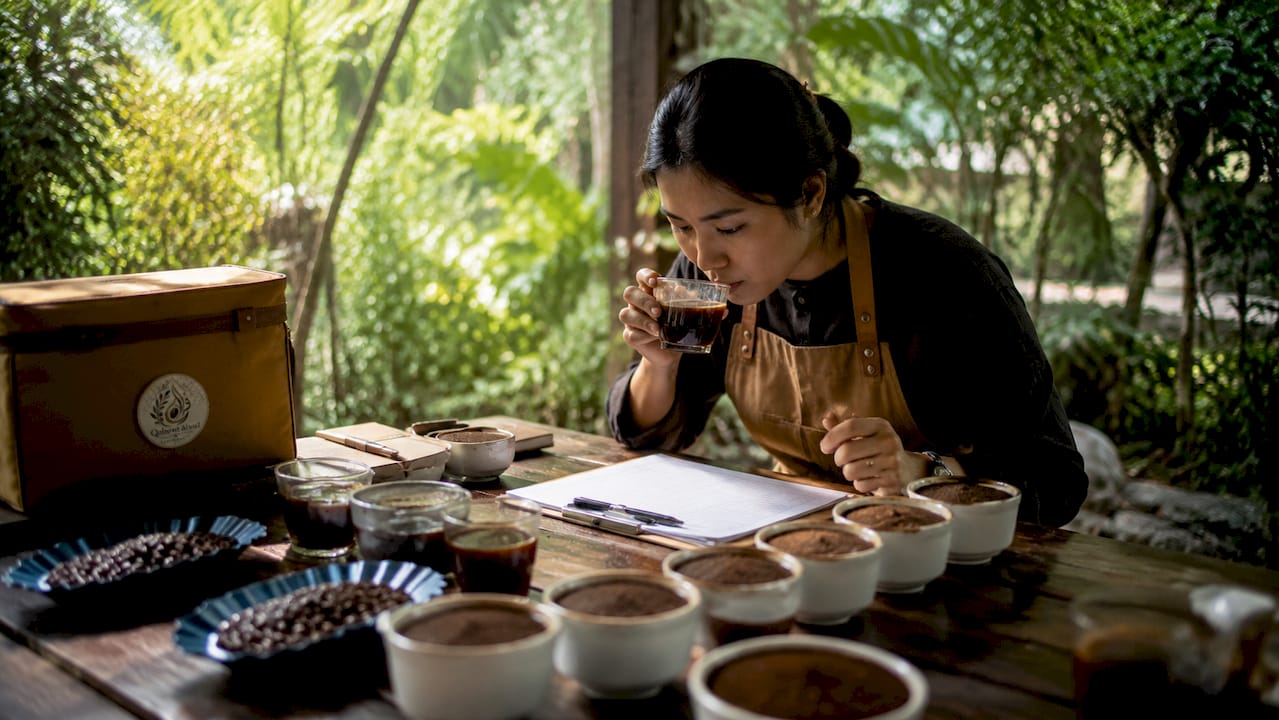
The cupping process itself follows a strict blind tasting protocol. Certified Q Graders, who are trained and licensed by the Coffee Quality Institute, evaluate five cups per sample independently and then average the results. Blind tasting removes brand bias and ensures the score reflects only what is in the cup. Multiple evaluators often score the same lot to confirm consistency.
Defects play a major role in the final number. A coffee must contain no more than 5 primary defects in a 300-gram sample to qualify as specialty. Each defect found during evaluation subtracts from the score. A single fermentation fault or contamination note can drop a coffee from specialty into commercial grade.
Pro Tip: If you want to practice reading a coffee’s sensory profile at home, try the cupping at home guide from Qahwatalard. It walks you through the same basic steps Q Graders use, without requiring professional equipment.
What do different cup score ranges mean for quality?
Cup scores fall into three recognized quality tiers, and each tier tells you something specific about what to expect in the cup.
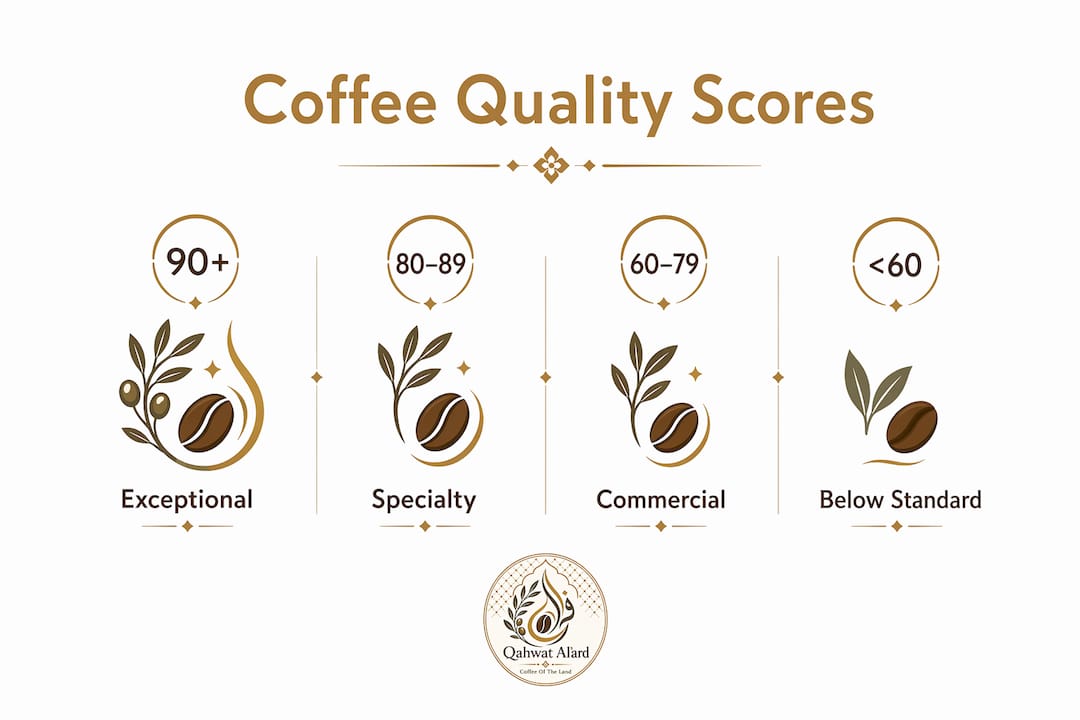
- 80–84 points (Specialty): Clean, defect-free coffee with clear origin character. These coffees meet the SCA’s minimum specialty threshold and represent a significant step above commercial grade. Expect consistent flavor, pleasant acidity, and no off-notes.
- 85–89 points (Very Good): Pronounced complexity with distinct origin flavors. A coffee scoring here typically shows a well-defined flavor profile, whether that is the bright citrus of an Ethiopian Yirgacheffe or the dark chocolate depth of a Colombian Huila. These are the coffees that make enthusiasts stop and pay attention.
- 90+ points (Exceptional): Rare, often auctioned lots with extraordinary sensory characteristics. Scores over 90 typically come from small, carefully managed farms and are priced accordingly. Finding one at your local roaster is genuinely uncommon.
Specialty coffee represents roughly 3–5% of global coffee production. That statistic reframes what “specialty” actually means. It is not a marketing word. It is a narrow category defined by measurable sensory performance and defect limits.
One nuance worth knowing: the cup score reflects the raw green bean evaluated at origin. Roasting adds another layer that can either bring out the bean’s potential or suppress it. A coffee that scored 87 as a green bean can taste flat if the roast is poorly executed. The score signals the ceiling, not the guaranteed result.
How do cup scores influence coffee selection?
Cup scores function as a shared language between producers, roasters, and buyers. When a farm in Guatemala submits a lot for evaluation and receives an 86, that number travels with the coffee through the supply chain. Scores support pricing and sourcing decisions at every stage, from the export contract to the retail bag.
For roasters, the score guides green bean purchasing. A roaster building a single-origin program will typically source lots scoring 84 and above to meet customer expectations. For buyers at large coffee companies, scores help standardize quality across multiple origins and harvests.
For you as a coffee enthusiast, the score is a useful starting point, not a final verdict. Here is how to use it practically:
- Pair the score with tasting notes. A score of 85 tells you the coffee is excellent. The tasting notes tell you whether “excellent” means stone fruit and floral, or dark chocolate and walnut. Both matter for your personal enjoyment.
- Use scores to compare origins. If you are deciding between a Kenyan AA and a Brazilian natural, both scoring 84, the tasting notes will reveal very different flavor profiles at the same quality level.
- Check the roast date alongside the score. A high-scoring bean roasted six months ago will taste worse than a lower-scoring bean roasted last week. Freshness is a variable the cup score does not capture.
Pro Tip: When shopping for specialty coffee, look for bags that list both the cup score and the specific origin details, such as the farm name, region, and processing method. That combination gives you the most complete picture of what you are buying. Qahwatalard’s single-origin collection provides this level of transparency on each product.
Common misconceptions about cup score coffee
The biggest misconception is that a high cup score guarantees you will love the coffee. Cup scores represent an objective quality assessment done by trained experts using standardized criteria. They do not account for personal taste preferences. A coffee scoring 88 with intense natural fermentation notes might be technically excellent and completely off-putting to someone who prefers clean, mild cups.
A cup score tells you how well a coffee performed against a universal quality standard. It does not tell you whether that coffee will suit your palate. The score is the starting point for exploration, not the final answer.
Several other common misunderstandings are worth addressing directly:
- “Coffees below 80 are bad.” Commercial-grade coffees scoring 75–79 are not defective. They simply do not meet the specialty threshold. Many everyday coffees in this range are perfectly enjoyable and serve a different market.
- “The score accounts for roasting.” It does not. The cupping score reflects raw bean quality assessed at origin. A skilled roaster can honor that potential, and a poor roast can undermine it. Understanding how roasters shape flavor is a separate but equally important topic.
- “A 90+ coffee is always worth the price.” Exceptional scores do correlate with exceptional quality, but value is subjective. Some enthusiasts find that an 85-scoring coffee from a well-matched origin delivers more personal satisfaction than a 91-scoring lot that does not suit their palate.
- “All specialty coffees taste the same.” The 80-point floor creates a quality baseline, not a flavor template. Coffees from Ethiopia, Colombia, and Yemen can all score 84 and taste completely different from each other.
Cup scoring is a tool. It works best when you use it alongside tasting notes, origin information, and your own experience with different coffees and roast profiles.
Key Takeaways
The cup score is the most reliable single indicator of coffee quality available to enthusiasts, but it works best when paired with tasting notes, origin details, and an understanding of roasting’s role in the final cup.
| Point | Details |
|---|---|
| Cup score definition | A 0–100 rating based on ten sensory attributes evaluated by certified Q Graders under blind tasting conditions. |
| Specialty threshold | Coffee must score 80+ points and contain no more than 5 primary defects in a 300-gram sample to qualify as specialty. |
| Score ranges | 80–84 is specialty, 85–89 is very good, and 90+ is exceptional. Each tier signals a distinct level of complexity and rarity. |
| Scores reflect raw beans | The cup score rates green bean quality at origin. Roasting can elevate or diminish that potential independently. |
| Scores are not taste guarantees | Objective quality and personal preference are different things. Use scores alongside tasting notes to find coffees you will actually enjoy. |
Why I think most coffee lovers are reading cup scores wrong
I have spent years tasting coffees across a wide range of scores, and the pattern I keep seeing is this: enthusiasts treat the cup score like a restaurant star rating. They assume higher always means better for them personally. That is the wrong frame.
A cup score is closer to a standardized test result. It tells you how the coffee performed against a fixed set of criteria on a specific day, evaluated by specific people. A coffee scoring 91 from a natural-processed Ethiopian lot might be extraordinary by every objective measure and still taste too funky for someone who grew up drinking clean, washed Central Americans. Neither preference is wrong.
The more useful habit is to track your own reactions alongside the scores. When you drink a coffee that scores 85 and love it, note what the tasting notes said. When you try a 90-pointer and feel underwhelmed, look at the processing method and origin. Over time, you will start to see which score ranges and flavor profiles consistently match your palate. That is when the cup score becomes genuinely useful to you, not as a prestige signal, but as a navigation tool.
The other thing I would push back on is the idea that scoring below 80 means a coffee is not worth your time. Some of the most interesting coffees I have tasted were commercial-grade lots with unusual processing or rare varietals that simply had minor defects keeping them out of specialty classification. The score is a gate for industry classification. It is not a ceiling on your curiosity.
— Anthony-Yasin
Specialty coffee worth scoring at Qahwatalard
Knowing what a cup score means is one thing. Tasting it is another.
Qahwatalard sources single-origin coffees with a focus on traceability, origin transparency, and quality that shows up in the cup. Each offering reflects careful selection from recognized growing regions, with attention to the sensory attributes that drive high cup scores. Whether you are starting with a specialty single-origin or exploring a well-crafted blend like the Max Caf Blend, the quality behind each product is grounded in the same standards Q Graders apply. Qahwatalard’s catalog is a practical way to put your new understanding of cup scores to work.
FAQ
What is the minimum cup score for specialty coffee?
A coffee must score at least 80 points on the SCA 100-point scale and contain no more than 5 primary defects in a 300-gram sample to be classified as specialty coffee.
What does a 90+ cup score mean?
A score above 90 indicates an exceptional, rare coffee with outstanding sensory complexity. These lots typically come from small farms and are often sold through specialty auctions at premium prices.
Do cup scores guarantee a specific flavor?
No. Cup scores measure objective quality against standardized criteria. Personal flavor preferences may differ significantly from what a high score reflects, so tasting notes and origin details are equally important guides.
Who assigns cup scores to coffee?
Certified Q Graders, licensed by the Coffee Quality Institute, conduct blind cupping evaluations and assign scores. Each sample is typically evaluated across five cups to produce an averaged result.
Does roasting affect the cup score?
The cup score is assigned to the green bean at origin and does not change with roasting. However, the roast directly affects the flavor in your cup, meaning a high-scoring bean can be improved or diminished depending on how it is roasted.


