


TL;DR:
- Mexico’s top coffee regions produce arabica beans with unique flavors shaped by altitude, soil, and indigenous farming traditions. Chiapas leads in volume, offering reliable, chocolatey coffees, while Veracruz’s volcanic soil creates a diverse flavor range, and Oaxaca produces delicate, floral micro-lots. Puebla is an emerging region with high-altitude, fruit-forward coffees featuring cacao, pear, and chamomile notes.
Mexico’s coffee growing regions are defined by high-altitude terrain, volcanic soil, and indigenous farming traditions that produce arabica coffees valued by specialty roasters worldwide. Chiapas, Veracruz, Oaxaca, Puebla, and several emerging states together account for the vast majority of Mexican production. Mexico’s coffee is approximately 97% arabica, which explains the country’s reputation for clean, nuanced cups rather than heavy, bitter brews. Each region carries its own microclimate, cultural history, and flavor signature. Understanding those differences is the fastest way to stop buying Mexican coffee by country and start buying it by origin.
1. What makes Chiapas Mexico’s leading coffee producing region?
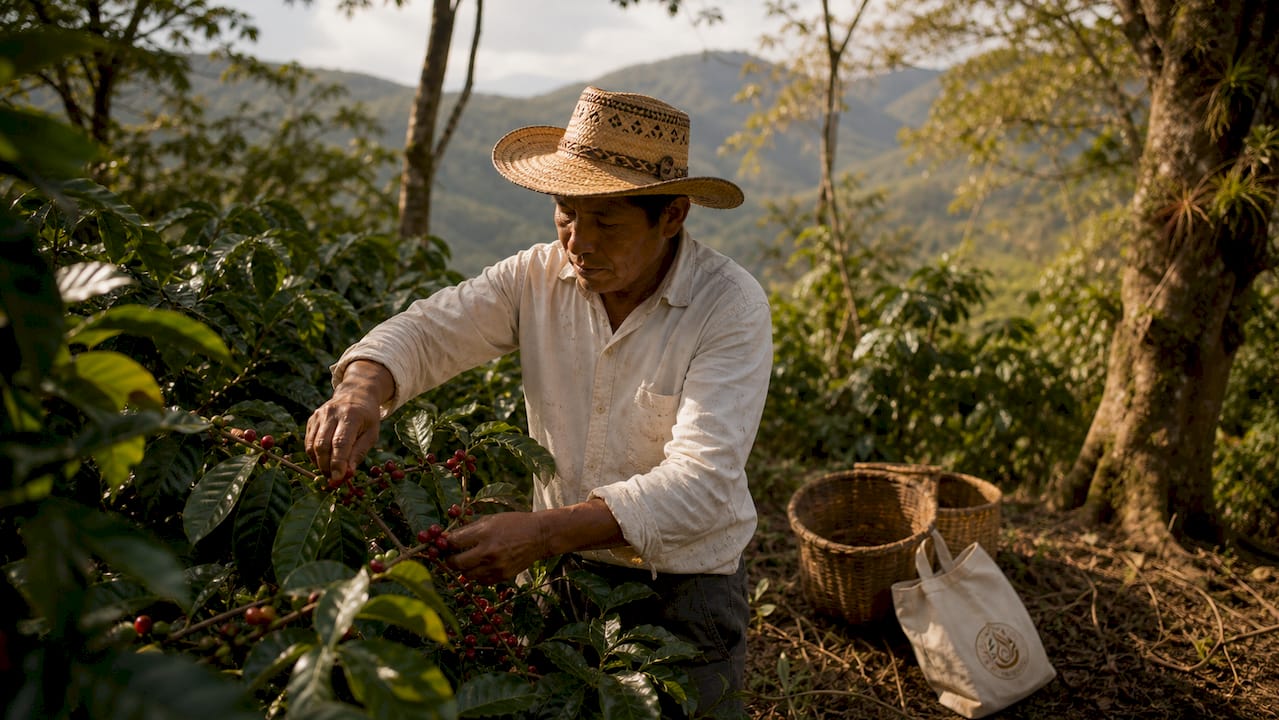
Chiapas is the engine of Mexican coffee. Chiapas, Veracruz, and Puebla produce over 80% of Mexico’s coffee, with Chiapas alone holding roughly 40% of national output. That concentration exists because the Sierra Madre mountain range along the Guatemalan border delivers the altitude, rainfall, and temperature swings that arabica needs.
The flavor profile here is approachable and consistent. Chiapas coffee delivers a smooth body, chocolatey aroma, and caramel sweetness that makes it the most accessible entry point in the Mexican coffee regional flavor guide. Cooperatives drive that consistency. Organized washing stations and controlled fermentation reduce batch-to-batch variation, which is why Chiapas beans appear reliably in specialty blends.
Key characteristics of Chiapas coffee:
- Altitude: 900–1,800 meters above sea level in the Sierra Madre highlands
- Processing: Washed and semi-washed, with cooperative-managed fermentation
- Tasting notes: Milk chocolate, caramel, roasted almond, and mild citrus finish
- Certifications: Many farms hold organic and Fair Trade status through regional cooperatives
Pro Tip: If you are new to Mexican coffee, start with a Chiapas single-origin. Its chocolate and nut notes are crowd-pleasing and give you a reliable baseline before you move into the more delicate profiles of Oaxaca or Puebla.
2. How does Veracruz’s geography influence its coffee profile?
Veracruz is Mexico’s oldest coffee region. Veracruz produces about 25% of Mexico’s coffee and holds the longest unbroken cultivation history in the country, stretching back to the late 18th century. That history matters because it shaped the infrastructure, the varietals, and the processing knowledge that still define the region today.
The terrain is the real story. Land rises steeply from the Gulf Coast to the peaks of the Sierra Madre Oriental, creating a ladder of microclimates within a single state. Coffee grown at lower elevations tastes different from coffee grown near the cloud forests above 1,500 meters. Volcanic soil throughout the region adds mineral complexity that you simply cannot replicate in flat, non-volcanic growing areas.
Veracruz coffees show brown sugar, baking spice, and soft stone fruit notes when roasted lightly. That profile rewards a medium roast as well, where the nut and chocolate base comes forward without losing the fruit brightness.
What defines Veracruz coffee:
- Terrain range: Sea level to over 1,800 meters, creating multiple distinct growing zones
- Soil type: Volcanic and mineral-rich, contributing to cup complexity
- Flavor range: Brown sugar, baking spice, stone fruit, and soft chocolate depending on elevation
- Historical significance: First commercial coffee cultivation in Mexico began here
3. What unique qualities define Oaxaca’s specialty coffee?
Oaxaca produces less volume than Chiapas or Veracruz, but it commands serious attention from specialty buyers. Oaxacan coffee is grown by indigenous smallholders using shade-grown traditional systems, and the result is a delicate, aromatic, and complex cup that stands apart from every other Mexican origin.
The Zapotec connection is central to understanding this coffee. Oaxaca coffee comes primarily from Zapotec indigenous micro-lots, which means most of it moves through small-batch importers rather than commercial export channels. That limited supply is exactly why specialty roasters prize it. You are buying a specific farm’s expression of a specific harvest, not a blended regional lot.
Shade-grown cultivation under native tree canopies slows cherry development and concentrates sugars. The result is a floral, aromatic cup with a delicate body that rewards light roasting. Oaxacan coffee also carries deep cultural weight. Authentic café de olla uses Ceylon cinnamon to complement Mexican arabica’s subtle chocolate and nut notes, and Oaxaca’s beans are the traditional base for that preparation. The ritual of brewing café de olla in a clay pot with piloncillo and cinnamon is as much a part of Oaxacan identity as the coffee itself.
Pro Tip: When you find a Oaxacan single-origin, brew it as a pour-over at a lower temperature, around 195°F. The floral and aromatic notes open up at lower heat and collapse under a full boil.
4. Why is Puebla an emerging region to watch in Mexican coffee cultivation?
Puebla’s Sierra Norte is the most exciting development in Mexican coffee right now. Puebla’s Sierra Norte contributes roughly 15% of Mexico’s total coffee and is gaining recognition as a specialty origin with flavor notes that do not appear anywhere else in the country.
High elevation near the active volcano Popocatepetl shapes the flavor complexity here. The altitude stresses the coffee plant in productive ways, slowing maturation and building density in the bean. Recent investments in washing stations and raised drying beds have dramatically improved post-harvest quality, turning what was once a bulk-grade origin into a specialty contender.
| Feature | Details |
|---|---|
| Growing elevation | High altitude in the Sierra Norte range |
| Proximity to volcano | Near Popocatepetl, contributing mineral terroir |
| Tasting notes | Cacao nib, pear, chamomile |
| Processing improvement | New washing and raised-bed drying infrastructure |
| Market position | Rising specialty origin, previously undervalued |
The flavor combination of cacao nib, pear, and chamomile is genuinely unusual. Most Mexican coffees lean toward chocolate and nut. Puebla’s delicate, fruit-forward profile gives enthusiasts a reason to seek it out specifically, not just as a Mexican coffee but as a distinct origin with its own character.
5. Which other Mexican coffee regions offer unique flavors and cultural significance?
Beyond the four primary states, emerging regions including Guerrero, Nayarit, Hidalgo, and Jalisco are producing small-batch specialty lots that deserve attention from serious enthusiasts. These areas represent the frontier of coffee cultivation in Mexico, where traditional farming meets growing market demand for traceable, origin-specific beans.
Each region brings a distinct flavor identity:
- Guerrero: Smallholder farms in the Sierra Madre del Sur produce coffees with roasted hazelnut and dark caramel notes. Low commercial visibility means these lots rarely reach international markets without direct-trade relationships.
- Nayarit: Pacific-facing slopes and humid microclimates create coffees with mild citrus brightness and a clean, light body. The region is still developing its post-harvest infrastructure, but early specialty lots show real promise.
- Hidalgo: High-altitude farms in the Huasteca region produce coffees with a balanced profile, mild acidity, and a soft sweetness that suits espresso blending.
- Jalisco: A newer entrant to specialty coffee, Jalisco farms are experimenting with natural and honey processing to differentiate their lots in a competitive market.
Smallholder farmers and cooperatives dominate Mexican coffee production across all these regions. That structure preserves biodiversity and traditional farming knowledge, but it also limits scale. Finding these coffees requires working with importers who specialize in direct-trade Mexican origins. The reward is access to flavors that never appear in mass-market blends.
Mexico holds a 2.3% world export share of coffee, and the country’s coffee harvest runs from november to march across its high-altitude mountainous regions. That harvest window means fresh-crop Mexican coffee typically arrives at roasters between february and may, depending on the region and processing time. Knowing the harvest calendar helps you buy at peak freshness rather than from aging inventory.
For enthusiasts who want to compare Mexican flavor profiles against other Latin American origins, the arabica flavor profiles guide at Qahwatalard covers the full spectrum of what arabica expresses across different growing conditions.
Key takeaways
Mexico’s top coffee regions, led by Chiapas, Veracruz, Oaxaca, and Puebla, each produce arabica coffees with distinct flavor profiles shaped by altitude, volcanic soil, and indigenous farming traditions.
| Point | Details |
|---|---|
| Chiapas leads in volume | Roughly 40% of national output, with consistent chocolate and caramel notes from cooperative-managed farms. |
| Veracruz offers the widest range | Diverse microclimates from coast to mountain produce everything from stone fruit to baking spice. |
| Oaxaca rewards specialists | Zapotec micro-lots and shade-grown systems yield delicate, floral coffees rarely found in commercial channels. |
| Puebla is the sleeper origin | Sierra Norte’s high elevation and improved processing create unusual cacao nib and chamomile notes. |
| Emerging regions expand the map | Guerrero, Nayarit, Hidalgo, and Jalisco offer small-batch lots with hazelnut, citrus, and caramel profiles. |
What I’ve learned from chasing Mexican coffee by region
By Anthony-Yasin
Most coffee enthusiasts treat Mexico as a single origin. That is the first mistake. The flavor gap between a Chiapas cooperative lot and an Oaxacan Zapotec micro-lot is as wide as the gap between Colombian and Ethiopian coffee. They share a country, not a cup.
My honest observation after years of tasting across these origins is that Chiapas is underrated precisely because it is reliable. Reliability gets dismissed as boring in specialty coffee circles, but a well-processed Chiapas bean at the right roast level delivers a genuinely satisfying cup that most people would pay more for if it carried a different country’s name on the bag.
Oaxaca is the opposite problem. It is overhyped in some specialty circles, which drives prices up and availability down. The best Oaxacan lots I have tasted came from importers with direct relationships with Zapotec farming communities. Buying through generic “Mexican coffee” channels rarely gets you the real thing.
Puebla is where I would put my attention right now. The flavor profile is genuinely different from anything else Mexico produces. Chamomile and pear in a coffee from a country known for chocolate and nuts is not a marketing claim. It is a real expression of what high altitude near Popocatepetl does to a coffee plant. That origin will not stay undervalued for long.
The café de olla tradition also changed how I think about these coffees. Brewing Oaxacan arabica in a clay pot with Ceylon cinnamon and piloncillo is not a novelty preparation. It is a flavor system built over centuries that reveals something in the bean that a pour-over does not. Every serious enthusiast should try it at least once with a proper Oaxacan lot.
— Anthony-Yasin
Taste Mexico’s regions in every cup with Qahwatalard
Qahwatalard sources single-origin coffees with full traceability back to the growing region, so you know exactly which part of Mexico you are tasting.
The Mexico Coffee Pods bring Chiapas’s signature chocolate and nut profile into a convenient format without sacrificing origin integrity. For enthusiasts who want to explore multiple origins side by side, the single-origin collection at Qahwatalard includes regional selections that reflect the flavor diversity covered in this guide. Every product ships fresh-roasted, so the cup you brew matches the harvest, not a warehouse shelf. If you are ready to move beyond generic Mexican blends, this is where to start.
FAQ
What are the main coffee growing regions in Mexico?
The main regions are Chiapas, Veracruz, Oaxaca, and Puebla, which together produce over 80% of Mexico’s coffee. Emerging areas including Guerrero, Nayarit, and Hidalgo also contribute specialty lots.
What type of coffee does Mexico mostly produce?
Mexico’s coffee is approximately 97% arabica, grown primarily at high altitudes across mountainous regions. This arabica dominance gives Mexican coffee its characteristic clean, nuanced flavor.
When is the Mexican coffee harvest season?
The harvest runs from november to march across Mexico’s high-altitude growing zones. Fresh-crop beans typically reach roasters between february and may, depending on processing time and region.
What does Oaxacan coffee taste like?
Oaxacan coffee is delicate, floral, and aromatic, with a light body that rewards pour-over brewing. It comes primarily from Zapotec indigenous micro-lots grown under shade canopies using traditional farming methods.
What makes Puebla coffee different from other Mexican origins?
Puebla’s Sierra Norte produces coffees with tasting notes of cacao nib, pear, and chamomile, which are uncommon in Mexican coffee. High elevation near Popocatepetl and improved post-harvest processing drive that distinctive flavor complexity.


