


Tanzania peaberry is a rare, round Arabica grade prized for bright, wine-like acidity and a roast-friendly uniformity that flat beans simply cannot match. If you want the short version: buy traceable, check the roast date, and expect a cup that leans citrus and black currant at light roasts, shifting toward dark chocolate and brown sugar as you push toward medium.
- Origin: Grown primarily on the slopes of Mount Kilimanjaro and Mount Meru, plus the Southern Highlands (Mbeya, Ruvuma, Songwe)
- Grade label: Tanzania’s national grading system designates peaberry lots as PB, a distinct classification separate from the flat-bean sizes AA and A
- Rarity: Peaberry seeds occur in roughly 3–5% of coffee cherries, making each lot inherently scarce
- Defining character: Bright, wine-like acidity layered over stone fruit, citrus, and a chocolate-sweetness finish
Key Takeaways
| Point | Details |
|---|---|
| What it is | A natural mutation, not a varietal; one round seed per cherry, occurring in roughly 3–5% of cherries |
| Where it comes from | Kilimanjaro, Mount Meru, and the Southern Highlands (Mbeya, Ruvuma, Songwe) |
| Flavor highlights | Citrus, black currant, stone fruit at light roast; chocolate and brown sugar at medium |
| Roasting note | Denser, rounder shape requires slower heat ramp and careful development time monitoring |
| Buying standard | Prioritize region name, processing method, farm traceability, and roast date over the PB label alone |
| Qahwat Al’Ard | Offers traceable Tanzania peaberry roasted to order with roast date disclosed on every bag |
Table of Contents
- Where does Tanzania peaberry coffee come from?
- What growing conditions and varietals produce Tanzania peaberry?
- What exactly is peaberry coffee?
- How does Tanzania grade and process peaberry?
- What does Tanzania peaberry taste like?
- Roasting and brewing tips for peaberry beans
- What does roasting research say about peaberry differences?
- Why does peaberry cost more, and what are the myths?
- Food pairings and a simple pour-over recipe
- How to buy genuine Tanzania peaberry and store it well
- Why we feature Tanzania peaberry at Qahwat Al’Ard
- Qahwat Al’Ard’s Tanzania peaberry, sourced and roasted for you
- Sources
- FAQ
Where does Tanzania peaberry coffee come from?
Tanzania’s coffee geography splits into two broad zones, and both matter for understanding what ends up in your cup. The northern zone covers the slopes of Mount Kilimanjaro and Mount Meru near Arusha, where smallholder farmers and cooperatives have grown Arabica since the early 20th century. The Kilimanjaro Native Cooperative Union (KNCU), founded in 1932, was one of Africa’s earliest farmer cooperatives and helped establish the export infrastructure that still shapes Tanzanian coffee trade today.
The southern zone, the Southern Highlands, encompasses Mbeya, Ruvuma, and Songwe. These regions developed later as specialty export sources but now produce some of Tanzania’s most traceable micro-lots. Tanzanian coffee production spans both zones, with the PB grade appearing across all of them.
Volcanic soils, elevations between 1,400 and 2,000 meters, and two distinct rainy seasons combine to produce the East African brightness Tanzania is known for. The “Tanzania Peaberry” label became a recognizable specialty export category partly because of that consistent regional character and partly because the PB grade is easy to market as something rare and distinct.
What growing conditions and varietals produce Tanzania peaberry?
The terroir variables behind Tanzanian peaberry are specific enough to be worth knowing:
- Elevation: Most specialty lots come from 1,400–2,000 meters above sea level. Higher elevation slows bean development, concentrating sugars and acids, which is why Kilimanjaro lots often show sharper brightness than lower-grown alternatives
- Varietals: Bourbon and Kent are the most common Arabica types, alongside Nyasa and Typica-related selections. Peaberry is not a varietal; it appears across all of these
- Soil: Volcanic soils from Kilimanjaro and Meru provide excellent drainage and mineral content, contributing to the wine-like complexity in the cup
- Climate: Two rainy seasons allow for a main harvest and a smaller fly crop, giving buyers two windows per year to source fresh lots
The Bourbon varietal tends toward sweetness and stone fruit; Kent, a disease-resistant selection, is more neutral but still carries the regional brightness. Understanding which varietal underlies a given peaberry lot tells you more about expected flavor than the PB grade label alone. For a deeper look at how varietals shape cup character, coffee varietal guides are worth bookmarking.
What exactly is peaberry coffee?
A peaberry forms when only one seed develops inside the coffee cherry instead of the usual two. Normally, two seeds grow face-to-face, flattening against each other. When fertilization produces only one seed, it grows unconstrained and takes on a round, oval shape. That’s the entire botanical explanation. Peaberry is not a separate species, not a special cultivar, and not a processing method.
Occurrence: Peaberry seeds appear in roughly 3–5% of coffee cherries across all Arabica origins, though some sources cite ranges up to 5–10% depending on the crop and counting method. The variation in reported percentages comes from differences in how lots are sorted and measured, not from biological inconsistency.
The round shape matters for roasting because heat penetrates the bean differently. A flat bean has one curved side and one flat side, creating uneven surface exposure in the drum. A peaberry presents a more uniform surface area on all sides, which allows for more even heat transfer during development. Whether that translates to a better cup depends entirely on how the roaster handles it.
How does Tanzania grade and process peaberry?
Tanzania uses a letter-and-size grading system for its Arabica exports. Flat beans are graded AA (largest screen size), A, B, and so on down the scale. Peaberry gets its own designation: PB. The PB grade does not indicate quality above AA; it indicates shape and the sorting process required to separate round beans from flat ones.
| Grade | Bean type | Screen size / notes |
|---|---|---|
| AA | Flat bean | Largest screen, top flat grade |
| A | Flat bean | Second screen size |
| B | Flat bean | Smaller flat beans |
| PB | Peaberry | Round beans, separated by sorting |
Most Tanzanian specialty lots are washed (wet-processed): cherries are depulped, fermented in water tanks for 24–72 hours to remove the mucilage, washed clean, then dried on raised beds. This process preserves and amplifies the bright acidity and clean fruit notes the origin is known for. Natural and honey-processed Tanzanian lots exist but are far less common in the export market.
The PB fraction commands a premium partly because sorting peaberries requires both mechanical screens and hand-sorting, adding labor cost to an already small yield.
What does Tanzania peaberry taste like?
The cup profile that makes Tanzania peaberry worth seeking out sits at the intersection of East African brightness and a softer, rounder body than you’d expect from a Kenyan lot. Common tasting notes include:
- Citrus: Lemon zest, orange peel, sometimes grapefruit at lighter roasts
- Stone fruit: Peach, apricot, plum depending on the region and processing
- Black currant: A signature East African note, more pronounced in Kilimanjaro lots
- Brown sugar and honey: Sweetness that emerges in the mid-palate, especially with washed processing
- Dark chocolate: Appears as roast moves toward medium, rounding out the acidity
Tanzania peaberry tends to show brighter acidity than Kenya but with a softer overall structure, which makes it approachable for drinkers who find Kenyan lots too sharp. For a direct comparison of East African flavor profiles, Kenyan coffee’s flavor characteristics offer useful context.
At light roast, acidity leads and fruit notes dominate. Push to medium and the chocolate and brown sugar come forward while the citrus softens. For filter brewing, a light-to-medium roast highlights the full range. For espresso, a true medium roast pulls the sweetness and body into better balance.
Roasting and brewing tips for peaberry beans
Peaberry density changes how heat moves through the bean, and roasters who treat it identically to flat beans often end up with uneven development. The practical adjustments are not dramatic, but they matter.
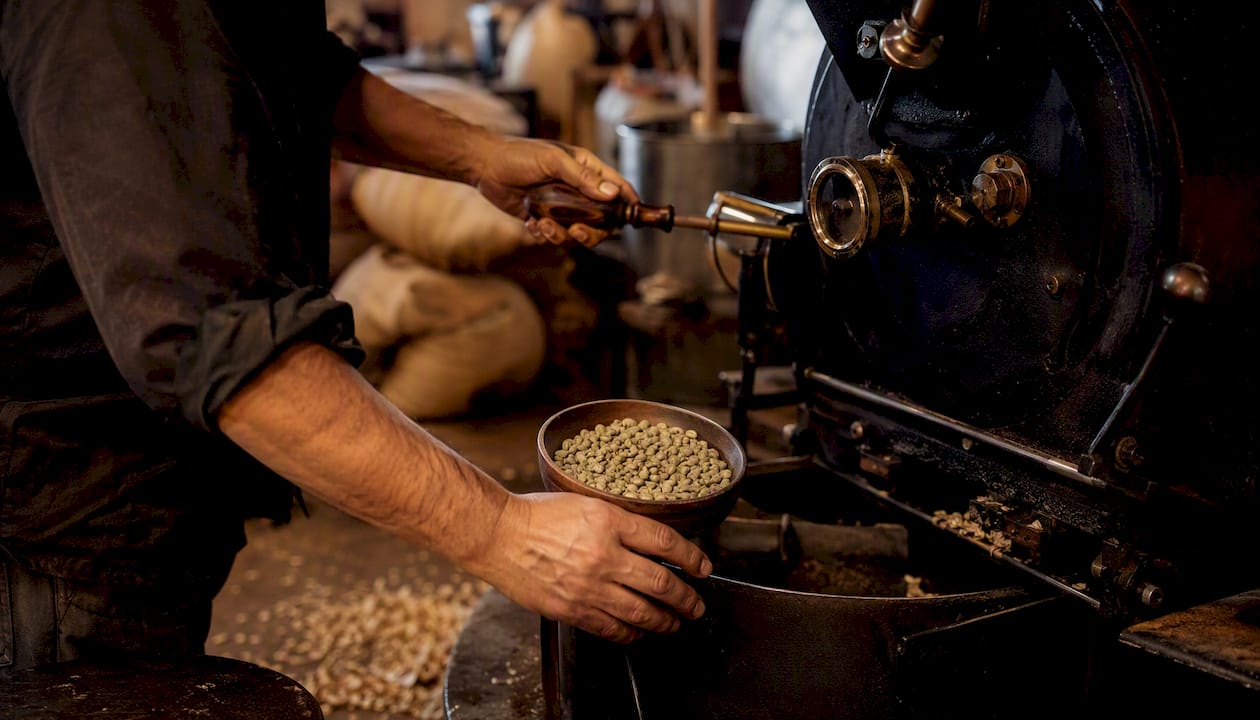
For roasters: the round shape means the bean rolls differently in the drum, which can actually improve contact consistency. The denser structure, though, means heat penetration is slower. A slightly extended drying phase and a measured ramp through Maillard help avoid a scorched exterior with an underdeveloped center. Roasting guides for peaberry consistently recommend monitoring development time ratio carefully, since the window between first crack and desired finish is narrower than with flat beans. Understanding how bean density shapes roast outcomes is worth reviewing before your first peaberry batch.
For home brewers: a light-to-medium roast is the sweet spot for Tanzania peaberry. For pour-over, use a medium-fine grind, water at 200°F (93°C), and a 1:15 coffee-to-water ratio. Expect a 3–3.5 minute total brew time. Espresso works well at medium roast with a 1:2 ratio and a 27–30 second pull.
Pro Tip: If you’re roasting peaberry for the first time, run a small test batch at your usual profile, then pull samples 15 seconds earlier and 15 seconds later than your normal finish. The peaberry’s density often means your usual endpoint produces a slightly darker result than expected.
What does roasting research say about peaberry differences?
A 2025 roasting optimization study on peaberry beans from dry cherry fruits measured physical changes during roasting, including moisture loss, mass loss, and bulk density shifts, and linked those variables to sensory outcomes under different roast profiles. The study found that higher-temperature development phases produced stronger sensory merit scores for the tested samples, suggesting that peaberry responds well to deliberate heat management rather than passive roasting.
Key findings from the research:
| Variable measured | Observed outcome |
|---|---|
| Moisture loss | Measurably different from flat-bean baseline under same profile |
| Mass loss | Correlated with roast intensity; tracked sensory merit |
| Bulk density shift | Confirmed physical distinction between peaberry and flat beans |
| Sensory merit | Higher scores at optimized higher-temperature development |
Industry roasters add a practical layer to this: the sensory advantage attributed to peaberry often comes from roast control and lot selection rather than anything inherent in the bean’s biology. A well-roasted flat bean from the same Kilimanjaro farm will frequently outperform a poorly roasted peaberry from a generic lot.
A useful experiment: if you can source peaberry and flat beans from the same Tanzanian farm and harvest, roast them side by side on identical profiles, then cup them blind. The differences you taste will tell you far more about peaberry’s actual contribution than any marketing claim.
Why does peaberry cost more, and what are the myths?
Myth vs. fact, quickly:
- Myth: Peaberry is a different coffee species. Fact: It’s a natural mutation of the same Arabica cherry, occurring randomly across all origins
- Myth: Peaberry always tastes better than flat beans. Fact: Roast quality and origin traceability determine cup quality; the round shape is a roasting variable, not a flavor guarantee
- Myth: The PB grade signals superior quality in Tanzania’s grading system. Fact: Coffee Review notes that “Tanzania peaberry” functions as much as a historical marketing label as a biological distinction; region and estate traceability matter more
The real cost drivers are straightforward: a 3–5% yield from any given harvest, mechanical and hand-sorting labor to separate round beans from flat, and the specialty market’s willingness to pay for rarity. Roasters also price peaberry at a premium because buyers expect it, which reinforces the cycle.
Buyer checklist before paying a peaberry premium:
- Does the listing name a specific region (Kilimanjaro, Mbeya, Ruvuma)?
- Is the processing method stated (washed, natural, honey)?
- Is there farm or cooperative traceability, not just “Tanzania PB”?
- Is a roast date visible, not just a best-by date?
If the answer to any of these is no, the premium may be marketing rather than merit.
Food pairings and a simple pour-over recipe
Tanzania peaberry’s acidity and fruit-forward character pair well with foods that either complement or gently contrast those notes:
- Berry tart or fruit compote: Amplifies the black currant and stone fruit without competing
- Dark chocolate (70%+ cacao): Mirrors the chocolate notes that emerge at medium roast
- Soft, mild cheese: A fresh chèvre or young brie softens the acidity and lets sweetness come forward
- Citrus-glazed pastry: Lemon or orange glaze echoes the citrus notes in the cup
Simple pour-over recipe:
- Dose: 20g ground coffee, medium-fine grind
- Water: 300ml at 200°F (93°C)
- Bloom: 40ml for 30 seconds
- Pour in two slow additions over 2.5–3 minutes
- Total brew time: 3–3.5 minutes
- Expected notes: citrus up front, stone fruit mid-cup, chocolate finish
At medium roast, swap the citrus pastry pairing for dark chocolate; the acidity softens enough that the chocolate pairing becomes the stronger match.
How to buy genuine Tanzania peaberry and store it well
Buying checklist for traceable peaberry:
- Region named: Kilimanjaro, Meru, Mbeya, Ruvuma, or Songwe — not just “Tanzania”
- Grade stated: PB on the label or product description
- Processing disclosed: Washed is most common; natural or honey should be stated explicitly
- Traceability: Farm name, cooperative, or estate listed
- Roast date visible: Aim to brew within 2–6 weeks of roast for peak flavor
Storage is straightforward but often done wrong. Keep whole beans in an airtight, opaque container at room temperature, away from heat and light. Ground coffee stales within days; buy whole bean and grind as needed. For long-term storage beyond six weeks, freezing in a sealed, portioned bag works well — thaw completely before opening to avoid condensation on the beans. Never refrigerate coffee you’re actively using; the humidity cycle degrades flavor faster than room-temperature storage.
When a flat-bean alternative makes sense: if budget is the constraint, a traceable AA lot from the same Kilimanjaro or Southern Highlands farm will often deliver a comparable cup at a lower price. The peaberry premium is worth it when traceability and roast date are confirmed; it’s not worth it for an untraced generic PB lot.
Why we feature Tanzania peaberry at Qahwat Al’Ard
Traceability is the reason Tanzania peaberry earns a place in what we curate. The grade label alone tells you the bean is round; it tells you nothing about the farm, the harvest season, or how long ago it was roasted. Every lot we carry lists the region, the processing method, and the roast date, because those three details predict what you’ll actually taste far better than any grade designation. Tanzania peaberry, sourced from named Kilimanjaro or Southern Highlands farms and roasted to order, is one of the clearest examples of why origin transparency matters in specialty coffee. If you’re evaluating any peaberry lot, including ours, hold it to that standard first.
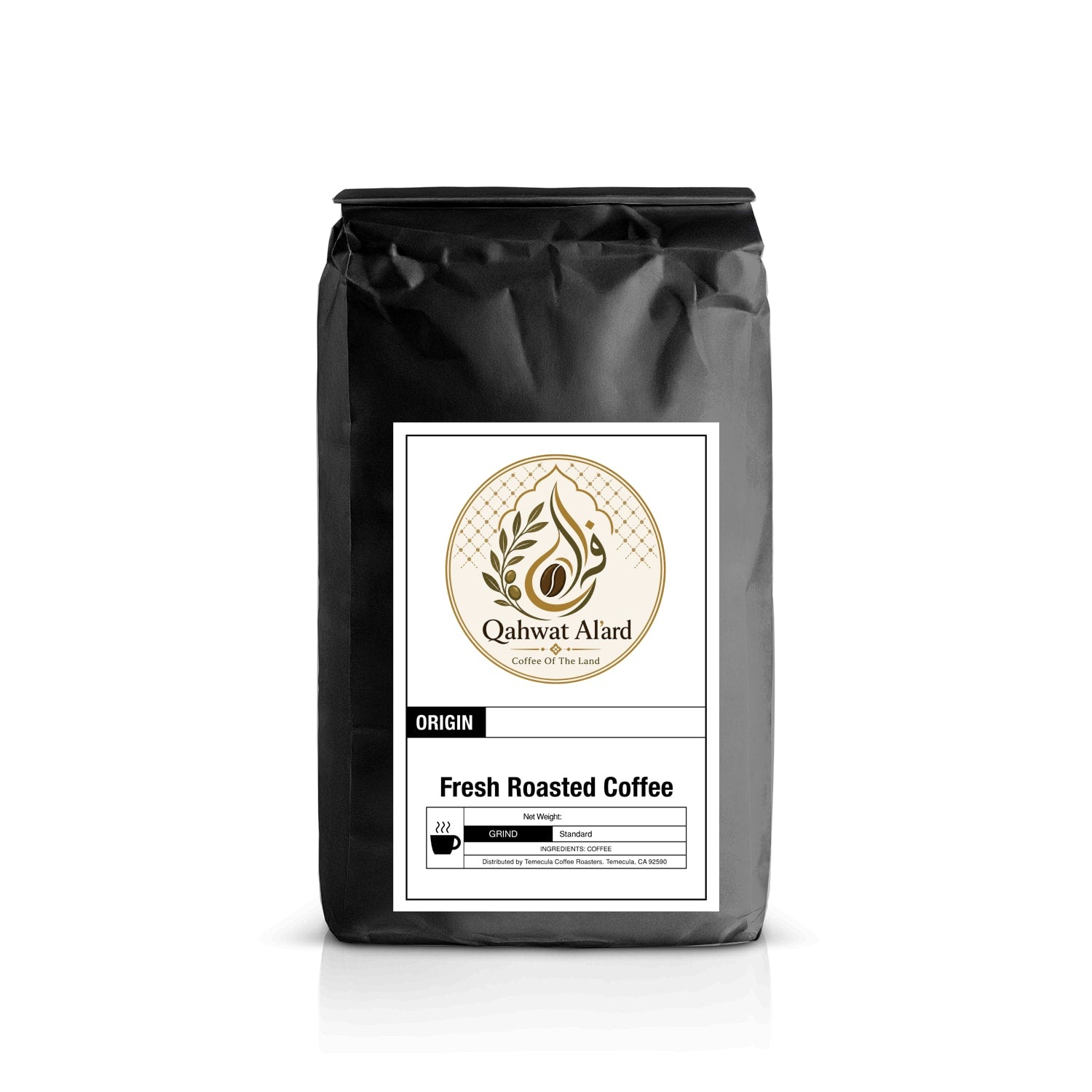
Qahwat Al’Ard’s Tanzania peaberry, sourced and roasted for you
Qahwat Al’Ard’s Tanzania single-origin is sourced from traceable Tanzanian farms, roasted to order, and shipped with the roast date on the bag. You get the bright citrus and black currant character the origin is known for, without the guesswork of an untraced PB lot. For readers who want an espresso-ready African profile, the African Espresso blend offers a darker, fuller-bodied alternative built around the same East African brightness. And if you’re curious how Tanzania compares to its East African neighbor, Kenya single-origin is available for a direct side-by-side.
Disclosure: Qahwat Al’Ard is the publisher of this article and sells the Tanzania peaberry product linked above.
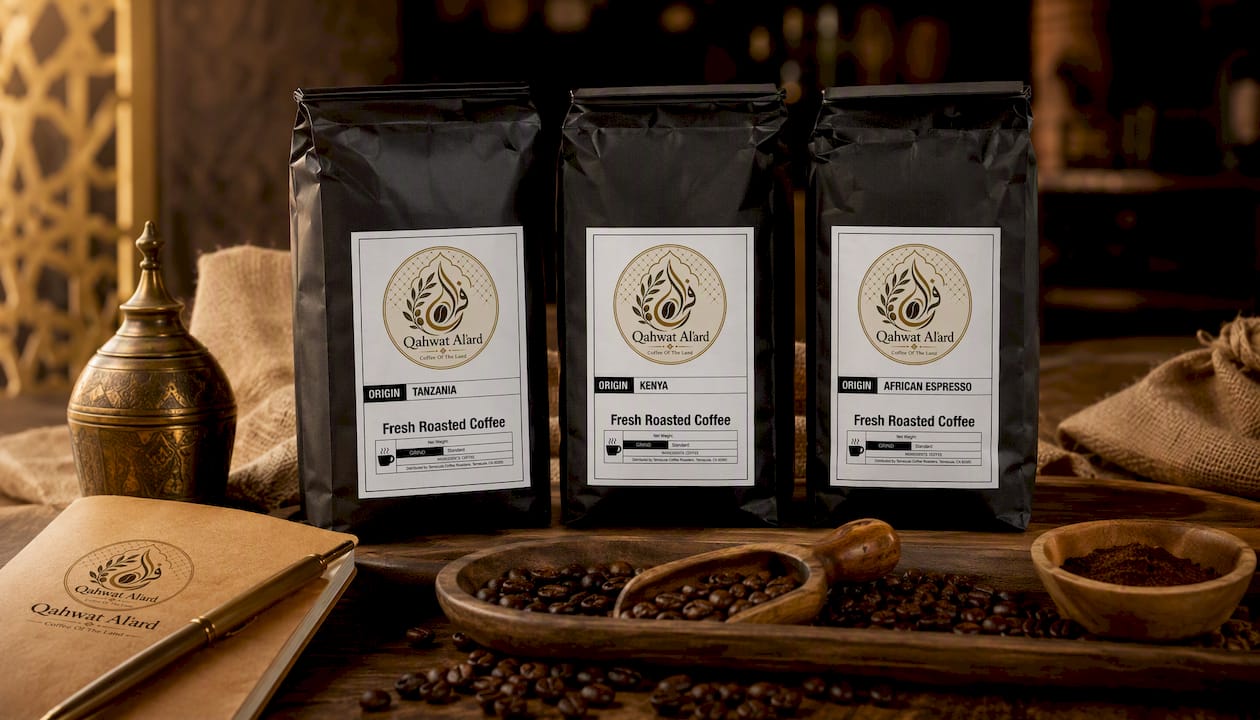
Head to the Tanzania product page to check current roast dates and place an order.
Sources
- A guide to Tanzanian coffee production
- Tanzania Coffee Ratings and Reviews - Coffee Review
- Roasting optimization of peaberry coffee beans from dry cherry fruits
- A roaster’s guide to peaberry coffee
- Know your coffee green beans: Peaberries
FAQ
What makes peaberry coffee special?
Peaberry’s round shape allows more even heat distribution during roasting, which can produce more consistent development. Tanzania peaberry adds a regional character: bright acidity, black currant, and citrus notes that are harder to find in flat-bean lots from the same origin.
Is Tanzania peaberry good coffee?
Yes, when sourced from a named region (Kilimanjaro or the Southern Highlands) with a clear roast date. Coffee Review notes that traceability and estate information predict quality better than the PB grade label alone.
Why is peaberry coffee more expensive?
Peaberry seeds occur in only 3–5% of coffee cherries, and separating them requires both mechanical screens and hand-sorting, adding labor cost to an already small yield. Specialty market demand for rarity further pushes the price.
How should I brew Tanzania peaberry at home?
Pour-over at a 1:15 ratio, 200°F water, medium-fine grind, and a 3–3.5 minute brew time highlights the citrus and fruit notes best. For espresso, a medium roast with a 1:2 ratio and a 27–30 second pull brings out the chocolate and sweetness.


