


TL;DR:
- Tanzanian coffee is characterized by its geographic diversity, cultural roots, and unique flavor profile rooted in volcanic terroir. It has a deep history dating back to the 16th century, with key developments by colonial missionaries and cooperative movements since 1932, now evolving towards specialty markets. Its flavor features bright red fruit acidity, fuller body, and a dominant washed process, with regional distinctions shaping its complex profile.
Tanzanian coffee is defined by its geographic diversity, cultural depth, and a flavor profile that sets it apart from every other East African origin. With the tanzanian coffee origin explained through both history and terroir, you get a fuller picture of why this coffee earns consistent respect in specialty markets worldwide. Grown across volcanic highlands, fertile southern plateaus, and western lake regions, Tanzanian coffee carries the fingerprints of its land in every cup. The Bourbon and Kent varietals, the Kilimanjaro Native Cooperative Union, and the washed processing tradition all shape what ends up in your grinder.
What is the historical origin of tanzanian coffee?
Coffee arrived in Tanzania from Ethiopia in the 16th century, brought by the Haya people of the western Kagera region, who chewed the raw berries as a stimulant long before brewing became common. That early relationship between the Haya tribe and coffee is one of the oldest documented human-coffee connections in sub-Saharan Africa. It was not until the colonial era that commercial cultivation took hold and changed the crop’s trajectory entirely.
Catholic missionaries reshaped Tanzanian coffee history in two critical moments. The Bourbon varietal arrived in 1898 via missionaries, followed by the Kent varietal in 1920. Both introductions planted the genetic foundation that still dominates Tanzanian Arabica today. Kent, in particular, was prized for its resistance to coffee leaf rust, a disease that devastated crops across Asia and threatened East African yields.
The most consequential institutional development came in 1932. The KNCU was founded by Chagga farmers on the slopes of Mount Kilimanjaro, making it one of Africa’s oldest farmer cooperatives. Its purpose was direct: bypass colonial marketing boards and keep more profit in farmers’ hands. That founding act of economic self-determination shaped the cooperative model that still structures much of Tanzanian coffee production today.
Key milestones in Tanzanian coffee history:
- 16th century: Haya people in Kagera use coffee berries as a stimulant
- 1898: Bourbon varietal introduced by Catholic missionaries
- 1920: Kent varietal introduced, adding disease resistance to the gene pool
- 1932: Kilimanjaro Native Cooperative Union (KNCU) founded by Chagga farmers
- Post-independence: Tanzania nationalizes and later liberalizes the coffee sector, opening export markets
Pro Tip: When buying Tanzanian coffee, look for cooperative or estate names on the label rather than just “Tanzania AA.” The KNCU and similar cooperatives signal traceable, farmer-supported sourcing.
Where is tanzanian coffee grown?
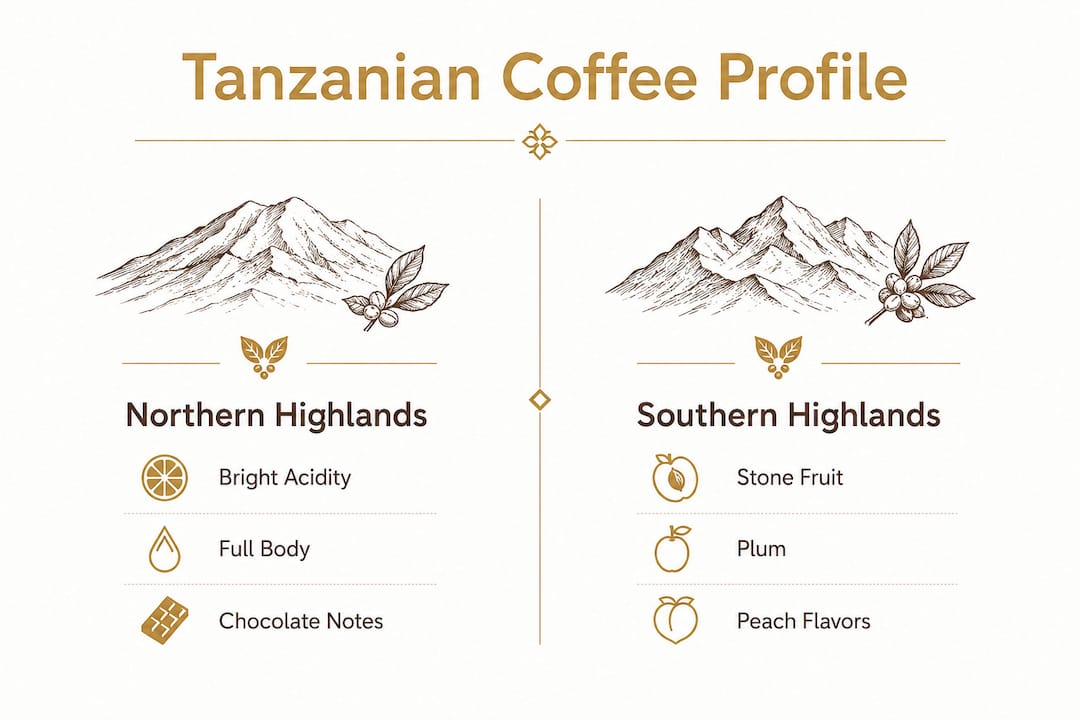
Tanzanian Arabica coffee grows primarily in two highland zones. The northern highlands include Kilimanjaro and Arusha, sitting at altitudes between 1,200 and 2,000 meters. The southern highlands cover Mbeya, Songwe, and Ruvuma. Each zone produces coffee with a distinct character, shaped by soil composition, rainfall patterns, and elevation.
Northern highlands: kilimanjaro and arusha
The volcanic soils around Mount Kilimanjaro are among the most mineral-rich growing environments on the continent. That volcanic base, combined with consistent rainfall and high altitude, produces complex fruity notes that define the Kilimanjaro cup. Arusha sits slightly lower but benefits from similar volcanic geology and proximity to Mount Meru.
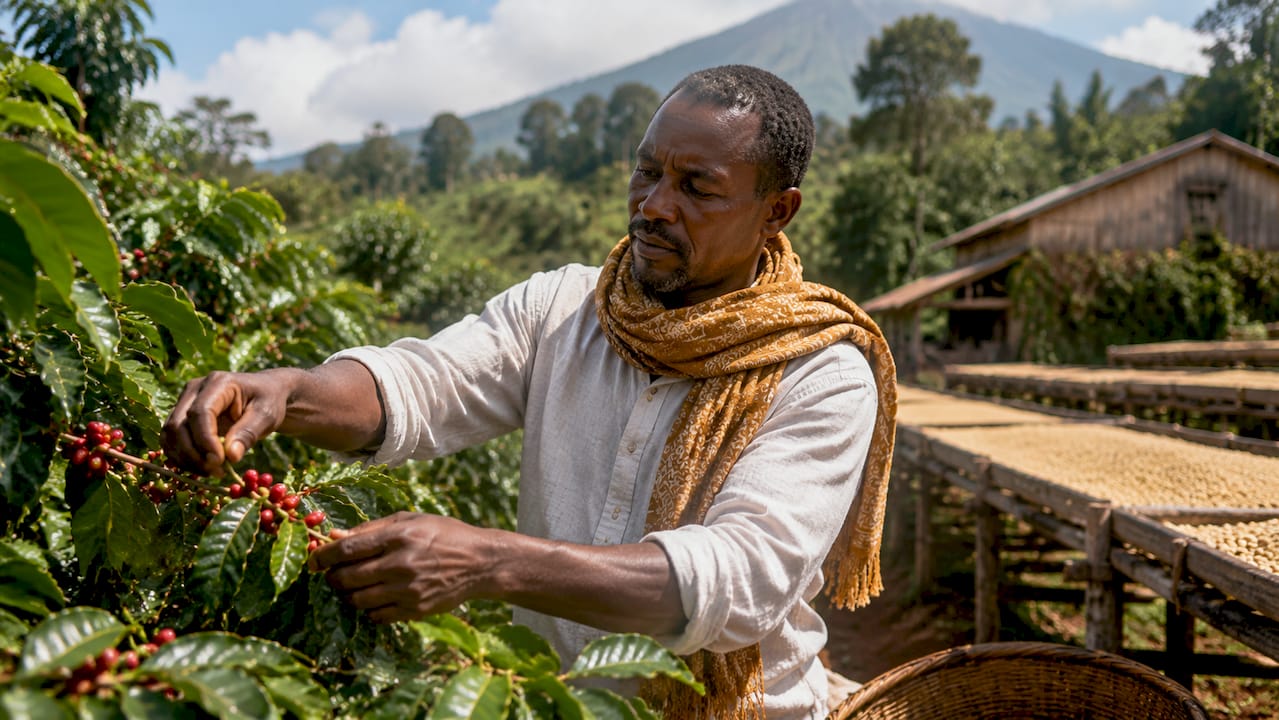
Southern highlands: mbeya, songwe, and ruvuma
The southern highlands produce coffee with stone fruit characteristics, leaning toward plum and peach rather than the brighter cherry notes found in the north. Ruvuma, bordering Mozambique, has attracted specialty buyer attention in recent years for its clean, well-structured lots. Mbeya and Songwe benefit from cooler temperatures and reliable seasonal rains that slow cherry development and concentrate sugars.
Western kagera: robusta country
The Kagera region near Lake Victoria grows Robusta, not Arabica. Kagera Robusta is milder and less complex than the highland Arabicas, but it plays a role in domestic consumption and blending. Understanding this regional split matters when you are evaluating what “Tanzanian coffee” actually means on a bag.
| Region | Altitude | Varietal | Flavor Character |
|---|---|---|---|
| Kilimanjaro / Arusha | 1,400–2,000m | Bourbon, Kent | Cherry, raspberry, chocolate |
| Mbeya / Songwe / Ruvuma | 1,200–1,800m | Bourbon, Kent | Plum, stone fruit, black tea |
| Kagera | 1,100–1,400m | Robusta | Mild, earthy, less complex |
Pro Tip: If you want to understand how coffee terroir shapes flavor, Tanzanian regional lots are an ideal study. The difference between a Kilimanjaro and a Ruvuma cup from the same harvest year is striking.
What are the flavor profiles and processing methods?
Tanzanian coffee flavor is built on a foundation of bright red fruit acidity balanced with fuller body and notes of chocolate and black tea. The characteristic cup profile includes cherry, raspberry, plum, and a smooth chocolate finish. That combination makes Tanzanian coffee more approachable than Kenyan coffee, which hits harder with sharper acidity and more intense brightness.
The washed processing method dominates Tanzanian production. The washed process involves sorting ripe cherries, pulping the outer skin, fermenting the beans to remove the sticky mucilage layer, and then drying them on raised beds. That fermentation step is critical. It strips away residual sugars that would otherwise muddy the cup, leaving a clean, transparent flavor that lets the terroir speak clearly.
Here is how northern and southern lots compare in the cup:
| Attribute | Kilimanjaro / Arusha | Mbeya / Ruvuma |
|---|---|---|
| Primary fruit note | Cherry, raspberry | Plum, peach |
| Acidity | Bright, lively | Softer, rounder |
| Body | Medium to full | Full |
| Finish | Chocolate, citrus zest | Black tea, stone fruit |
One grading detail every buyer should know: the “AA” designation in Tanzanian coffee refers to bean size, not quality. A large bean earns an AA stamp regardless of how it tastes in the cup. Savvy buyers look past the grade and focus on the cooperative or estate name as the real quality signal.
- Washed processing produces clean, fruit-forward cups with high clarity
- Natural processing is rare but growing in experimental lots
- Fermentation time and drying conditions vary by producer and affect final acidity
- Grade AA means the bean is large; it does not guarantee a superior cup
How does tanzanian coffee compare to kenya and ethiopia?
Tanzania, Kenya, and Ethiopia form the core of East African specialty coffee, but they produce very different cups. Understanding those differences helps you choose the right origin for your palate and brewing style.
Kenyan coffee is known for its sharp, almost aggressive acidity and intense brightness. A well-sourced Kenyan AA or AB lot delivers blackcurrant, tomato, and citrus notes with a wine-like complexity. For more detail on that profile, the Kenyan flavor guide from Qahwatalard breaks down the sensory distinctions clearly. Tanzanian coffee, by contrast, offers a rounder, softer acidity that many drinkers find more comfortable across multiple cups in a day.
Ethiopian coffee sits in its own category. Ethiopian beans, particularly from Yirgacheffe and Sidama, carry floral, jasmine, and bergamot notes alongside wine-like fruit. The genetic diversity of Ethiopian coffee is unmatched because Ethiopia is the birthplace of Arabica. Tanzania’s Bourbon and Kent varietals trace their lineage back to Ethiopia, but centuries of cultivation in different soil and climate conditions have produced a distinct expression.
- Kenya: Sharp acidity, blackcurrant, tomato, wine-like intensity
- Ethiopia: Floral, jasmine, bergamot, wine fruit, high genetic diversity
- Tanzania: Balanced red fruit, chocolate, black tea, fuller body, softer acidity
Tanzania’s market position sits between Kenya’s intensity and Ethiopia’s floral complexity. That middle ground is not a weakness. For espresso blending, filter brewing, and cold brew, Tanzanian coffee’s body and balance make it one of the most versatile East African origins available.
What is the current state of tanzanian coffee production?
Tanzania’s coffee sector is growing with measurable momentum. The 2025/26 production season delivered approximately 74,663 tons of clean coffee, reaching 88% of the national target. That figure represents meaningful progress after years of inconsistent output caused by climate variability and aging farm infrastructure. The government projects output exceeding 100,000 tons in 2026/27, driven by expanded irrigation and the introduction of climate-resilient varietals.
The Tanzania Coffee Board has also shifted its strategic focus. Rather than chasing volume alone, the board now targets specialty coffee markets with a price-and-quality approach designed to boost farmer incomes and international competitiveness. That shift matters because volume growth without quality control erodes the premium positioning that Tanzanian coffee has built over decades.
Long-term resilience depends on collaboration. Government extension officers, cooperatives like the KNCU, and international NGOs are working together to modernize processing infrastructure and improve consistency at the farm level. That multi-stakeholder model is the same structure that built Kenya’s coffee reputation, and Tanzania is applying it deliberately.
Key takeaways
Tanzanian coffee’s quality and character are inseparable from its geography, history, and the cooperative structures that have shaped its production since 1932.
| Point | Details |
|---|---|
| Historical roots run deep | Coffee reached Tanzania via the Haya people in the 16th century, with commercial varietals introduced by missionaries in 1898 and 1920. |
| Region determines flavor | Kilimanjaro lots deliver cherry and chocolate; southern highlands produce stone fruit and black tea; Kagera grows milder Robusta. |
| Washed processing defines clarity | The washed method strips mucilage through fermentation, producing clean, transparent cups that reflect terroir directly. |
| AA grade signals size, not quality | Bean size drives the AA designation; cooperative or estate provenance is the real indicator of cup quality. |
| Production is expanding | Tanzania produced 74,663 tons in 2025/26 and projects over 100,000 tons in 2026/27 through irrigation and varietal improvements. |
The kilimanjaro label is selling tanzania short
I have tasted a lot of Tanzanian coffee over the years, and the single most frustrating pattern I see is how the Kilimanjaro name dominates the conversation while the southern highlands go almost unnoticed. Ruvuma and Mbeya lots are producing some of the most interesting cups coming out of East Africa right now. They are fuller, more structured, and in many cases more consistent than northern lots that carry a famous mountain’s name as their primary selling point.
The other thing worth saying directly: the AA grading system misleads buyers more than it helps them. A large bean from a poorly managed farm will always underperform a smaller bean from a well-run cooperative. The specialty coffee world knows this, but the label still carries weight at retail. If you are serious about Tanzanian coffee, you need to read past the grade and look for the producer’s name.
Tanzania’s production growth is genuinely exciting, but the quality-versus-volume tension is real. Hitting 100,000 tons means nothing if processing infrastructure cannot keep pace. The cooperatives and the Tanzania Coffee Board are aware of this. Whether they can scale quality alongside volume is the defining question for the next decade of Tanzanian coffee.
— Anthony-Yasin
Taste tanzanian coffee through qahwatalard’s curated selection
Qahwatalard sources single-origin coffees with full traceability, and the African flavor profile is central to what the brand does best. If the Tanzanian cup profile described in this article speaks to you, the African Espresso is a direct expression of that East African character: bold body, red fruit brightness, and a clean chocolate finish. For those who want to explore the full range of single-origin options, the single-origin collection brings together traceable, ethically sourced beans from the world’s most distinctive growing regions.
Every product Qahwatalard offers reflects the same commitment to origin transparency that makes Tanzanian coffee worth understanding in the first place. Knowing where your coffee comes from is the first step to tasting it differently.
FAQ
What makes tanzanian coffee unique among african origins?
Tanzanian coffee offers a balanced profile of red fruit acidity, full body, and chocolate and black tea notes. That combination is softer and more approachable than Kenyan coffee while remaining more structured than many Ethiopian lots.
Where is tanzanian coffee grown?
Tanzanian Arabica grows in the northern highlands of Kilimanjaro and Arusha and the southern highlands of Mbeya, Songwe, and Ruvuma, at altitudes between 1,200 and 2,000 meters. Robusta grows in the western Kagera region near Lake Victoria.
What does the AA grade mean on tanzanian coffee?
The AA grade refers to bean size, not flavor or quality. Buyers focused on cup quality should look for specific cooperative or estate names rather than relying on the grade designation alone.
How is most tanzanian coffee processed?
Most Tanzanian coffee uses the washed method, which involves pulping, fermenting to remove mucilage, and drying on raised beds. This process produces clean, fruit-forward cups with high flavor clarity.
How much coffee does tanzania produce?
Tanzania produced approximately 74,663 tons of clean coffee in the 2025/26 season, reaching 88% of its national target. Output is projected to exceed 100,000 tons in 2026/27 through expanded irrigation and improved farming practices.


